

Late-flowering Thoroughwort
Eupatorium serotinum
Found in interdune swales, bottomland forests and openings, fields, open forests, powerline rights-of-way, tidal marshes, disturbed areas. Weakley, Flora of the Southeastern United States (2025), Northern Tier edition What its natural habitat tells you
Native to West Virginia. How scores work Is it native here?
Profile 94%
- Height
- 3–6 feet
- Light
- Part shade
- Soil moisture
- Somewhat dry to moist
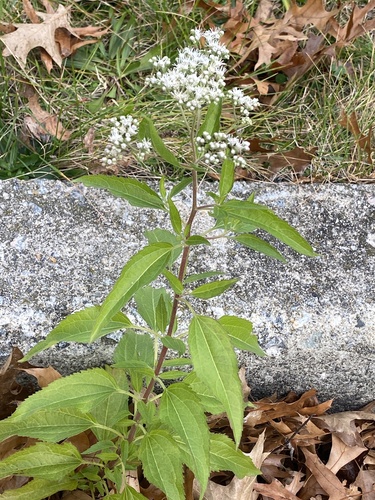
At a glance
- Life cycle
- Perennial
- Bloom
- August to October
Not yet recorded · Spread · Leaves
Recorded in 5 West Virginia counties.
Natural habitats
Places it grows wild. Not a planting requirement. Each habitat page lists the plants and wildlife also found there.
Floodplain and bottomland forests
Forests on low ground beside rivers and streams that flood from time to time.
Roadsides, fields and disturbed ground
Ground opened by people: roadsides, old fields, pastures, fencerows and lots.
Forest or woodland where the source does not say how moist or dry.
Also found with this plant
Wildlife whose habitat models include habitats this plant grows in, in West Virginia. Shared habitat, not food. 127 animals.
- Double-crested CormorantPhalacrocorax auritus
- Downy WoodpeckerPicoides pubescens
- Eastern KingbirdTyrannus tyrannus
- Eastern PhoebeSayornis phoebe
- Eastern Screech-owlMegascops asio
- Eurasian Collared-doveStreptopelia decaocto
- European StarlingSturnus vulgaris
- Golden-crowned KingletRegulus satrapa
- Gray CatbirdDumetella carolinensis
- Great Blue HeronArdea herodias
- Great EgretArdea alba
- Great Horned OwlBubo virginianus
- Green HeronButorides virescens
- Hairy WoodpeckerPicoides villosus
- Hooded MerganserLophodytes cucullatus
- Kentucky WarblerOporornis formosus
- Lincoln's SparrowMelospiza lincolnii
- Louisiana WaterthrushSeiurus motacilla
- MallardAnas platyrhynchos
- Mourning DoveZenaida macroura
- Northern CardinalCardinalis cardinalis
- Northern FlickerColaptes auratus
- Northern MockingbirdMimus polyglottos
- Northern ParulaParula americana










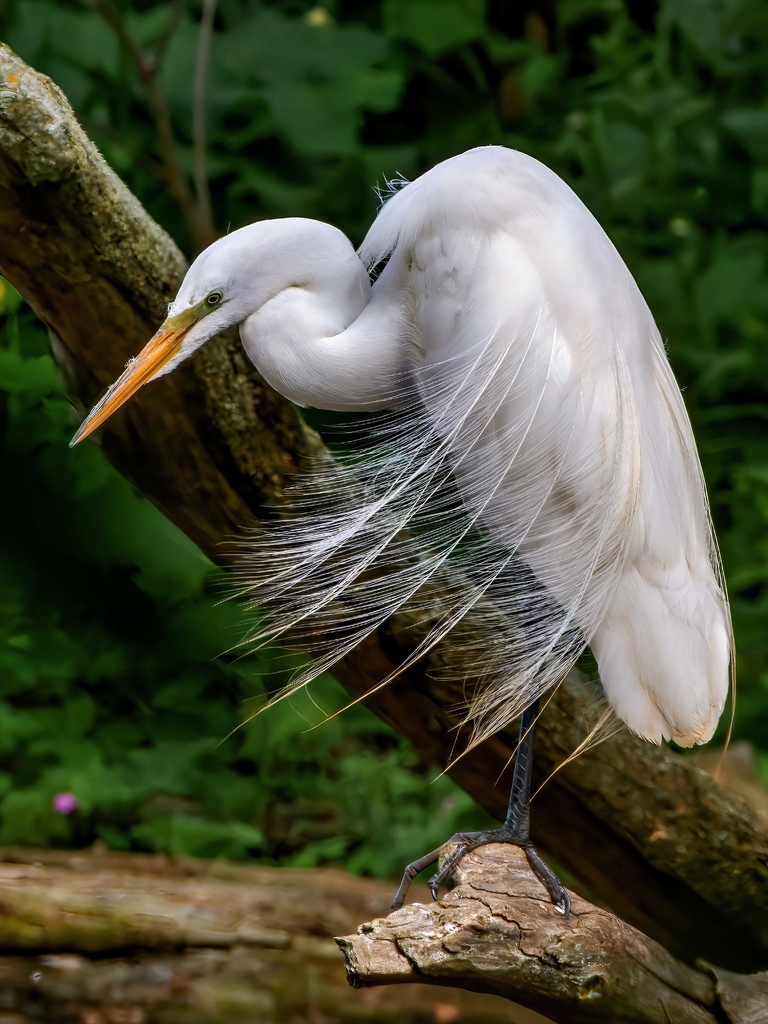













Who uses this plant?
 36CaterpillarsGenus host records with ranges including WV
Genus host records with ranges including WV · Eupatorium
- Agonopterix pulvipennellaGoldenrod Leaffolder, Featherduster Agonopterix
- Anavitrinella pampinariaCommon Gray, Cranberry Spanworm
- Carmenta bassiformisEupatorium Borer Moth, Ironweed Clearwing Moth
- Carmenta pyralidiformisBoneset Borer Moth
- Chlorochlamys chloroleucariaBlackberry Looper Moth
- Chrysodeixis includensSoybean Looper Moth
- Cisseps fulvicollisYellow-Collared Scape Moth
- Condica vecorsDusky Groundling
- Dichomeris setosellaHairy Dichomeris
- Digrammia continuataCurve-Lined Angle
Show all 36
- Dysodia oculatanaEyed Thyris
- Estigmene acreaSalt Marsh Moth, Acrea Moth
- Eupithecia miserulataCommon Eupithacia, Common Pug
- Feltia subgothicaSubgothic Dart
- Feltia tricosaConfused Dart, Tricose Dart
- Haploa clymeneClymene Moth
- Oedemasia concinnaRed-Humped Caterpillar, Red-Humped Appleworm
- Oidaematophorus eupatoriiEupatorium Plume Moth
- Orthodes majusculaRustic Quaker, Rustic Groundcat
- Ostrinia obumbratalisSmartweed Borer
- Papaipema cataphractaBurdock Border, Potato-Stalk Borer
- Papaipema eupatoriiJoe-Pye Weed Borer, Eupatorium Borer Moth
- Papaipema harrisiiHeracleum Stem Borer Moth, Cow Parsnip Borer
- Perigea xanthioidesRed Groundling
- Phragmatobia fuliginosaRuby Tiger Moth
- Phragmatobia lineataLined Ruby Tiger Moth
- Platynota flavedanaBlack-Shaded Platynota
- Pleuroprucha insulsariaCommon Tan Wave
- Schinia trifasciaThree-Lined Flower Moth
- Spoladea recurvalisHawaiian Beet Webworm
- Synchlora aerataWavy-Lined Emerald, Camouflaged Looper
- Tornos scolopacinariaDimorphic Gray
- Agonopterix atrodorsella
- Agonopterix eupatoriiella
- Chionodes pseudofondella
- Dichomeris washingtoniella
 34BeesSoutheastern regional records
Southeastern regional records · Eupatorium
Individual names are not available yet.
Noori, Seltmann & Orr 2026, A curated and integrated dataset for exploring global bee-plant interactions (GloBI), Zenodo, CC BY 4.0 2Specialist beesPollen specialists
Pollen specialists · Eupatorium
- Colletes simulans
- Megachile xylocopoides
 1BirdsRecorded genus food-resource interactions; not a state feeding claim
Recorded genus food-resource interactions; not a state feeding claim · Eupatorium
- Ortalis vetulaPlain Chachalaca
Direct food only: birds recorded eating this genus across North America. Caterpillars on host plants also feed nesting birds. NC Native Plant Society: butterfly gardening
Beetles 1
- Diabrotica 12-punctata
Flower visits · Carlinville, Illinois, USA
Flies 24
- Archytas aterrima
- Belvosia bifasciata
- Cistogaster occidua
- Conops xanthopareus
- Eristalis tenax
- Exoprosopa fasciata
- Exoprosopa fascipennis
- Geron rufipes
- Gymnosoma fuliginosa
- Leskia analis
Show all 24
- Milesia ornata
- Musca domestica
- Neofischeria flava
- Orthoneura nitida
- Physocephala texana
- Physocephala tibialis
- Scepsis fulvicollis
- Siphoplagia anomala
- Spallanzania hesperidarum
- Spilomyia longicornis
- Systoechus vulgaris
- Systropus macer
- Trichopoda pennipes
- Xanthomelana arcuata
Flower visits · Carlinville, Illinois, USA
Adult butterflies / moths 7
- Argynnis cybele
- Carmenta pyralidiformis
- Feltia subgothica
- Limochores taumas
- Phyciodes tharos
- Pontia protodice
- Vanessa cardui
Flower visits · Carlinville, Illinois, USA
Other wasps 26
- Ancistrocerus tigris
- Anoplius illinoensis
- Bicyrtes 4-fasciata
- Cerceris fulvipes
- Cerceris prominens
- Eucerceris zonatus
- Eumenes fraternus
- Isodontia apicalis
- Isodontia macrocephala
- Leionotus arvensis
Show all 26
- Leionotus dorsalis
- Leionotus scrophulariae
- Monobia 4-dens
- Philanthus punctatus
- Philanthus ventilabris
- Polistes annularis
- Polistes pallipes
- Polistes rubiginosus
- Polistes variatus
- Pompiloides marginatus
- Porizon albipennis
- Sphex gracilis
- Sphex nigricans
- Sphex procera
- Sphex vulgaris
- Tiphia robertsoni
Flower visits · Carlinville, Illinois, USA
Other insects 1
- Euschistus variolarius
Flower visits · Carlinville, Illinois, USA
No records yet · Ants
Plant details
- Family
- Asteraceae
- Flower color
- White
Safety has not been reviewed for this plant; check toxicity and thorns before planting.
Growing sources and scope
- Bloom · “August to October” · Weakley, Flora of the Southeastern United States (2025), Carolinas & Georgia edition · Carolinas and Georgia
- Flower color · “White” · Lady Bird Johnson Wildflower Center
- Height · “3–6 feet” · Tennessee Smart Yards (ranked first; Lady Bird Johnson Wildflower Center, Prairie Moon 2026 Cultural Guide differ) · Published Tennessee growing guidance; exact cached scientific heading
- Life cycle · “Perennial” · Lady Bird Johnson Wildflower Center
- Light · “Part shade” · Tennessee Smart Yards (ranked first; Prairie Moon 2026 Cultural Guide differs) · Published Tennessee growing guidance; exact cached scientific heading
- primary_flower_color · “white” · Prairie Moon 2026 Cultural Guide
- Soil · “moderately wet to moderately dry” · Tennessee Smart Yards (ranked first; Lady Bird Johnson Wildflower Center, Prairie Moon 2026 Cultural Guide differ) · Published Tennessee growing guidance; exact cached scientific heading
Also known as
Late flowering Thoroughwort; Lateflowering Thoroughwort
Conservation status
| West Virginia rank | S5 |
|---|---|
| Global rank | G5 |
| WV status | Not verified |
| Federal status | Not verified |
Will it fit your yard?
Check this plant against your county, sun and soil moisture. Conditions are checked in your browser.
Growing cautions
- Spreads by rhizomes. Spreads by rhizomes. Tennessee Smart Yards
For planning only; these do not change the score or Fit.
Sources
- NatureServe Explorer
- USDA PLANTS
- Vascular Plants of North Carolina (NC Natural Heritage Program)
- Weakley, Flora of the Southeastern United States (2025)
- West Virginia occurrence source
- Shropshire & Tallamy 2025, Lepidoptera of North America north of Mexico, ZooKeys 1261 (ODbL)
- Noori, Seltmann & Orr 2026, A curated and integrated dataset for exploring global bee-plant interactions (GloBI), Zenodo, CC BY 4.0
- Smith, Bachelder, Russell, Morales, Mosher & Seltmann 2024, Bee-Specialization-Modeling v0.6.1 (specialist host table compiled from J. Fowler's pollen specialist bee lists), Zenodo, CC BY 4.0
- Hurlbert, Olsen, Sawyer & Winner 2021, Avian Diet Database, Scientific Data 8: 260 (CC0)
- Narango, Tallamy & Shropshire 2020, Few keystone plant genera support the majority of Lepidoptera species, Nature Communications