

Eastern Gray Beardtongue
Penstemon canescens
Found in woodlands, glades, forest edges, rocky woodlands, roadsides. Weakley, Flora of the Southeastern United States (2025), Northern Tier edition What its natural habitat tells you
Native to West Virginia. How scores work Is it native here?
Profile 100%
- Height
- 1–3 feet
- Spread
- 1–1.5 feet
- Light
- Full sun
- Soil moisture
- Dry to average
Space about 1 ft apart from its recorded spread, about 100 per 100 sq ft. Enter your bed size for a count
Will it fit your yard?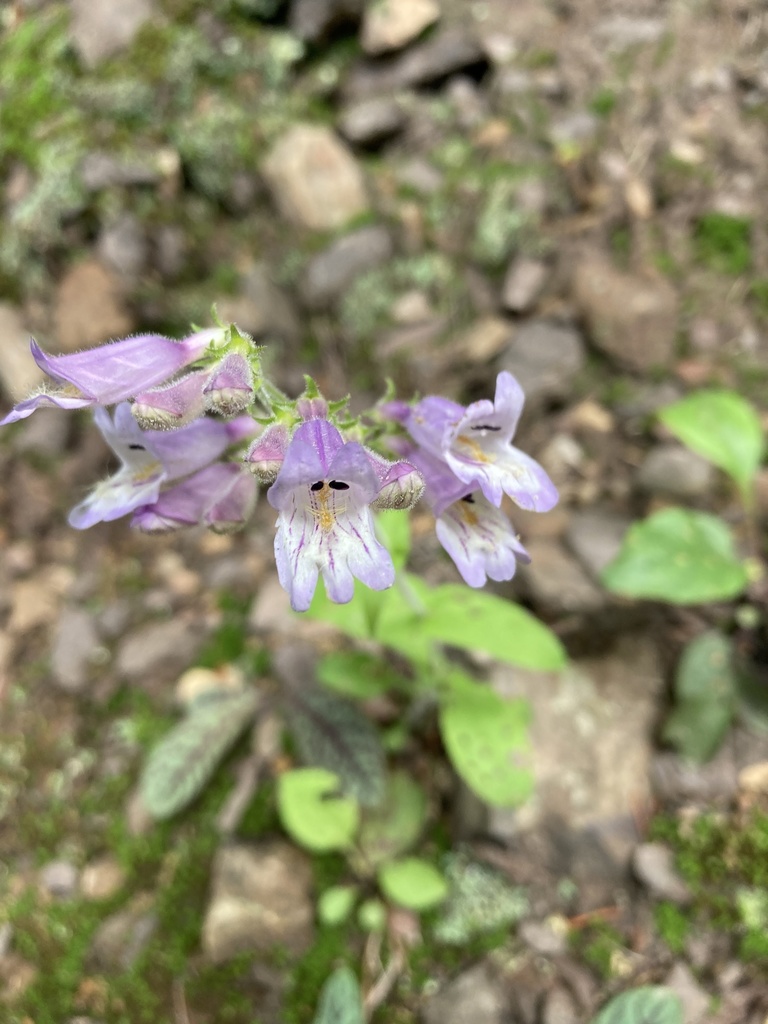
At a glance
- Life cycle
- Perennial
- Leaves
- Deciduous
- Bloom
- May to July
Recorded in 16 West Virginia counties.
Natural habitats
Places it grows wild. Not a planting requirement. Each habitat page lists the plants and wildlife also found there.
Forest or woodland where the source does not say how moist or dry.
Roadsides, fields and disturbed ground
Ground opened by people: roadsides, old fields, pastures, fencerows and lots.
Also found with this plant
Wildlife whose habitat models include habitats this plant grows in, in West Virginia. Shared habitat, not food. 37 animals.
Widespread birds also seen here (39)
Found in many habitats here, so not listed above.
- Alder Flycatcher
- American Goldfinch
- American Kestrel
- American Redstart
- American Robin
- Belted Kingfisher
- Blue Grosbeak
- Blue Jay
- Blue-gray Gnatcatcher
- Cedar Waxwing
- Chimney Swift
- Chipping Sparrow
- Common Nighthawk
- Common Raven
- Cooper's Hawk
- Dark-eyed Junco
- Eastern Kingbird
- European Starling
- Fox Sparrow
- Gray Catbird
- Great Horned Owl
- Mourning Dove
- Northern Flicker
- Northern Mockingbird
- Osprey
- Purple Finch
- Red-tailed Hawk
- Red-winged Blackbird
- Rose-breasted Grosbeak
- Ruby-crowned Kinglet
- Sharp-shinned Hawk
- Spotted Sandpiper
- Tufted Titmouse
- Turkey Vulture
- Veery
- White-throated Sparrow
- Wild Turkey
- Yellow-breasted Chat
- Yellow-rumped Warbler
Who uses this plant?
 7CaterpillarsGenus host records with ranges including WV
Genus host records with ranges including WV · Penstemon
- Elaphria chalcedoniaChalcedony Midget
- Endothenia hebesanaVerbena Bud Moth
- Euphydryas phaetonThe Baltimore, The Black Checker
- Junonia coeniaCommon Buckeye
- Pyrrhia ciliscaAmerican Bordered Sallow, Noble Sun Moth
- Pyrrhia exprimensPurple-Lined Sallow, Purple-Lined Sun Moth
- Sparganothis sulfureanaSparganothis Fruitworm Moth, Sulfur Leafroller, False Yellow-Head
 46BeesSoutheastern regional records
Southeastern regional records · Penstemon
Individual names are not available yet.
Noori, Seltmann & Orr 2026, A curated and integrated dataset for exploring global bee-plant interactions (GloBI), Zenodo, CC BY 4.0 2Specialist beesPollen specialists
Pollen specialists · Penstemon
- Atoposmia abjecta
- Osmia distincta
 1BirdsRecorded eating Penstemon in West Virginia
Diet records by plant genus, from studies across North America. Not a record from this state. Birds whose range includes West Virginia, most records first.
- Wild Turkey1 diet record
Direct food only. Caterpillars on host plants also feed nesting birds. NC Native Plant Society: butterfly gardening
No records yet · Ants · Beetles · Flies · Adult butterflies / moths · Other wasps · Other insects
Birds that eat Penstemon 1
Diet records by plant genus, from studies across North America. Not a record from this state. Avian Diet Database (Hurlbert Lab), CC0 1.0.
- Wild TurkeyMeleagris gallopavo


Plant details
- Family
- Plantaginaceae
- Hardiness
- Zones 5a–8b
- Soil pH
- Acidic to alkaline
- Flower color
- Purple
Safety has not been reviewed for this plant; check toxicity and thorns before planting.
Growing sources and scope
- Bloom · “May to July” · Weakley, Flora of the Southeastern United States (2025), Carolinas & Georgia edition · Carolinas and Georgia
- Flower color · “Purple” · NC Extension Plant Toolbox
- Hardiness · “Zones 5a–8b” · NC Extension Plant Toolbox
- Height · “1–3 feet” · NC Extension Plant Toolbox
- Leaves · “Deciduous” · NC Extension Plant Toolbox
- Life cycle · “Perennial” · NC Extension Plant Toolbox
- Light · “Full sun (6 or more hours of direct sunlight a day)” · NC Extension Plant Toolbox (ranked first; Virginia DCR Piedmont differs)
- primary_flower_color · “purple” · NC Extension Plant Toolbox
- Soil · “Occasionally dry” · NC Extension Plant Toolbox (ranked first; Virginia DCR Piedmont differs)
- Soil pH · “Acidic to alkaline” · NC Extension Plant Toolbox
- Spread · “1–1.5 feet” · NC Extension Plant Toolbox
Also known as
Appalachian Beard Tongue; Eastern Gray Beard Tongue
Conservation status
| West Virginia rank | S4 |
|---|---|
| Global rank | G4 |
| WV status | Not verified |
| Federal status | Not verified |
Will it fit your yard?
Check this plant against your county, sun and soil moisture. Conditions are checked in your browser.
Sources
- NatureServe Explorer
- USDA PLANTS
- Vascular Plants of North Carolina (NC Natural Heritage Program)
- Weakley, Flora of the Southeastern United States (2025), Carolinas & Georgia edition
- West Virginia occurrence source
- Shropshire & Tallamy 2025, Lepidoptera of North America north of Mexico, ZooKeys 1261 (ODbL)
- Noori, Seltmann & Orr 2026, A curated and integrated dataset for exploring global bee-plant interactions (GloBI), Zenodo, CC BY 4.0
- Smith, Bachelder, Russell, Morales, Mosher & Seltmann 2024, Bee-Specialization-Modeling v0.6.1 (specialist host table compiled from J. Fowler's pollen specialist bee lists), Zenodo, CC BY 4.0
- Hurlbert, Olsen, Sawyer & Winner 2021, Avian Diet Database, Scientific Data 8: 260 (CC0)
- Narango, Tallamy & Shropshire 2020, Few keystone plant genera support the majority of Lepidoptera species, Nature Communications