

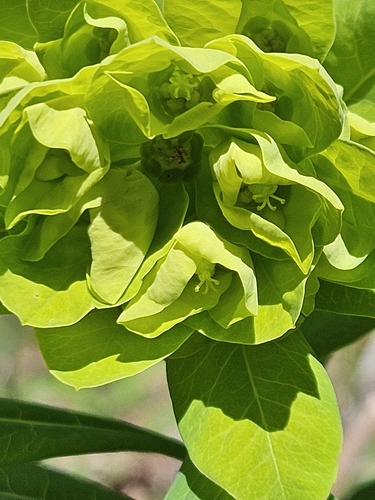
Glade Spurge
Euphorbia purpurea
Found in moist forests; floodplain and bottomland forests; glades, barrens and outcrops on mafic or serpentine rock; glades, barrens and outcrops on limestone; swamps; seeps and springs. Weakley, Flora of the Southeastern United States (2025), Northern Tier edition What its natural habitat tells you
Native to West Virginia. How scores work Is it native here?
Profile 94%
- Height
- Up to about 4 feet
- Light
- Partial shade, Full shade, Full sun
- Soil moisture
- Moist to wet
Rare or protected plant. Specialist conservation planting; excluded from routine garden suggestions. Plant caution source
Hidden from default planting suggestions. Wildlife value and native status remain unchanged.
At a glance
- Life cycle
- Perennial
- Bloom
- May to September
Not yet recorded · Spread · Leaves
Recorded in 3 West Virginia counties.
Natural habitats
Places it grows wild. Not a planting requirement. Each habitat page lists the plants and wildlife also found there.
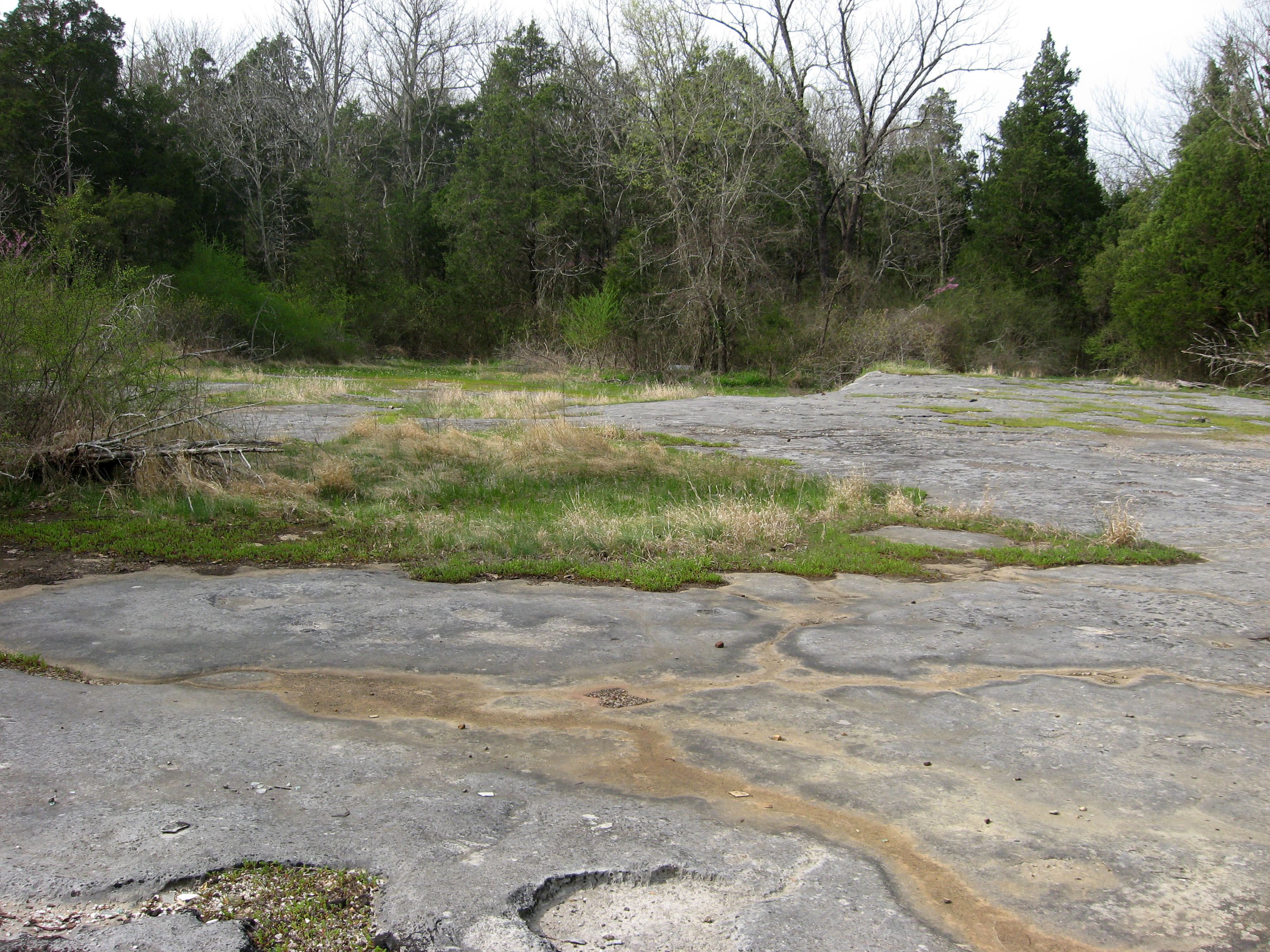
Glades, barrens and outcrops on limestone
Forests on moist but not wet ground, such as rich slopes and ravines.
Floodplain and bottomland forests
Forests on low ground beside rivers and streams that flood from time to time.
Glades, barrens and outcrops on mafic or serpentine rock
Open, thin-soil openings, outcrops and cliffs on dark, magnesium- or iron-rich rock such as serpentine, diabase or gabbro.
Forested wetlands with standing water much of the year, such as cypress and gum swamps.
Places where groundwater keeps the soil or rock wet, such as seepage slopes and spring runs.
Also found with this plant
Wildlife whose habitat models include habitats this plant grows in, in West Virginia. Shared habitat, not food. 116 animals.
- American GoldfinchCarduelis tristis
- American KestrelFalco sparverius
- American RedstartSetophaga ruticilla
- American RobinTurdus migratorius
- Bald EagleHaliaeetus leucocephalus
- Baltimore OrioleIcterus galbula
- Barred OwlStrix varia
- Black-and-White WarblerMniotilta varia
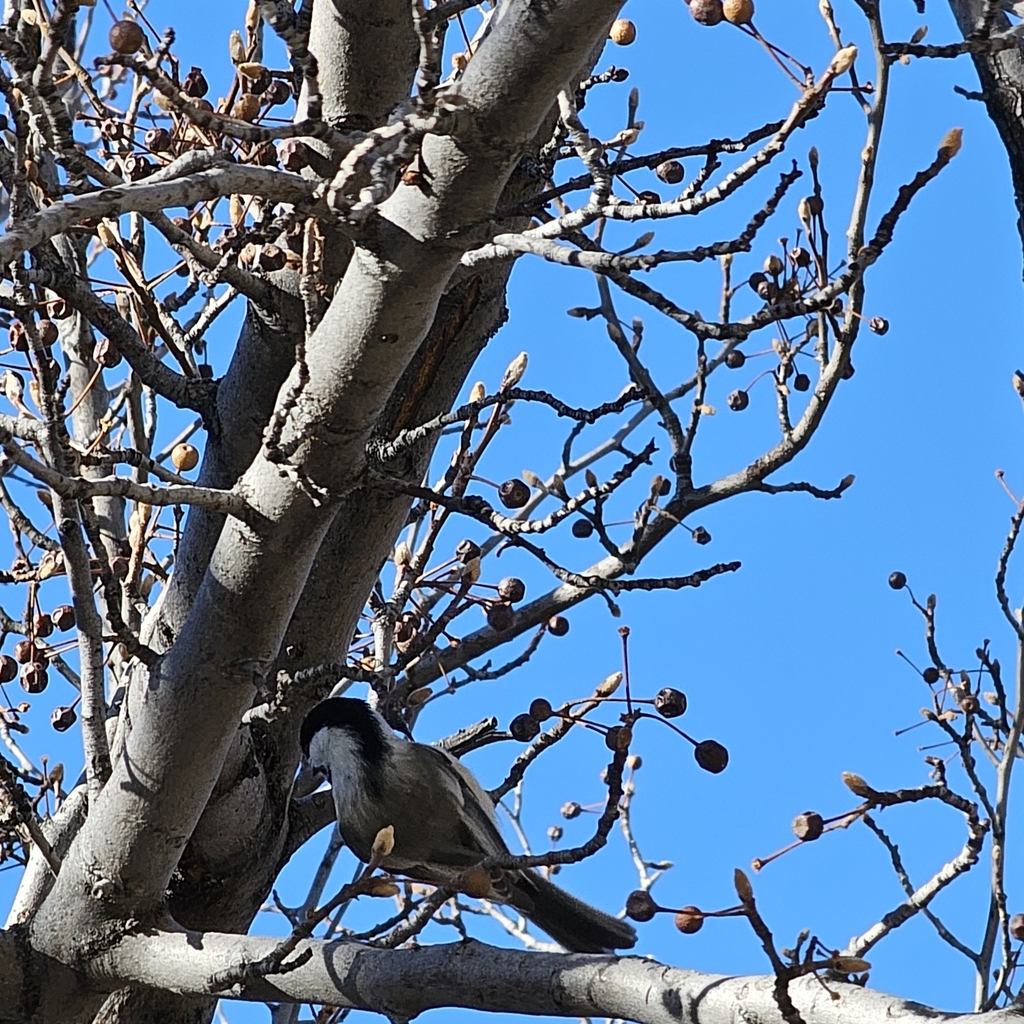
- Black-capped ChickadeePoecile atricapillus
- Black-throated Blue WarblerDendroica caerulescens
- Blue GrosbeakPasserina caerulea
- Blue JayCyanocitta cristata
- Blue-gray GnatcatcherPolioptila caerulea
- Broad-winged HawkButeo platypterus
- Brown CreeperCerthia americana
- Cedar WaxwingBombycilla cedrorum
- Cerulean WarblerDendroica cerulea
- Chimney SwiftChaetura pelagica
- Chipping SparrowSpizella passerina
- Common NighthawkChordeiles minor
- Common RavenCorvus corax
- Cooper's HawkAccipiter cooperii
- Downy WoodpeckerPicoides pubescens
- Eastern BluebirdSialia sialis
























Who uses this plant?
 7CaterpillarsGenus host records with ranges including WV
Genus host records with ranges including WV · Euphorbia
- Automeris ioIo Moth
- Episimus argutanaSumac Leaftier
- Eudryas unioPearly Wood-Nymph
- Eutrapela clematariaCurved-Tooth Geometer, Purplish Brown Looper
- Hypercompe scriboniaGiant Leopard Moth, Great Leopard Moth
- Lobocleta plemyrariaStraight-Lined Wave
- Sparganothis sulfureanaSparganothis Fruitworm Moth, Sulfur Leafroller, False Yellow-Head
 13BeesSoutheastern regional records
Southeastern regional records · Euphorbia
Individual names are not available yet.
Noori, Seltmann & Orr 2026, A curated and integrated dataset for exploring global bee-plant interactions (GloBI), Zenodo, CC BY 4.0 0Specialist beesPollen specialists
 14BirdsRecorded genus food-resource interactions; not a state feeding claim
Recorded genus food-resource interactions; not a state feeding claim · Euphorbia
- Anthus rubescensAmerican Pipit
- Anthus spragueiiSprague's Pipit
- Calcarius pictusSmith's Longspur
- Callipepla gambeliiGambel's Quail
- Cardinalis cardinalisNorthern Cardinal
- Columbina passerinaCommon Ground Dove
- Corvus brachyrhynchosAmerican Crow
- Cyrtonyx montezumaeMontezuma Quail
- Meleagris gallopavoWild Turkey
- Pooecetes gramineusVesper Sparrow
Show all 14
- Spizella breweriBrewer's Sparrow
- Spizella pusillaField Sparrow
- Tympanuchus pallidicinctusLesser Prairie-Chicken
- Zenaida macrouraMourning Dove
Direct food only: birds recorded eating this genus across North America. Caterpillars on host plants also feed nesting birds. NC Native Plant Society: butterfly gardening
No records yet · Ants · Beetles · Flies · Adult butterflies / moths · Other wasps · Other insects
Plant details
- Family
- Euphorbiaceae
- Flower color
- Yellow or green
Growing sources and scope
- Bloom · “May to September” · Weakley, Flora of the Southeastern United States (2025), Carolinas & Georgia edition · Carolinas and Georgia
- Flower color · “Yellow or green” · Lady Bird Johnson Wildflower Center
- Height · “Up to about 4 feet” · Lady Bird Johnson Wildflower Center
- Life cycle · “Perennial” · Lady Bird Johnson Wildflower Center
- Light · “Partial shade; Full shade; Full sun (documented habitat)” · Weakley, Flora of the Southeastern United States (2025), Carolinas & Georgia edition · Carolinas and Georgia
- Soil · “Moist; Wet (documented habitat)” · Weakley, Flora of the Southeastern United States (2025), Carolinas & Georgia edition · Carolinas and Georgia
Conservation status
| West Virginia rank | S2 |
|---|---|
| Global rank | G3 |
| WV status | Not verified |
| Federal status | Not verified |
Will it fit your yard?
Check this plant against your county, sun and soil moisture. Conditions are checked in your browser.
Sources
- NatureServe Explorer
- USDA PLANTS
- Vascular Plants of North Carolina (NC Natural Heritage Program)
- Weakley, Flora of the Southeastern United States (2025), Carolinas & Georgia edition
- West Virginia occurrence source
- Shropshire & Tallamy 2025, Lepidoptera of North America north of Mexico, ZooKeys 1261 (ODbL)
- Noori, Seltmann & Orr 2026, A curated and integrated dataset for exploring global bee-plant interactions (GloBI), Zenodo, CC BY 4.0
- Smith, Bachelder, Russell, Morales, Mosher & Seltmann 2024, Bee-Specialization-Modeling v0.6.1 (specialist host table compiled from J. Fowler's pollen specialist bee lists), Zenodo, CC BY 4.0
- Hurlbert, Olsen, Sawyer & Winner 2021, Avian Diet Database, Scientific Data 8: 260 (CC0)
- Narango, Tallamy & Shropshire 2020, Few keystone plant genera support the majority of Lepidoptera species, Nature Communications