

Lanceleaf Tickseed
Coreopsis lanceolata
Yellow, notched flower rays brighten this spreading, narrow-leaved perennial. Found in open sandy prairies; eastwards in disturbed areas. Weakley, Flora of the Southeastern United States (2025), Northern Tier edition What its natural habitat tells you
Native to West Virginia. How scores work Is it native here?
Profile 100%
- Height
- 1–3 feet
- Spread
- 1–2 feet
- Light
- Full sun, Partial shade
- Soil moisture
- Somewhat dry to moist
Space about 1.5 ft apart from its recorded spread, about 44 per 100 sq ft. Enter your bed size for a count
Will it fit your yard?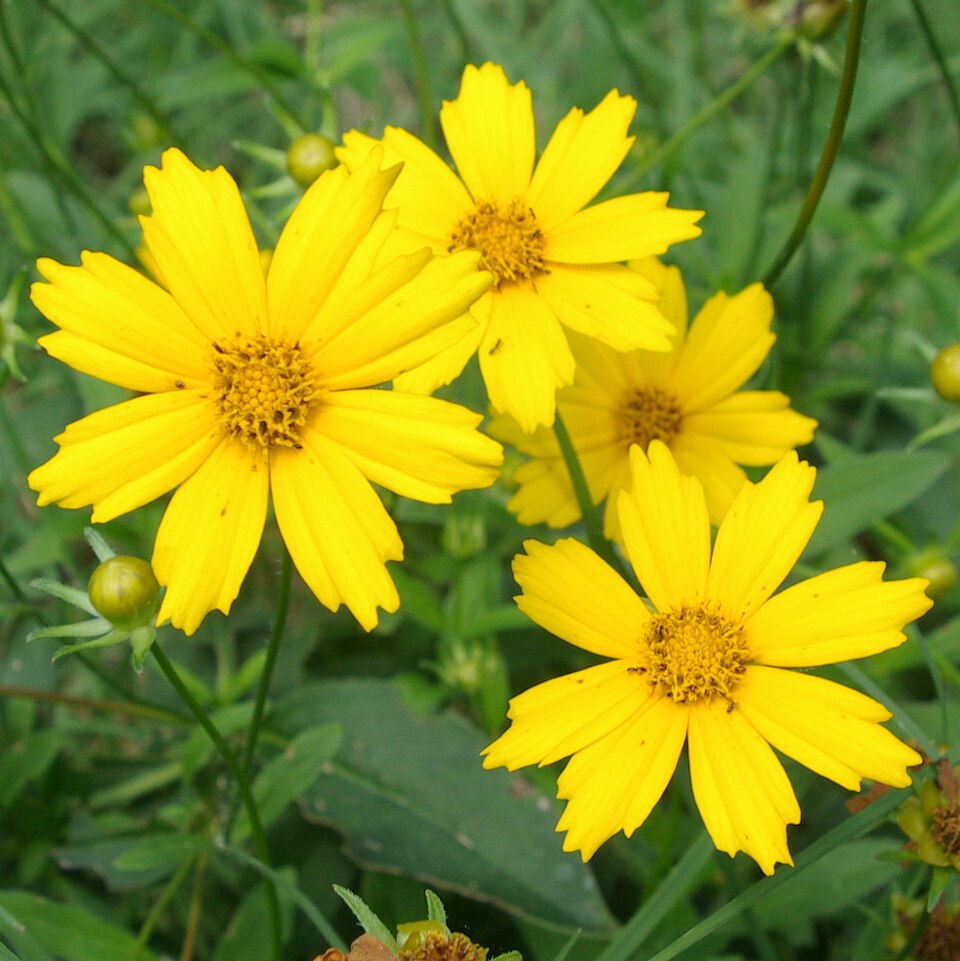

At a glance
- Life cycle
- Herbaceous perennial
- Leaves
- Deciduous
- Bloom
- April to June
- Fruiting season
- Summer
Recorded in 3 West Virginia counties.
Natural habitats
Places it grows wild. Not a planting requirement. Each habitat page lists the plants and wildlife also found there.
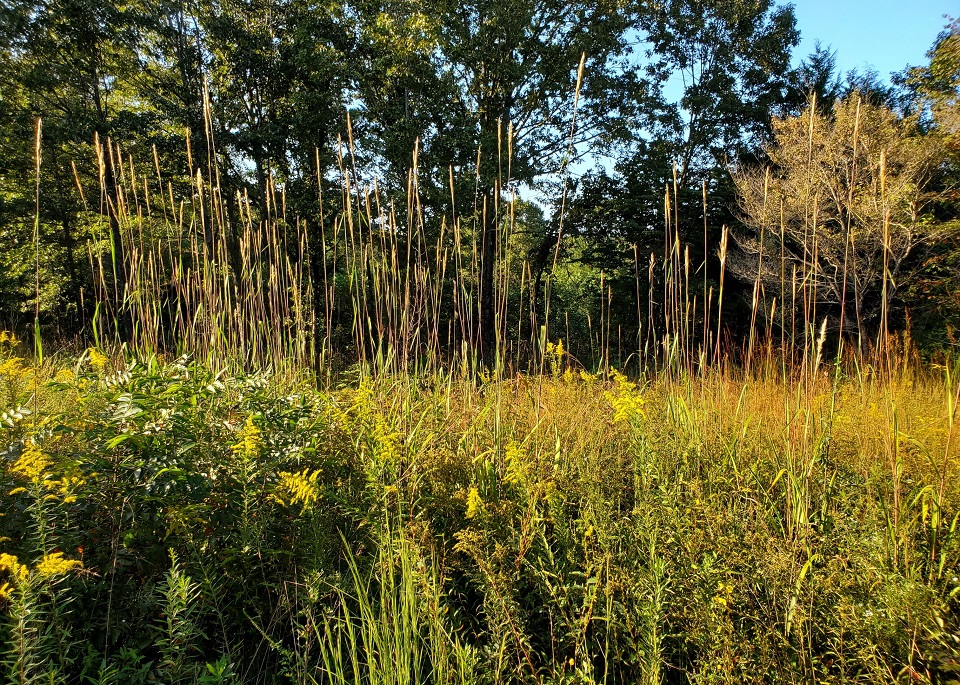
Roadsides, fields and disturbed ground
Ground opened by people: roadsides, old fields, pastures, fencerows and lots.
Care
- Avoid persistently wet, poorly drained soil.
- Optional bloom tip: Removing spent flowers can encourage more blooms.
Who uses this plant?
 6CaterpillarsGenus host records with ranges including WV
Genus host records with ranges including WV · Coreopsis
- Homoeosoma electellaSunflower Moth
- Pleuroprucha insulsariaCommon Tan Wave
- Suleima helianthanaSunflower Bud Moth
- Synchlora aerataWavy-Lined Emerald, Camouflaged Looper
- Tornos scolopacinariaDimorphic Gray
- Agonopterix atrodorsella
 46BeesSoutheastern regional records
Southeastern regional records · Coreopsis
Individual names are not available yet.
Noori, Seltmann & Orr 2026, A curated and integrated dataset for exploring global bee-plant interactions (GloBI), Zenodo, CC BY 4.0 15Specialist beesPollen specialists
Pollen specialists · Coreopsis
- Andrena beameri
- Andrena duplicata
- Andrena gardineri
- Colletes birkmanni
- Dianthidium curvatum
- Dianthidium simile
- Megachile parallela
- Megachile pugnata
- Megachile xylocopoides
- Melissodes coreopsis
Show all 15
- Melissodes subillatus
- Melissodes wheeleri
- Paranthidium jugatorium
- Perdita foveata
- Protandrena albitarsis
 —BirdsRecorded genus food-resource interactions; not a state feeding claim
 1AntsRecorded seed interactions
- Solenopsis invicta
Solenopsis invicta: Seed predation.
No records yet · Beetles · Flies · Adult butterflies / moths · Other wasps · Other insects
Plant details
- Family
- Asteraceae
- Hardiness
- Zones 4a–9b
- Soil pH
- Acidic to neutral
- Flower color
- Yellow or orange
- Growth rate
- Moderate
- Growth habit
- Single crown
- Foliage color
- Green
- Fruit begins
- Summer
- Fruit ends
- Summer
Safety has not been reviewed for this plant; check toxicity and thorns before planting.
Deadhead to limit self-seeding and encourage flowers. Rich soil can produce floppy growth; divide crowded clumps. NC State Extension
Growing sources and scope
- Bloom · “April to June” · Weakley, Flora of the Southeastern United States (2025), Carolinas & Georgia edition (ranked first; USDA PLANTS, Prairie Moon 2026 Cultural Guide differ) · Carolinas and Georgia
- Flower color · “Yellow or orange” · NC Extension Plant Toolbox (ranked first; USDA PLANTS, Prairie Moon 2026 Cultural Guide differ)
- Foliage color · “Green” · USDA PLANTS · Nationwide species characteristics; local growing conditions may vary
- Fruit begins · “Summer” · NC Extension Plant Toolbox (ranked first; USDA PLANTS differs) · Species profile fruit display season; not a local ripening date
- Fruit ends · “Summer” · NC Extension Plant Toolbox (ranked first; USDA PLANTS differs) · Species profile fruit display season; not a local ripening date
- Growth habit · “Single crown” · USDA PLANTS · Nationwide species characteristics; local growing conditions may vary
- Growth rate · “Moderate” · USDA PLANTS · Nationwide species characteristics; local growing conditions may vary
- Hardiness · “Zones 4a–9b” · NC Extension Plant Toolbox
- Height · “1–3 feet” · NC Extension Plant Toolbox (ranked first; Tennessee Smart Yards, USDA PLANTS, Minnesota Wildflowers, Prairie Moon 2026 Cultural Guide differ)
- Leaves · “Deciduous” · NC Extension Plant Toolbox
- Life cycle · “Perennial” · NC Extension Plant Toolbox
- Light · “Full sun (6 or more hours of direct sunlight a day); Partial shade (direct sunlight only part of the day, 2-6 hours)” · NC Extension Plant Toolbox (ranked first; Tennessee Smart Yards, Prairie Moon 2026 Cultural Guide differ)
- Soil · “Moist; Occasionally dry” · NC Extension Plant Toolbox (ranked first; Tennessee Smart Yards, Prairie Moon 2026 Cultural Guide differ)
- Soil pH · “Acidic to neutral” · NC Extension Plant Toolbox
- Spread · “1–2 feet” · NC Extension Plant Toolbox
Recognizing it
Opposite narrow leaves sometimes have side lobes. Flower heads usually carry eight notched yellow rays. Identification source
Also known as
Lance Leaf Tickseed
Conservation status
| West Virginia rank | S4 |
|---|---|
| Global rank | G5 |
| WV status | Not verified |
| Federal status | Not verified |
Will it fit your yard?
Check this plant against your county, sun and soil moisture. Conditions are checked in your browser.
Growing cautions
- Self-seeds aggressively. Can be an aggressive self-seeder and get weedy if not maintained. NC State Extension Plant Toolbox
- Needs good drainage. Avoid persistently wet, poorly drained soil. NC State Extension Plant Toolbox
For planning only; these do not change the score or Fit.
Sources
- NatureServe Explorer
- USDA PLANTS
- Vascular Plants of North Carolina (NC Natural Heritage Program)
- Weakley, Flora of the Southeastern United States (2025)
- West Virginia occurrence source
- Shropshire & Tallamy 2025, Lepidoptera of North America north of Mexico, ZooKeys 1261 (ODbL)
- Noori, Seltmann & Orr 2026, A curated and integrated dataset for exploring global bee-plant interactions (GloBI), Zenodo, CC BY 4.0
- Smith, Bachelder, Russell, Morales, Mosher & Seltmann 2024, Bee-Specialization-Modeling v0.6.1 (specialist host table compiled from J. Fowler's pollen specialist bee lists), Zenodo, CC BY 4.0
- Hurlbert, Olsen, Sawyer & Winner 2021, Avian Diet Database, Scientific Data 8: 260 (CC0)
- Narango, Tallamy & Shropshire 2020, Few keystone plant genera support the majority of Lepidoptera species, Nature Communications
- NC State Extension