

Common Snowberry
Symphoricarpos albus
Native to West Virginia. How scores work Is it native here?
Profile 100%
- Height
- 3–6 feet
- Spread
- 3–6 feet
- Light
- Full sun, Partial shade
- Soil moisture
- Somewhat dry to moist
Space about 4.5 ft apart from its recorded spread, about 5 per 100 sq ft. Enter your bed size for a count
Will it fit your yard?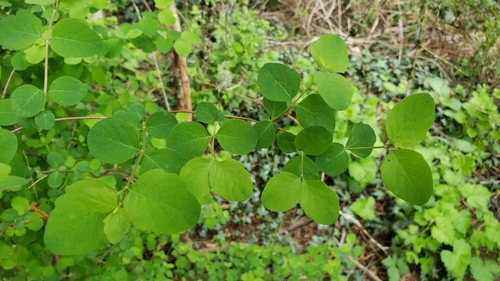
Rare or protected plant. Specialist conservation planting; excluded from routine garden suggestions. Plant caution source
Hidden from default planting suggestions. Wildlife value and native status remain unchanged.
At a glance
- Life cycle
- Woody perennial
- Leaves
- Deciduous
- Bloom
- Early summer
- Fruiting season
- Summer to fall
County records are not available.
Who uses this plant?
 25CaterpillarsGenus host records with ranges including WV
Genus host records with ranges including WV · Symphoricarpos
- Hemaris diffinisSnowberry Clearwing
- Hemaris thysbeHummingbird Clearwing
- Amphipyra pyramidoidesMiranda Underwing, Copper Underwing, Copper Amphipyra
- Apamea amputatrixYellow-Headed Cutworm Moth
- Archips rileyanaSouthern Ugly-Nest Caterpillar Moth
- Automeris ioIo Moth
- Callizzia amorataGray Scoopwing
- Campaea perlataPale Beauty, Fringed Looper
- Choristoneura rosaceanaOblique-Banded Leafroller Moth, Rosaceous Leaf Roller
- Dysstroma citrataDark Marbled Carpet
Show all 25
- Dysstroma truncataMarbled Carpet
- Ectropis crepusculariaThe Small Engrailed, Saddleback Looper
- Euphydryas phaetonThe Baltimore, The Black Checker
- Eurois occultaGreat Grey Dart, Great Brocade
- Haploa leconteiLeconte's Haploa
- Harrisimemna trisignataHarris's Three-Spot
- Herpetogramma pertextalisBold-Feathered Grass Moth
- Hesperumia sulphurariaSulphur Moth
- Hyalophora cecropiaCecropia Silkmoth, Cecropia Moth
- Hyphantria cuneaFall Webworm
- Lomographa vestaliataWhite Spring Moth
- Melanchra pictaPainted Arches, Zebra Caterpillar Moth
- Orgyia leucostigmaWhite-Marked Tussock Moth
- Palthis asopialisFaint-Spotted Palthis
- Polia purpurissataPurple Arches
 4BeesSoutheastern regional records
Southeastern regional records · Symphoricarpos
Individual names are not available yet.
Noori, Seltmann & Orr 2026, A curated and integrated dataset for exploring global bee-plant interactions (GloBI), Zenodo, CC BY 4.0 0Specialist beesPollen specialists
 17BirdsRecorded genus food-resource interactions; not a state feeding claim
Recorded genus food-resource interactions; not a state feeding claim · Symphoricarpos
- Bonasa umbellusRuffed Grouse
- Calcarius lapponicusLapland Longspur
- Callipepla californicaCalifornia Quail
- Catharus fuscescensVeery
- Catharus guttatusHermit Thrush
- Catharus ustulatusSwainson's Thrush
- Centrocercus urophasianusGreater Sage-Grouse
- Coccothraustes vespertinusEvening Grosbeak
- Dendragapus obscurusDusky Grouse
- Falcipennis canadensisSpruce Grouse
Show all 17
- Ixoreus naeviusVaried Thrush
- Oreortyx pictusMountain Quail
- Perdix perdixGray Partridge
- Pinicola enucleatorPine Grosbeak
- Pipilo maculatusSpotted Towhee
- Turdus migratoriusAmerican Robin
- Tympanuchus phasianellusSharp-tailed Grouse
Direct food only: birds recorded eating this genus across North America. Caterpillars on host plants also feed nesting birds. NC Native Plant Society: butterfly gardening
No records yet · Ants · Beetles · Flies · Adult butterflies / moths · Other wasps · Other insects
Plant details
- Family
- Caprifoliaceae
- Hardiness
- Zones 3a–7b
- Soil pH
- Neutral
- Flower color
- Pink or white
- Growth rate
- Moderate
- Growth habit
- Spreads by rhizomes
- Foliage color
- Green
- Fruit begins
- Summer
- Fruit ends
- Fall
What its natural habitat tells you
Growing sources and scope
- Bloom · “Early summer” · USDA PLANTS · Nationwide species characteristics; local growing conditions may vary
- Flower color · “Pink or white” · NC Extension Plant Toolbox (ranked first; USDA PLANTS differs)
- Foliage color · “Green” · USDA PLANTS · Nationwide species characteristics; local growing conditions may vary
- Fruit begins · “Summer” · USDA PLANTS · Nationwide species characteristics; local growing conditions may vary
- Fruit ends · “Fall” · USDA PLANTS · Nationwide species characteristics; local growing conditions may vary
- Growth habit · “Spreads by rhizomes” · USDA PLANTS · Nationwide species characteristics; local growing conditions may vary
- Growth rate · “Moderate” · USDA PLANTS · Nationwide species characteristics; local growing conditions may vary
- Hardiness · “Zones 3a–7b” · NC Extension Plant Toolbox
- Height · “3–6 feet” · NC Extension Plant Toolbox (ranked first; USDA PLANTS, Minnesota Wildflowers differ)
- Leaves · “Deciduous” · NC Extension Plant Toolbox
- Life cycle · “Woody perennial” · NC Extension Plant Toolbox
- Light · “Full sun (6 or more hours of direct sunlight a day); Partial shade (direct sunlight only part of the day, 2-6 hours)” · NC Extension Plant Toolbox
- Soil · “Moist; Occasionally dry; Occasionally wet” · NC Extension Plant Toolbox
- Soil pH · “Neutral” · NC Extension Plant Toolbox
- Spread · “3–6 feet” · NC Extension Plant Toolbox
Also known as
Pacific Snowberry; Snowberry
Conservation status
| West Virginia rank | S2 |
|---|---|
| Global rank | G5 |
| WV status | Not verified |
| Federal status | Not verified |
Will it fit your yard?
Check this plant against your county, sun and soil moisture. Conditions are checked in your browser.
Growing cautions
- Spreads by rhizomes. USDA PLANTS lists its growth form as rhizomatous. USDA PLANTS
For planning only; these do not change the score or Fit.
Sources
- NatureServe Explorer
- USDA PLANTS
- West Virginia occurrence source
- Shropshire & Tallamy 2025, Lepidoptera of North America north of Mexico, ZooKeys 1261 (ODbL)
- Noori, Seltmann & Orr 2026, A curated and integrated dataset for exploring global bee-plant interactions (GloBI), Zenodo, CC BY 4.0
- Smith, Bachelder, Russell, Morales, Mosher & Seltmann 2024, Bee-Specialization-Modeling v0.6.1 (specialist host table compiled from J. Fowler's pollen specialist bee lists), Zenodo, CC BY 4.0
- Hurlbert, Olsen, Sawyer & Winner 2021, Avian Diet Database, Scientific Data 8: 260 (CC0)
- Narango, Tallamy & Shropshire 2020, Few keystone plant genera support the majority of Lepidoptera species, Nature Communications