

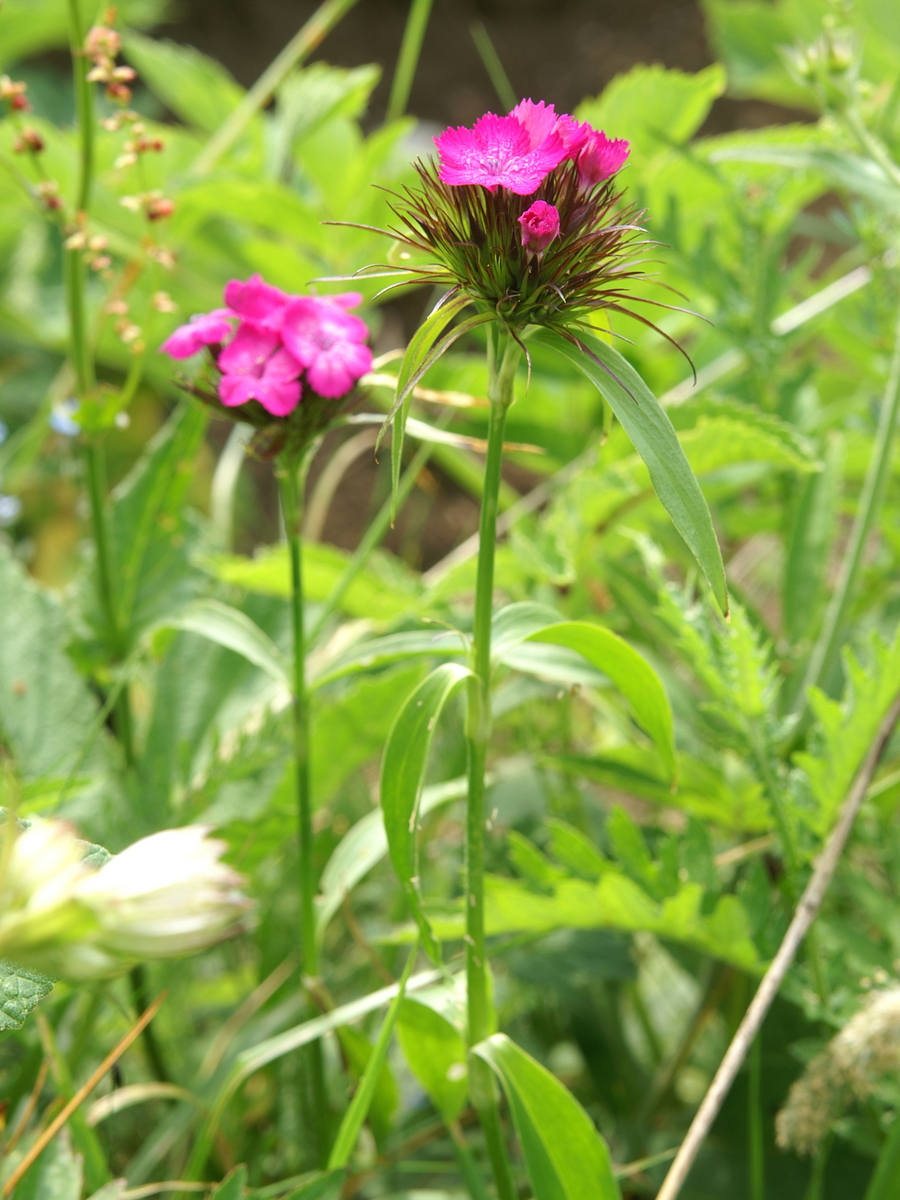
Sweet William
Dianthus barbatus
—
Not native
Not native to West Virginia. How scores work Is it native here?
Profile 71%
- Height
- 1–2 feet
- Spread
- 6 inches–1 foot
- Light
- Full sun, Partial shade
- Soil moisture
- Usually moist

At a glance
- Life cycle
- Annual, biennial or perennial
Not yet recorded · Leaves · Bloom
This plant is missing most of its facts, so Quercus is looking them up in old botany books.
Recorded in 5 West Virginia counties.
Ecological relationships
Who uses this plant?
 12CaterpillarsGenus host records with ranges including WV
Genus host records with ranges including WV · Dianthus
- Chloridea virescensTobacco Budworm Moth
- Chlorochlamys chloroleucariaBlackberry Looper Moth
- Choristoneura rosaceanaOblique-Banded Leafroller Moth, Rosaceous Leaf Roller
- Hadena capsularisCapsule Moth
- Helicoverpa zeaCorn Earworm Moth
- Papaipema nebrisStalk Borer
- Platynota flavedanaBlack-Shaded Platynota
- Pyrrharctia isabellaIsabella Tiger Moth, Banded Woolybear
- Spodoptera frugiperdaFall Armyworm Moth
- Spodoptera ornithogalliYellow-Striped Armyworm Moth, Cotton Cutworm
Show all 12
- Trichoplusia niNi Moth, Cabbage Looper Moth
- Caryocolum pullatella
 —BeesSoutheastern regional records
 —Specialist beesPollen specialists
 —BirdsRecorded genus food-resource interactions; not a state feeding claim
Growing and identification
Plant details
- Family
- Caryophyllaceae
- Hardiness
- Zones 3a–9b
- Soil pH
- Neutral
- Flower color
- Pink, purple, red, variegated or white
What its natural habitat tells you
Safety has not been reviewed for this plant; check toxicity and thorns before planting.
Growing sources and scope
- Flower color · “Pink, purple, red, variegated or white” · NC Extension Plant Toolbox
- Hardiness · “Zones 3a–9b” · NC Extension Plant Toolbox
- Height · “1–2 feet” · NC Extension Plant Toolbox (ranked first; Minnesota Wildflowers differs)
- Life cycle · “Annual, biennial or perennial” · NC Extension Plant Toolbox (ranked first; Minnesota Wildflowers differs)
- Light · “Full sun (6 or more hours of direct sunlight a day); Partial shade (direct sunlight only part of the day, 2-6 hours)” · NC Extension Plant Toolbox
- Soil · “Moist” · NC Extension Plant Toolbox
- Soil pH · “Neutral” · NC Extension Plant Toolbox
- Spread · “6 inches–1 foot” · NC Extension Plant Toolbox
Conservation status
| West Virginia rank | SNA |
|---|---|
| Global rank | GNR |
| WV status | Not verified |
| Federal status | Not verified |
Native alternatives
Find natives for your gardenSources
- NatureServe Explorer
- USDA PLANTS
- West Virginia occurrence source
- Shropshire & Tallamy 2025, Lepidoptera of North America north of Mexico, ZooKeys 1261 (ODbL)
- Noori, Seltmann & Orr 2026, A curated and integrated dataset for exploring global bee-plant interactions (GloBI), Zenodo, CC BY 4.0
- Smith, Bachelder, Russell, Morales, Mosher & Seltmann 2024, Bee-Specialization-Modeling v0.6.1 (specialist host table compiled from J. Fowler's pollen specialist bee lists), Zenodo, CC BY 4.0
- Hurlbert, Olsen, Sawyer & Winner 2021, Avian Diet Database, Scientific Data 8: 260 (CC0)
- Narango, Tallamy & Shropshire 2020, Few keystone plant genera support the majority of Lepidoptera species, Nature Communications