

Bird
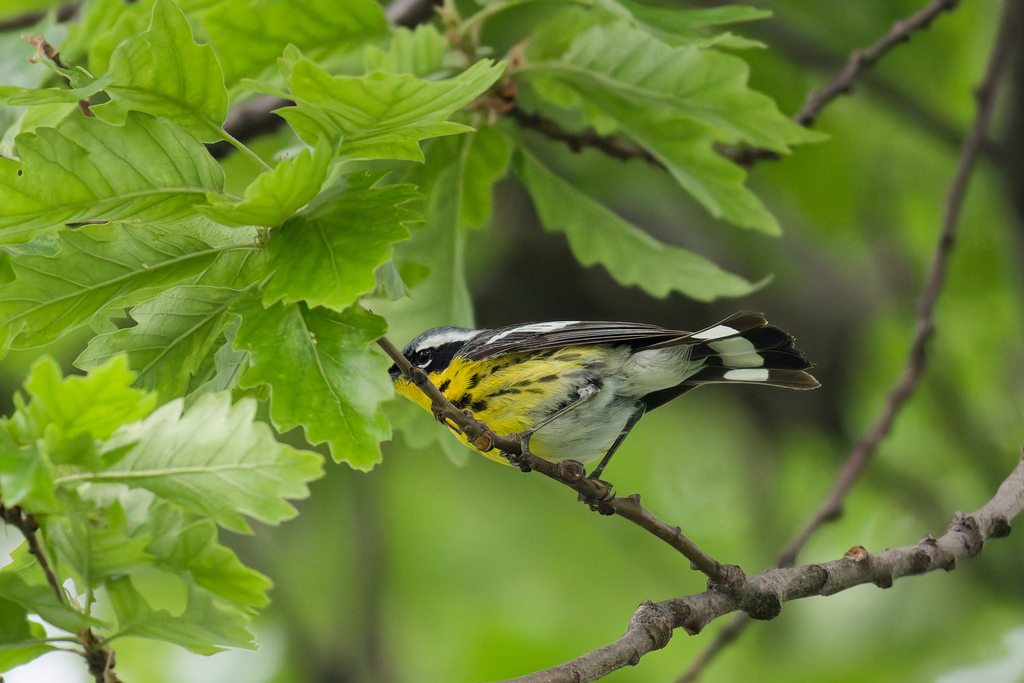
Magnolia Warbler
Dendroica magnolia
A summer resident that nests in Virginia. Found in all 133 counties and cities, across 12 habitats.
- Here
- Summer and on migration
- Nesting
- Nests here
- Range
- All 133 counties and cities
- Habitats
- 12
At a glance
- Group
- Birds
- Here
- Summer and on migration
- Nesting
- Nests here
- Range
- All 133 counties and cities
- Habitats
- 12
- Habitat models
- Summer
Where it lives
The places its habitat model includes. It is not found everywhere a habitat occurs.
Habitats in Virginia 12
Each habitat page lists the plants and wildlife also found there.
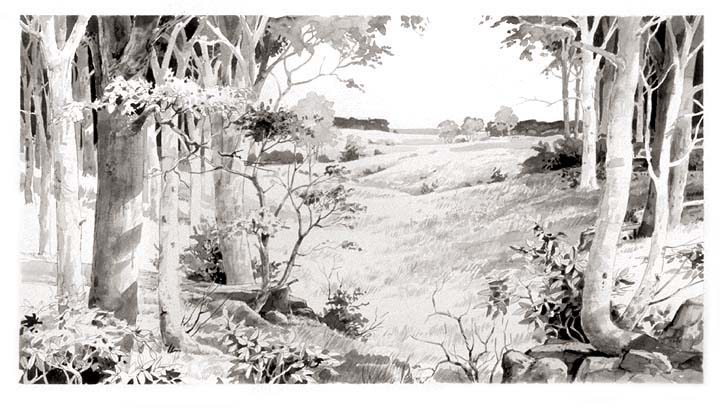
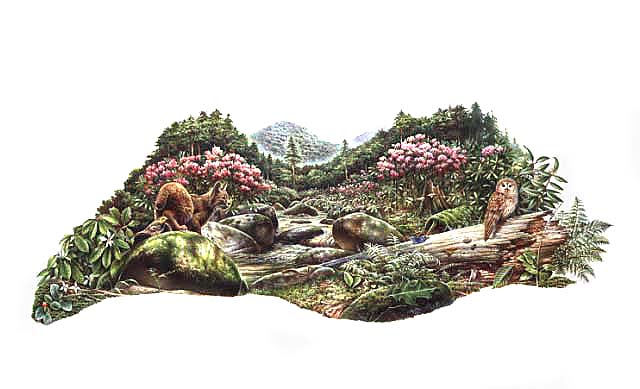
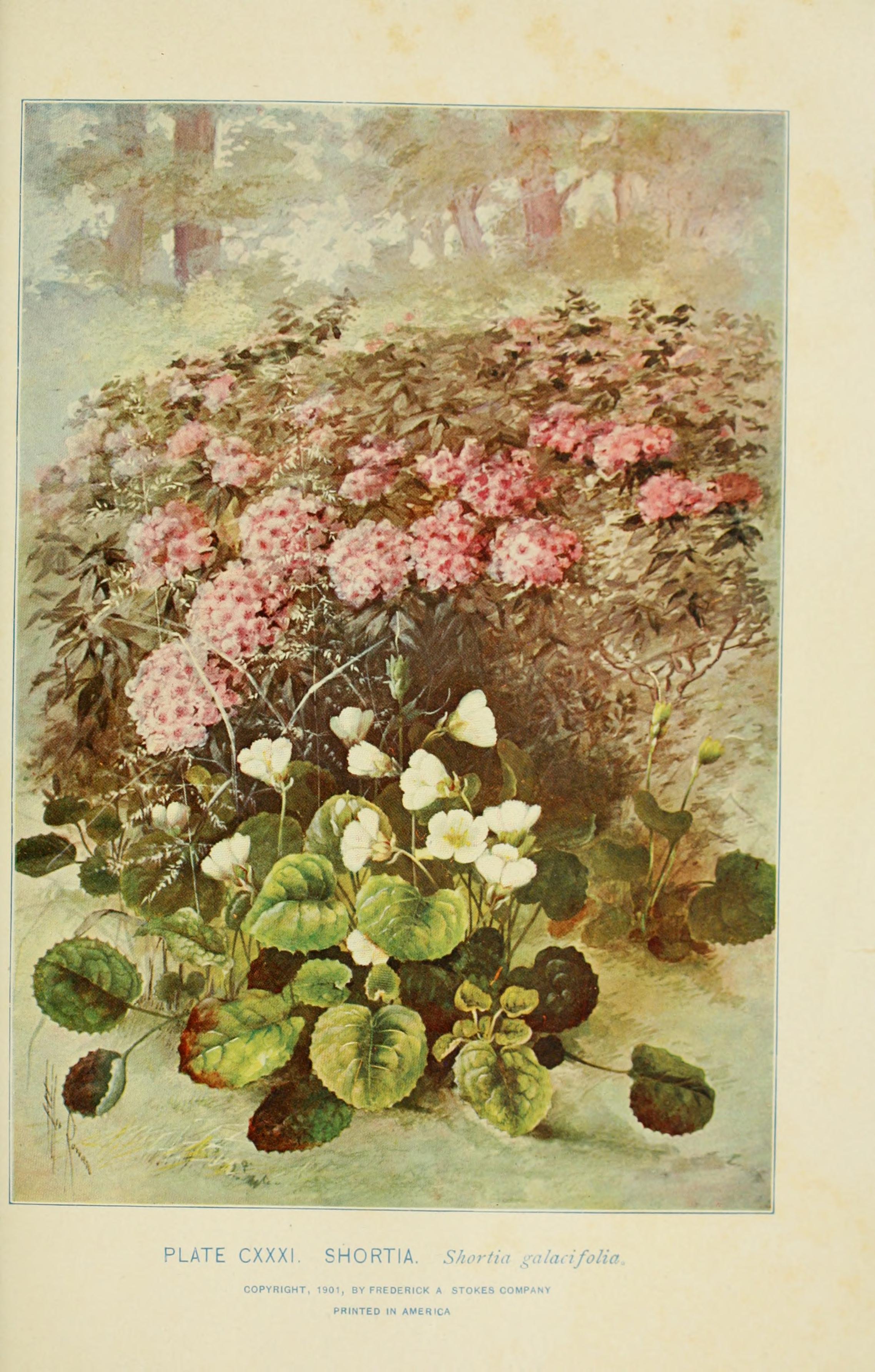
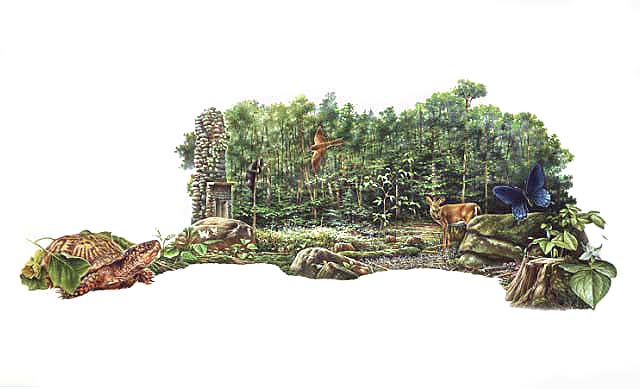
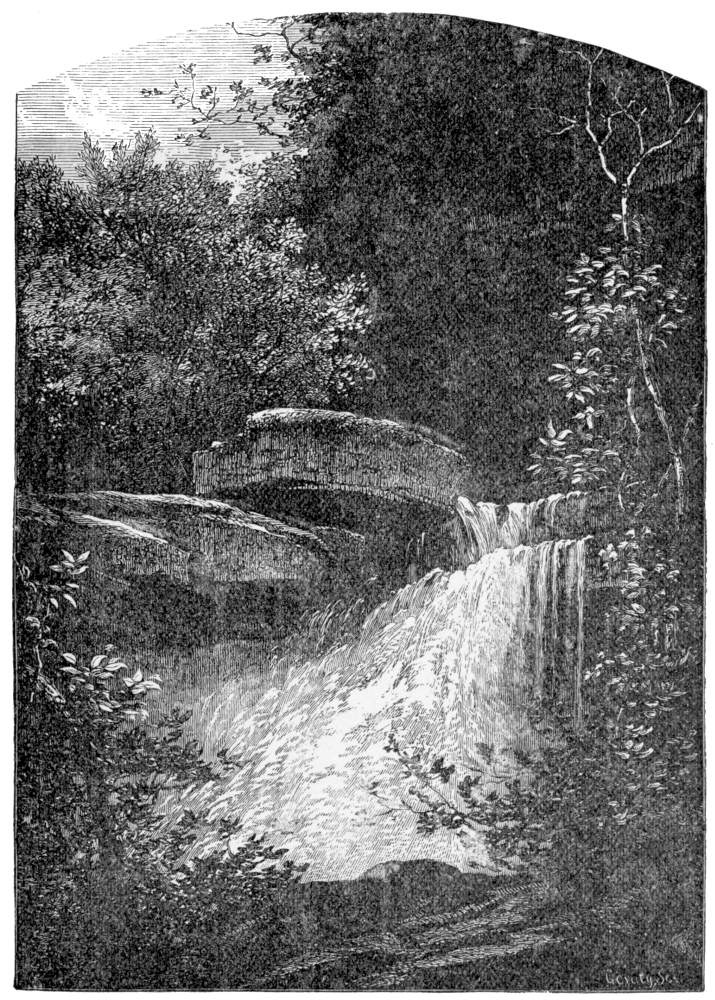
Streams, rivers and their banks
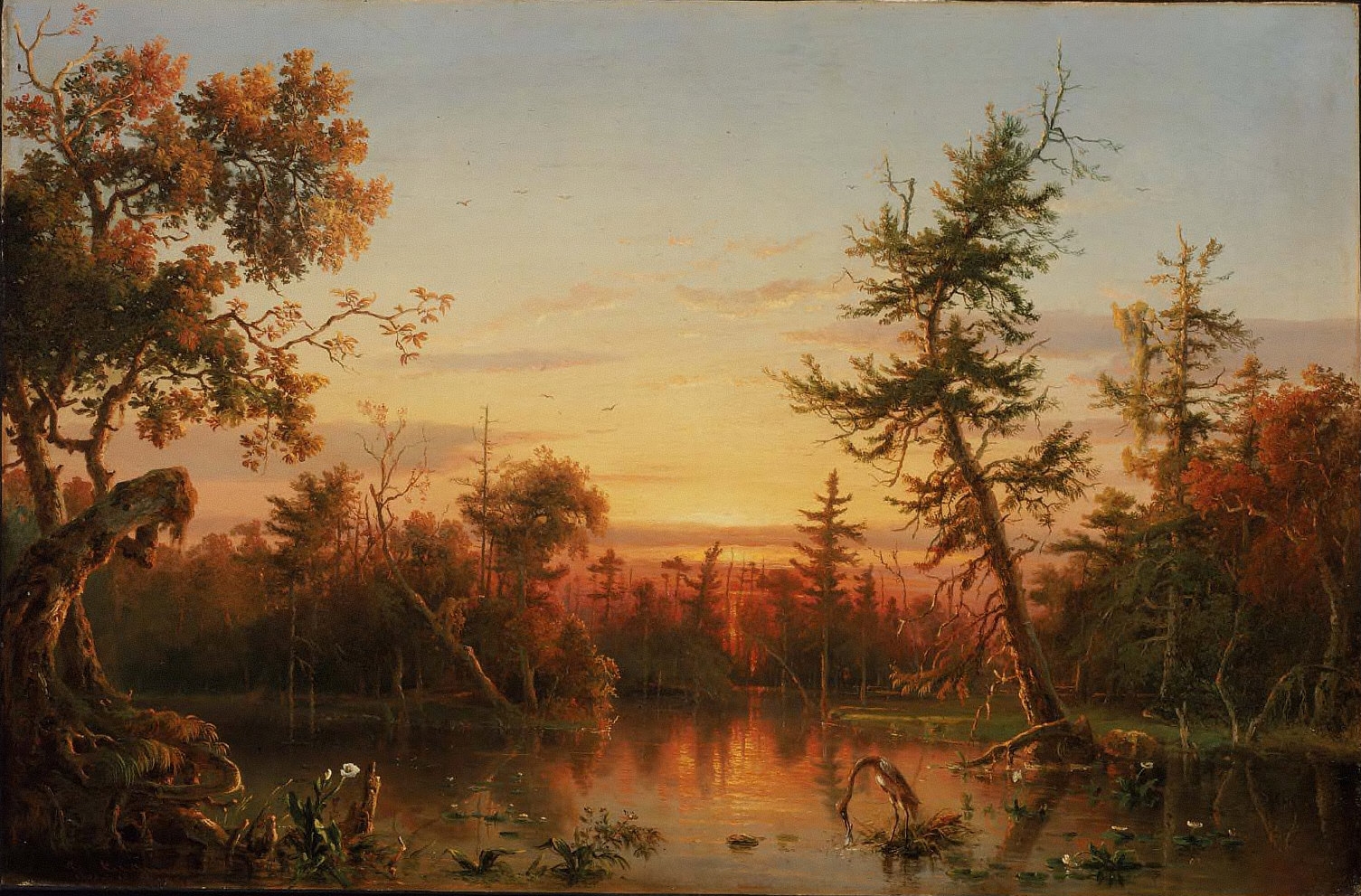
Disturbed and introduced wetlands
Wet ground taken over by weedy or introduced plants after disturbance, such as common reed, Chinese tallow or tamarisk stands; the upland counterpart is roadsides, fields and disturbed ground.
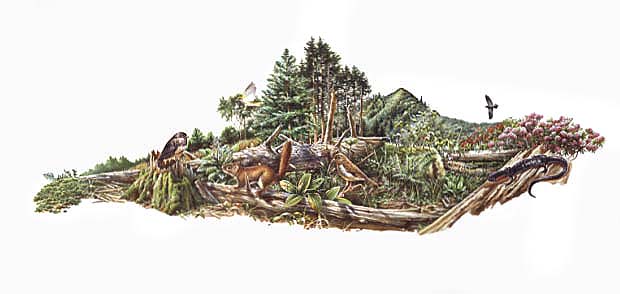
Forests and open woodlands on dry ridges and slopes, often oak or pine.
Floodplain and bottomland forests
Forests on low ground beside rivers and streams that flood from time to time.
Wet, open, peaty mountain wetlands fed by seepage, often with sphagnum moss.
Tree plantations and managed pine
Planted or intensively managed stands of pine or hardwoods grown for timber; a land use rather than a natural community.
Other habitats in its models (5)
Land cover, or classes with no habitat page in Virginia.
- Recently Logged Areas Summer.
- Recently Burned Summer.
- Recently Burned Forest Summer.
- Recently Burned Shrubland Summer.
- Introduced Upland Vegetation - Shrub Summer.
Seasons in Virginia
- Migratory: does not nest here, in 125 of 133 counties and cities.
- Summer: nests here, in 26 of 133 counties and cities.
Also found in this habitat
Plants 479
Plants named in NatureServe descriptions of these habitats that grow in Virginia. Shared habitat, not food.
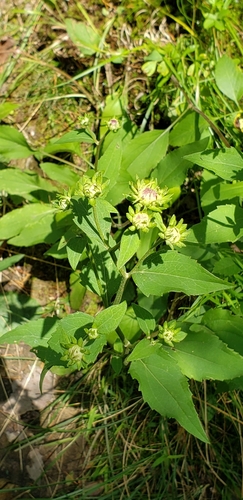
- Sun-facing ConeflowerRudbeckia heliopsidis
- Southeastern Cut Leaf Cone FlowerRudbeckia laciniata var. digitata
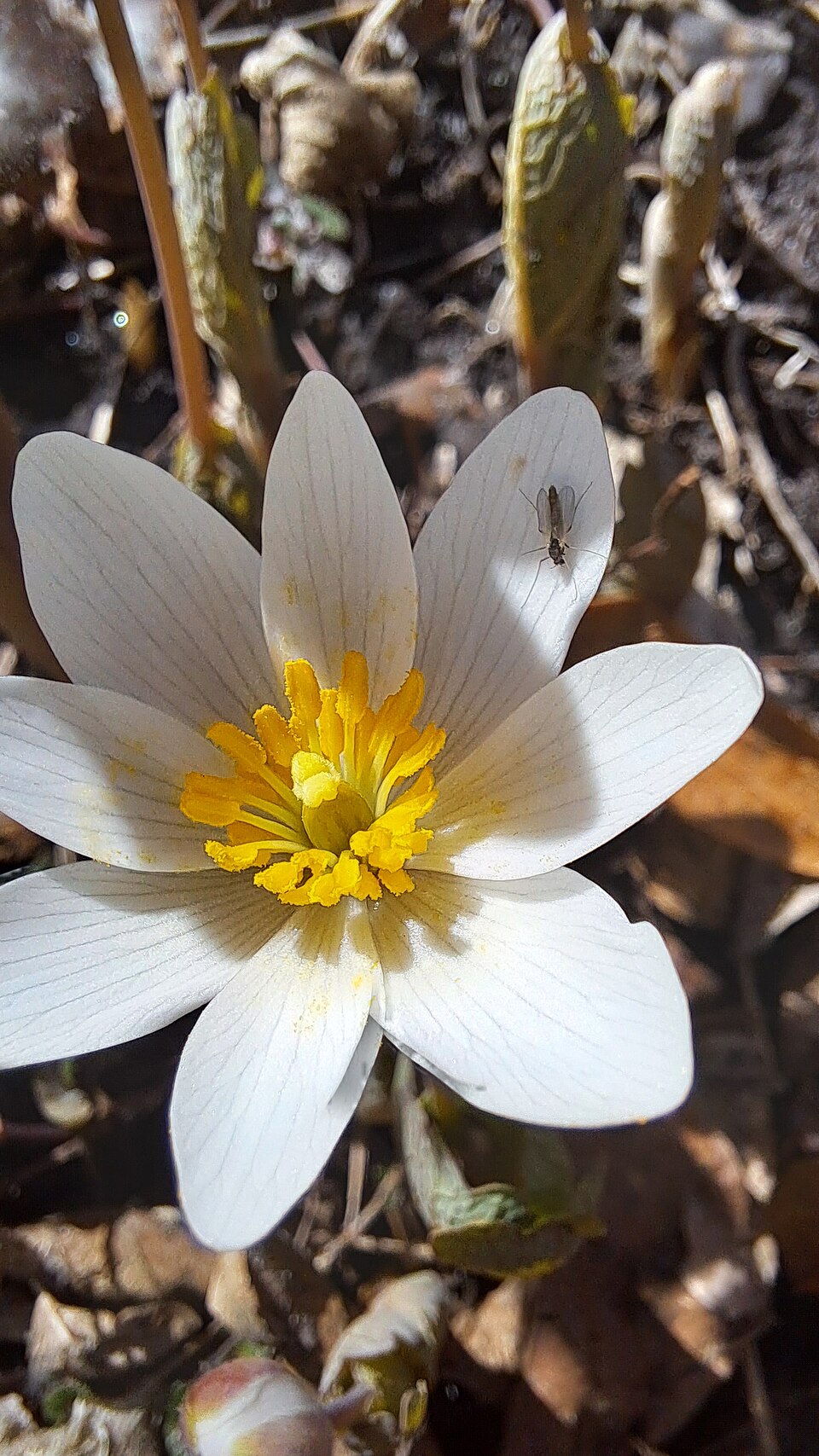
- BloodrootSanguinaria canadensis
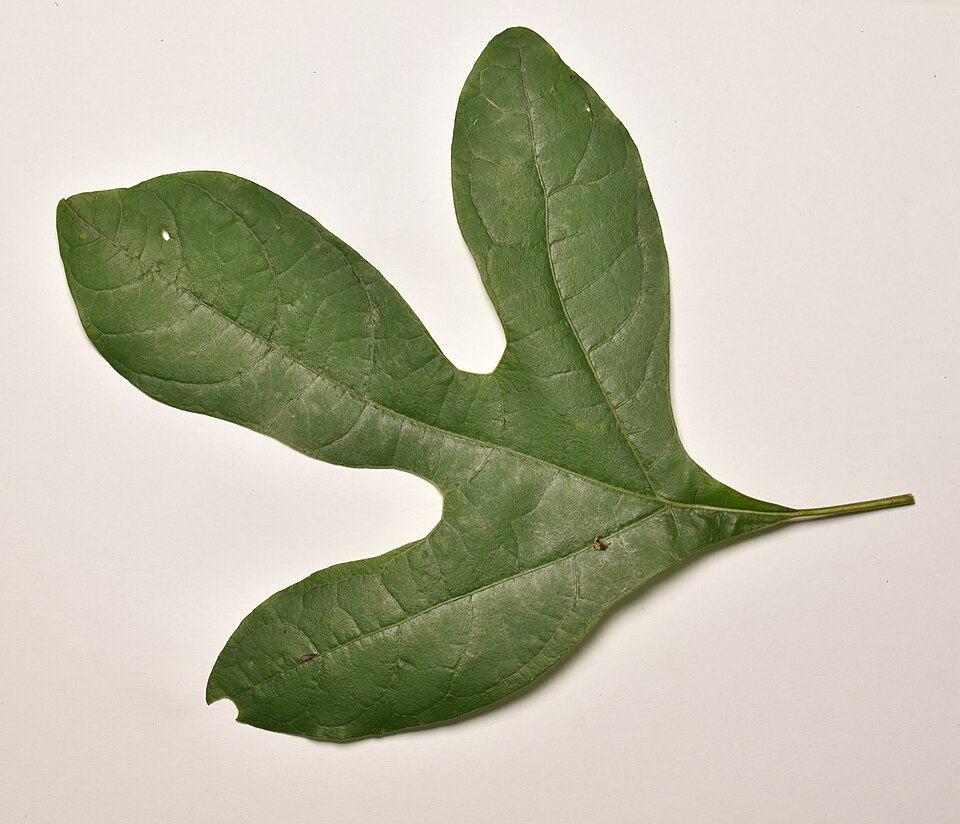
- SassafrasSassafras albidum
- False MelicSchizachne purpurascens
- Rock SkullcapScutellaria saxatilis
- Eastern Hay-scented FernSitobolium punctilobulum
- American Mountain-ashSorbus americana
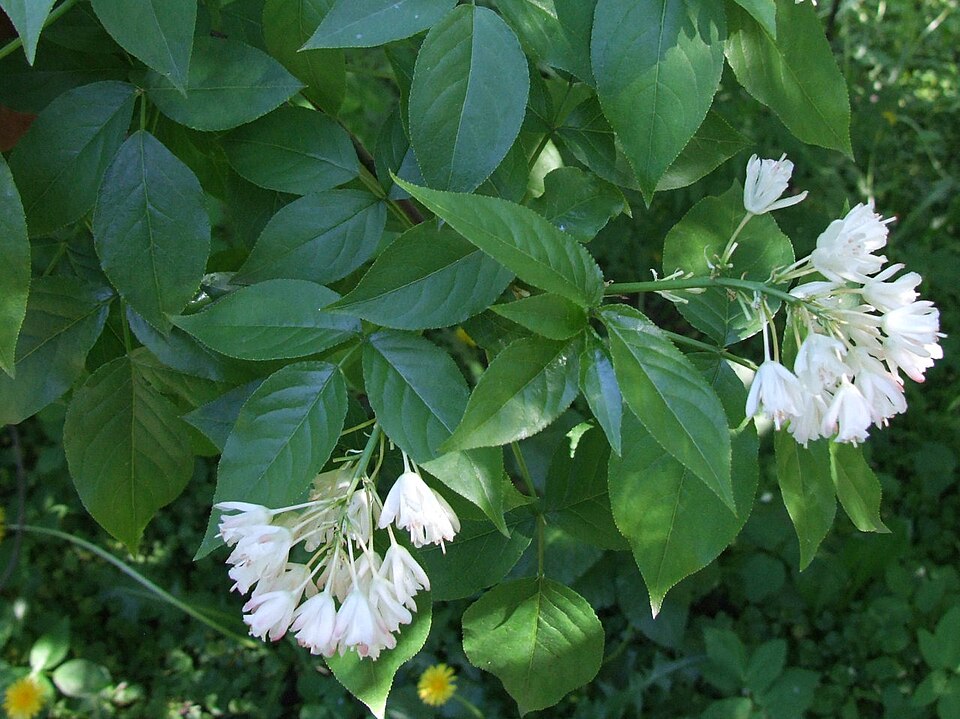
- American BladdernutStaphylea trifolia
- Round Leaf DogwoodSwida rugosa
- Canada YewTaxus canadensis
- Northern White CedarThuja occidentalis
- Piedmont FoamflowerTiarella cordifolia
- American BasswoodTilia americana
- StarflowerTrientalis borealis
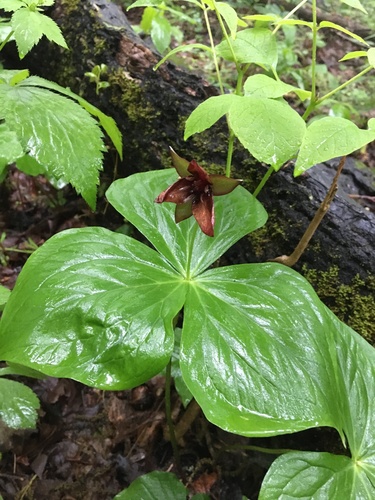
- Painted TrilliumTrillidium undulatum
- Barksdale TrilliumTrillium sulcatum
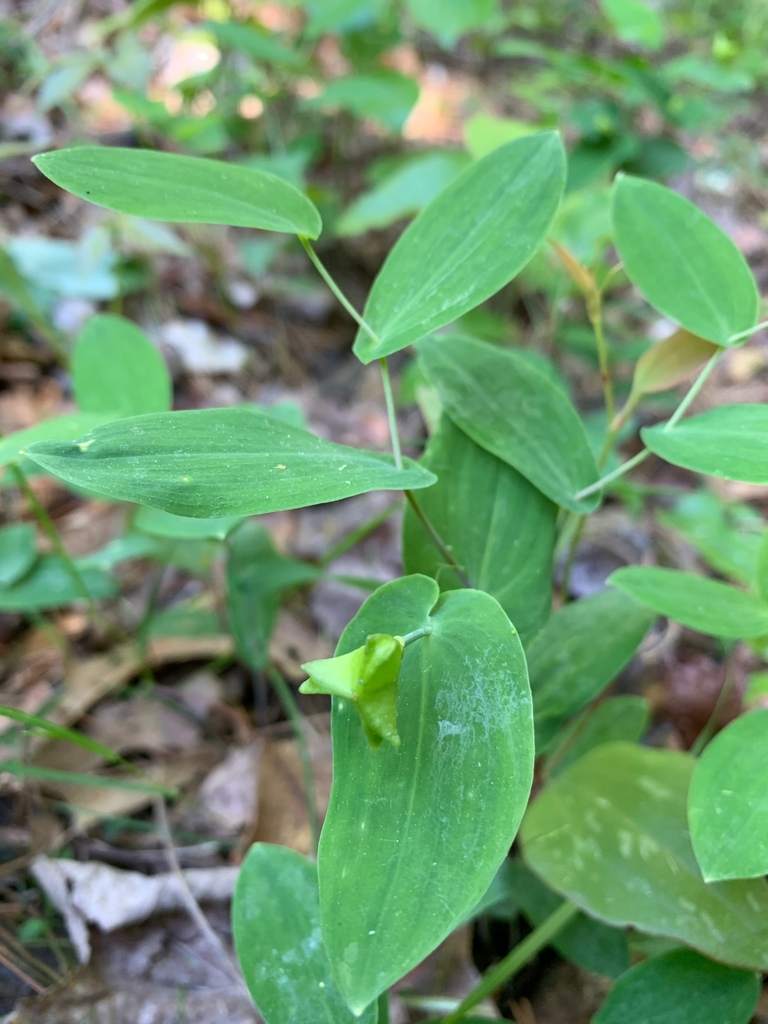
- Perfoliate BellwortUvularia perfoliata
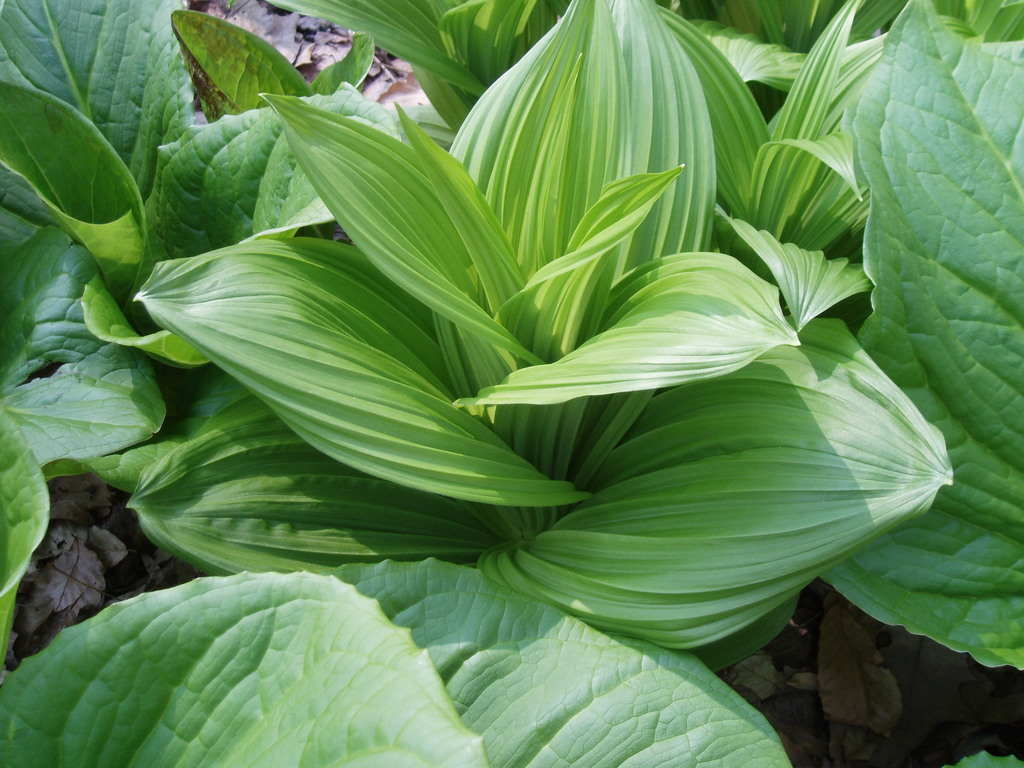
- Green False-helleboreVeratrum viride
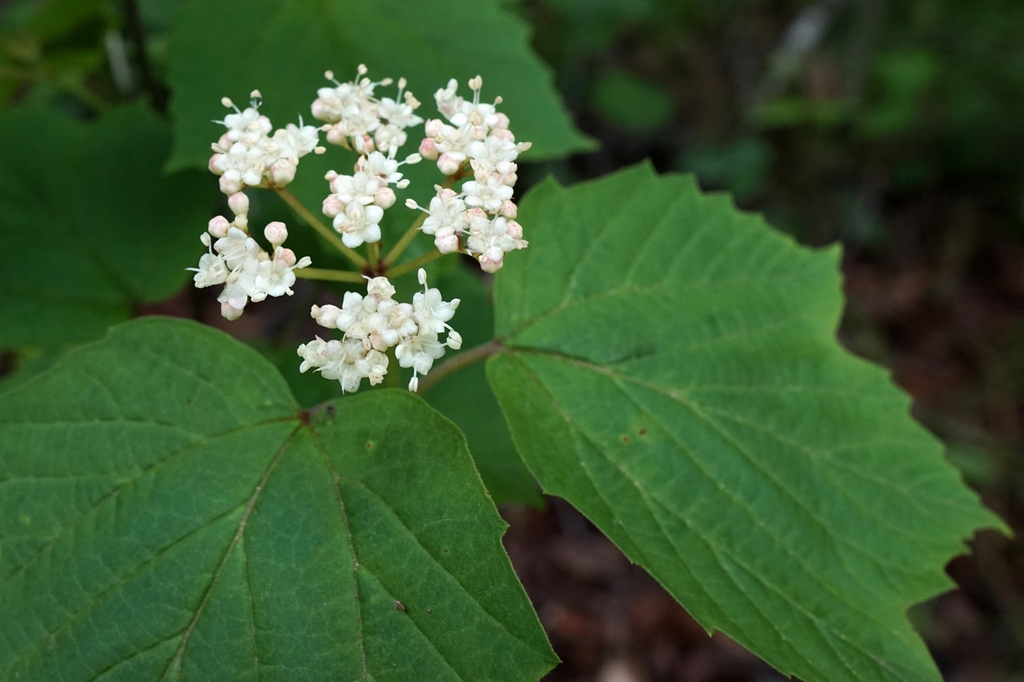
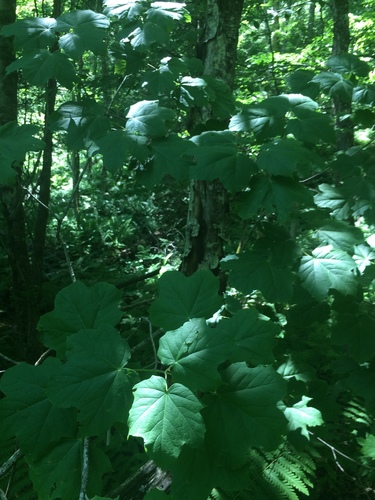
- Mapleleaf ViburnumViburnum acerifolium
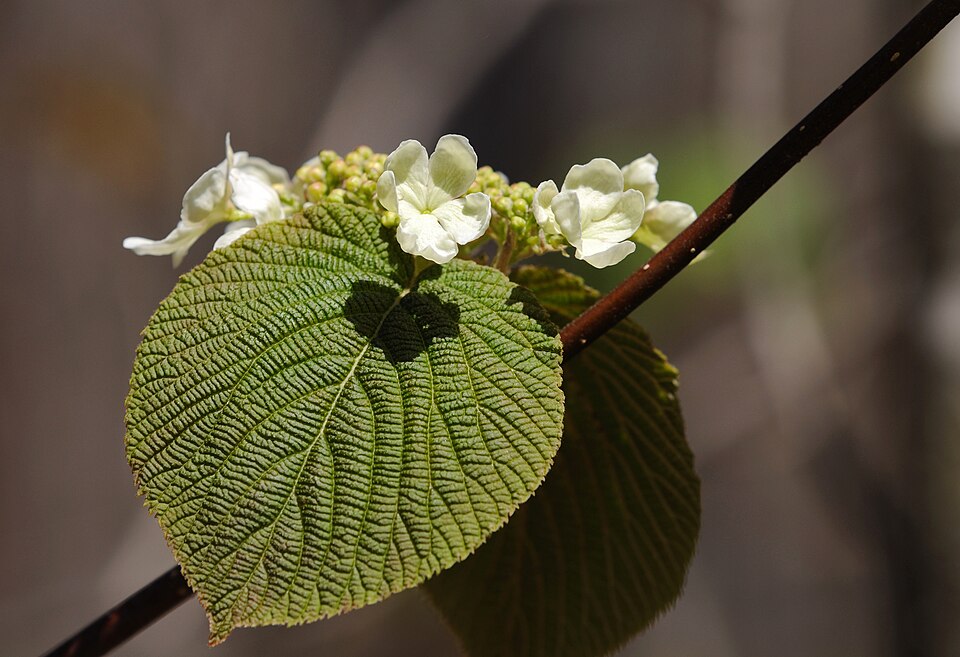
- HobblebushViburnum lantanoides
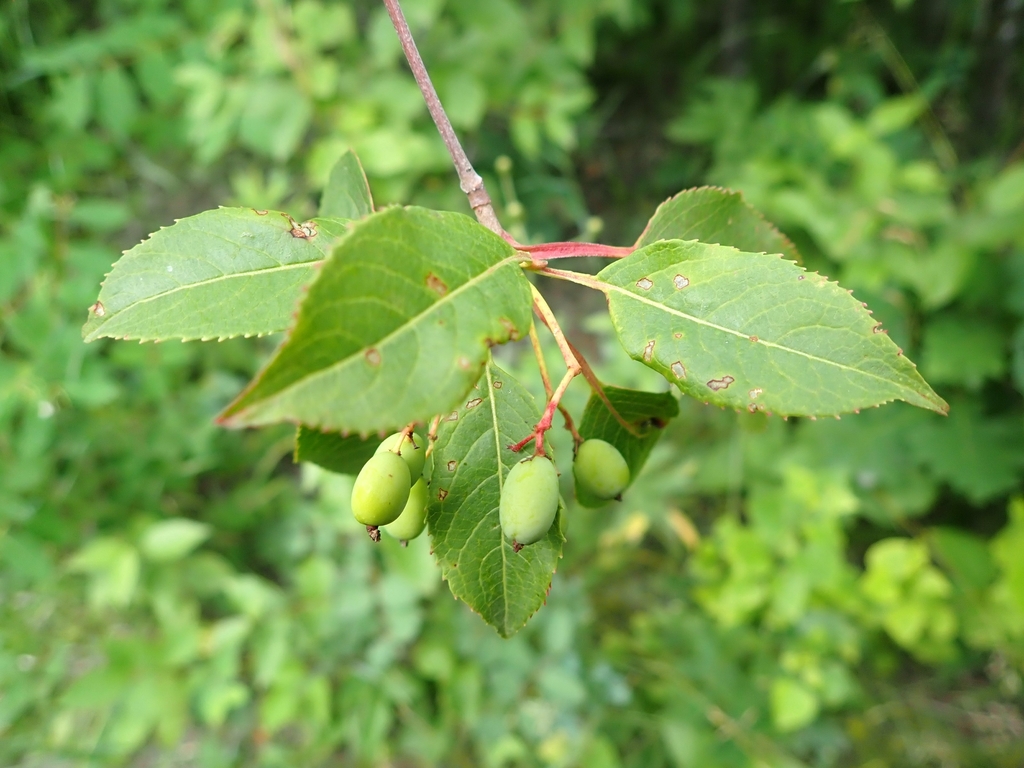
- Nannyberry; Sheepberry; Nanny Berry; Sheep BerryViburnum lentago
- Northern Barren-strawberryWaldsteinia fragarioides
- Black MapleAcer nigrum
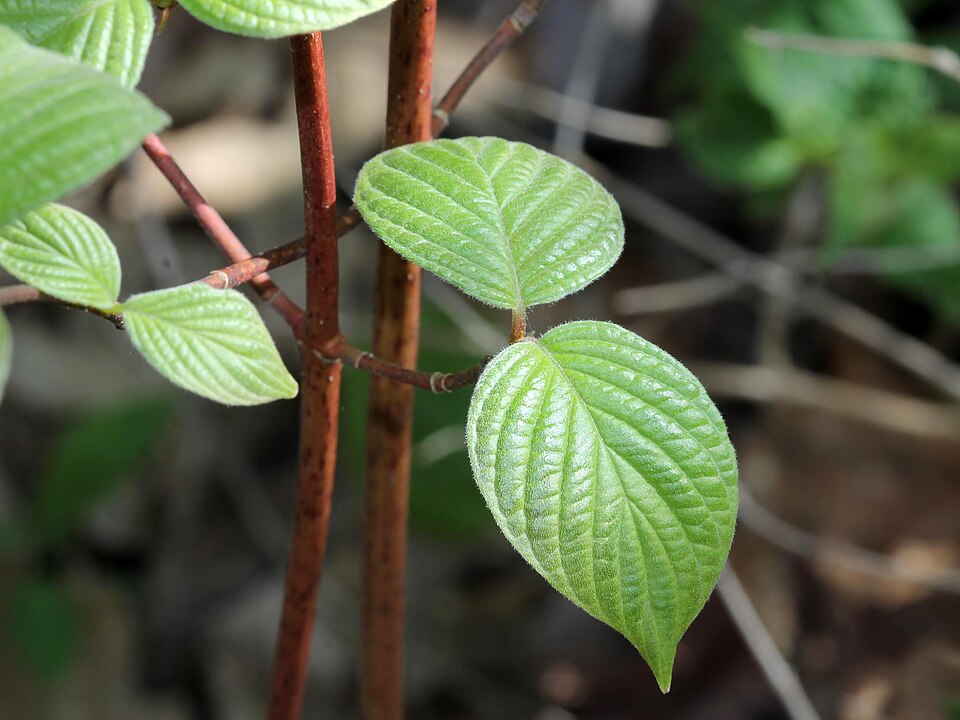
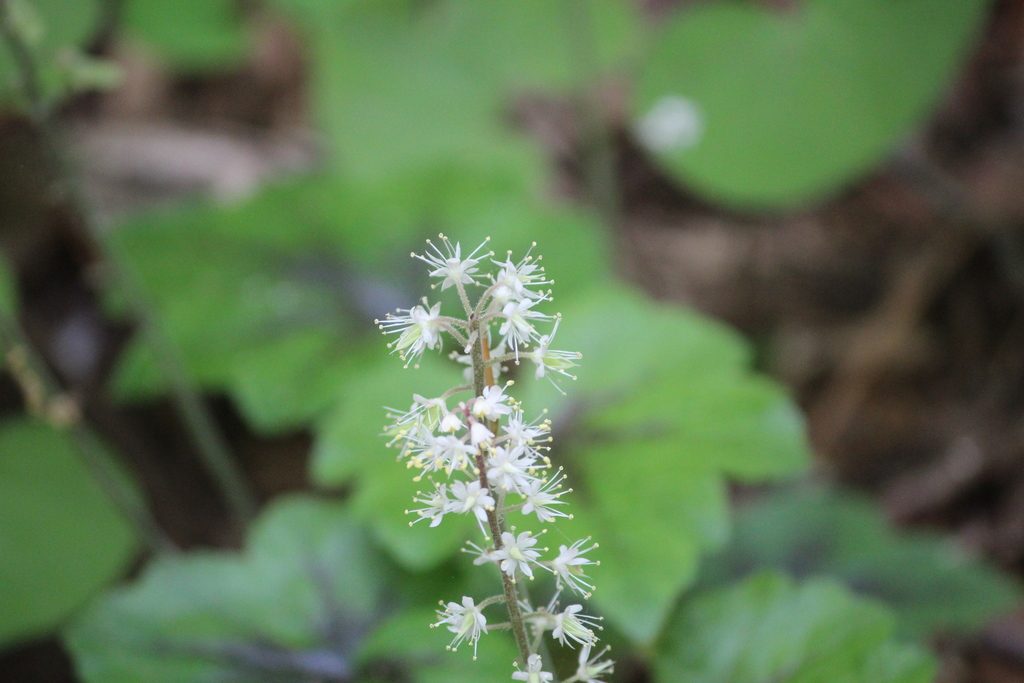
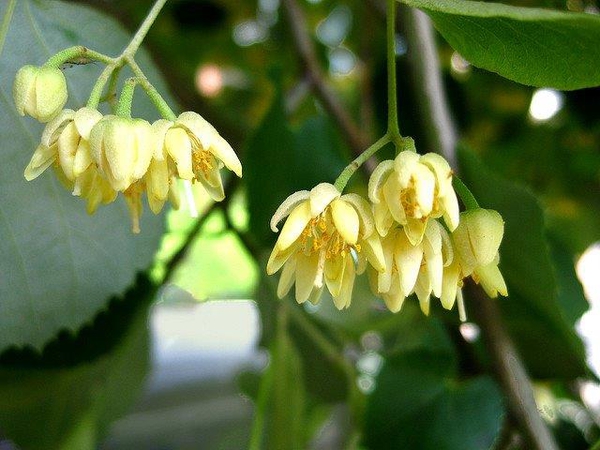
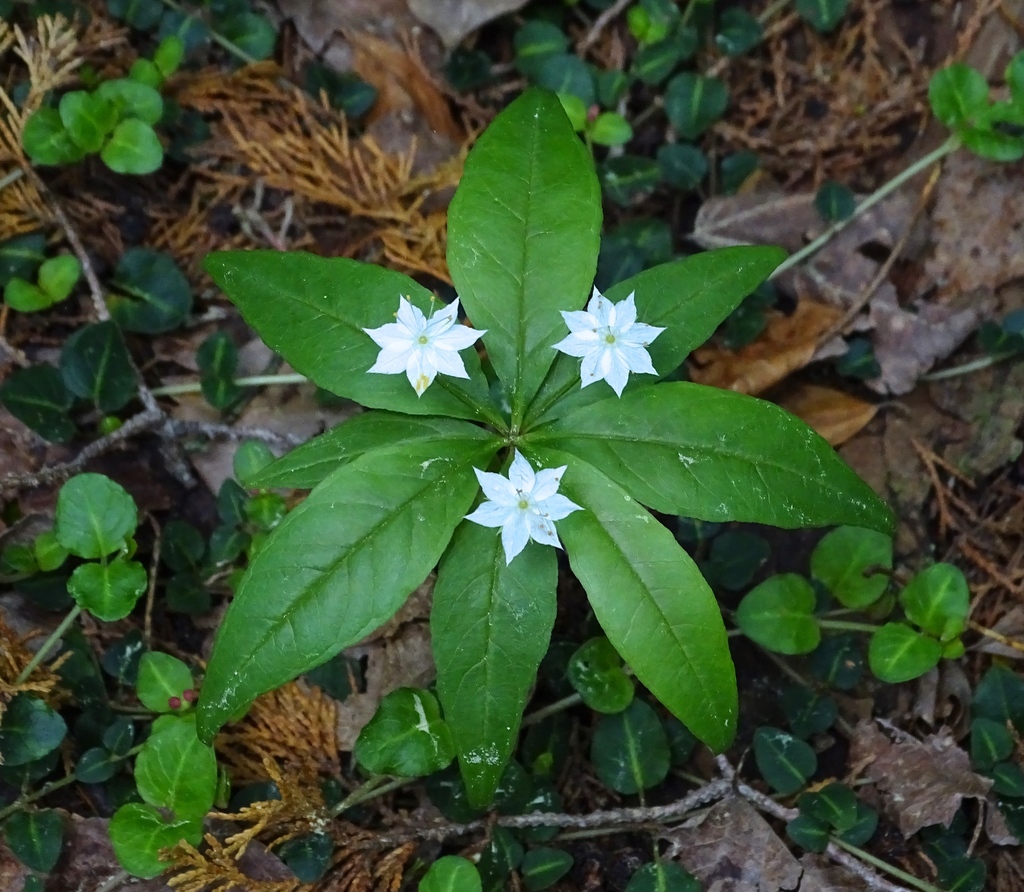
Wildlife 233
Other animals whose habitat models include the same habitats in Virginia. Not sighting records.
- American CrowCorvus brachyrhynchos
- American GoldfinchCarduelis tristis
- American RobinTurdus migratorius
- Cedar WaxwingBombycilla cedrorum
- Common GrackleQuiscalus quiscula
- Common NighthawkChordeiles minor
- Common RavenCorvus corax
- Cooper's HawkAccipiter cooperii
- Eastern TowheePipilo erythrophthalmus
- Great Crested FlycatcherMyiarchus crinitus
- Great Horned OwlBubo virginianus
- Northern CardinalCardinalis cardinalis
- Red-tailed HawkButeo jamaicensis
- Sharp-shinned HawkAccipiter striatus
- Turkey VultureCathartes aura
- Alder FlycatcherEmpidonax alnorum
- Baltimore OrioleIcterus galbula
- Belted KingfisherMegaceryle alcyon
- Black-and-White WarblerMniotilta varia
- Blue JayCyanocitta cristata
- Carolina WrenThryothorus ludovicianus
- Chimney SwiftChaetura pelagica
- Common YellowthroatGeothlypis trichas
- Dark-eyed JuncoJunco hyemalis








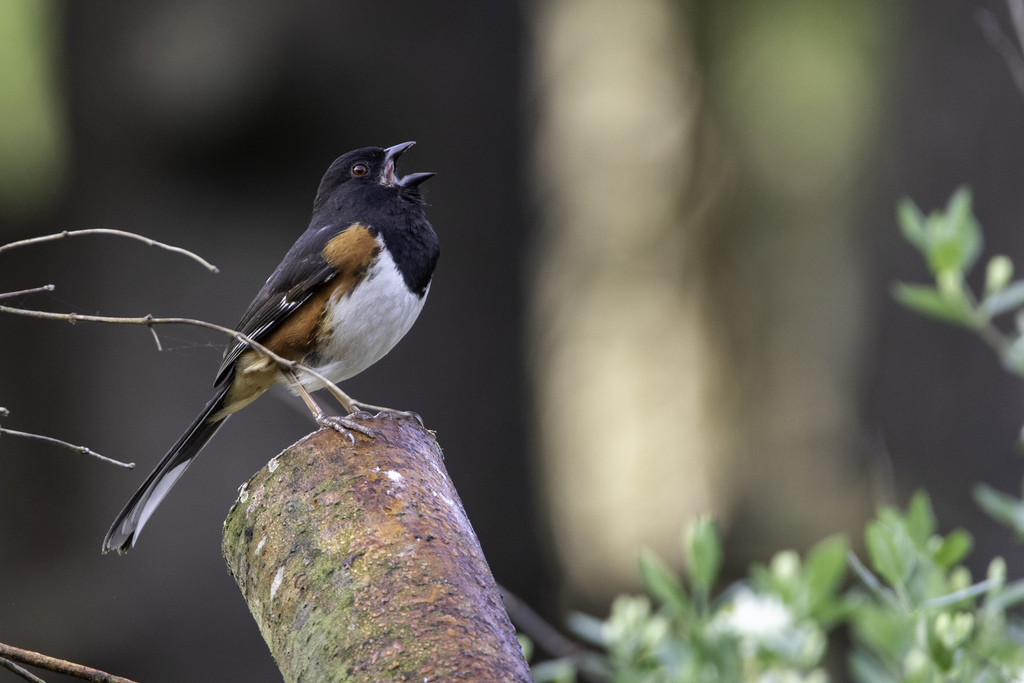
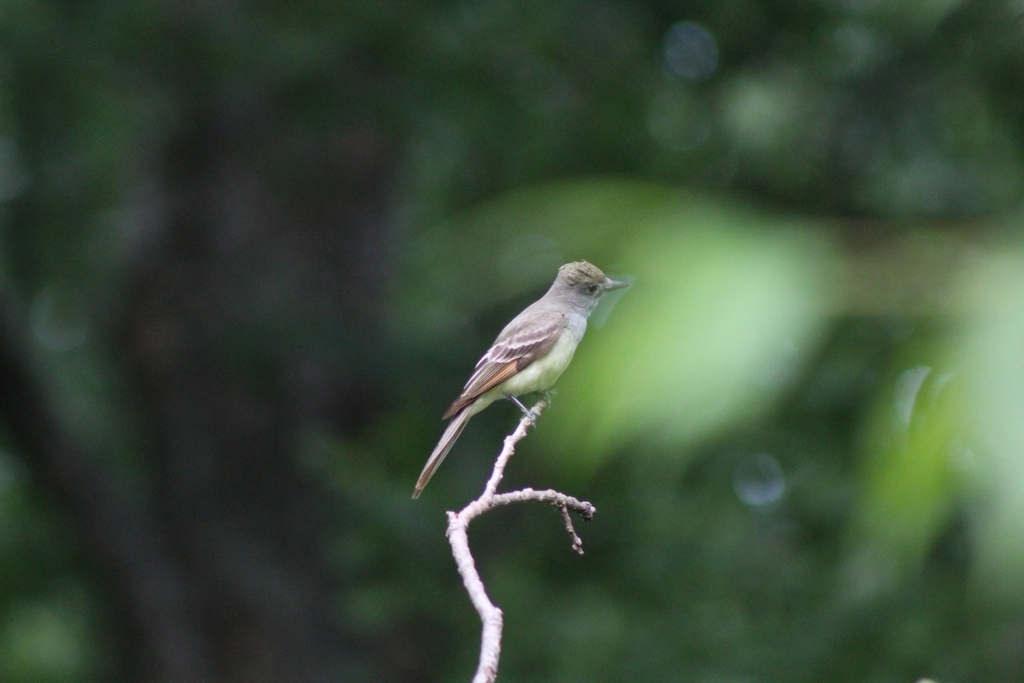














NatureServe Explorer, CC BY 4.0. USGS Gap Analysis Project habitat models.
Sources
- USGS Gap Analysis Project habitat models (2001)
- USGS GAP summer habitat model for Magnolia Warbler
- USGS Gap Analysis Project range maps (2001), modeled by watershed; migratory gives no dates
- NatureServe Explorer (CC BY 4.0), habitat names
- US Census TIGER/Line counties
- Names follow the USGS Gap Analysis Project (2001)