

Red Elderberry
Sambucus racemosa var. pubens
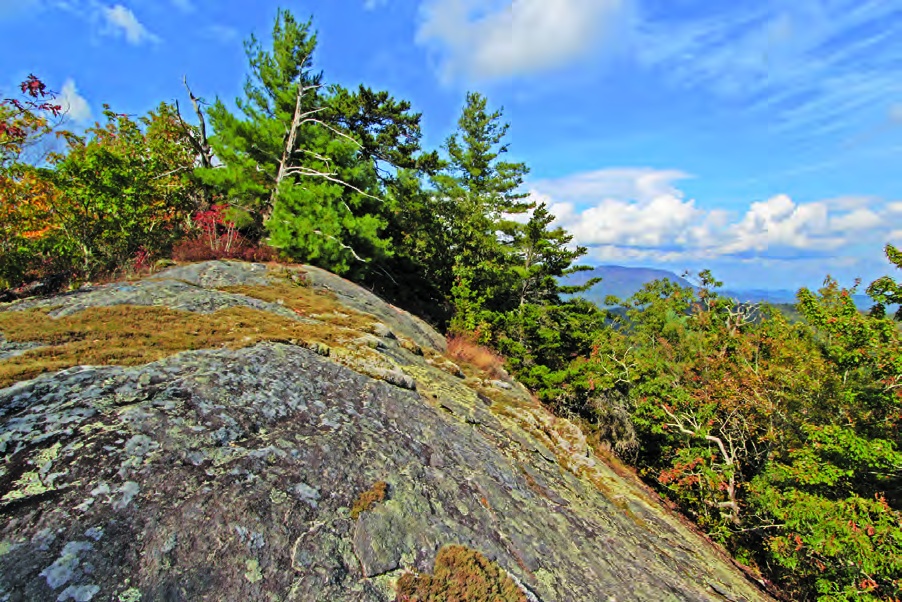
Found in northern hardwood forests; spruce-fir forests; cliffs, ledges and rocky summits. FloraQuest, phone app (app page) What its natural habitat tells you
Native to Virginia. How scores work Is it native here?
Profile 100%
- Height
- About 18 feet
- Light
- Partial shade, Full shade, Full sun
- Soil moisture
- Dry to wet
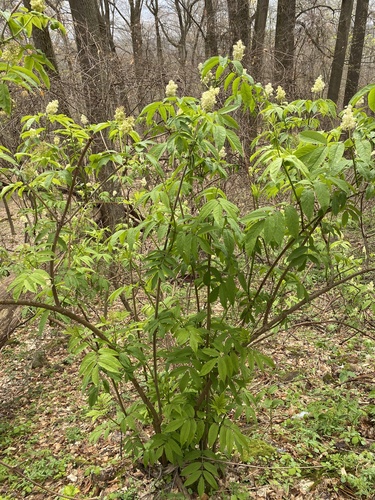
At a glance
- Leaves
- Deciduous
- Bloom
- April and June
- Fruiting season
- Late June to August
Not yet recorded · Spread · Life cycle
Recorded in 30 Virginia counties.
Natural habitats
Places it grows wild. Not a planting requirement. Each habitat page lists the plants and wildlife also found there.
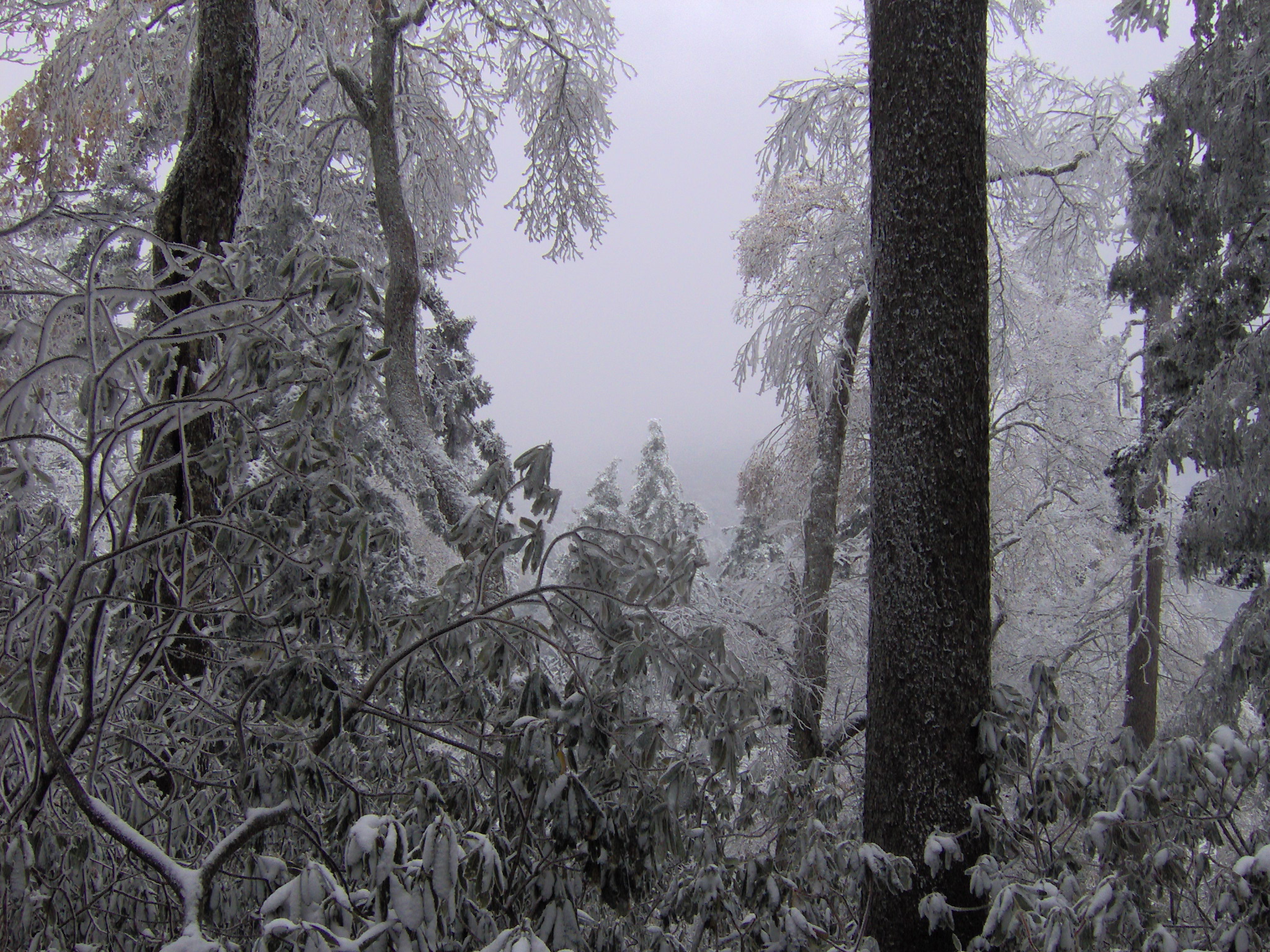

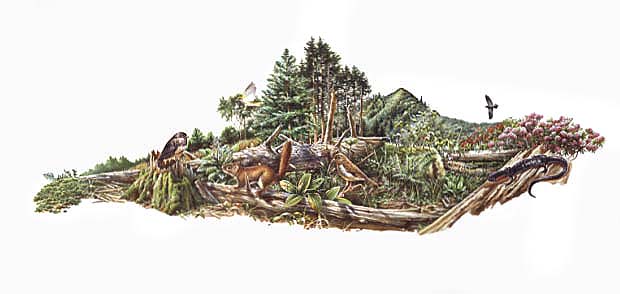
Cliffs, ledges and rocky summits
Who uses this plant?
 35CaterpillarsGenus host records with ranges including VA
Genus host records with ranges including VA · Sambucus
- Achatodes zeaeElder Shoot Border Moth, Spindele Worm, Cornstalk Borer
- Aethalura intertextaFour-Barred Gray
- Anania tertialisCrowned Anania, Crowned Phlyctaenia
- Anavitrinella pampinariaCommon Gray, Cranberry Spanworm
- Antheraea polyphemusPolyphemus Moth
- Callima argenticinctellaOrange-Headed Epicallima
- Campaea perlataPale Beauty, Fringed Looper
- Coelodasys unicornisUnicorn Caterpillar Moth
- Eacles imperialisImperial Moth, Imperial Spiny Caterpillar
- Ectropis crepusculariaThe Small Engrailed, Saddleback Looper
Show all 35
- Episimus argutanaSumac Leaftier
- Estigmene acreaSalt Marsh Moth, Acrea Moth
- Eueretagrotis attentusAttentive Dart
- Euplexia benesimilisAmerican Angle Shades
- Eutrapela clematariaCurved-Tooth Geometer, Purplish Brown Looper
- Hyalophora cecropiaCecropia Silkmoth, Cecropia Moth
- Hyles lineataWhite-Lined Sphinx
- Hyphantria cuneaFall Webworm
- Iridopsis larvariaBent-Line Gray
- Lacanobia grandisGrand Arches
- Melanchra adjunctaHitched Arches
- Melanchra pictaPainted Arches, Zebra Caterpillar Moth
- Orgyia leucostigmaWhite-Marked Tussock Moth
- Orthosia hibisciSpeckled Green Fruitworm Moth, Speckled Green Quaker
- Orthosia rubescensRuby Quaker
- Papaipema cataphractaBurdock Border, Potato-Stalk Borer
- Papaipema nebrisStalk Borer
- Paralobesia viteanaAmerican Vine Moth, Grape Berry Moth
- Proteoteras moffatianaMaple Bud Borer, Maple Shoot Borer
- Spilosoma virginicaVirginian Tiger Moth, Yellow Woolybear Moth, Yellow Bear
- Tetracis crocallataYellow Slant-Line
- Thyridopteryx ephemeraeformisEvergreen Bagworm Moth
- Xestia smithiiSmith's Dart
- Paralobesia rhoifructana
- Paralobesia sambuci
 3BeesSoutheastern regional records
Southeastern regional records · Sambucus
Individual names are not available yet.
Noori, Seltmann & Orr 2026, A curated and integrated dataset for exploring global bee-plant interactions (GloBI), Zenodo, CC BY 4.0 0Specialist beesPollen specialists
 49BirdsRecorded genus food-resource interactions; not a state feeding claim
Recorded genus food-resource interactions; not a state feeding claim · Sambucus
- Anthus rubescensAmerican Pipit
- Aphelocoma californicaCalifornia Scrub-Jay
- Bonasa umbellusRuffed Grouse
- Callipepla californicaCalifornia Quail
- Cardinalis cardinalisNorthern Cardinal
- Catharus fuscescensVeery
- Catharus guttatusHermit Thrush
- Catharus minimus/bicknelliGray-cheeked/Bicknell's Thrush
- Catharus ustulatusSwainson's Thrush
- Coccothraustes vespertinusEvening Grosbeak
Show all 49
- Contopus virensEastern Wood-Pewee
- Cyanocitta stelleriSteller's Jay
- Dendragapus obscurusDusky Grouse
- Dryobates pubescensDowny Woodpecker
- Dryobates villosusHairy Woodpecker
- Empidonax alnorum/trailliiAlder/Willow Flycatcher (Traill's Flycatcher)
- Empidonax difficilisPacific-slope Flycatcher
- Hylocichla mustelinaWood Thrush
- Icterus bullockiiBullock's Oriole
- Melanerpes formicivorusAcorn Woodpecker
- Melospiza melodiaSong Sparrow
- Melozone crissalisCalifornia Towhee
- Myadestes townsendiTownsend's Solitaire
- Myiarchus cinerascensAsh-throated Flycatcher
- Oreortyx pictusMountain Quail
- Passerina cyaneaIndigo Bunting
- Patagioenas fasciataBand-tailed Pigeon
- Pheucticus ludovicianusRose-breasted Grosbeak
- Pheucticus melanocephalusBlack-headed Grosbeak
- Pipilo maculatusSpotted Towhee
- Piranga ludovicianaWestern Tanager
- Sayornis nigricansBlack Phoebe
- Sayornis sayaSay's Phoebe
- Sialia currucoidesMountain Bluebird
- Sialia mexicanaWestern Bluebird
- Sialia sialisEastern Bluebird
- Sphyrapicus variusYellow-bellied Sapsucker
- Toxostoma redivivumCalifornia Thrasher
- Turdus migratoriusAmerican Robin
- Tyrannus tyrannusEastern Kingbird
- Tyrannus verticalisWestern Kingbird
- Vireo belliiBell's Vireo
- Vireo gilvusWarbling Vireo
- Vireo griseusWhite-eyed Vireo
- Vireo huttoniHutton's Vireo
- Vireo olivaceusRed-eyed Vireo
- Vireo solitariusBlue-headed Vireo
- Zonotrichia atricapillaGolden-crowned Sparrow
- Zonotrichia leucophrysWhite-crowned Sparrow
Direct food only: birds recorded eating this genus across North America. Caterpillars on host plants also feed nesting birds. NC Native Plant Society: butterfly gardening
No records yet · Ants · Beetles · Flies · Adult butterflies / moths · Other wasps · Other insects
Plant details
- Family
- Viburnaceae
- Flower color
- White
- Growth rate
- Moderate
- Growth habit
- Several stems
- Foliage color
- Green
- Fruit begins
- Late June
- Fruit ends
- August
Safety has not been reviewed for this plant; check toxicity and thorns before planting.
Growing sources and scope
- Bloom · “Late April to early June” · FloraQuest: Carolinas, Georgia (Southeastern Flora Team), phone app (app page) (ranked first; USDA PLANTS differs) · Carolinas and Georgia
- Flower color · “White” · USDA PLANTS · Nationwide species characteristics; local growing conditions may vary
- Foliage color · “Green” · USDA PLANTS · Nationwide species characteristics; local growing conditions may vary
- Fruit begins · “Late June” · FloraQuest: Carolinas, Georgia (Southeastern Flora Team), phone app (app page) (ranked first; USDA PLANTS differs) · Carolinas and Georgia
- Fruit ends · “August” · FloraQuest: Carolinas, Georgia (Southeastern Flora Team), phone app (app page) (ranked first; USDA PLANTS differs) · Carolinas and Georgia
- Growth habit · “Several stems” · USDA PLANTS · Nationwide species characteristics; local growing conditions may vary
- Growth rate · “Moderate” · USDA PLANTS · Nationwide species characteristics; local growing conditions may vary
- Height · “About 18 feet” · USDA PLANTS · Nationwide species characteristics; local growing conditions may vary
- Leaf retention · “Deciduous” · USDA PLANTS · Nationwide species characteristics; local growing conditions may vary
- Light · “Partial shade; Full shade; Full sun (documented habitat)” · FloraQuest: Carolinas, Georgia (Southeastern Flora Team), phone app (app page) · Carolinas and Georgia
- primary_flower_color · “white” · USDA PLANTS
- Soil · “Dry; Moist; Wet (documented habitat)” · FloraQuest: Carolinas, Georgia (Southeastern Flora Team), phone app (app page) · Carolinas and Georgia
Conservation status
| Virginia rank | Not available |
|---|---|
| Global rank | G5T5 |
| VA status | Not verified |
| Federal status | Not verified |
Will it fit your yard?
Check this plant against your county, sun and soil moisture. Conditions are checked in your browser.
Sources
- Digital Atlas of the Virginia Flora
- USDA PLANTS
- Vascular Plants of North Carolina (NC Natural Heritage Program)
- Shropshire & Tallamy 2025, Lepidoptera of North America north of Mexico, ZooKeys 1261 (ODbL)
- Noori, Seltmann & Orr 2026, A curated and integrated dataset for exploring global bee-plant interactions (GloBI), Zenodo, CC BY 4.0
- Smith, Bachelder, Russell, Morales, Mosher & Seltmann 2024, Bee-Specialization-Modeling v0.6.1 (specialist host table compiled from J. Fowler's pollen specialist bee lists), Zenodo, CC BY 4.0
- Hurlbert, Olsen, Sawyer & Winner 2021, Avian Diet Database, Scientific Data 8: 260 (CC0)
- Narango, Tallamy & Shropshire 2020, Few keystone plant genera support the majority of Lepidoptera species, Nature Communications