

Rocky Mountain Sage
Salvia reflexa
Found in marshes, prairies, disturbed areas. Weakley, Flora of the Southeastern United States (2025), Northern Tier edition What its natural habitat tells you
Not native to Virginia. How scores work Is it native here?
Profile 41%
- Height
- 1–2 feet
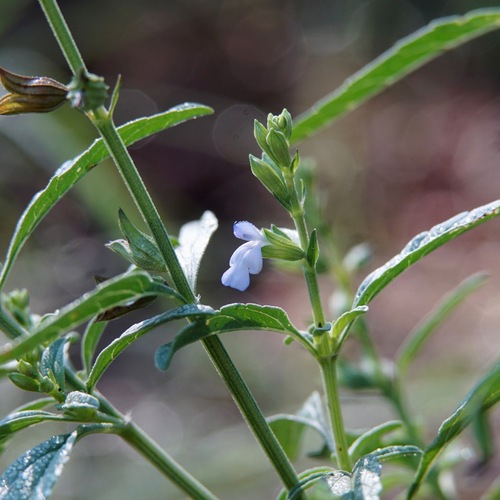
At a glance
- Life cycle
- Annual
Not yet recorded · Spread · Light · Soil · Leaves · Bloom
This plant is missing most of its facts, so Quercus is looking them up in old botany books.
Recorded in 1 Virginia county.
Natural habitats
Places it grows wild. Not a planting requirement. Each habitat page lists the plants and wildlife also found there.
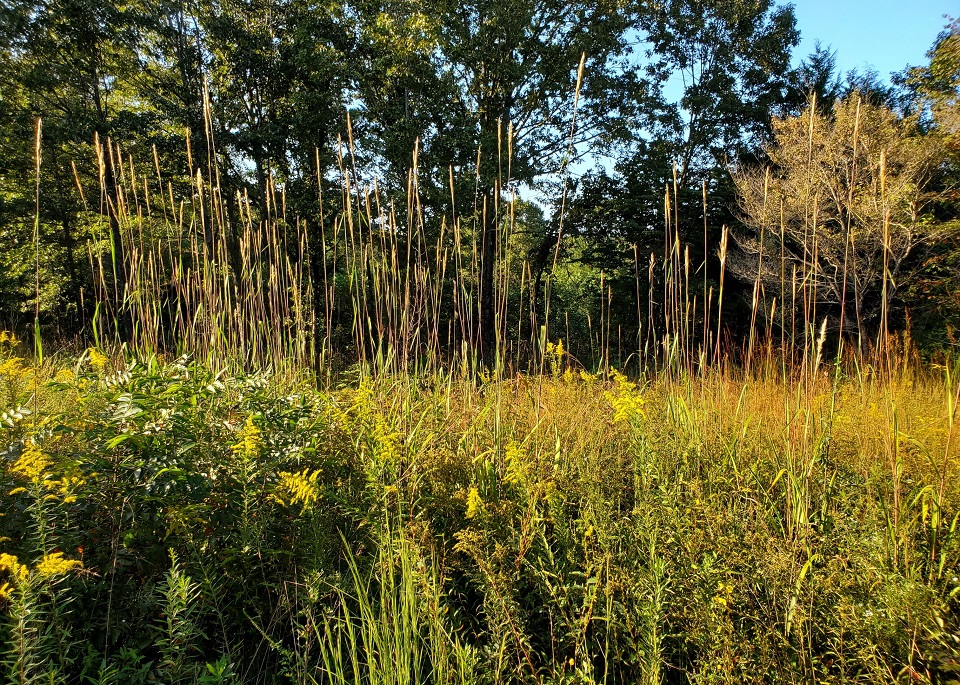
Open, herb-covered wetlands with fresh, non-tidal water.
Roadsides, fields and disturbed ground
Ground opened by people: roadsides, old fields, pastures, fencerows and lots.
Who uses this plant?
 10CaterpillarsGenus host records with ranges including VA
Genus host records with ranges including VA · Salvia
- Lintneria eremitusHermit Sphinx
- Megalographa bilobaBilobed Looper Moth
- Papaipema nebrisStalk Borer
- Platynota rostranaOmnivorous Platynota
- Spilosoma virginicaVirginian Tiger Moth, Yellow Woolybear Moth, Yellow Bear
- Spoladea recurvalisHawaiian Beet Webworm
- Strymon melinusGray Hairstreak
- Synchlora aerataWavy-Lined Emerald, Camouflaged Looper
- Urbanus proteusLong-Tailed Skipper, Bean Leaf Roller
- Vanessa carduiPainted Lady, Cosmopolite
 —BeesSoutheastern regional records
 —Specialist beesPollen specialists
 —BirdsRecorded genus food-resource interactions; not a state feeding claim
Plant details
- Family
- Lamiaceae
- Flower color
- White, blue or purple
Safety has not been reviewed for this plant; check toxicity and thorns before planting.
Growing sources and scope
- Flower color · “White, blue or purple” · Lady Bird Johnson Wildflower Center
- Height · “1–2 feet” · Minnesota Wildflowers
- Life cycle · “Annual” · Minnesota Wildflowers
Also known as
Lance Leaf Sage
Conservation status
| Virginia rank | Not available |
|---|---|
| Global rank | Not available |
| VA status | Not verified |
| Federal status | Not verified |
Native alternatives
Find natives for your gardenSources
- Digital Atlas of the Virginia Flora
- Weakley, Flora of the Southeastern United States (2025)
- Shropshire & Tallamy 2025, Lepidoptera of North America north of Mexico, ZooKeys 1261 (ODbL)
- Noori, Seltmann & Orr 2026, A curated and integrated dataset for exploring global bee-plant interactions (GloBI), Zenodo, CC BY 4.0
- Smith, Bachelder, Russell, Morales, Mosher & Seltmann 2024, Bee-Specialization-Modeling v0.6.1 (specialist host table compiled from J. Fowler's pollen specialist bee lists), Zenodo, CC BY 4.0
- Hurlbert, Olsen, Sawyer & Winner 2021, Avian Diet Database, Scientific Data 8: 260 (CC0)
- Narango, Tallamy & Shropshire 2020, Few keystone plant genera support the majority of Lepidoptera species, Nature Communications