

Common Browneyed Susan; Common Three Lobed Coneflower
Rudbeckia triloba var. triloba
Found in cliffs, ledges and rocky summits; moist forests; prairies and grasslands; roadsides, fields and disturbed ground. FloraQuest, phone app (app page) What its natural habitat tells you
Native to Virginia. How scores work Is it native here?
Profile 41%
Will it fit your yard?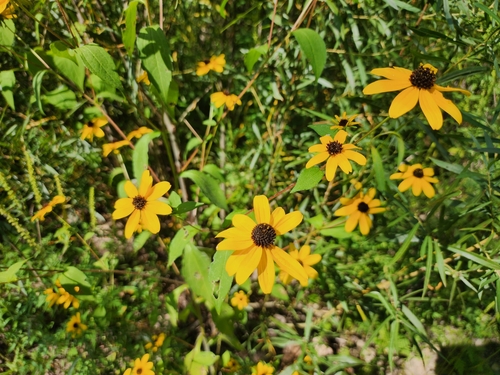
At a glance
Not yet recorded · Height · Spread · Light · Soil · Life cycle · Leaves · Bloom
This plant is missing most of its facts, so Quercus is looking them up in old botany books.
Recorded in 72 Virginia counties.
Natural habitats
Places it grows wild. Not a planting requirement.
Cliffs, ledges and rocky summits
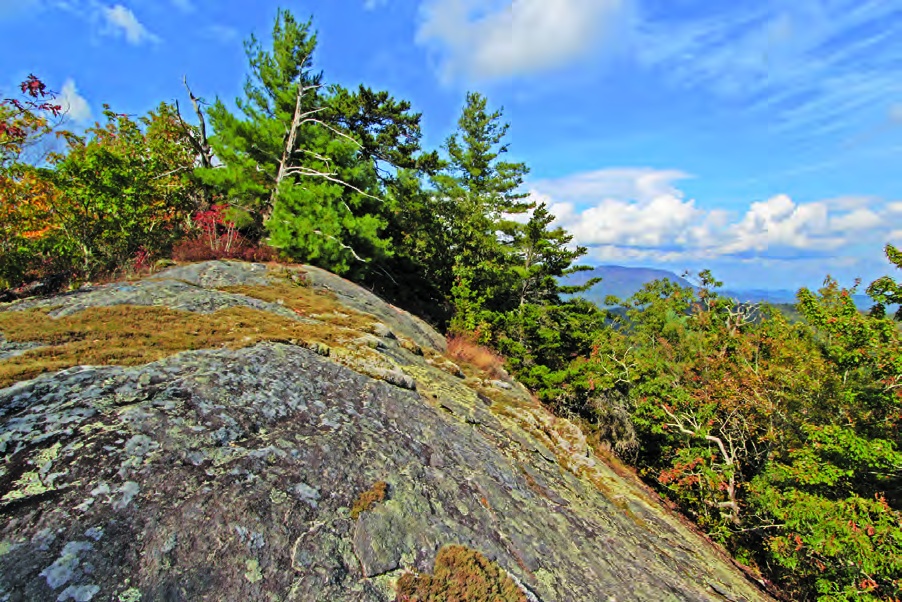
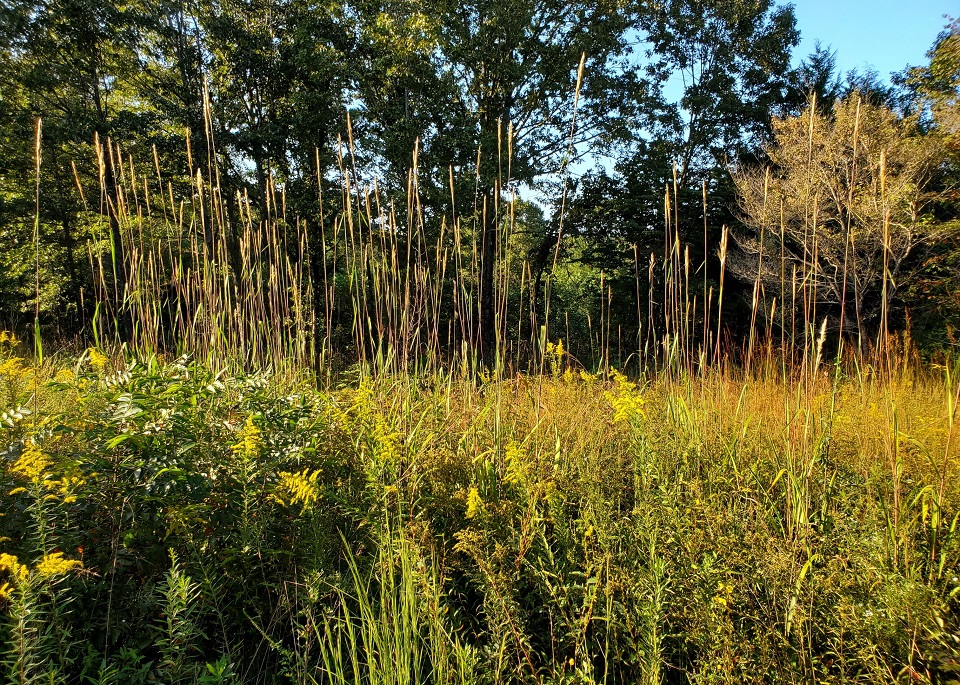
Habitats
Cliffs, ledges and rocky summits; moist forests; prairies and grasslands; roadsides, fields and disturbed ground.
Each habitat page lists the plants and wildlife also found there. All habitats
Who uses this plant?
 21CaterpillarsGenus host records with ranges including VA
Genus host records with ranges including VA · Rudbeckia
- Chlosyne nycteisSilvery Checkerspot
- Acharia stimuleaSaddleback Caterpillar Moth
- Adaina ambrosiaeAmbrosia Plume Moth, Ragweed Plume Moth
- Archips griseaGray Archips
- Chlorochlamys chloroleucariaBlackberry Looper Moth
- Epiblema carolinanaGray-Blotched Epiblema
- Epiblema tripartitanaThree-Parted Epiblema
- Eupithecia miserulataCommon Eupithacia, Common Pug
- Homoeosoma electellaSunflower Moth
- Lithophane unimodaDowdy Pinion
Show all 21
- Orthotaenia undulanaDusky Leafroller
- Papaipema cataphractaBurdock Border, Potato-Stalk Borer
- Papaipema nebrisStalk Borer
- Papaipema nelitaConeflower Borer
- Papaipema unimodaMeadow Rue Borer, Chain Fern Border Moth
- Phtheochroa birdanaBird's Cochylid
- Synchlora aerataWavy-Lined Emerald, Camouflaged Looper
- Synchlora frondariaSouthern Emerald
- Vanessa carduiPainted Lady, Cosmopolite
- Epiblema tandana
- Paralobesia rhoifructana
 56BeesSoutheastern regional records
Southeastern regional records · Rudbeckia
Individual names are not available yet.
Noori, Seltmann & Orr 2026, A curated and integrated dataset for exploring global bee-plant interactions (GloBI), Zenodo, CC BY 4.0 25Specialist beesPollen specialists
Pollen specialists · Rudbeckia
- Andrena aliciae
- Andrena asteris
- Andrena rudbeckiae
- Diadasia enavata
- Dieunomia bolliana
- Dieunomia heteropoda
- Megachile inimica
- Megachile parallela
- Megachile pugnata
- Megachile xylocopoides
Show all 25
- Melissodes bidentis
- Melissodes boltoniae
- Melissodes coreopsis
- Melissodes denticulatus
- Melissodes dentiventris
- Melissodes desponsus
- Melissodes druriellus
- Melissodes illatus
- Melissodes subillatus
- Melissodes trinodis
- Melissodes wheeleri
- Paranthidium jugatorium
- Perdita octomaculata
- Protandrena albitarsis
- Protandrena andrenoides
 —BirdsRecorded genus food-resource interactions; not a state feeding claim
No records yet · Ants · Beetles · Flies · Adult butterflies / moths · Other wasps · Other insects
Plant details
- Family
- ASTERACEAE
Safety has not been reviewed for this plant; check toxicity and thorns before planting.
Conservation status
| Virginia rank | S5 |
|---|---|
| Global rank | G5T4T5 |
| VA status | Not verified |
| Federal status | Not verified |
Will it fit your yard?
Check this plant against your county, sun and soil moisture. Conditions are checked in your browser.
Sources
- Digital Atlas of the Virginia Flora
- USDA PLANTS
- Vascular Plants of North Carolina (NC Natural Heritage Program)
- NatureServe Explorer
- Shropshire & Tallamy 2025, Lepidoptera of North America north of Mexico, ZooKeys 1261 (ODbL)
- Noori, Seltmann & Orr 2026, A curated and integrated dataset for exploring global bee-plant interactions (GloBI), Zenodo, CC BY 4.0
- Smith, Bachelder, Russell, Morales, Mosher & Seltmann 2024, Bee-Specialization-Modeling v0.6.1 (specialist host table compiled from J. Fowler's pollen specialist bee lists), Zenodo, CC BY 4.0
- Hurlbert, Olsen, Sawyer & Winner 2021, Avian Diet Database, Scientific Data 8: 260 (CC0)
- Narango, Tallamy & Shropshire 2020, Few keystone plant genera support the majority of Lepidoptera species, Nature Communications