

Virginia Rose
Rosa virginiana
Native to Virginia. How scores work Is it native here?
Profile 100%
- Height
- About 6 feet
- Light
- Full sun, Partial shade
- Soil moisture
- Average
At a glance
- Life cycle
- Woody perennial
- Leaves
- Deciduous
- Bloom
- Late spring
- Fruiting season
- Summer
Not yet recorded · Spread
Recorded in 20 Virginia counties.
Who uses this plant?
 117CaterpillarsGenus host records with ranges including VA
Genus host records with ranges including VA · Rosa
- Acharia stimuleaSaddleback Caterpillar Moth
- Achyra rantalisGarden Webworm Moth
- Acleris albicomanaRed-Edged Acleris
- Acleris minutaLesser Apple Leaf Folder, Yellowheaded Fireworm
- Acleris robinsonianaRobinson's Acleris
- Acleris semipurpuranaOak Leaf Shredder, Oak Leaftier, Oak Leafshredder
- Acrobasis indigenellaLeaf Crumpler
- Acronicta clarescensClear Dagger
- Acronicta fragilisFragile Dagger
- Acronicta impletaYellow-Haired Dagger
Show all 117
- Acronicta impressaImpressive Dagger, Printed Dagger
- Acronicta longaLong-Winged Dagger, Darkish Dagger
- Amphipyra pyramidoidesMiranda Underwing, Copper Underwing, Copper Amphipyra
- Ancylis floridanaStrawberry Leafroller
- Antheraea polyphemusPolyphemus Moth
- Anticlea vasiliataVariable Carpet
- Apamea amputatrixYellow-Headed Cutworm Moth
- Archips argyrospilaFruit-Tree Leafroller Moth
- Archips cerasivoranaCherry Tent Caterpillar, Cherry Worm, Ugly Nest Caterpillar
- Argyrotaenia velutinanaRed-Banded Leafroller Moth, Jack Pine Tube Moth
- Artace cribrariusDot-Lined White Moth
- Automeris ioIo Moth
- Biston betulariaSalt-and-Pepper Geometer, Cleft-Headed Looper
- Campaea perlataPale Beauty, Fringed Looper
- Cenopis pettitanaMaple-Basswood Leafroller Moth
- Cenopis reticulatanaReticulated Fruitworm Moth
- Cerma cerinthaTufted Bird-Dropping Moth, Cherry Agate
- Chloridea subflexaSubflexus Straw, Groundcherry Sun Moth
- Chloridea virescensTobacco Budworm Moth
- Choristoneura conflictanaLarge Aspen Tortrix
- Choristoneura rosaceanaOblique-Banded Leafroller Moth, Rosaceous Leaf Roller
- Clepsis persicanaWhite Triangle Tortrix
- Clepsis virescanaGreeenish Apple Moth
- Coelodasys unicornisUnicorn Caterpillar Moth
- Coptotriche aeneaBlackberry Leafminer Moth
- Crocigrapha normaniNorman's Quaker
- Dasychira vagansVariable Tussock Moth
- Datana ministraYellow-Necked Caterpillar Moth
- Derrima stellataPink Star
- Dysstroma citrataDark Marbled Carpet
- Eacles imperialisImperial Moth, Imperial Spiny Caterpillar
- Ectropis crepusculariaThe Small Engrailed, Saddleback Looper
- Erannis tiliariaLinden Looper Moth, Western Winter Moth, Lime Looper
- Euchlaena effectaEffective Euchlaena
- Euchlaena obtusariaObtuse Euchlaena
- Eulia ministranaFerruginous Eulia
- Eulithis diversilineataLesser Grapevine Looper Moth
- Eupsilia tristigmataThree-Spotted Sallow, Brown Fruitworm
- Glena cognatariaBlueberry Gray
- Grapholita packardiCherry Fruit Worm
- Hedya nr.Large Bud Moth, Green Bud Moth, Off-White Hedya
- Hedya separatanaPink-Washed Leafroller Moth
- Helicoverpa zeaCorn Earworm Moth
- Hesperumia sulphurariaSulphur Moth
- Hyalophora cecropiaCecropia Silkmoth, Cecropia Moth
- Hylephila phyleusFiery Skipper
- Hyles lineataWhite-Lined Sphinx
- Hypagyrtis unipunctataOne-Spotted Variant
- Hyphantria cuneaFall Webworm
- Hyppa xylinoidesCommon Hyppa
- Limenitis arthemisBanded Purple, Red-Spotted Admiral
- Lithophane antennataAshen Pinion
- Lophocampa caryaeHickory Tussock Moth, Hickory Tiger Moth
- Lytrosis unitariaCommon Lytrosis
- Malacosoma americanaEastern Tent Caterpillar
- Malacosoma disstriaForest Tent Caterpillar
- Megalopyge opercularisSouthern Flannel Moth, Puss Caterpillar
- Metaxaglaea semitariaFootpath Sallow
- Moodna ostrinellaDarker Moodna
- Morrisonia confusaConfused Woodgrain
- Nadata gibbosaWhite-Dotted Prominent
- Nematocampa resistariaFilament Bearer, Horned Spanworm Moth
- Nymphalis antiopaMourning Cloak
- Oedemasia concinnaRed-Humped Caterpillar, Red-Humped Appleworm
- Oedemasia leptinoidesBlack-Blotched Schizura
- Oedemasia semirufescensRed-Washed Prominent
- Oiketicus abbotiiAbbot's Bagworm Moth
- Olethreutes appendiceumServiceberry Leafroller
- Olethreutes permundanaRaspberry Leafroller
- Orgyia leucostigmaWhite-Marked Tussock Moth
- Orthosia hibisciSpeckled Green Fruitworm Moth, Speckled Green Quaker
- Orthotaenia undulanaDusky Leafroller
- Paleacrita vernataSpring Cankerworm Moth
- Pandemis limitataThree-Lined Leafroller Moth
- Paonias excaecataBlinded Sphinx, Blind Eyed Sphinx
- Papaipema marginidensBrick-Red Borer
- Papaipema nebrisStalk Borer
- Parasa indeterminaStinging Rose Caterpillar Moth, Rose Slug Caterpillar
- Phigalia titeaThe Half-Wing Geometer, Spiney Looper, Eastern Oak Looper
- Plagodis pulverariaAmerican Barred Umber, Barred Umber
- Platynota flavedanaBlack-Shaded Platynota
- Platynota rostranaOmnivorous Platynota
- Platynota stultanaOmnivorous Leafroller
- Probole amicariaFriendly Probole
- Prolimacodes badiaSkiff Moth, Skiff Caterpillar
- Proteoteras moffatianaMaple Bud Borer, Maple Shoot Borer
- Pseudothyatira cymatophoroidesTufted Thyatirid
- Pyrrhia ciliscaAmerican Bordered Sallow, Noble Sun Moth
- Pyrrhia exprimensPurple-Lined Sallow, Purple-Lined Sun Moth
- Schizura ipomaeaeMorning-Glory Prominent, Checkered-Fringe Prominent
- Sphinx gordiusApple Sphinx
- Spodoptera eridaniaSouthern Armyworm Moth
- Spodoptera frugiperdaFall Armyworm Moth
- Spodoptera ornithogalliYellow-Striped Armyworm Moth, Cotton Cutworm
- Strymon melinusGray Hairstreak
- Synchlora aerataWavy-Lined Emerald, Camouflaged Looper
- Thyridopteryx ephemeraeformisEvergreen Bagworm Moth
- Udea rubigalisCelery Leaftier
- Xanthotype sospetaCrocus Geometer
- Xanthotype urticariaFalse Crocus Geometer
- Xylena nuperaRed Swordgrass Moth, American Swordgrass Moth, False Armyworm
- Zale lunataLunate Zale
- Cenopis saracana
- Hedya cyanana
- Menesta tortriciformella
- Notocelia culminana
- Xenotemna pallorana
 18BeesSoutheastern regional records
Southeastern regional records · Rosa
Individual names are not available yet.
Noori, Seltmann & Orr 2026, A curated and integrated dataset for exploring global bee-plant interactions (GloBI), Zenodo, CC BY 4.0 0Specialist beesPollen specialists
 19BirdsRecorded genus food-resource interactions; not a state feeding claim
Recorded genus food-resource interactions; not a state feeding claim · Rosa
- Alectoris chukarChukar
- Bonasa umbellusRuffed Grouse
- Callipepla californicaCalifornia Quail
- Cardinalis cardinalisNorthern Cardinal
- Catharus guttatusHermit Thrush
- Catharus ustulatusSwainson's Thrush
- Dendragapus obscurusDusky Grouse
- Ectopistes migratoriusPassenger Pigeon
- Falcipennis canadensisSpruce Grouse
- Hylocichla mustelinaWood Thrush
Show all 19
- Lagopus lagopusWillow Ptarmigan
- Meleagris gallopavoWild Turkey
- Mimus polyglottosNorthern Mockingbird
- Myadestes townsendiTownsend's Solitaire
- Perdix perdixGray Partridge
- Sialia sialisEastern Bluebird
- Tympanuchus phasianellusSharp-tailed Grouse
- Vireo olivaceusRed-eyed Vireo
- Vireo philadelphicusPhiladelphia Vireo
Direct food only: birds recorded eating this genus across North America. Caterpillars on host plants also feed nesting birds. NC Native Plant Society: butterfly gardening
No records yet · Ants · Beetles · Flies · Adult butterflies / moths · Other wasps · Other insects
Plant details
- Family
- Rosaceae
- Hardiness
- Zones 3a–8b
- Soil pH
- Acidic to neutral
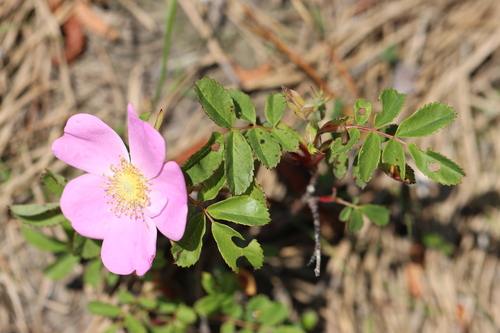
- Flower color
- Yellow or pink
- Growth rate
- Moderate
- Growth habit
- Spreads by rhizomes
- Foliage color
- Green
- Fruit begins
- Summer
- Fruit ends
- Summer
What its natural habitat tells you
Safety has not been reviewed for this plant; check toxicity and thorns before planting.
Growing sources and scope
- Bloom · “Late spring” · USDA PLANTS · Nationwide species characteristics; local growing conditions may vary
- Flower color · “Yellow or pink” · NC Extension Plant Toolbox (ranked first; USDA PLANTS differs)
- Foliage color · “Green” · USDA PLANTS · Nationwide species characteristics; local growing conditions may vary
- Fruit begins · “Summer” · USDA PLANTS · Nationwide species characteristics; local growing conditions may vary
- Fruit ends · “Summer” · USDA PLANTS · Nationwide species characteristics; local growing conditions may vary
- Growth habit · “Spreads by rhizomes” · USDA PLANTS · Nationwide species characteristics; local growing conditions may vary
- Growth rate · “Moderate” · USDA PLANTS · Nationwide species characteristics; local growing conditions may vary
- Hardiness · “Zones 3a–8b” · NC Extension Plant Toolbox
- Height · “About 6 feet” · USDA PLANTS · Nationwide species characteristics; local growing conditions may vary
- Leaves · “Deciduous” · NC Extension Plant Toolbox
- Life cycle · “Woody perennial” · NC Extension Plant Toolbox
- Light · “Full sun (6 or more hours of direct sunlight a day); Partial shade (direct sunlight only part of the day, 2-6 hours)” · NC Extension Plant Toolbox (ranked first; Tennessee Smart Yards differs)
- Soil · “medium” · Tennessee Smart Yards · Published Tennessee growing guidance; exact cached scientific heading
- Soil pH · “Acidic to neutral” · NC Extension Plant Toolbox
Conservation status
| Virginia rank | SH |
|---|---|
| Global rank | G5 |
| VA status | Not verified |
| Federal status | Not verified |
Will it fit your yard?
Check this plant against your county, sun and soil moisture. Conditions are checked in your browser.
Growing cautions
- Spreads by rhizomes. USDA PLANTS lists its growth form as rhizomatous. USDA PLANTS
For planning only; these do not change the score or Fit.
Sources
- Virginia DCR Natural Heritage rare plant list
- Digital Atlas of the Virginia Flora
- USDA PLANTS
- NatureServe Explorer
- Shropshire & Tallamy 2025, Lepidoptera of North America north of Mexico, ZooKeys 1261 (ODbL)
- Noori, Seltmann & Orr 2026, A curated and integrated dataset for exploring global bee-plant interactions (GloBI), Zenodo, CC BY 4.0
- Smith, Bachelder, Russell, Morales, Mosher & Seltmann 2024, Bee-Specialization-Modeling v0.6.1 (specialist host table compiled from J. Fowler's pollen specialist bee lists), Zenodo, CC BY 4.0
- Hurlbert, Olsen, Sawyer & Winner 2021, Avian Diet Database, Scientific Data 8: 260 (CC0)
- Narango, Tallamy & Shropshire 2020, Few keystone plant genera support the majority of Lepidoptera species, Nature Communications