

Bristly Locust
Robinia hispida
Native to Virginia. How scores work Is it native here?
Profile 94%
- Height
- 2–10 feet
- Spread
- 5–15 feet
- Light
- Full sun
- Soil moisture
- Somewhat dry to moist
Space about 10 ft apart from its recorded spread. Enter your bed size for a count
Will it fit your yard?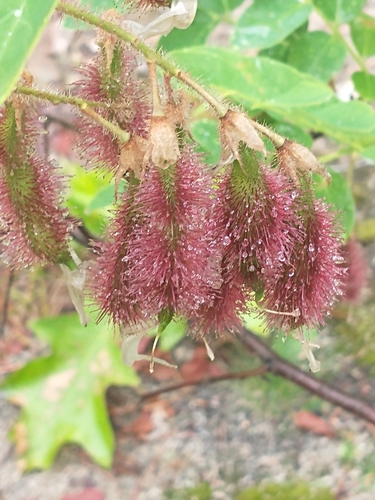
At a glance
- Life cycle
- Perennial
- Leaves
- Deciduous
- Bloom
- Spring and summer
Recorded in 53 Virginia counties.
Also found with this plant
Wildlife whose habitat models include habitats this plant grows in, in Virginia. Shared habitat, not food. 73 animals.
- Yellow-throated WarblerDendroica dominica

Who uses this plant?
 62CaterpillarsGenus host records with ranges including VA
Genus host records with ranges including VA · Robinia
- Epargyreus clarusSilver-spotted Skipper
- Acharia stimuleaSaddleback Caterpillar Moth
- Acronicta americanaAmerican Dagger
- Actias lunaLuna Moth
- Agonopterix robiniellaFour-Dotted Agonopterix Moth, Locust Leaffolder
- Alsophila pometariaFall Cankerworm Moth
- Anticarsia gemmatalisVelvetbean Caterpillar Moth
- Archips argyrospilaFruit-Tree Leafroller Moth
- Aroga trialbamaculellaRed-Striped Fireworm Moth
- Automeris ioIo Moth
Show all 62
- Biston betulariaSalt-and-Pepper Geometer, Cleft-Headed Looper
- Caloptilia stigmatellaPoplar Caloptilia
- Catocala habilisHabilis Underwing
- Catocala illectaMagdalen Underwing
- Celiptera frustulumBlack Bit Moth
- Ceratomia amyntorElm Sphinx
- Coelodasys unicornisUnicorn Caterpillar Moth
- Colias philodiceClouded Sulphur, Clover Butterfly
- Dasylophia anguinaBlack-Spotted Prominent
- Datana ministraYellow-Necked Caterpillar Moth
- Digrammia ocellinataFaint-Spotted Angle
- Eacles imperialisImperial Moth, Imperial Spiny Caterpillar
- Ecdytolopha insiticianaLocust Twig Borer Moth
- Elasmopalpus lignosellaLesser Cornstalk Borer
- Euparthenos nubilisLocust Underwing
- Filatima pseudacaciellaDusky-Backed Filatima
- Gesta icelusDreamy Duskywing
- Gesta zaruccoZarucco Duskywing
- Gymnandrosoma punctidiscanumDotted Gymnast, Dotted Ecdytolopha
- Halysidota tessellarisBanded Tussock Moth, Pale Tiger Moth
- Heliomata cycladataCommon Spring Moth, Stout Locust Looper
- Heliomata infulataRare Spring Moth
- Hypena scabraGreen Cloverworm Bomolocha, Black Snout
- Hypercompe scriboniaGiant Leopard Moth, Great Leopard Moth
- Hyphantria cuneaFall Webworm
- Lophocampa caryaeHickory Tussock Moth, Hickory Tiger Moth
- Lophocampa maculataSpotted Tussock Moth, Yellow-Spotted Tiger Moth
- Malacosoma disstriaForest Tent Caterpillar
- Mellilla xanthometataOrange Wing
- Nematocampa resistariaFilament Bearer, Horned Spanworm Moth
- Norape cretataWhite Flannel Moth
- Oedemasia concinnaRed-Humped Caterpillar, Red-Humped Appleworm
- Oiketicus abbotiiAbbot's Bagworm Moth
- Orgyia leucostigmaWhite-Marked Tussock Moth
- Orthosia hibisciSpeckled Green Fruitworm Moth, Speckled Green Quaker
- Papaipema nebrisStalk Borer
- Parectopa robiniellaLocust Digitate Leafminer
- Pero honestariaHonest Pero
- Prionoxystus robiniaeCarpenterworm Moth, Black Locust Borer, Cottonwood Borer
- Psilocorsis cryptolechiellaBlack-Fringed Leaftier
- Pyrrhia ciliscaAmerican Bordered Sallow, Noble Sun Moth
- Sciota subcaesiellaLocust Leafroller
- Sciota virgatellaBlack-Spotted Leafroller
- Sparganothis sulfureanaSparganothis Fruitworm Moth, Sulfur Leafroller, False Yellow-Head
- Syssphinx bicolorHoney Locust Moth
- Tetracis cachexiataWhite Slant-Line
- Thyridopteryx ephemeraeformisEvergreen Bagworm Moth
- Tlascala reductellaTlascala Moth, Honey Locust Leafroller
- Zale undularisBlack Zale
- Zale unilineataOne-Lined Zale
- Chrysopeleia purpuriella
- Sinoe robiniella
 1BeesSoutheastern regional records
Southeastern regional records · Robinia
Individual names are not available yet.
Noori, Seltmann & Orr 2026, A curated and integrated dataset for exploring global bee-plant interactions (GloBI), Zenodo, CC BY 4.0 0Specialist beesPollen specialists
 3BirdsRecorded genus food-resource interactions; not a state feeding claim
Recorded genus food-resource interactions; not a state feeding claim · Robinia
- Callipepla californicaCalifornia Quail
- Columba liviaRock Pigeon
- Oreortyx pictusMountain Quail
Direct food only: birds recorded eating this genus across North America. Caterpillars on host plants also feed nesting birds. NC Native Plant Society: butterfly gardening
No records yet · Ants · Beetles · Flies · Adult butterflies / moths · Other wasps · Other insects
Plant details
- Family
- Fabaceae
- Hardiness
- Zones 5a–8b
- Flower color
- Pink
What its natural habitat tells you
Safety has not been reviewed for this plant; check toxicity and thorns before planting.
Growing sources and scope
- Bloom · “Spring and summer” · NC Extension Plant Toolbox
- Flower color · “Pink” · NC Extension Plant Toolbox
- Hardiness · “Zones 5a–8b” · NC Extension Plant Toolbox
- Height · “2–10 feet” · NC Extension Plant Toolbox
- Leaves · “Deciduous” · NC Extension Plant Toolbox
- Life cycle · “Perennial” · NC Extension Plant Toolbox
- Light · “Full sun (6 or more hours of direct sunlight a day)” · NC Extension Plant Toolbox
- primary_flower_color · “pink” · NC Extension Plant Toolbox
- Soil · “Good drainage; Moist; Occasionally dry” · NC Extension Plant Toolbox
- Spread · “5–15 feet” · NC Extension Plant Toolbox
Conservation status
| Virginia rank | S4 |
|---|---|
| Global rank | G4 [G5] |
| VA status | Not verified |
| Federal status | Not verified |
Will it fit your yard?
Check this plant against your county, sun and soil moisture. Conditions are checked in your browser.
Sources
- Digital Atlas of the Virginia Flora
- USDA PLANTS
- Vascular Plants of North Carolina (NC Natural Heritage Program)
- NatureServe Explorer
- Shropshire & Tallamy 2025, Lepidoptera of North America north of Mexico, ZooKeys 1261 (ODbL)
- Noori, Seltmann & Orr 2026, A curated and integrated dataset for exploring global bee-plant interactions (GloBI), Zenodo, CC BY 4.0
- Smith, Bachelder, Russell, Morales, Mosher & Seltmann 2024, Bee-Specialization-Modeling v0.6.1 (specialist host table compiled from J. Fowler's pollen specialist bee lists), Zenodo, CC BY 4.0
- Hurlbert, Olsen, Sawyer & Winner 2021, Avian Diet Database, Scientific Data 8: 260 (CC0)
- Narango, Tallamy & Shropshire 2020, Few keystone plant genera support the majority of Lepidoptera species, Nature Communications