

Maritime Pokeweed
Phytolacca americana var. rigida
Found in dune slacks, dune slopes, edges of tidal marshes, disturbed areas on barrier islands, dry sandhills near the coast. FloraQuest, phone app (app page) What its natural habitat tells you
Native to Virginia. How scores work Is it native here?
Profile 100%
- Height
- Up to about 20 feet
- Light
- Full sun, Partial shade
- Soil moisture
- Moist to standing water
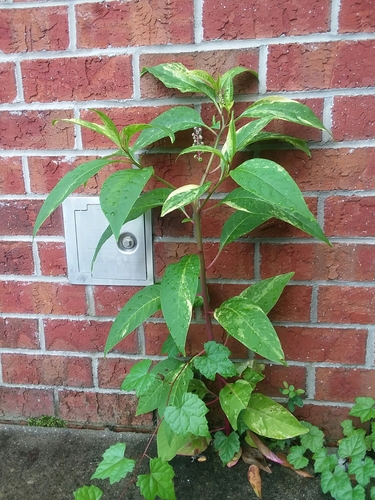
At a glance
- Life cycle
- Perennial
- Leaves
- Deciduous
- Bloom
- May to December
Not yet recorded · Spread
Recorded in 1 Virginia county.
Natural habitats
Places it grows wild. Not a planting requirement. Each habitat page lists the plants and wildlife also found there.
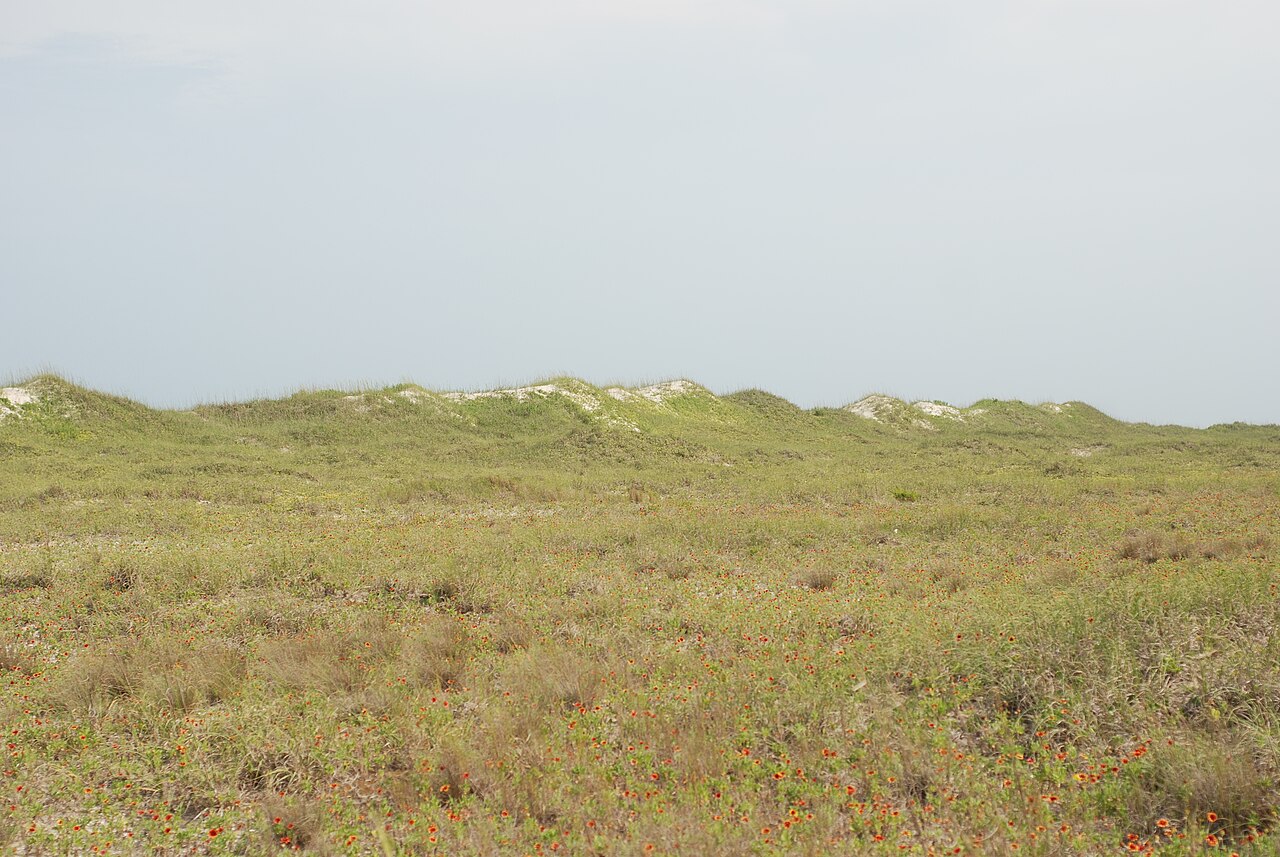

Coastal tidal marshes (salinity not stated)
Tidal marshes of the Atlantic and Gulf coasts where the source does not say whether the water is fresh, brackish or salt. A stated salinity files the marsh under freshwater tidal marshes or salt and brackish marshes instead.
Roadsides, fields and disturbed ground
Ground opened by people: roadsides, old fields, pastures, fencerows and lots.
Dry, deep-sand ridges with longleaf pine and turkey oak, kept open by fire.
Who uses this plant?
 10CaterpillarsGenus host records with ranges including VA
Genus host records with ranges including VA · Phytolacca
- Disclisioprocta stellataSomber Carpet, Bougainvillea Looper
- Herpetogramma aeglealisSerpentine Webworm
- Hypenula cacuminalisLong-Horned Owlet
- Hypercompe scriboniaGiant Leopard Moth, Great Leopard Moth
- Parapoynx obscuralisObscure Pondweed Moth
- Spodoptera eridaniaSouthern Armyworm Moth
- Spodoptera frugiperdaFall Armyworm Moth
- Spodoptera ornithogalliYellow-Striped Armyworm Moth, Cotton Cutworm
- Spoladea recurvalisHawaiian Beet Webworm
- Thyridopteryx ephemeraeformisEvergreen Bagworm Moth
 18BeesSoutheastern regional records
Southeastern regional records · Phytolacca
Individual names are not available yet.
Noori, Seltmann & Orr 2026, A curated and integrated dataset for exploring global bee-plant interactions (GloBI), Zenodo, CC BY 4.0 0Specialist beesPollen specialists
 22BirdsRecorded genus food-resource interactions; not a state feeding claim
Recorded genus food-resource interactions; not a state feeding claim · Phytolacca
- Agelaius phoeniceusRed-winged Blackbird
- Bombycilla cedrorumCedar Waxwing
- Cardinalis cardinalisNorthern Cardinal
- Catharus fuscescensVeery
- Catharus guttatusHermit Thrush
- Catharus minimus/bicknelliGray-cheeked/Bicknell's Thrush
- Catharus ustulatusSwainson's Thrush
- Columba liviaRock Pigeon
- Contopus virensEastern Wood-Pewee
- Corvus brachyrhynchosAmerican Crow
Show all 22
- Ectopistes migratoriusPassenger Pigeon
- Empidonax flaviventrisYellow-bellied Flycatcher
- Francolinus francolinusBlack Francolin
- Quiscalus quisculaCommon Grackle
- Sialia sialisEastern Bluebird
- Sturnus vulgarisEuropean Starling
- Turdus migratoriusAmerican Robin
- Tyrannus tyrannusEastern Kingbird
- Vireo flavifronsYellow-throated Vireo
- Vireo gilvusWarbling Vireo
- Vireo griseusWhite-eyed Vireo
- Vireo olivaceusRed-eyed Vireo
Direct food only: birds recorded eating this genus across North America. Caterpillars on host plants also feed nesting birds. NC Native Plant Society: butterfly gardening
No records yet · Ants · Beetles · Flies · Adult butterflies / moths · Other wasps · Other insects
Plant details
- Family
- Phytolaccaceae
- Soil pH
- Neutral
- Flower color
- Black, green, pink, purple or white
Safety has not been reviewed for this plant; check toxicity and thorns before planting.
Growing sources and scope
- Bloom · “May to December” · FloraQuest: Carolinas, Georgia (Southeastern Flora Team), phone app (app page) · Carolinas and Georgia
- Flower color · “Black, green, pink, purple or white” · NC Extension Plant Toolbox (ranked first; Lady Bird Johnson Wildflower Center differs)
- Height · “Up to about 20 feet” · Lady Bird Johnson Wildflower Center
- Leaves · “Deciduous” · NC Extension Plant Toolbox
- Life cycle · “Perennial” · NC Extension Plant Toolbox
- Light · “Full sun (6 or more hours of direct sunlight a day); Partial shade (direct sunlight only part of the day, 2-6 hours)” · NC Extension Plant Toolbox
- Soil · “Frequent standing water; Moist” · NC Extension Plant Toolbox
- Soil pH · “Neutral” · NC Extension Plant Toolbox
Also known as
Phytolacca americana var. rigida
Conservation status
| Virginia rank | Not available |
|---|---|
| Global rank | G5T5 [G5] |
| VA status | Not verified |
| Federal status | Not verified |
Will it fit your yard?
Check this plant against your county, sun and soil moisture. Conditions are checked in your browser.
Sources
- Digital Atlas of the Virginia Flora
- USDA PLANTS
- Vascular Plants of North Carolina (NC Natural Heritage Program)
- Shropshire & Tallamy 2025, Lepidoptera of North America north of Mexico, ZooKeys 1261 (ODbL)
- Noori, Seltmann & Orr 2026, A curated and integrated dataset for exploring global bee-plant interactions (GloBI), Zenodo, CC BY 4.0
- Smith, Bachelder, Russell, Morales, Mosher & Seltmann 2024, Bee-Specialization-Modeling v0.6.1 (specialist host table compiled from J. Fowler's pollen specialist bee lists), Zenodo, CC BY 4.0
- Hurlbert, Olsen, Sawyer & Winner 2021, Avian Diet Database, Scientific Data 8: 260 (CC0)
- Narango, Tallamy & Shropshire 2020, Few keystone plant genera support the majority of Lepidoptera species, Nature Communications