

Virginia Creeper
Parthenocissus quinquefolia
Found in swamp forests, bottomlands, maritime forests and thickets, rock outcrops, moist forests. FloraQuest, phone app (app page) What its natural habitat tells you
Native to Virginia. How scores work Is it native here?
Profile 100%
- Height
- 30–50 feet
- Spread
- 5–10 feet
- Light
- Dappled sunlight, Full sun, Partial shade
- Soil moisture
- Somewhat dry to moist
Space about 7.5 ft apart from its recorded spread. Enter your bed size for a count
Will it fit your yard?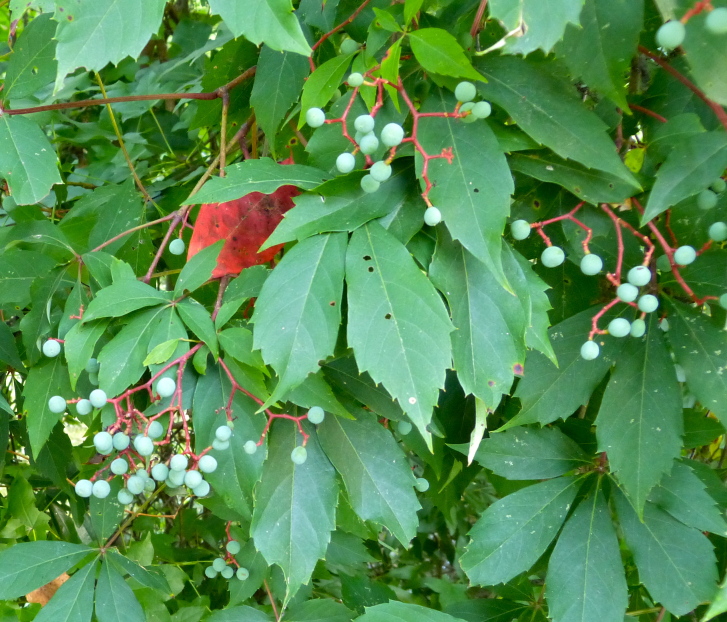
At a glance
- Life cycle
- Woody perennial
- Leaves
- Deciduous or evergreen
- Bloom
- Late spring
- Fruiting season
- Spring to fall
Recorded in 102 Virginia counties.
Natural habitats
Places it grows wild. Not a planting requirement. Each habitat page lists the plants and wildlife also found there.

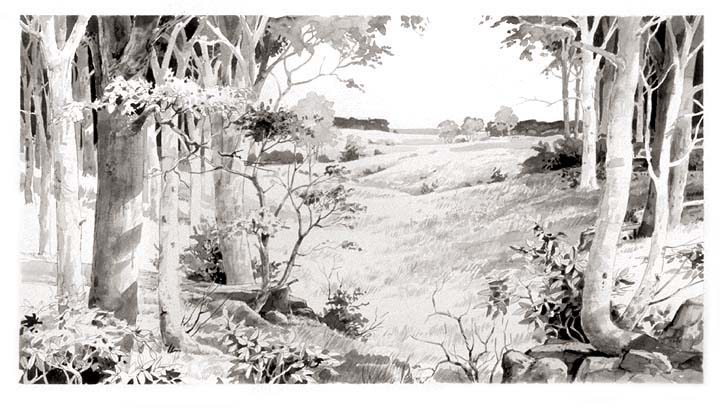
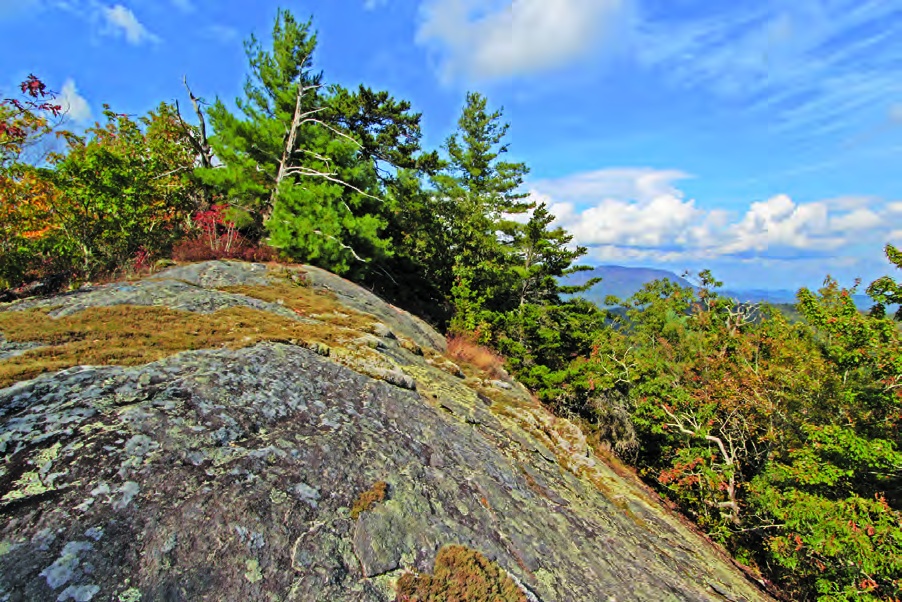
Cliffs, ledges and rocky summits
Floodplain and bottomland forests
Forests on low ground beside rivers and streams that flood from time to time.
Salt-pruned forests and shrub thickets behind coastal dunes.
Also found with this plant
Wildlife whose habitat models include habitats this plant grows in, in Virginia. Shared habitat, not food. 161 animals.
- Mourning DoveZenaida macroura
- Red-tailed HawkButeo jamaicensis
- Turkey VultureCathartes aura
- Bald EagleHaliaeetus leucocephalus
- Belted KingfisherMegaceryle alcyon
- Common NighthawkChordeiles minor
- European StarlingSturnus vulgaris
- Great Horned OwlBubo virginianus
- Sharp-shinned HawkAccipiter striatus
- Eastern KingbirdTyrannus tyrannus
- American CrowCorvus brachyrhynchos
- American KestrelFalco sparverius
- Blue JayCyanocitta cristata
- Blue-gray GnatcatcherPolioptila caerulea
- Chimney SwiftChaetura pelagica
- Cooper's HawkAccipiter cooperii
- Gray CatbirdDumetella carolinensis
- Ruby-crowned KingletRegulus calendula
- Tufted TitmouseBaeolophus bicolor
- Yellow-breasted ChatIcteria virens
- Yellow-rumped WarblerDendroica coronata
- American GoldfinchCarduelis tristis
- American RobinTurdus migratorius
- Black-and-White WarblerMniotilta varia
























Who uses this plant?
 31CaterpillarsGenus host records with ranges including VA
Genus host records with ranges including VA · Parthenocissus
- Adela ridingsellaRidings' Fairy Moth
- Albuna fraxiniVirginia Creeper Clearwing
- Alypia octomaculataEight-Spot Forester, 8-Spot Forester
- Amphion floridensisNessus Sphinx
- Amphipyra pyramidoidesMiranda Underwing, Copper Underwing, Copper Amphipyra
- Darapsa myronVirginia Creeper Sphinx
- Deidamia inscriptumLettered Sphinx
- Desmia funeralisGrape Leaffolder Moth
- Dyspteris abortivariaThe Bad-Wing, Badwing
- Eudryas grataBeautiful Wood-Nymph
Show all 31
- Eulithis diversilineataLesser Grapevine Looper Moth
- Eulithis gracilineataGreater Grapevine Looper
- Eumorpha achemonAchemon Sphinx
- Eumorpha pandorusPandorus Sphinx, Pandora Sphinx
- Geina periscelidactylaGrape Plume Moth
- Halysidota tessellarisBanded Tussock Moth, Pale Tiger Moth
- Harrisina americanaGrapeleaf Skeletonizer Moth
- Hyalophora cecropiaCecropia Silkmoth, Cecropia Moth
- Hyles lineataWhite-Lined Sphinx
- Hyphantria cuneaFall Webworm
- Lophocampa caryaeHickory Tussock Moth, Hickory Tiger Moth
- Monochroa absconditellaStrawberry Crown Miner
- Orgyia leucostigmaWhite-Marked Tussock Moth
- Phigalia strigatariaSmall Phigalia, Small Oak Looper
- Phyllodesma americanaLappet Moth, American Lappet Moth, Southern Lappet Moth
- Psychomorpha epimenisGrapevine Epimenis
- Pyrrharctia isabellaIsabella Tiger Moth, Banded Woolybear
- Sphecodina abbottiiAbbott's Sphinx
- Spilosoma virginicaVirginian Tiger Moth, Yellow Woolybear Moth, Yellow Bear
- Vitacea scepsiformisVirginia Creeper Clearwing, Lesser Grape Root Borer
- Heliozela aesella
 20BeesSoutheastern regional records
Southeastern regional records · Parthenocissus
Individual names are not available yet.
Noori, Seltmann & Orr 2026, A curated and integrated dataset for exploring global bee-plant interactions (GloBI), Zenodo, CC BY 4.0 0Specialist beesPollen specialists
 12BirdsRecorded genus food-resource interactions; not a state feeding claim
Recorded genus food-resource interactions; not a state feeding claim · Parthenocissus
- Sialia sialisEastern Bluebird
- Catharus fuscescensVeery
- Catharus guttatusHermit Thrush
- Catharus ustulatusSwainson's Thrush
- Hylocichla mustelinaWood Thrush
- Plectrophenax nivalisSnow Bunting
- Tachycineta bicolorTree Swallow
- Turdus migratoriusAmerican Robin
- Tyrannus tyrannusEastern Kingbird
- Tyrannus verticalisWestern Kingbird
Show all 12
- Vireo griseusWhite-eyed Vireo
- Vireo olivaceusRed-eyed Vireo
Direct food only: birds recorded eating this genus across North America. Caterpillars on host plants also feed nesting birds. NC Native Plant Society: butterfly gardening
No records yet · Ants · Beetles · Flies · Adult butterflies / moths · Other wasps · Other insects
Plant details
- Family
- Vitaceae
- Hardiness
- Zones 3a–10b
- Soil pH
- Acidic to alkaline
- Flower color
- Green or white
- Growth rate
- Rapid
- Growth habit
- Spreads by runners
- Foliage color
- Green
- Fruit begins
- Spring
- Fruit ends
- Fall
Safety has not been reviewed for this plant; check toxicity and thorns before planting.
Growing sources and scope
- Bloom · “Late spring” · USDA PLANTS · Nationwide species characteristics; local growing conditions may vary
- Flower color · “Green or white” · NC Extension Plant Toolbox
- Foliage color · “Green” · USDA PLANTS · Nationwide species characteristics; local growing conditions may vary
- Fruit begins · “Spring” · USDA PLANTS · Nationwide species characteristics; local growing conditions may vary
- Fruit ends · “Fall” · USDA PLANTS · Nationwide species characteristics; local growing conditions may vary
- Growth habit · “Spreads by runners” · USDA PLANTS · Nationwide species characteristics; local growing conditions may vary
- Growth rate · “Rapid” · USDA PLANTS · Nationwide species characteristics; local growing conditions may vary
- Hardiness · “Zones 3a–10b” · NC Extension Plant Toolbox
- Height · “30–50 feet” · NC Extension Plant Toolbox (ranked first; USDA PLANTS, Minnesota Wildflowers differ)
- Leaves · “Deciduous or evergreen” · NC Extension Plant Toolbox
- Life cycle · “Woody perennial” · NC Extension Plant Toolbox
- Light · “Dappled sunlight (shade through upper canopy all day); Full sun (6 or more hours of direct sunlight a day); Partial shade (direct sunlight only part of the day, 2-6 hours)” · NC Extension Plant Toolbox (ranked first; Tennessee Smart Yards, Virginia DCR Piedmont, Virginia DCR Coastal Plain differ)
- Soil · “Moist; Occasionally dry; Occasionally wet” · NC Extension Plant Toolbox (ranked first; Tennessee Smart Yards, Virginia DCR Piedmont, Virginia DCR Coastal Plain differ)
- Soil pH · “Acidic to alkaline” · NC Extension Plant Toolbox
- Spread · “5–10 feet” · NC Extension Plant Toolbox
Conservation status
| Virginia rank | S5 |
|---|---|
| Global rank | G5 |
| VA status | Not verified |
| Federal status | Not verified |
Will it fit your yard?
Check this plant against your county, sun and soil moisture. Conditions are checked in your browser.
Growing cautions
- Spreads by runners. USDA PLANTS lists its growth form as stoloniferous. USDA PLANTS
For planning only; these do not change the score or Fit.
Sources
- Digital Atlas of the Virginia Flora
- USDA PLANTS
- Vascular Plants of North Carolina (NC Natural Heritage Program)
- NatureServe Explorer
- Shropshire & Tallamy 2025, Lepidoptera of North America north of Mexico, ZooKeys 1261 (ODbL)
- Noori, Seltmann & Orr 2026, A curated and integrated dataset for exploring global bee-plant interactions (GloBI), Zenodo, CC BY 4.0
- Smith, Bachelder, Russell, Morales, Mosher & Seltmann 2024, Bee-Specialization-Modeling v0.6.1 (specialist host table compiled from J. Fowler's pollen specialist bee lists), Zenodo, CC BY 4.0
- Hurlbert, Olsen, Sawyer & Winner 2021, Avian Diet Database, Scientific Data 8: 260 (CC0)
- Narango, Tallamy & Shropshire 2020, Few keystone plant genera support the majority of Lepidoptera species, Nature Communications