

American Water-willow
Justicia americana
Found in river and stream beds, in shallow water, often rooted in rocky shallows. Weakley, Flora of the Southeastern United States (2025), Northern Tier edition What its natural habitat tells you
Native to Virginia. How scores work Is it native here?
Profile 100%
- Height
- About 2.5 feet
- Light
- Partial shade, Full sun
- Soil moisture
- Moist to standing water
At a glance
- Bloom
- Late spring
- Fruiting season
- Spring to fall
Not yet recorded · Spread · Life cycle · Leaves
Recorded in 77 Virginia counties.
Also found with this plant
Wildlife whose habitat models include habitats this plant grows in, in Virginia. Shared habitat, not food. 189 animals.
- Eurasian Collared-doveStreptopelia decaocto
- European StarlingSturnus vulgaris
- Golden-crowned KingletRegulus satrapa
- Gray CatbirdDumetella carolinensis
- Hairy WoodpeckerPicoides villosus
- Kentucky WarblerOporornis formosus
- Louisiana WaterthrushSeiurus motacilla
- Mourning DoveZenaida macroura
- Northern CardinalCardinalis cardinalis
- Northern FlickerColaptes auratus
- Northern MockingbirdMimus polyglottos
- Northern ParulaParula americana
- Northern Saw-whet OwlAegolius acadicus
- Pine SiskinCarduelis pinus
- Prothonotary WarblerProtonotaria citrea
- Purple FinchCarpodacus purpureus
- Red-breasted NuthatchSitta canadensis
- Red-headed WoodpeckerMelanerpes erythrocephalus
- Red-shouldered HawkButeo lineatus
- Red-tailed HawkButeo jamaicensis
- Ruby-crowned KingletRegulus calendula
- Ruffed GrouseBonasa umbellus
- Rusty BlackbirdEuphagus carolinus
- Snowy EgretEgretta thula

























Who uses this plant?
 7CaterpillarsGenus host records with ranges including VA
Genus host records with ranges including VA · Justicia
- Argyrogramma verrucaGolden Looper
- Automeris ioIo Moth
- Darapsa versicolorHydrangea Sphinx
- Eudryas unioPearly Wood-Nymph
- Ozarba aeriaAerial Brown
- Phyciodes phaonPhaon Crescent, Crescentspot
- Spodoptera eridaniaSouthern Armyworm Moth
 3BeesSoutheastern regional records
Southeastern regional records · Justicia
Individual names are not available yet.
Noori, Seltmann & Orr 2026, A curated and integrated dataset for exploring global bee-plant interactions (GloBI), Zenodo, CC BY 4.0 0Specialist beesPollen specialists
 —BirdsRecorded genus food-resource interactions; not a state feeding claim
No records yet · Ants · Beetles · Flies · Adult butterflies / moths · Other wasps · Other insects
Plant details
- Family
- Acanthaceae
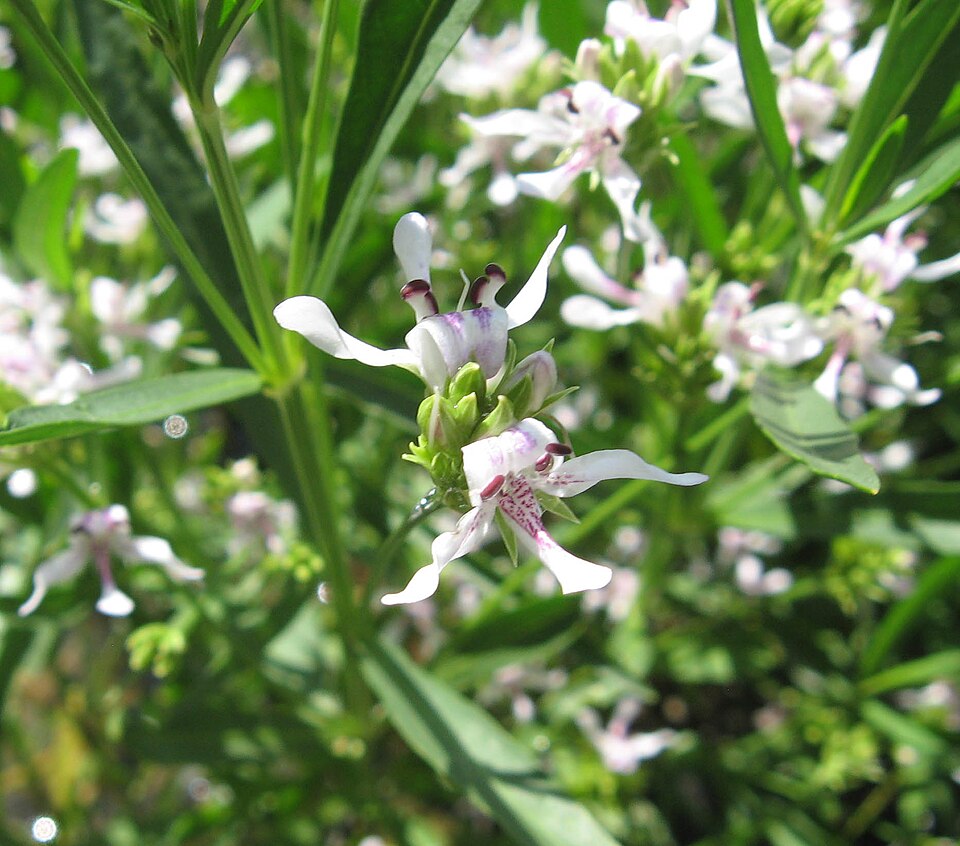
- Flower color
- White
- Growth rate
- Rapid
- Growth habit
- Spreads by rhizomes
- Foliage color
- Dark green
- Fruit begins
- Spring
- Fruit ends
- Fall
Safety has not been reviewed for this plant; check toxicity and thorns before planting.
Growing sources and scope
- Bloom · “Late spring” · USDA PLANTS · Nationwide species characteristics; local growing conditions may vary
- Flower color · “White” · USDA PLANTS · Nationwide species characteristics; local growing conditions may vary
- Foliage color · “Dark green” · USDA PLANTS · Nationwide species characteristics; local growing conditions may vary
- Fruit begins · “Spring” · USDA PLANTS · Nationwide species characteristics; local growing conditions may vary
- Fruit ends · “Fall” · USDA PLANTS · Nationwide species characteristics; local growing conditions may vary
- Growth habit · “Spreads by rhizomes” · USDA PLANTS · Nationwide species characteristics; local growing conditions may vary
- Growth rate · “Rapid” · USDA PLANTS · Nationwide species characteristics; local growing conditions may vary
- Height · “About 2.5 feet” · USDA PLANTS · Nationwide species characteristics; local growing conditions may vary
- Light · “Partial shade; Full sun (documented habitat)” · Weakley, Flora of the Southeastern United States (2025), Carolinas & Georgia edition · Carolinas and Georgia
- primary_flower_color · “white” · USDA PLANTS
- Soil · “Moist; Water; Wet (documented habitat)” · Weakley, Flora of the Southeastern United States (2025), Carolinas & Georgia edition · Carolinas and Georgia
Also known as
American Water Willow
Conservation status
| Virginia rank | S5 |
|---|---|
| Global rank | G5 |
| VA status | Not verified |
| Federal status | Not verified |
Will it fit your yard?
Check this plant against your county, sun and soil moisture. Conditions are checked in your browser.
Growing cautions
- Spreads by rhizomes. USDA PLANTS lists its growth form as rhizomatous. USDA PLANTS
For planning only; these do not change the score or Fit.
Sources
- Digital Atlas of the Virginia Flora
- USDA PLANTS
- Vascular Plants of North Carolina (NC Natural Heritage Program)
- Weakley, Flora of the Southeastern United States (2025), Carolinas & Georgia edition
- NatureServe Explorer
- Shropshire & Tallamy 2025, Lepidoptera of North America north of Mexico, ZooKeys 1261 (ODbL)
- Noori, Seltmann & Orr 2026, A curated and integrated dataset for exploring global bee-plant interactions (GloBI), Zenodo, CC BY 4.0
- Smith, Bachelder, Russell, Morales, Mosher & Seltmann 2024, Bee-Specialization-Modeling v0.6.1 (specialist host table compiled from J. Fowler's pollen specialist bee lists), Zenodo, CC BY 4.0
- Hurlbert, Olsen, Sawyer & Winner 2021, Avian Diet Database, Scientific Data 8: 260 (CC0)
- Narango, Tallamy & Shropshire 2020, Few keystone plant genera support the majority of Lepidoptera species, Nature Communications