

New Jersey Tea
Ceanothus americanus
Native to Virginia. How scores work Is it native here?
Profile 100%
- Height
- 2–3 feet
- Spread
- 3–5 feet
- Light
- 2–4 hours, 4–6 hours, Full sun
- Soil moisture
- Somewhat dry to moist
Space about 4 ft apart from its recorded spread, about 6 per 100 sq ft. Enter your bed size for a count
Will it fit your yard?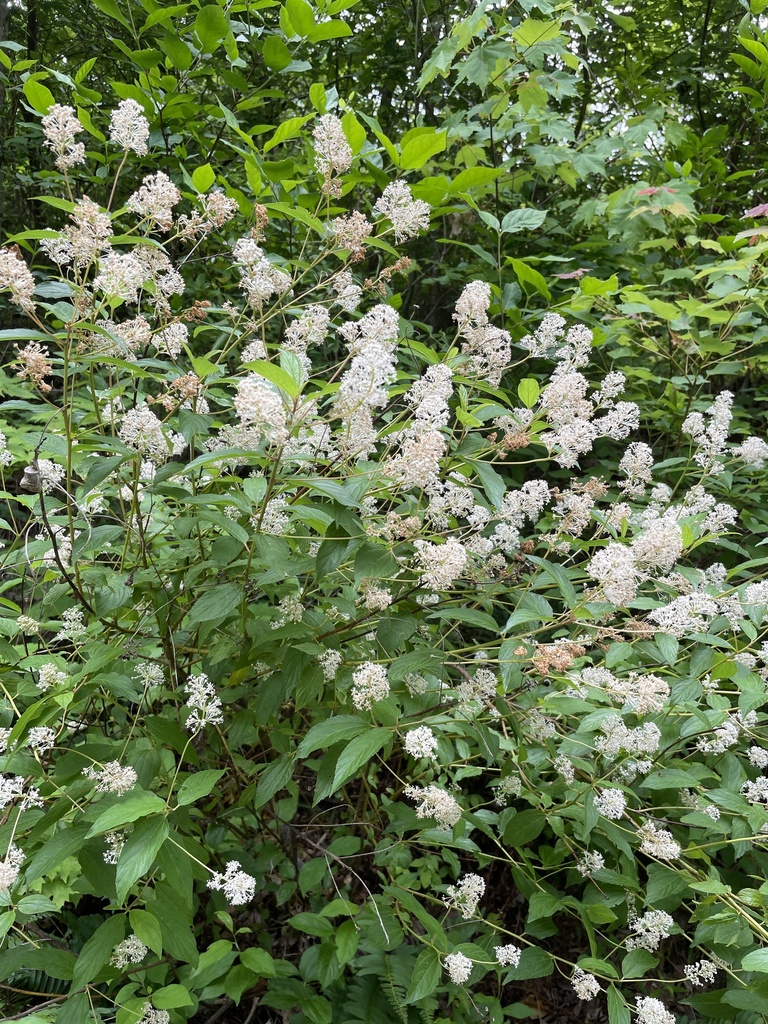
At a glance
- Life cycle
- Woody perennial
- Leaves
- Deciduous
- Bloom
- Spring and summer
- Fruiting season
- Summer
Recorded in 92 Virginia counties.
Also found with this plant
Wildlife whose habitat models include habitats this plant grows in, in Virginia. Shared habitat, not food. 79 animals.
- White-throated SparrowZonotrichia albicollis
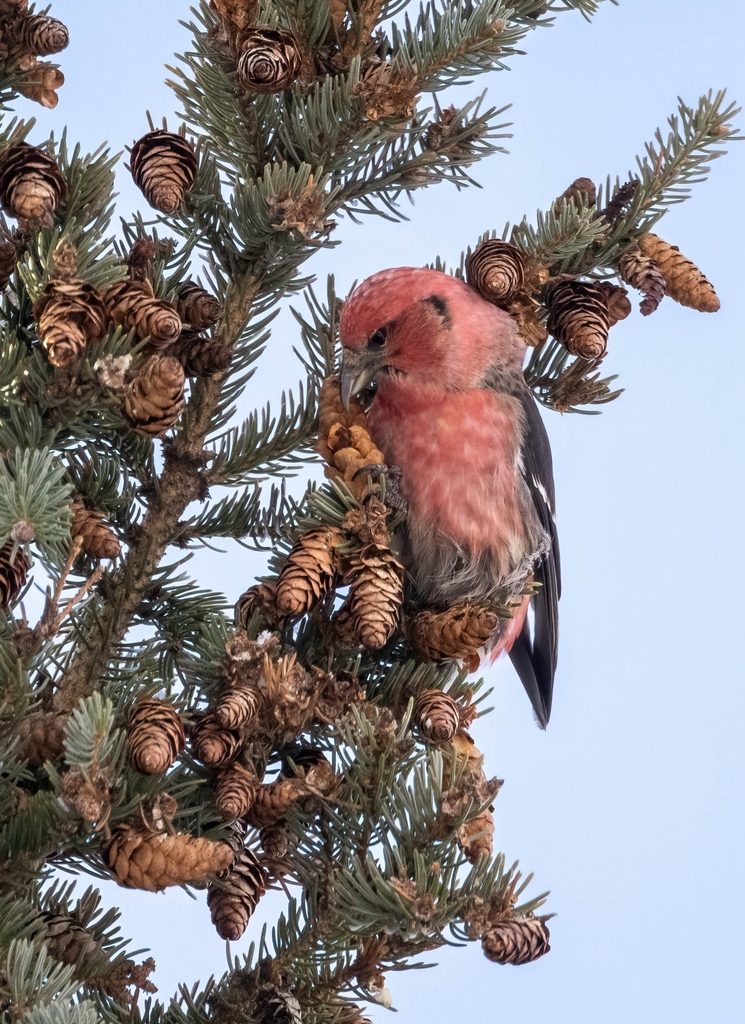
- White-winged CrossbillLoxia leucoptera
- Wild TurkeyMeleagris gallopavo
- Yellow-bellied SapsuckerSphyrapicus varius
- Yellow-breasted ChatIcteria virens
- Yellow-rumped WarblerDendroica coronata
- Yellow-throated WarblerDendroica dominica






Care
- Avoid wet soil.
- Choose a lasting spot; established plants are difficult to move.
Who uses this plant?
 47CaterpillarsGenus host records with ranges including VA
Genus host records with ranges including VA · Ceanothus
- Acleris pulverosana"North American" Hasty Acleris
- Anavitrinella pampinariaCommon Gray, Cranberry Spanworm
- Ancylis semiovanaHalf-Oval Ancylis
- Apodrepanulatrix liberariaBarrens Carpet
- Archips argyrospilaFruit-Tree Leafroller Moth
- Biston betulariaSalt-and-Pepper Geometer, Cleft-Headed Looper
- Callophrys augustinusThe Brown Elfin
- Calycopis cecropsRed-Banded Hairstreak, Cecrops Hairstreak
- Celastrina neglectaSummer Azure
- Chlorochlamys chloroleucariaBlackberry Looper Moth
Show all 47
- Choristoneura rosaceanaOblique-Banded Leafroller Moth, Rosaceous Leaf Roller
- Clepsis persicanaWhite Triangle Tortrix
- Coelodasys unicornisUnicorn Caterpillar Moth
- Ectropis crepusculariaThe Small Engrailed, Saddleback Looper
- Erastria colorariaBroad-Lined Erastria
- Erastria cruentariaThin-Lined Erastria
- Euchlaena marginariaOchre Euchlaena
- Eupithecia columbiataColumbia Pug
- Eupithecia miserulataCommon Eupithacia, Common Pug
- Eupithecia misturataInsignificant Pug
- Eutrapela clematariaCurved-Tooth Geometer, Purplish Brown Looper
- Gesta martialisMottled Duskywing
- Haploa leconteiLeconte's Haploa
- Harrisimemna trisignataHarris's Three-Spot
- Hesperumia sulphurariaSulphur Moth
- Hyalophora cecropiaCecropia Silkmoth, Cecropia Moth
- Hypena bijugalisDimorphic Bomolocha, Dimorphic Snout
- Hypena scabraGreen Cloverworm Bomolocha, Black Snout
- Lyonetia prunifoliellaStriped Bent-wing
- Malacosoma americanaEastern Tent Caterpillar
- Nematocampa resistariaFilament Bearer, Horned Spanworm Moth
- Nemoria rubrifrontariaRed-Fronted Emerald
- Oedemasia concinnaRed-Humped Caterpillar, Red-Humped Appleworm
- Orthosia hibisciSpeckled Green Fruitworm Moth, Speckled Green Quaker
- Palthis angulalisDark-Spotted Palthis
- Phyllodesma americanaLappet Moth, American Lappet Moth, Southern Lappet Moth
- Platynota idaeusalisTufted Apple-Bud Moth
- Redectis vitreaWhite-Spotted Redactis
- Schizura ipomaeaeMorning-Glory Prominent, Checkered-Fringe Prominent
- Sicya maculariaSharp-Lined Yellow
- Spiramater lutraDarling Mamestra, Splashed Arches, Otter Spiramater, Otter Arches
- Strymon melinusGray Hairstreak
- Synchlora aerataWavy-Lined Emerald, Camouflaged Looper
- Xanthotype sospetaCrocus Geometer
- Zale minereaColorful Zale
- Lithacodes fiskeanus
- Periploca ceanothiella
 46BeesSoutheastern regional records
Southeastern regional records · Ceanothus
Individual names are not available yet.
Noori, Seltmann & Orr 2026, A curated and integrated dataset for exploring global bee-plant interactions (GloBI), Zenodo, CC BY 4.0 1Specialist beesPollen specialists
Pollen specialists · Ceanothus
- Protandrena pauper
 2BirdsRecorded genus food-resource interactions; not a state feeding claim
Recorded genus food-resource interactions; not a state feeding claim · Ceanothus
- Coccothraustes vespertinusEvening Grosbeak
- Zonotrichia leucophrysWhite-crowned Sparrow
Direct food only: birds recorded eating this genus across North America. Caterpillars on host plants also feed nesting birds. NC Native Plant Society: butterfly gardening
Beetles 9
- Centrinites strigicollis
- Centrinus picumnus
- Centrinus scutellum album
- Cryptorhopalum haemorrhoidale
- Diabrotica 12-punctata
- Limonius griseus
- Oxacis thoracica
- Trichius piger
- Typocerus sinuatus
Flower visits · Carlinville, Illinois, USA
Flies 25
- Anthrax sinuosa
- Archytas analis
- Archytas aterrima
- Cistogaster occidua
- Exorista confinis
- Limnophora narona
- Morellia micans
- Musca domestica
- Nemotelus glaber
- Orthoneura nitida
Show all 25
- Paradidyma singularis
- Phorantha purpurascens
- Phormia regina
- Sarcophaga sinuata
- Sciara atrata
- Sepsis violacea
- Siphona geniculata
- Spallanzania hesperidarum
- Sphaerophoria cylindrica
- Syrphus americanus
- Trichophora ruficauda
- Tropidia quadrata
- Trypeta humilis
- Xanthomelana arcuata
- Zodion fulvifrons
Flower visits · Carlinville, Illinois, USA
Adult butterflies / moths 2
- Thecla calanus
- Thecla sylvinus
Flower visits · Carlinville, Illinois, USA
Other wasps 21
- Ancistrocerus tigris
- Anoplius illinoensis
- Cerceris clypeata
- Cerceris compar
- Cerceris robertsonii
- Cerceris rufinoda
- Ceropales robinsonii
- Eumenes fraternus
- Isodontia apicalis
- Leionotus dorsalis
Show all 21
- Leionotus fulvipes
- Leionotus fundatus
- Leionotus illinoensis
- Oxybelus 4-notatus
- Poecilopompilus navus
- Polistes variatus
- Pompiloides marginatus
- Psammochares relativus
- Sphex nigricans
- Tachysphex acutus
- Tachysphex belfragei
Flower visits · Carlinville, Illinois, USA
Other insects 4
- Calocoris rapidus
- Canthophorus cinctus
- Lygaeus turcicus
- Lygus pratensis
Flower visits · Carlinville, Illinois, USA
No records yet · Ants
Plant details
- Family
- Rhamnaceae
- Hardiness
- Zones 4a–8b
- Soil pH
- Neutral to alkaline
- Flower color
- White
- Growth rate
- Slow
- Growth habit
- Several stems
- Foliage color
- Green
- Fruit begins
- Summer
- Fruit ends
- Summer
What its natural habitat tells you
Safety has not been reviewed for this plant; check toxicity and thorns before planting.
Growing sources and scope
- Bloom · “Spring and summer” · NC Extension Plant Toolbox (ranked first; USDA PLANTS, Prairie Moon 2026 Cultural Guide differ)
- Flower color · “White” · Lady Bird Johnson Wildflower Center: Ceanothus americanus
- Foliage color · “Green” · USDA PLANTS · Nationwide species characteristics; local growing conditions may vary
- Fruit begins · “Summer” · NC Extension Plant Toolbox · Species profile fruit display season; not a local ripening date
- Fruit ends · “Summer” · NC Extension Plant Toolbox (ranked first; USDA PLANTS differs) · Species profile fruit display season; not a local ripening date
- Growth habit · “Several stems” · USDA PLANTS · Nationwide species characteristics; local growing conditions may vary
- Growth rate · “Slow” · USDA PLANTS · Nationwide species characteristics; local growing conditions may vary
- Hardiness · “Zones 4a–8b” · NC Extension Plant Toolbox (ranked first; Missouri Botanical Garden Plant Finder differs)
- Height · “2–3 feet” · NC Extension Plant Toolbox (ranked first; USDA PLANTS, Missouri Botanical Garden Plant Finder, Prairie Moon 2026 Cultural Guide differ)
- Leaves · “Deciduous” · NC Extension Plant Toolbox
- Life cycle · “Woody perennial” · NC Extension Plant Toolbox (ranked first; Lady Bird Johnson Wildflower Center differs)
- Light · “2–4 hours; 4–6 hours; Full sun” · Lady Bird Johnson Wildflower Center: Ceanothus americanus
- primary_flower_color · “white” · Lady Bird Johnson Wildflower Center: Ceanothus americanus
- Soil · “Good drainage; Moist; Occasionally dry” · NC Extension Plant Toolbox (ranked first; Tennessee Smart Yards, Virginia DCR Piedmont, Virginia DCR Coastal Plain, Lady Bird Johnson Wildflower Center, Missouri Botanical Garden Plant Finder, Prairie Moon 2026 Cultural Guide differ)
- Soil pH · “Neutral to alkaline” · NC Extension Plant Toolbox (ranked first; Lady Bird Johnson Wildflower Center differs)
- Spread · “3–5 feet” · NC Extension Plant Toolbox
Conservation status
| Virginia rank | S5 |
|---|---|
| Global rank | G5 |
| VA status | Not verified |
| Federal status | Not verified |
Will it fit your yard?
Check this plant against your county, sun and soil moisture. Conditions are checked in your browser.
Growing cautions
- Needs good drainage. Avoid wet soil. NC State Extension Plant Toolbox
For planning only; these do not change the score or Fit.
Sources
- Digital Atlas of the Virginia Flora
- USDA PLANTS
- Vascular Plants of North Carolina (NC Natural Heritage Program)
- NatureServe Explorer
- Shropshire & Tallamy 2025, Lepidoptera of North America north of Mexico, ZooKeys 1261 (ODbL)
- Noori, Seltmann & Orr 2026, A curated and integrated dataset for exploring global bee-plant interactions (GloBI), Zenodo, CC BY 4.0
- Smith, Bachelder, Russell, Morales, Mosher & Seltmann 2024, Bee-Specialization-Modeling v0.6.1 (specialist host table compiled from J. Fowler's pollen specialist bee lists), Zenodo, CC BY 4.0
- Hurlbert, Olsen, Sawyer & Winner 2021, Avian Diet Database, Scientific Data 8: 260 (CC0)
- Narango, Tallamy & Shropshire 2020, Few keystone plant genera support the majority of Lepidoptera species, Nature Communications