

Bicknell's Sedge
Carex opaca
Found in prairies, eastwards in disturbed areas, such as introduced at old railroad livestock yard and well-established. FloraQuest, phone app (app page) What its natural habitat tells you
Not native to Virginia. How scores work Is it native here?
Profile 59%
- Light
- Full sun
- Soil moisture
- Dry to wet
No photograph yet. Looking for an old drawing…
At a glance
- Bloom
- April to July
Not yet recorded · Height · Spread · Life cycle · Leaves
This plant is missing most of its facts, so Quercus is looking them up in old botany books.
Recorded in 1 Virginia county.
Natural habitats
Places it grows wild. Not a planting requirement. Each habitat page lists the plants and wildlife also found there.
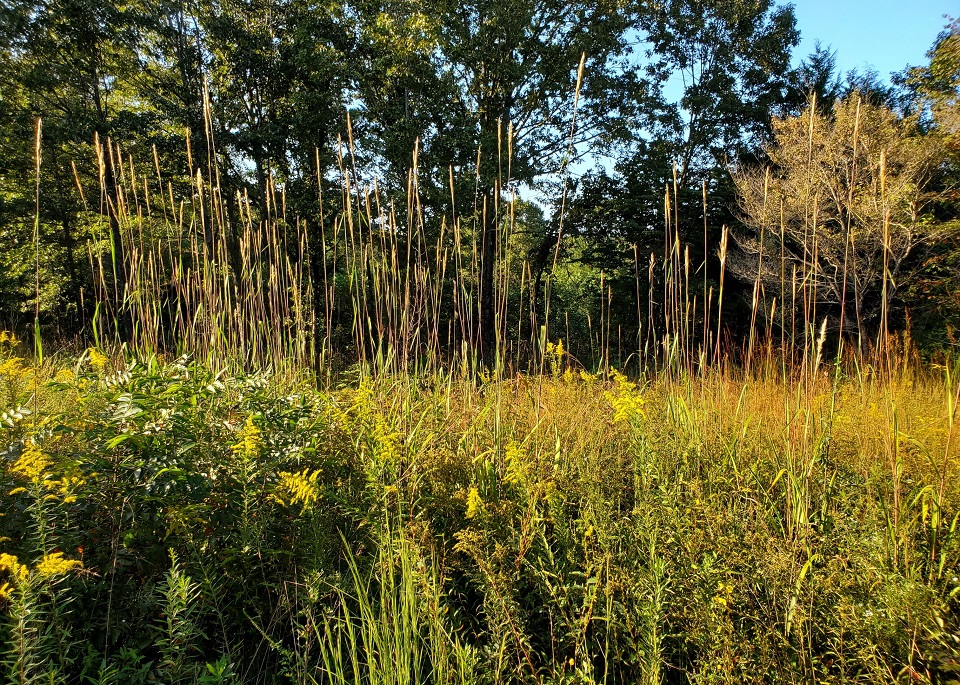
Roadsides, fields and disturbed ground
Ground opened by people: roadsides, old fields, pastures, fencerows and lots.
Who uses this plant?
 31CaterpillarsGenus host records with ranges including VA
Genus host records with ranges including VA · Carex
- Acronicta insularisHenry's Marsh Moth, Cattail Caterpillar
- Amolita roseolaPink Sedge Moth, Rosy Grass Moth
- Amphipoea americanaAmerican Ear Moth, American Borer
- Amphipoea interoceanicaStrawberry Cutworm, Interoceanic Ear Moth
- Anatrytone loganDelaware Skipper, Logan Skipper, Black-Vein Skipper
- Apamea indocilisIgnorant Apamea
- Apamea sordensBordered Apamea, Rustic Shoulder-Knot
- Cercyonis pegalaCommon Wood Nymph
- Deltote belliculaBurnished Bog Moth, Bog Deltote, Bog Lithacodia
- Euphyes bimaculaTwo-Spotted Skipper, Two-Spotted Sedge Skipper
Show all 31
- Euphyes dionDion Skipper, Sedge Skipper
- Euphyes dukesiDukes' Skipper
- Euphyes vestrisDun Skipper, Dun Sedge Skipper, Sedge Witch)\
- Helotropha reniformisAmerican Crescent Borer, Reniform Celaena, Reniform Helotropha
- Hesperia leonardusLeonard's Skipper, Blazing Star Skipper, Pawnee Prairie Skipper, Pawnee Montane Skipper
- Lethe appalachiaAppalachian Brown, Appalachian Eyed Brown
- Leucania phragmitidicolaNeedle Wainscot, Phragmites Wainscot
- Limochores mysticLong Dash
- Loscopia velataVeiled Ear Moth, Veiled Grass Moth
- Macrochilo absorptalisSlant-Lined Owlet; Slant-Lined Fan-foot
- Maliattha synochitisBlack-Dotted Lithacodia, Black-Dotted Glyph, Brass-Dotted Grass Moth
- Meropleon diversicolorMulticolored Sedgeminer
- Mythimna oxygalaLesser Wainscot
- Neonympha mitchelliiMitchell's Satyr
- Papaipema nebrisStalk Borer
- Plusia putnamiPutnam's Looper Moth, Lempke's Gold Spot
- Poanes viatorBroad-Winged Skipper
- Pseudeustrotia carneolaPink-Barred Lithacodia, Pink-Barred Pseudeustrotia
- Spodoptera frugiperdaFall Armyworm Moth
- Cosmopterix clemensella
- Donacaula dispersella
 —BeesSoutheastern regional records
 —Specialist beesPollen specialists
 50BirdsRecorded genus food-resource interactions; not a state feeding claim
Recorded genus food-resource interactions; not a state feeding claim · Carex
- Acanthis flammeaCommon Redpoll
- Agelaius phoeniceusRed-winged Blackbird
- Ammospiza leconteiiLeConte's Sparrow
- Anas acutaNorthern Pintail
- Anas creccaGreen-winged Teal
- Anas platyrhynchosMallard
- Anas rubripesAmerican Black Duck
- Anser albifronsGreater White-fronted Goose
- Anser caerulescensSnow Goose
- Anser rossiiRoss's Goose
Show all 50
- Anthus rubescensAmerican Pipit
- Anthus spragueiiSprague's Pipit
- Bonasa umbellusRuffed Grouse
- Branta canadensisCanada Goose
- Calcarius lapponicusLapland Longspur
- Calcarius ornatusChestnut-collared Longspur
- Calcarius pictusSmith's Longspur
- Callipepla californicaCalifornia Quail
- Cardinalis cardinalisNorthern Cardinal
- Centrocercus urophasianusGreater Sage-Grouse
- Colinus virginianusNorthern Bobwhite
- Cygnus buccinatorTrumpeter Swan
- Cygnus columbianusTundra Swan
- Dendragapus obscurusDusky Grouse
- Falcipennis canadensisSpruce Grouse
- Fulica americanaAmerican Coot
- Haemorhous mexicanusHouse Finch
- Junco hyemalisDark-eyed Junco
- Lagopus lagopusWillow Ptarmigan
- Lagopus leucuraWhite-tailed Ptarmigan
- Lagopus mutaRock Ptarmigan
- Leucosticte atrataBlack Rosy-Finch
- Mareca americanaAmerican Wigeon
- Meleagris gallopavoWild Turkey
- Melospiza melodiaSong Sparrow
- Molothrus aterBrown-headed Cowbird
- Pheucticus ludovicianusRose-breasted Grosbeak
- Pinicola enucleatorPine Grosbeak
- Pipilo maculatusSpotted Towhee
- Plectrophenax nivalisSnow Bunting
- Pooecetes gramineusVesper Sparrow
- Porzana carolinaSora
- Rallus limicolaVirginia Rail
- Rhynchophanes mccowniiMcCown's Longspur
- Spatula discorsBlue-winged Teal
- Spinus psaltriaLesser Goldfinch
- Spizella passerinaChipping Sparrow
- Spizelloides arboreaAmerican Tree Sparrow
- Zonotrichia atricapillaGolden-crowned Sparrow
- Zonotrichia leucophrysWhite-crowned Sparrow
Direct food only: birds recorded eating this genus across North America. Caterpillars on host plants also feed nesting birds. NC Native Plant Society: butterfly gardening
Plant details
- Family
- Cyperaceae
Safety has not been reviewed for this plant; check toxicity and thorns before planting.
Growing sources and scope
- Bloom · “April to July” · FloraQuest: Carolinas, Georgia (Southeastern Flora Team), phone app (app page) · Carolinas and Georgia
- Light · “Full sun (documented habitat)” · FloraQuest: Carolinas, Georgia (Southeastern Flora Team), phone app (app page) · Carolinas and Georgia
- Soil · “Dry; Moist; Wet (documented habitat)” · FloraQuest: Carolinas, Georgia (Southeastern Flora Team), phone app (app page) · Carolinas and Georgia
Conservation status
| Virginia rank | Not available |
|---|---|
| Global rank | G4 |
| VA status | Not verified |
| Federal status | Not verified |
Native alternatives
Find natives for your gardenSources
- Digital Atlas of the Virginia Flora
- USDA PLANTS
- FloraQuest: Northern Tier (Weakley), phone app (app page)
- Shropshire & Tallamy 2025, Lepidoptera of North America north of Mexico, ZooKeys 1261 (ODbL)
- Noori, Seltmann & Orr 2026, A curated and integrated dataset for exploring global bee-plant interactions (GloBI), Zenodo, CC BY 4.0
- Smith, Bachelder, Russell, Morales, Mosher & Seltmann 2024, Bee-Specialization-Modeling v0.6.1 (specialist host table compiled from J. Fowler's pollen specialist bee lists), Zenodo, CC BY 4.0
- Hurlbert, Olsen, Sawyer & Winner 2021, Avian Diet Database, Scientific Data 8: 260 (CC0)
- Narango, Tallamy & Shropshire 2020, Few keystone plant genera support the majority of Lepidoptera species, Nature Communications