Do not plant. Listed invasive in South Carolina.

Ecological relationships
Who uses this plant?
 24CaterpillarsGenus host records with ranges including SC
Genus host records with ranges including SC · Panicum
- Anatrytone loganDelaware Skipper, Logan Skipper, Black-Vein Skipper
- Ancyloxypha numitorLeast Skipper
- Dargida diffusaWheat Head Armywotm Moth
- Dargida rubripennisThe Pink-Streak
- Hesperia attalusDotted Skipper
- Hesperia leonardusLeonard's Skipper, Blazing Star Skipper, Pawnee Prairie Skipper, Pawnee Montane Skipper
- Hesperia sassacusIndian Skipper
- Hylephila phyleusFiery Skipper
- Hypena scabraGreen Cloverworm Bomolocha, Black Snout
- Lerema acciusClouded Skipper, Corn Leaf tier
Show all 24
- Leucania adjutaAdjutant Wainscot
- Leucania linitaReed Wainscot, Linen Wainscot
- Lon hobomokHobomok Skipper
- Marimatha nigrofimbriaBlack-Bordered Lemon
- Mocis latipesSmall Mocis, Striped Grass Looper
- Mocis texanaTexas Mocis
- Mythimna unipunctaArmyworm Moth, White Speck
- Panoquina ocolaOcola Skipper, Long-Winged Skiiper
- Papaipema nebrisStalk Borer
- Poanes viatorBroad-Winged Skipper
- Polites egeremetNorthern Broken-Dash
- Polites themistoclesTawny-Edged Skipper
- Spodoptera frugiperdaFall Armyworm Moth
- Idioglossa miraculosa
 —BeesSoutheastern regional records
 —Specialist beesPollen specialists
 35BirdsRecorded genus food-resource interactions; not a state feeding claim
Recorded genus food-resource interactions; not a state feeding claim · Panicum
- Acanthis flammeaCommon Redpoll
- Agelaius phoeniceusRed-winged Blackbird
- Aix sponsaWood Duck
- Anas creccaGreen-winged Teal
- Anthus rubescensAmerican Pipit
- Anthus spragueiiSprague's Pipit
- Aythya collarisRing-necked Duck
- Calcarius lapponicusLapland Longspur
- Calcarius ornatusChestnut-collared Longspur
- Calcarius pictusSmith's Longspur
Show all 35
- Callipepla gambeliiGambel's Quail
- Colinus virginianusNorthern Bobwhite
- Columbina passerinaCommon Ground Dove
- Contopus virensEastern Wood-Pewee
- Cyrtonyx montezumaeMontezuma Quail
- Dendrocygna bicolorFulvous Whistling-Duck
- Dolichonyx oryzivorusBobolink
- Fulica americanaAmerican Coot
- Gallinula galeataCommon Gallinule
- Junco hyemalisDark-eyed Junco
- Mareca streperaGadwall
- Meleagris gallopavoWild Turkey
- Molothrus aterBrown-headed Cowbird
- Passer domesticusHouse Sparrow
- Peucaea aestivalisBachman's Sparrow
- Plectrophenax nivalisSnow Bunting
- Pooecetes gramineusVesper Sparrow
- Porzana carolinaSora
- Quiscalus quisculaCommon Grackle
- Sialia sialisEastern Bluebird
- Spizella passerinaChipping Sparrow
- Spizella pusillaField Sparrow
- Turdus migratoriusAmerican Robin
- Xanthocephalus xanthocephalusYellow-headed Blackbird
- Zenaida macrouraMourning Dove
Growing and identification
Plant details
- Family
- Poaceae
Safety has not been reviewed for this plant; check toxicity and thorns before planting.
Growing sources and scope
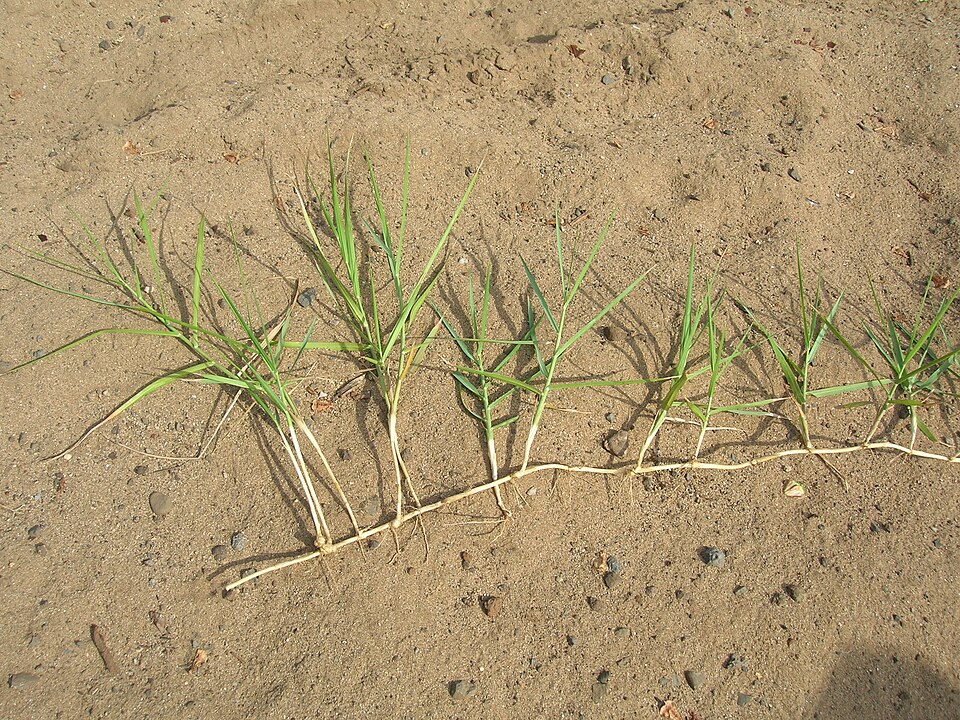
- Height · “Torpedo grass is a perennial grass growing up to 3 feet (1 m) tall from sturdy, widely creeping or floating rhizomes [65].” · Fire Effects Information System: Panicum repens · Source botanical description; original units and scope retained
- Light · “Full sun (documented habitat)” · FloraQuest: Carolinas, Georgia (Southeastern Flora Team) · Carolinas and Georgia
- Soil · “Dry; Moist; Water; Wet (documented habitat)” · FloraQuest: Carolinas, Georgia (Southeastern Flora Team) · Carolinas and Georgia
Conservation status
| South Carolina rank | Not available |
|---|---|
| Global rank | GNR |
| SC status | Not verified |
| Federal status | Not verified |
Native alternatives
Find natives for your gardenSources
- tnky_atlas
- usda
- sc_invasive
- South Carolina occurrence source
- Shropshire & Tallamy 2025, Lepidoptera of North America north of Mexico, ZooKeys 1261 (ODbL)
- Noori, Seltmann & Orr 2026, A curated and integrated dataset for exploring global bee-plant interactions (GloBI), Zenodo, CC BY 4.0
- Smith, Bachelder, Russell, Morales, Mosher & Seltmann 2024, Bee-Specialization-Modeling v0.6.1 (specialist host table compiled from J. Fowler's pollen specialist bee lists), Zenodo, CC BY 4.0
- Hurlbert, Olsen, Sawyer & Winner 2021, Avian Diet Database, Scientific Data 8: 260 (CC0)
- Narango, Tallamy & Shropshire 2020, Few keystone plant genera support the majority of Lepidoptera species, Nature Communications