
Ecological relationships
Who uses this plant?
 25CaterpillarsGenus host records with ranges including SC
Genus host records with ranges including SC · Magnolia
- Callosamia prometheaPromethea Moth
- Papilio glaucusEastern Tiger Swallowtail
- Automeris ioIo Moth
- Callosamia anguliferaTulip-Tree Silkmoth
- Callosamia securiferaSweetbay Silkmoth, Carolina Silk Moth
- Cameraria hamadryadellaSolitary Oak Leafminer Moth
- Epimecis hortariaTulip-Tree Beauty
- Episimus tyriusMaple Tip Borer
- Euzophera magnolialisMagnolia Borer
- Euzophera ostricolorellaTulip-Tree Borer, Root Collar borer
Show all 25
- Hypercompe scriboniaGiant Leopard Moth, Great Leopard Moth
- Hyphantria cuneaFall Webworm
- Laetilia coccidivoraScale-Feeding Snout
- Melanolophia canadariaCanadian Melanolphia, Variable Redmarked Looper
- Morrisonia latexFluid Arches, Fluid Mamestra
- Orgyia leucostigmaWhite-Marked Tussock Moth
- Papilio palamedesPalamedes Swallowtail
- Papilio polyxenesBlack Swallowtail, Celery Caterpillar, Fennel Worm, Desert Black Swallowtail, Parsnip Swallowtail
- Papilio troilusSpicebush Swallowtail
- Paralobesia cyclopianaSweetbay Seedpod Moth
- Paralobesia liriodendranaTulip-Tree Leaftier
- Phyllocnistis liriodendronellaMagnolia Serpentine Leafminer
- Prolimacodes badiaSkiff Moth, Skiff Caterpillar
- Paralobesia magnoliana
- Paralobesia parsaura
 7BeesSoutheastern regional records
Southeastern regional records · Magnolia
Individual names are not available yet.
Noori, Seltmann & Orr 2026, A curated and integrated dataset for exploring global bee-plant interactions (GloBI), Zenodo, CC BY 4.0 0Specialist beesPollen specialists
 2BirdsRecorded genus food-resource interactions; not a state feeding claim
Recorded genus food-resource interactions; not a state feeding claim · Magnolia
- Campephilus principalisIvory-billed Woodpecker
- Vireo olivaceusRed-eyed Vireo
 1AntsRecorded seed interactions
- Pogonomyrmex badius
Pogonomyrmex badius: Seed predation.
No records yet · Beetles · Flies · Adult butterflies / moths · Other wasps · Other insects
Growing and identification
Plant details
- Family
- Magnoliaceae
- Hardiness
- Zones 6a–10b
- Soil pH
- Acidic to alkaline
- Flower color
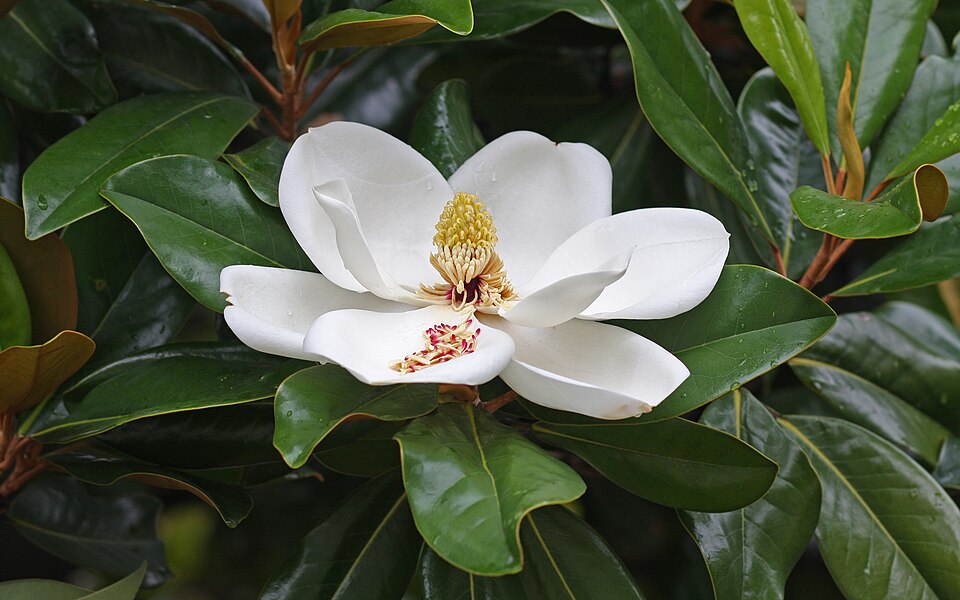
- Cream or white
- Growth rate
- Moderate
- Growth habit
- Single stem
- Foliage color
- Green
- Fruit begins
- Summer
- Fruit ends
- Summer
Safety has not been reviewed for this plant; check toxicity and thorns before planting.
Growing sources and scope
- Bloom · “Mid spring” · USDA PLANTS · Nationwide species characteristics; local growing conditions may vary
- Flower color · “Cream or white” · NC Extension Plant Toolbox
- Foliage color · “Green” · USDA PLANTS · Nationwide species characteristics; local growing conditions may vary
- Fruit begins · “Summer” · USDA PLANTS · Nationwide species characteristics; local growing conditions may vary
- Fruit ends · “Summer” · USDA PLANTS · Nationwide species characteristics; local growing conditions may vary
- Growth habit · “Single stem” · USDA PLANTS · Nationwide species characteristics; local growing conditions may vary
- Growth rate · “Moderate” · USDA PLANTS · Nationwide species characteristics; local growing conditions may vary
- Hardiness · “Zones 6a–10b” · NC Extension Plant Toolbox
- Height · “60–80 feet” · NC Extension Plant Toolbox
- Leaves · “Evergreen” · NC Extension Plant Toolbox
- Life cycle · “Woody perennial” · NC Extension Plant Toolbox
- Light · “Full sun (6 or more hours of direct sunlight a day); Partial shade (direct sunlight only part of the day, 2-6 hours)” · NC Extension Plant Toolbox
- primary_flower_color · “white” · USDA PLANTS
- Soil · “Moist” · NC Extension Plant Toolbox
- Soil pH · “Acidic to alkaline” · NC Extension Plant Toolbox
- Spread · “30–50 feet” · NC Extension Plant Toolbox
Also known as
Evergreen Magnolia; Southern Magnolia
Conservation status
| South Carolina rank | Not available |
|---|---|
| Global rank | G5 |
| SC status | Not verified |
| Federal status | Not verified |
In your garden
Will it fit your spot?
Check this plant against your county, sun and soil moisture. Conditions are checked in your browser.
Choose a county to begin.
Sources
- tnky_atlas
- usda
- nc_flora
- South Carolina occurrence source
- Shropshire & Tallamy 2025, Lepidoptera of North America north of Mexico, ZooKeys 1261 (ODbL)
- Noori, Seltmann & Orr 2026, A curated and integrated dataset for exploring global bee-plant interactions (GloBI), Zenodo, CC BY 4.0
- Smith, Bachelder, Russell, Morales, Mosher & Seltmann 2024, Bee-Specialization-Modeling v0.6.1 (specialist host table compiled from J. Fowler's pollen specialist bee lists), Zenodo, CC BY 4.0
- Hurlbert, Olsen, Sawyer & Winner 2021, Avian Diet Database, Scientific Data 8: 260 (CC0)
- Narango, Tallamy & Shropshire 2020, Few keystone plant genera support the majority of Lepidoptera species, Nature Communications