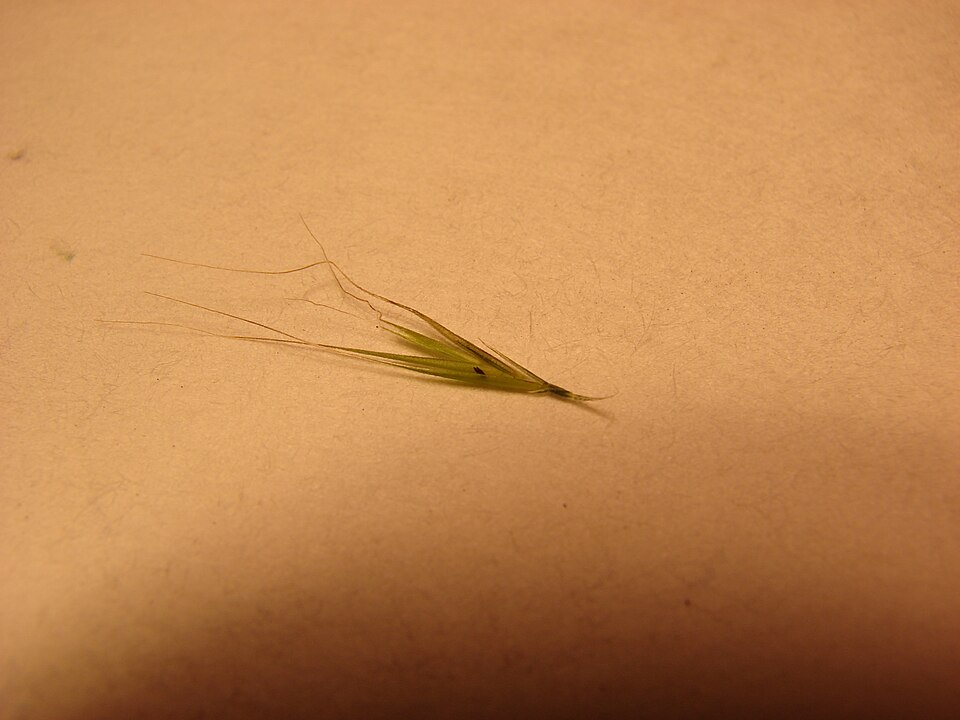
.jpg)
Ecological relationships
Who uses this plant?
 9CaterpillarsGenus host records with ranges including SC
Genus host records with ranges including SC · Festuca
- Acrolophus popeanellaClemen's Grass Tubeworm
- Agrotis ipsilonIpsilon Dart, Black Cutworm, Greasy Cutworm
- Apamea sordensBordered Apamea, Rustic Shoulder-Knot
- Atalopedes huronSachem
- Cisseps fulvicollisYellow-Collared Scape Moth
- Hesperia sassacusIndian Skipper
- Pediasia trisectaSod Webworm Moth, Larger Sod Webworm
- Spodoptera frugiperdaFall Armyworm Moth
- Spodoptera ornithogalliYellow-Striped Armyworm Moth, Cotton Cutworm
 —BeesSoutheastern regional records
 —Specialist beesPollen specialists
 6BirdsRecorded genus food-resource interactions; not a state feeding claim
Recorded genus food-resource interactions; not a state feeding claim · Festuca
- Alectoris chukarChukar
- Calcarius lapponicusLapland Longspur
- Meleagris gallopavoWild Turkey
- Plectrophenax nivalisSnow Bunting
- Spizella pusillaField Sparrow
- Zenaida macrouraMourning Dove
Growing and identification
Plant details
- Family
- Poaceae
Safety has not been reviewed for this plant; check toxicity and thorns before planting.
Growing sources and scope
- Height · “Culms are 3 to 18 inches (8-46 cm) tall, growing solitary or in small tufts [46,52,70,92,168,180,212].” · Fire Effects Information System: Vulpia myuros · Source botanical description; original units and scope retained
- Light · “Full sun (documented habitat)” · FloraQuest: Carolinas, Georgia (Southeastern Flora Team) · Carolinas and Georgia
- Soil · “Dry; Moist (documented habitat)” · FloraQuest: Carolinas, Georgia (Southeastern Flora Team) · Carolinas and Georgia
Also known as
Rat Tail Fescue; Rat's tail Fescue; Vulpia myuros
Conservation status
| South Carolina rank | Not available |
|---|---|
| Global rank | G5 |
| SC status | Not verified |
| Federal status | Not verified |
Native alternatives
Find natives for your gardenSources
- tnky_atlas
- usda
- South Carolina occurrence source
- Shropshire & Tallamy 2025, Lepidoptera of North America north of Mexico, ZooKeys 1261 (ODbL)
- Noori, Seltmann & Orr 2026, A curated and integrated dataset for exploring global bee-plant interactions (GloBI), Zenodo, CC BY 4.0
- Smith, Bachelder, Russell, Morales, Mosher & Seltmann 2024, Bee-Specialization-Modeling v0.6.1 (specialist host table compiled from J. Fowler's pollen specialist bee lists), Zenodo, CC BY 4.0
- Hurlbert, Olsen, Sawyer & Winner 2021, Avian Diet Database, Scientific Data 8: 260 (CC0)
- Narango, Tallamy & Shropshire 2020, Few keystone plant genera support the majority of Lepidoptera species, Nature Communications