

Bristly Locust
Robinia hispida
Native to Mississippi (estimated). How scores work Is it native here?
Profile 94%
- Height
- 2–10 feet
- Spread
- 5–15 feet
- Light
- Full sun
- Soil moisture
- Somewhat dry to moist
Space about 10 ft apart from its recorded spread. Enter your bed size for a count
Will it fit your yard?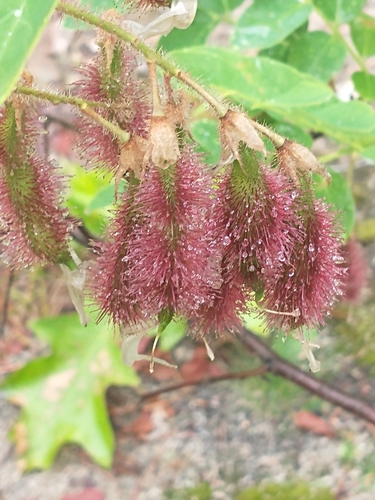
At a glance
- Life cycle
- Perennial
- Leaves
- Deciduous
- Bloom
- Spring and summer
Recorded in 9 Mississippi counties.
Who uses this plant?
 60CaterpillarsGenus host records with ranges including MS
Genus host records with ranges including MS · Robinia
- Epargyreus clarusSilver-spotted Skipper
- Abaeis mexicanaMexican Yellow, Wolf-Face Yellow
- Acharia stimuleaSaddleback Caterpillar Moth
- Acronicta americanaAmerican Dagger
- Actias lunaLuna Moth
- Agonopterix robiniellaFour-Dotted Agonopterix Moth, Locust Leaffolder
- Alsophila pometariaFall Cankerworm Moth
- Amyelois transitellaNavel Orangeworm
- Anticarsia gemmatalisVelvetbean Caterpillar Moth
- Archips argyrospilaFruit-Tree Leafroller Moth
Show all 60
- Aroga trialbamaculellaRed-Striped Fireworm Moth
- Automeris ioIo Moth
- Caloptilia stigmatellaPoplar Caloptilia
- Catocala illectaMagdalen Underwing
- Celiptera frustulumBlack Bit Moth
- Ceratomia amyntorElm Sphinx
- Coelodasys unicornisUnicorn Caterpillar Moth
- Colias philodiceClouded Sulphur, Clover Butterfly
- Dasylophia anguinaBlack-Spotted Prominent
- Datana ministraYellow-Necked Caterpillar Moth
- Digrammia ocellinataFaint-Spotted Angle
- Eacles imperialisImperial Moth, Imperial Spiny Caterpillar
- Ecdytolopha insiticianaLocust Twig Borer Moth
- Elasmopalpus lignosellaLesser Cornstalk Borer
- Euparthenos nubilisLocust Underwing
- Gesta icelusDreamy Duskywing
- Gesta zaruccoZarucco Duskywing
- Gymnandrosoma punctidiscanumDotted Gymnast, Dotted Ecdytolopha
- Halysidota tessellarisBanded Tussock Moth, Pale Tiger Moth
- Heliomata cycladataCommon Spring Moth, Stout Locust Looper
- Heliomata infulataRare Spring Moth
- Hypena scabraGreen Cloverworm Bomolocha, Black Snout
- Hypercompe scriboniaGiant Leopard Moth, Great Leopard Moth
- Hyphantria cuneaFall Webworm
- Malacosoma disstriaForest Tent Caterpillar
- Mellilla xanthometataOrange Wing
- Nematocampa resistariaFilament Bearer, Horned Spanworm Moth
- Norape cretataWhite Flannel Moth
- Oedemasia concinnaRed-Humped Caterpillar, Red-Humped Appleworm
- Oiketicus abbotiiAbbot's Bagworm Moth
- Orgyia leucostigmaWhite-Marked Tussock Moth
- Orthosia hibisciSpeckled Green Fruitworm Moth, Speckled Green Quaker
- Papaipema nebrisStalk Borer
- Parectopa robiniellaLocust Digitate Leafminer
- Pero honestariaHonest Pero
- Prionoxystus robiniaeCarpenterworm Moth, Black Locust Borer, Cottonwood Borer
- Pseudanthracia coraciasPseudanthracia Moth
- Psilocorsis cryptolechiellaBlack-Fringed Leaftier
- Pyrrhia ciliscaAmerican Bordered Sallow, Noble Sun Moth
- Sciota subcaesiellaLocust Leafroller
- Sciota virgatellaBlack-Spotted Leafroller
- Selenisa sueroidesTailpipes, Pale-Edged Selenisa Moth
- Sparganothis sulfureanaSparganothis Fruitworm Moth, Sulfur Leafroller, False Yellow-Head
- Syssphinx bicolorHoney Locust Moth
- Tetracis cachexiataWhite Slant-Line
- Thyridopteryx ephemeraeformisEvergreen Bagworm Moth
- Tlascala reductellaTlascala Moth, Honey Locust Leafroller
- Zale undularisBlack Zale
- Zale unilineataOne-Lined Zale
- Sinoe robiniella
 1BeesSoutheastern regional records
Southeastern regional records · Robinia
Individual names are not available yet.
Noori, Seltmann & Orr 2026, A curated and integrated dataset for exploring global bee-plant interactions (GloBI), Zenodo, CC BY 4.0 0Specialist beesPollen specialists
 3BirdsRecorded genus food-resource interactions; not a state feeding claim
Recorded genus food-resource interactions; not a state feeding claim · Robinia
- Callipepla californicaCalifornia Quail
- Columba liviaRock Pigeon
- Oreortyx pictusMountain Quail
Direct food only: birds recorded eating this genus across North America. Caterpillars on host plants also feed nesting birds. NC Native Plant Society: butterfly gardening
No records yet · Ants · Beetles · Flies · Adult butterflies / moths · Other wasps · Other insects
Plant details
- Family
- Fabaceae
- Hardiness
- Zones 5a–8b
- Flower color
- Pink
What its natural habitat tells you
Safety has not been reviewed for this plant; check toxicity and thorns before planting.
Growing sources and scope
- Bloom · “Spring and summer” · NC Extension Plant Toolbox
- Flower color · “Pink” · NC Extension Plant Toolbox
- Hardiness · “Zones 5a–8b” · NC Extension Plant Toolbox
- Height · “2–10 feet” · NC Extension Plant Toolbox
- Leaves · “Deciduous” · NC Extension Plant Toolbox
- Life cycle · “Perennial” · NC Extension Plant Toolbox
- Light · “Full sun (6 or more hours of direct sunlight a day)” · NC Extension Plant Toolbox
- primary_flower_color · “pink” · NC Extension Plant Toolbox
- Soil · “Good drainage; Moist; Occasionally dry” · NC Extension Plant Toolbox
- Spread · “5–15 feet” · NC Extension Plant Toolbox
Conservation status
| Mississippi rank | SNR |
|---|---|
| Global rank | G4 [G5] |
| MS status | Not verified |
| Federal status | Not verified |
Will it fit your yard?
Check this plant against your county, sun and soil moisture. Conditions are checked in your browser.
Sources
- USDA PLANTS
- Vascular Plants of North Carolina (NC Natural Heritage Program)
- Mississippi occurrence source
- Shropshire & Tallamy 2025, Lepidoptera of North America north of Mexico, ZooKeys 1261 (ODbL)
- Noori, Seltmann & Orr 2026, A curated and integrated dataset for exploring global bee-plant interactions (GloBI), Zenodo, CC BY 4.0
- Smith, Bachelder, Russell, Morales, Mosher & Seltmann 2024, Bee-Specialization-Modeling v0.6.1 (specialist host table compiled from J. Fowler's pollen specialist bee lists), Zenodo, CC BY 4.0
- Hurlbert, Olsen, Sawyer & Winner 2021, Avian Diet Database, Scientific Data 8: 260 (CC0)
- Narango, Tallamy & Shropshire 2020, Few keystone plant genera support the majority of Lepidoptera species, Nature Communications