

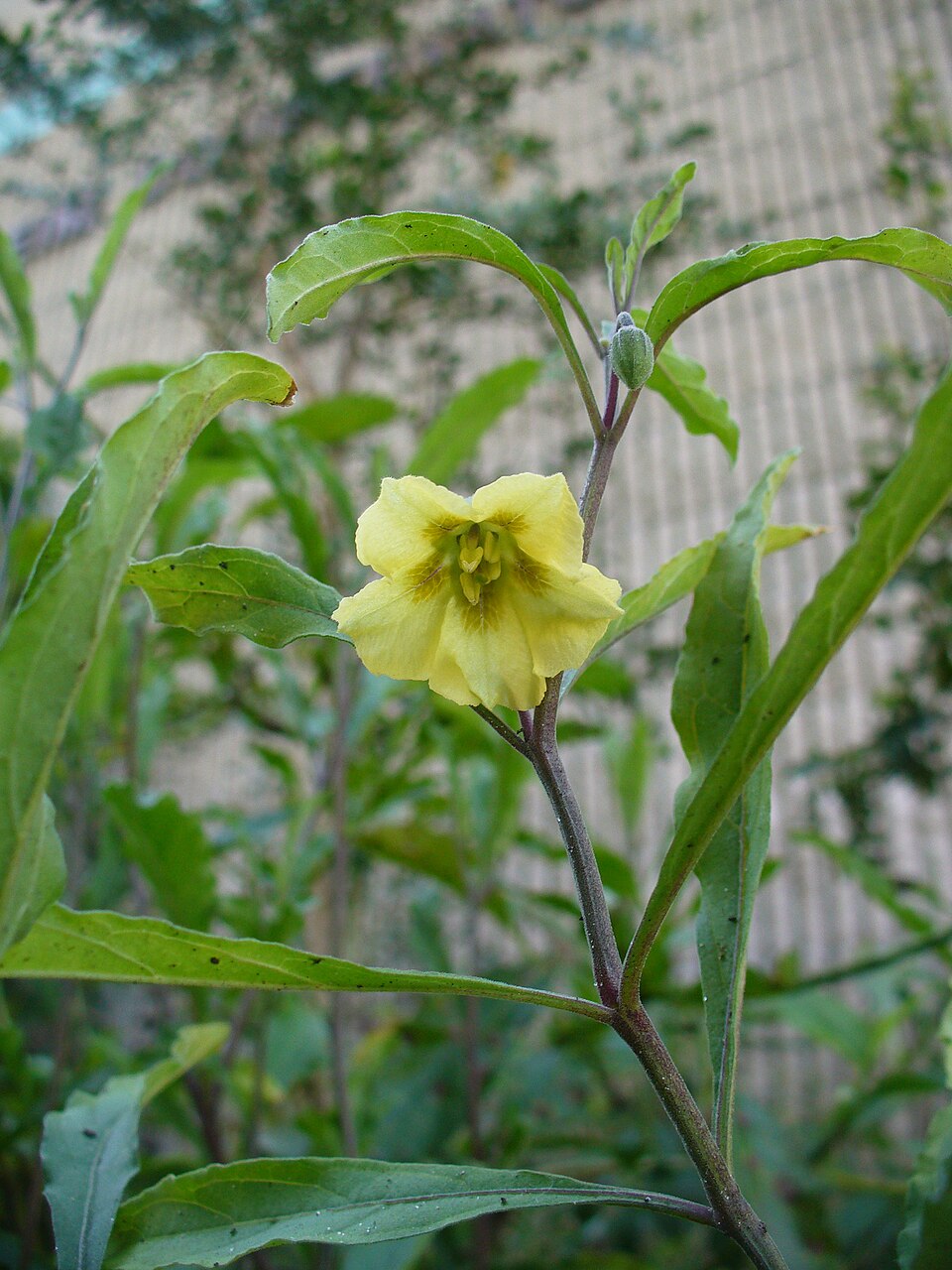
Dune Ground-cherry
Physalis walteri
Found in dunes of sea-beaches, openings in maritime forests, longleaf pine sandhills (southward), and rarely inland as a waif in disturbed areas. Weakley, Flora of the Southeastern United States (2025), South Central edition What its natural habitat tells you
Native to Mississippi. How scores work Is it native here?
Profile 82%
- Height
- Up to about 2 feet
- Light
- Partial shade, Full sun
- Soil moisture
- Dry to moist

At a glance
- Life cycle
- Perennial
Not yet recorded · Spread · Leaves · Bloom
Bloom: NC species account not read yet.
Spread and leaves: no source found yet.
This plant is missing most of its facts, so Quercus is looking them up in old botany books.
Recorded in 5 Mississippi counties.
Natural habitats
Places it grows wild. Not a planting requirement. Each habitat page lists the plants and wildlife also found there.
Open sand of beaches, dunes and the hollows between them.
Salt-pruned forests and shrub thickets behind coastal dunes.
Who uses this plant?
 14CaterpillarsGenus host records with ranges including MS
Genus host records with ranges including MS · Physalis
- Chloridea subflexaSubflexus Straw, Groundcherry Sun Moth
- Chloridea virescensTobacco Budworm Moth
- Diaphania nitidalisPickleworm Moth
- Estigmene acreaSalt Marsh Moth, Acrea Moth
- Helicoverpa zeaCorn Earworm Moth
- Herpetogramma pertextalisBold-Feathered Grass Moth
- Lineodes fontellaEastern Lineodes
- Lineodes integraEggplant Leafroller
- Manduca quinquemaculatusFive-Spotted Hawkmoth, Tomato Hornworm
- Manduca sextaCarolina Sphinx, Tomatoe Sphinx, Tobacco Hornworm
Show all 14
- Papaipema nebrisStalk Borer
- Spodoptera dolichosSweetpotato Armyworm, Dolichos Armyworm, Large Cotton Armyworm
- Striacosta albicostaWestern Bean Cutworm
- Strymon melinusGray Hairstreak
 10BeesSoutheastern regional records
Southeastern regional records · Physalis
Individual names are not available yet.
Noori, Seltmann & Orr 2026, A curated and integrated dataset for exploring global bee-plant interactions (GloBI), Zenodo, CC BY 4.0 3Specialist beesPollen specialists
Pollen specialists · Physalis
- Colletes latitarsis
- Colletes willistoni
- Perdita halictoides
 5BirdsRecorded genus food-resource interactions; not a state feeding claim
Recorded genus food-resource interactions; not a state feeding claim · Physalis
- Colinus virginianusNorthern Bobwhite
- Cyrtonyx montezumaeMontezuma Quail
- Meleagris gallopavoWild Turkey
- Ortalis vetulaPlain Chachalaca
- Tympanuchus phasianellusSharp-tailed Grouse
Direct food only: birds recorded eating this genus across North America. Caterpillars on host plants also feed nesting birds. NC Native Plant Society: butterfly gardening
No records yet · Ants · Beetles · Flies · Adult butterflies / moths · Other wasps · Other insects
Plant details
- Family
- Solanaceae
- Flower color
- Yellow
Safety has not been reviewed for this plant; check toxicity and thorns before planting.
Growing sources and scope
- Flower color · “Yellow” · Lady Bird Johnson Wildflower Center
- Height · “Up to about 2 feet” · Lady Bird Johnson Wildflower Center
- Life cycle · “Perennial” · Lady Bird Johnson Wildflower Center
- Light · “Partial shade; Full sun (documented habitat)” · Weakley, Flora of the Southeastern United States (2025), Carolinas & Georgia edition · Carolinas and Georgia
- primary_flower_color · “yellow” · Lady Bird Johnson Wildflower Center
- Soil · “Dry; Moist (documented habitat)” · Weakley, Flora of the Southeastern United States (2025), Carolinas & Georgia edition · Carolinas and Georgia
Also known as
Dune Ground cherry; Physalis angustifolia; Physalis viscosa ssp. maritima
Conservation status
| Mississippi rank | SNR |
|---|---|
| Global rank | G4 |
| MS status | Not verified |
| Federal status | Not verified |
Will it fit your yard?
Check this plant against your county, sun and soil moisture. Conditions are checked in your browser.
Sources
- Weakley, Flora of the Southeastern United States (2025), South Central edition
- USDA PLANTS
- Vascular Plants of North Carolina (NC Natural Heritage Program)
- Mississippi occurrence source
- Shropshire & Tallamy 2025, Lepidoptera of North America north of Mexico, ZooKeys 1261 (ODbL)
- Noori, Seltmann & Orr 2026, A curated and integrated dataset for exploring global bee-plant interactions (GloBI), Zenodo, CC BY 4.0
- Smith, Bachelder, Russell, Morales, Mosher & Seltmann 2024, Bee-Specialization-Modeling v0.6.1 (specialist host table compiled from J. Fowler's pollen specialist bee lists), Zenodo, CC BY 4.0
- Hurlbert, Olsen, Sawyer & Winner 2021, Avian Diet Database, Scientific Data 8: 260 (CC0)
- Narango, Tallamy & Shropshire 2020, Few keystone plant genera support the majority of Lepidoptera species, Nature Communications