

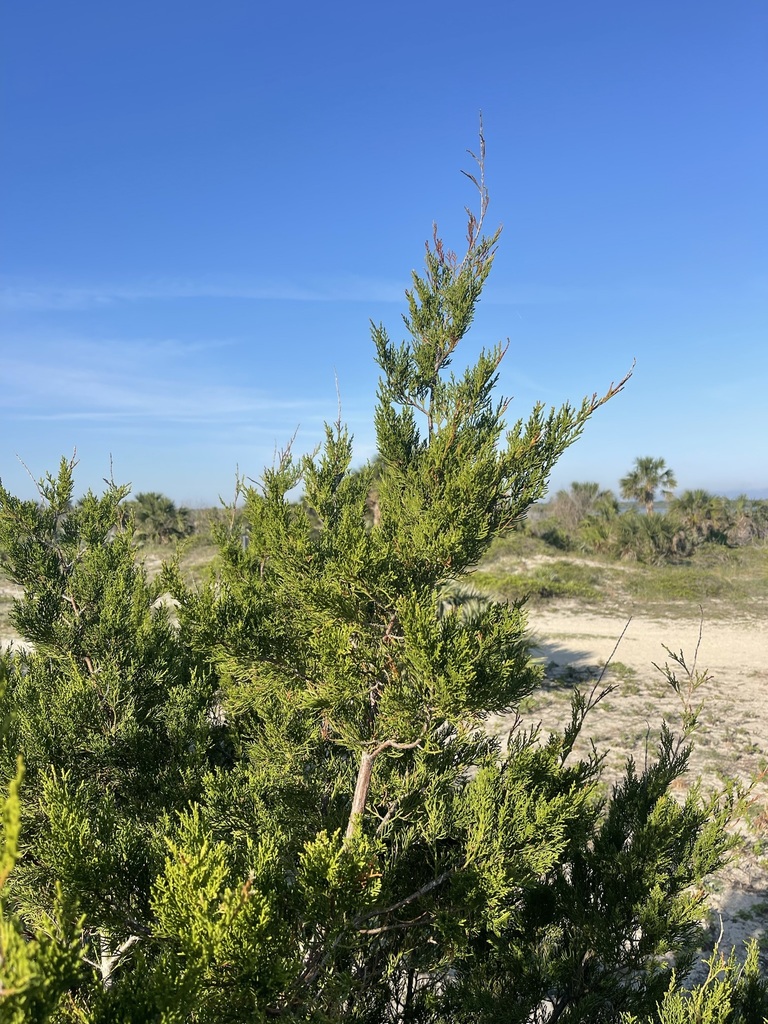
Southern Red Cedar
Juniperus virginiana var. silicicola
Found in maritime forests and thickets; Coastal Plain hammocks; salt and brackish marshes. Weakley, Flora of the Southeastern United States (2025), South Central edition What its natural habitat tells you
Native to Mississippi. How scores work Is it native here?
Profile 100%
- Height
- About 65 feet
- Light
- Full sun
- Soil moisture
- Dry to wet
Rare or protected plant. Specialist conservation planting; excluded from routine garden suggestions. Plant caution source
Hidden from default planting suggestions. Wildlife value and native status remain unchanged.
At a glance
- Life cycle
- Woody perennial
- Leaves
- Evergreen
- Bloom
- January to February
- Fruiting season
- October to November
Not yet recorded · Spread
Recorded in 4 Mississippi counties.
Natural habitats
Places it grows wild. Not a planting requirement. Each habitat page lists the plants and wildlife also found there.
Salt-pruned forests and shrub thickets behind coastal dunes.
Dense, evergreen groves of live oak, magnolia and other hardwoods in the southern Coastal Plain, from dry oak domes to wet hydric hammocks and south Florida's tropical hammocks; salt-shaped maritime hammocks are maritime forests.
Coastal marshes flooded by salty or brackish tides.
Also found with this plant
Wildlife whose habitat models include habitats this plant grows in, in Mississippi. Shared habitat, not food. 75 animals.
- White-eyed VireoVireo griseus
- Wood DuckAix sponsa
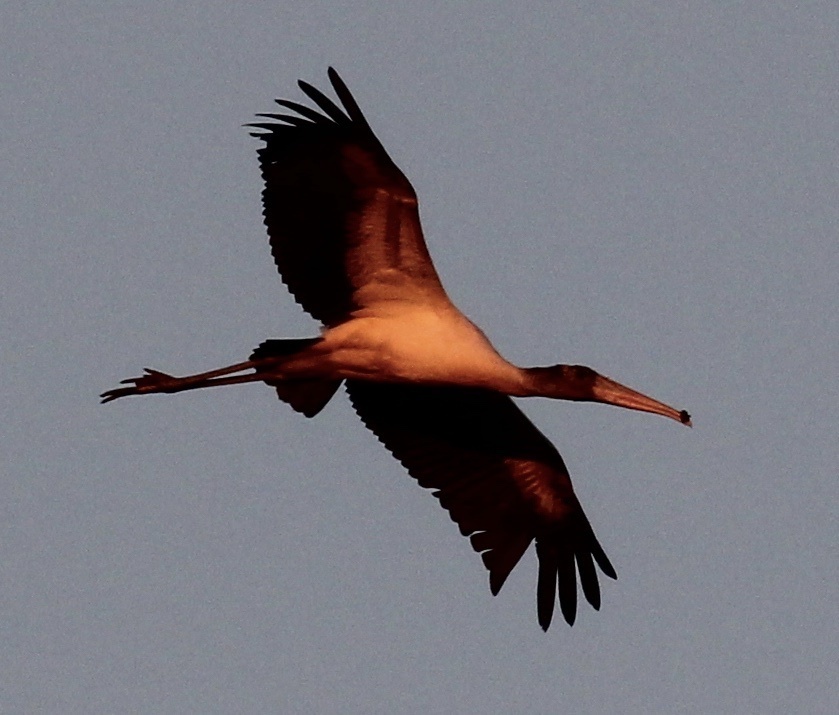
- Wood StorkMycteria americana


Widespread birds also seen here (43)
Found in many habitats here, so not listed above.
- American Crow
- American Goldfinch
- American Kestrel
- American Robin
- Bald Eagle
- Belted Kingfisher
- Black-crowned Night-heron
- Blue Grosbeak
- Carolina Chickadee
- Carolina Wren
- Cedar Waxwing
- Chimney Swift
- Chipping Sparrow
- Common Grackle
- Common Nighthawk
- Common Yellowthroat
- Cooper's Hawk
- Double-crested Cormorant
- Eastern Kingbird
- Eastern Screech-owl
- Eastern Towhee
- Eurasian Collared-dove
- European Starling
- Fish Crow
- Great Horned Owl
- Hooded Merganser
- Mourning Dove
- Northern Cardinal
- Northern Flicker
- Northern Mockingbird
- Osprey
- Purple Finch
- Red-shouldered Hawk
- Red-tailed Hawk
- Red-winged Blackbird
- Sharp-shinned Hawk
- Swallow-tailed Kite
- Tufted Titmouse
- Turkey Vulture
- White-throated Sparrow
- Yellow-breasted Chat
- Yellow-crowned Night-heron
- Yellow-rumped Warbler
Who uses this plant?
 30CaterpillarsGenus host records with ranges including MS
Genus host records with ranges including MS · Juniperus
- Callophrys gryneusJuniper Hairstreak
- Acronicta americanaAmerican Dagger
- Argyresthia alternatellaHoney-Comb Micromoth
- Callophrys augustinusThe Brown Elfin
- Callophrys niphonPine Elfin
- Digrammia continuataCurve-Lined Angle
- Eacles imperialisImperial Moth, Imperial Spiny Caterpillar
- Elaphria versicolorVariegated Midget
- Elasmopalpus lignosellaLesser Cornstalk Borer
- Eupithecia miserulataCommon Eupithacia, Common Pug
Show all 30
- Glena plumosariaCedar Grey, Dainty Gray
- Glyphidocera juniperellaJuniper Tip Moth
- Henricus edwardsianaContrasting Henricus
- Hyphantria cuneaFall Webworm
- Lambdina fiscellariaHemlock Looper, Western Oak Looper
- Lithophane lemmeriLemmer's Pinion
- Macaria distribuariaSouthern Chocolate Angle
- Macaria multilineataMany-Lined Angle
- Oiketicus abbotiiAbbot's Bagworm Moth
- Orgyia leucostigmaWhite-Marked Tussock Moth
- Palthis angulalisDark-Spotted Palthis
- Papilio troilusSpicebush Swallowtail
- Patalene olyzonariaJuniper Geometer
- Platynota stultanaOmnivorous Leafroller
- Prochoerodes lineolaLarge Maple Spanworm Moth
- Spodoptera latifasciaOrange-Striped Armyworm, Velvet Armyworm Moth
- Spodoptera ornithogalliYellow-Striped Armyworm Moth, Cotton Cutworm
- Thyridopteryx ephemeraeformisEvergreen Bagworm Moth
- Argyresthia freyella
- Periploca laeta
 0BeesSoutheastern regional records
 0Specialist beesPollen specialists
 13BirdsRecorded eating Juniperus in Mississippi
Diet records by plant genus, from studies across North America. Not a record from this state. Birds whose range includes Mississippi, most records first.
- Wild TurkeyFruit. 12 diet records
- Cedar WaxwingFruit. 8 diet records
- American RobinFruit. 4 diet records
- Evening Grosbeak2 diet records
- Blue-headed Vireo1 diet record
- Eastern BluebirdFruit. 1 diet record
- Eastern KingbirdFruit. 1 diet record
- European Starling1 diet record
- Hermit ThrushFruit and seeds. 1 diet record
- Northern Mockingbird1 diet record
Show all 13
- Swainson's ThrushFruit and seeds. 1 diet record
- Tree SwallowFruit. 1 diet record
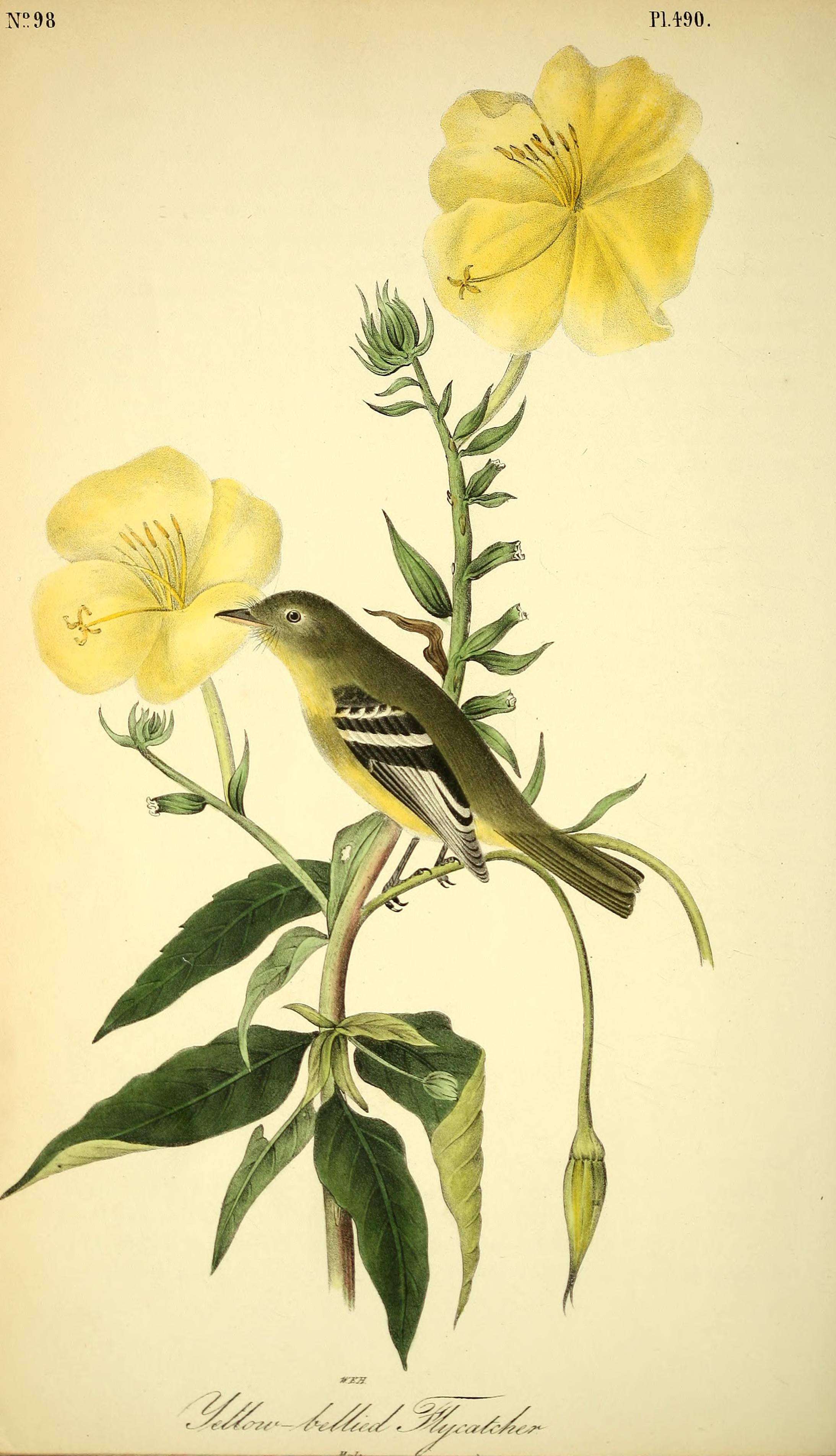
- Yellow-bellied FlycatcherLeaves. 1 diet record
Direct food only. Caterpillars on host plants also feed nesting birds. NC Native Plant Society: butterfly gardening
No records yet · Ants · Beetles · Flies · Adult butterflies / moths · Other wasps · Other insects
Birds that eat Juniperus 13
Diet records by plant genus, from studies across North America. Not a record from this state. Avian Diet Database (Hurlbert Lab), CC0 1.0.
- Wild TurkeyMeleagris gallopavo
- Cedar WaxwingBombycilla cedrorum
- American RobinTurdus migratorius
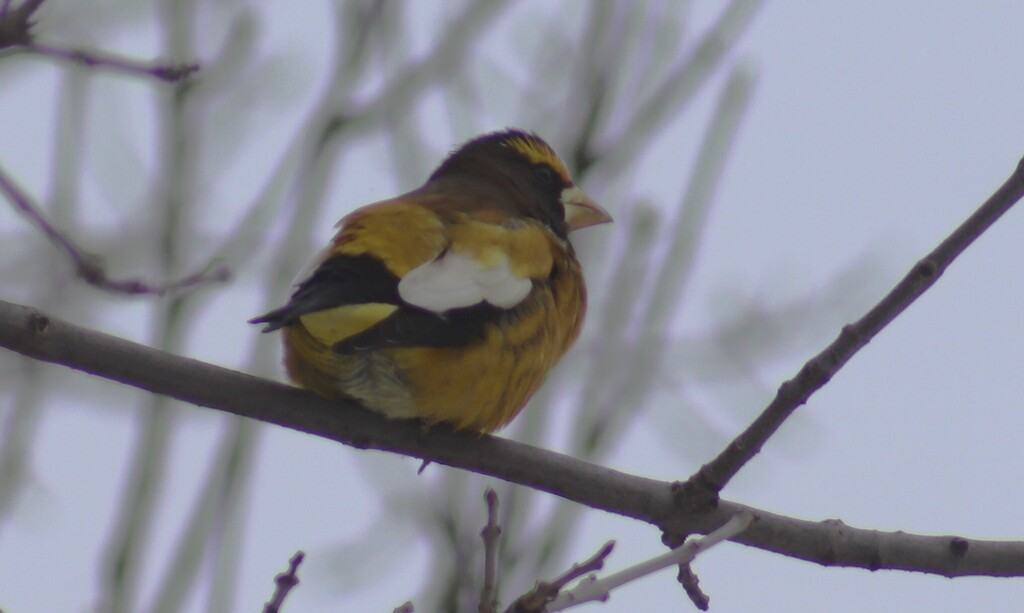
- Evening GrosbeakCoccothraustes vespertinus
- Blue-headed VireoVireo solitarius
- Eastern BluebirdSialia sialis
- Eastern KingbirdTyrannus tyrannus
- European StarlingSturnus vulgaris
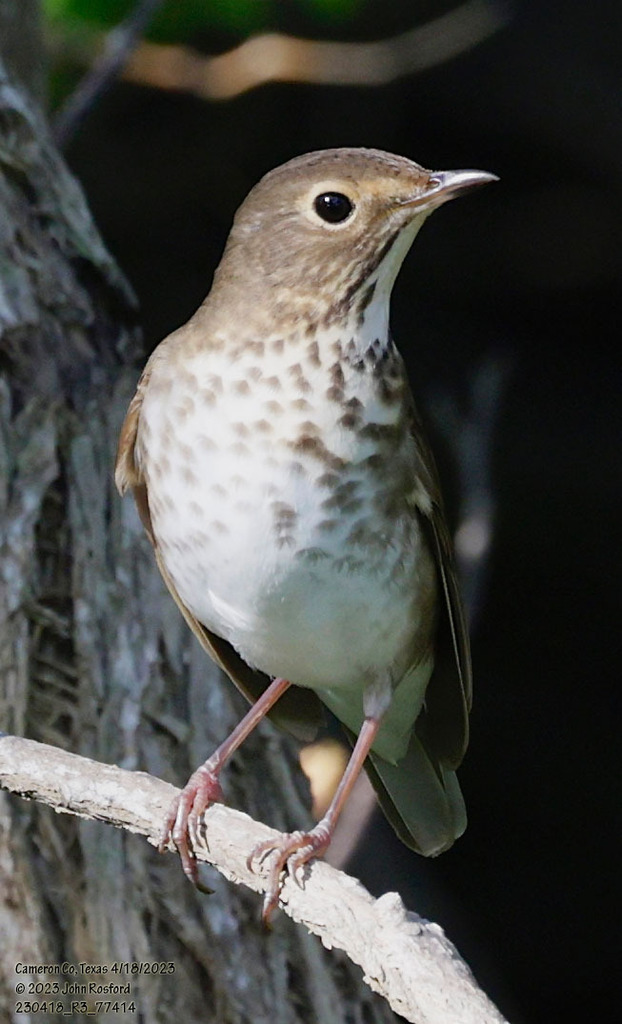
- Hermit ThrushCatharus guttatus
- Northern MockingbirdMimus polyglottos
- Swainson's ThrushCatharus ustulatus
- Tree SwallowTachycineta bicolor
- Yellow-bellied FlycatcherEmpidonax flaviventris










Plant details
- Family
- Cupressaceae
- Hardiness
- Zones 7a–11b
- Flower color
- Yellow
- Growth rate
- Slow
- Growth habit
- Single stem
- Foliage color
- Green
- Fruit begins
- October
- Fruit ends
- November
Growing sources and scope
- Bloom · “January to February” · Weakley, Flora of the Southeastern United States (2025), Carolinas & Georgia edition (ranked first; USDA PLANTS differs) · Carolinas and Georgia
- Flower color · “Yellow” · USDA PLANTS · Nationwide species characteristics; local growing conditions may vary
- Foliage color · “Green” · USDA PLANTS · Nationwide species characteristics; local growing conditions may vary
- Fruit begins · “October” · Weakley, Flora of the Southeastern United States (2025), Carolinas & Georgia edition (ranked first; USDA PLANTS differs) · Carolinas and Georgia
- Fruit ends · “November” · Weakley, Flora of the Southeastern United States (2025), Carolinas & Georgia edition (ranked first; USDA PLANTS differs) · Carolinas and Georgia
- Growth habit · “Single stem” · USDA PLANTS · Nationwide species characteristics; local growing conditions may vary
- Growth rate · “Slow” · USDA PLANTS · Nationwide species characteristics; local growing conditions may vary
- Hardiness · “Zones 7a–11b” · NC Extension Plant Toolbox
- Height · “About 65 feet” · USDA PLANTS · Nationwide species characteristics; local growing conditions may vary
- Leaves · “Evergreen” · NC Extension Plant Toolbox
- Life cycle · “Woody perennial” · NC Extension Plant Toolbox
- Light · “Full sun (6 or more hours of direct sunlight a day)” · NC Extension Plant Toolbox
- Soil · “Dry; Moist; Wet (documented habitat)” · Weakley, Flora of the Southeastern United States (2025), Carolinas & Georgia edition · Carolinas and Georgia
Also known as
Juniperus virginiana var. silicicola
Conservation status
| Mississippi rank | S2 |
|---|---|
| Global rank | G5T4T5 [G4G5] |
| MS status | Not verified |
| Federal status | Not verified |
Will it fit your yard?
Check this plant against your county, sun and soil moisture. Conditions are checked in your browser.
Sources
- NatureServe Explorer
- USDA PLANTS
- Vascular Plants of North Carolina (NC Natural Heritage Program)
- Weakley, Flora of the Southeastern United States (2025)
- Mississippi occurrence source
- Shropshire & Tallamy 2025, Lepidoptera of North America north of Mexico, ZooKeys 1261 (ODbL)
- Noori, Seltmann & Orr 2026, A curated and integrated dataset for exploring global bee-plant interactions (GloBI), Zenodo, CC BY 4.0
- Smith, Bachelder, Russell, Morales, Mosher & Seltmann 2024, Bee-Specialization-Modeling v0.6.1 (specialist host table compiled from J. Fowler's pollen specialist bee lists), Zenodo, CC BY 4.0
- Hurlbert, Olsen, Sawyer & Winner 2021, Avian Diet Database, Scientific Data 8: 260 (CC0)
- Narango, Tallamy & Shropshire 2020, Few keystone plant genera support the majority of Lepidoptera species, Nature Communications