

Red Morning-glory
Ipomoea coccinea
Found in fields, roadsides, thickets, streambanks. Weakley, Flora of the Southeastern United States (2025), South Central edition What its natural habitat tells you
Native status: sources disagree, under review. How scores work Is it native here?
Profile 71%
- Light
- Full sun, Partial shade
- Soil moisture
- Somewhat dry to moist
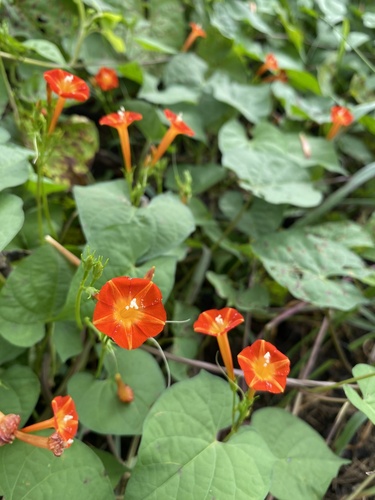
Do not plant. Listed invasive in Mississippi.
At a glance
- Life cycle
- Annual
- Leaves
- Deciduous
- Bloom
- August to December
Not yet recorded · Height · Spread
Recorded in 11 Mississippi counties.
Natural habitats
Places it grows wild. Not a planting requirement. Each habitat page lists the plants and wildlife also found there.
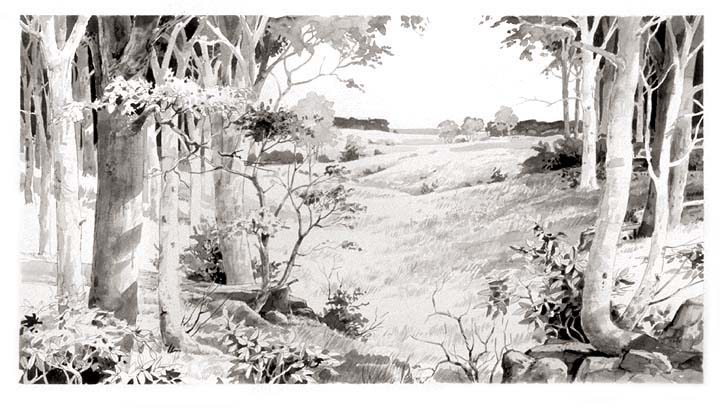
Roadsides, fields and disturbed ground
Ground opened by people: roadsides, old fields, pastures, fencerows and lots.
Streams, rivers and their banks
Flowing water and its banks, bars and rocky shoals.
Who uses this plant?
 50CaterpillarsGenus host records with ranges including MS
Genus host records with ranges including MS · Ipomoea
- Agrius cingulataPink-Spotted Hawkmoth, Sweet Potatoe Caterpillar
- Agrotis gladiariaSwordsman Dart, Clay-Backed Cut-Worm
- Agrotis ipsilonIpsilon Dart, Black Cutworm, Greasy Cutworm
- Amyna strictaEight-Spot Moth
- Anomis flavaTropical Anomis Moth
- Argyrotaenia ivanaIvana Leafroller Moth
- Autographa precationisCommon Looper Moth
- Chloridea virescensTobacco Budworm Moth
- Chrysodeixis includensSoybean Looper Moth
- Elaphria chalcedoniaChalcedony Midget
Show all 50
- Elophila obliteralisWaterlily Leafcutter Moth
- Emmelina monodactylaMorning-Glory Plume Moth
- Eublemma rectaStraight-Lined Seed Moth
- Euptoieta claudiaVariegated Fritillary, (?)Gulf Fritillary
- Euzophera semifuneralisAmerican Plum Borer
- Feltia herilisMaster's Dart
- Feltia jaculiferaDingy Cutworm
- Feltia subterraneaSubterranean Dart, Granulate Cutworm
- Hahncappsia mancalisCommon Hahncappsia
- Helicoverpa zeaCorn Earworm Moth
- Herpetogramma fluctuosalisGreater Sweetpotato Webworm
- Herpetogramma thestealisZigzag Herpetogramma, Subtle-Feathered Grass Moth
- Hydriris ornatalisOrnate Hydriris
- Hyles lineataWhite-Lined Sphinx
- Hypena scabraGreen Cloverworm Bomolocha, Black Snout
- Lascoria ambigualisAmbiguous Moth, Ambiguous Litter Moth
- Lygropia tripunctataSweet Potato Leaf Roller
- Marimatha nigrofimbriaBlack-Bordered Lemon
- Marimatha tripunctaThree-Spotted Lemon
- Megalopyge opercularisSouthern Flannel Moth, Puss Caterpillar
- Mythimna unipunctaArmyworm Moth, White Speck
- Orgyia leucostigmaWhite-Marked Tussock Moth
- Ostrinia obumbratalisSmartweed Borer
- Papilio troilusSpicebush Swallowtail
- Patania silicalisHerbivorous Patania, Herbivorous Pleuroptya
- Schizura ipomaeaeMorning-Glory Prominent, Checkered-Fringe Prominent
- Spilosoma virginicaVirginian Tiger Moth, Yellow Woolybear Moth, Yellow Bear
- Spodoptera dolichosSweetpotato Armyworm, Dolichos Armyworm, Large Cotton Armyworm
- Spodoptera eridaniaSouthern Armyworm Moth
- Spodoptera frugiperdaFall Armyworm Moth
- Spodoptera latifasciaOrange-Striped Armyworm, Velvet Armyworm Moth
- Spodoptera ornithogalliYellow-Striped Armyworm Moth, Cotton Cutworm
- Spoladea recurvalisHawaiian Beet Webworm
- Spragueia damaSouthern Spragueia
- Udea rubigalisCelery Leaftier
- Vanessa carduiPainted Lady, Cosmopolite
- Cosmopterix astrapias
- Cosmopterix gemmiferella
- Hahncappsia neobliteralis
- Microthyris anormalis
 —BeesSoutheastern regional records
 3Specialist beesPollen specialists
Pollen specialists · Ipomoea
- Melitoma grisella
- Melitoma marginella
- Melitoma taurea
 2BirdsRecorded genus food-resource interactions; not a state feeding claim
Recorded genus food-resource interactions; not a state feeding claim · Ipomoea
- Columbina passerinaCommon Ground Dove
- Cyrtonyx montezumaeMontezuma Quail
Direct food only: birds recorded eating this genus across North America. Caterpillars on host plants also feed nesting birds. NC Native Plant Society: butterfly gardening
Plant details
- Family
- Convolvulaceae
- Hardiness
- Zones 6a–10b
- Soil pH
- Acidic to alkaline
- Flower color
- Red
Safety has not been reviewed for this plant; check toxicity and thorns before planting.
Growing sources and scope
- Bloom · “August to December” · Weakley, Flora of the Southeastern United States (2025), Carolinas & Georgia edition · Carolinas and Georgia
- Flower color · “Red” · NC Extension Plant Toolbox
- Hardiness · “Zones 6a–10b” · NC Extension Plant Toolbox
- Leaves · “Deciduous” · NC Extension Plant Toolbox
- Life cycle · “Annual” · NC Extension Plant Toolbox
- Light · “Full sun (6 or more hours of direct sunlight a day); Partial shade (direct sunlight only part of the day, 2-6 hours)” · NC Extension Plant Toolbox
- primary_flower_color · “red” · NC Extension Plant Toolbox
- Soil · “Moist; Occasionally dry” · NC Extension Plant Toolbox
- Soil pH · “Acidic to alkaline” · NC Extension Plant Toolbox
Also known as
Red Morning Glory; Scarlet Creeper
Conservation status
| Mississippi rank | SNA |
|---|---|
| Global rank | GNR |
| MS status | Not verified |
| Federal status | Not verified |
Native alternatives
Find natives for your gardenSources
- NatureServe Explorer
- USDA PLANTS
- Weakley, Flora of the Southeastern United States (2025)
- Mississippi occurrence source
- Shropshire & Tallamy 2025, Lepidoptera of North America north of Mexico, ZooKeys 1261 (ODbL)
- Noori, Seltmann & Orr 2026, A curated and integrated dataset for exploring global bee-plant interactions (GloBI), Zenodo, CC BY 4.0
- Smith, Bachelder, Russell, Morales, Mosher & Seltmann 2024, Bee-Specialization-Modeling v0.6.1 (specialist host table compiled from J. Fowler's pollen specialist bee lists), Zenodo, CC BY 4.0
- Hurlbert, Olsen, Sawyer & Winner 2021, Avian Diet Database, Scientific Data 8: 260 (CC0)
- Narango, Tallamy & Shropshire 2020, Few keystone plant genera support the majority of Lepidoptera species, Nature Communications