

Yellow Nutsedge
Cyperus esculentus
Native status: sources disagree, under review. How scores work Is it native here?
Profile 82%
- Height
- 6 inches–2 feet
- Spread
- 2–5 inches
- Light
- Full sun, Partial shade
- Soil moisture
- Somewhat dry to moist
Space about 1 ft apart from its recorded spread, about 100 per 100 sq ft. Enter your bed size for a count
Will it fit your yard?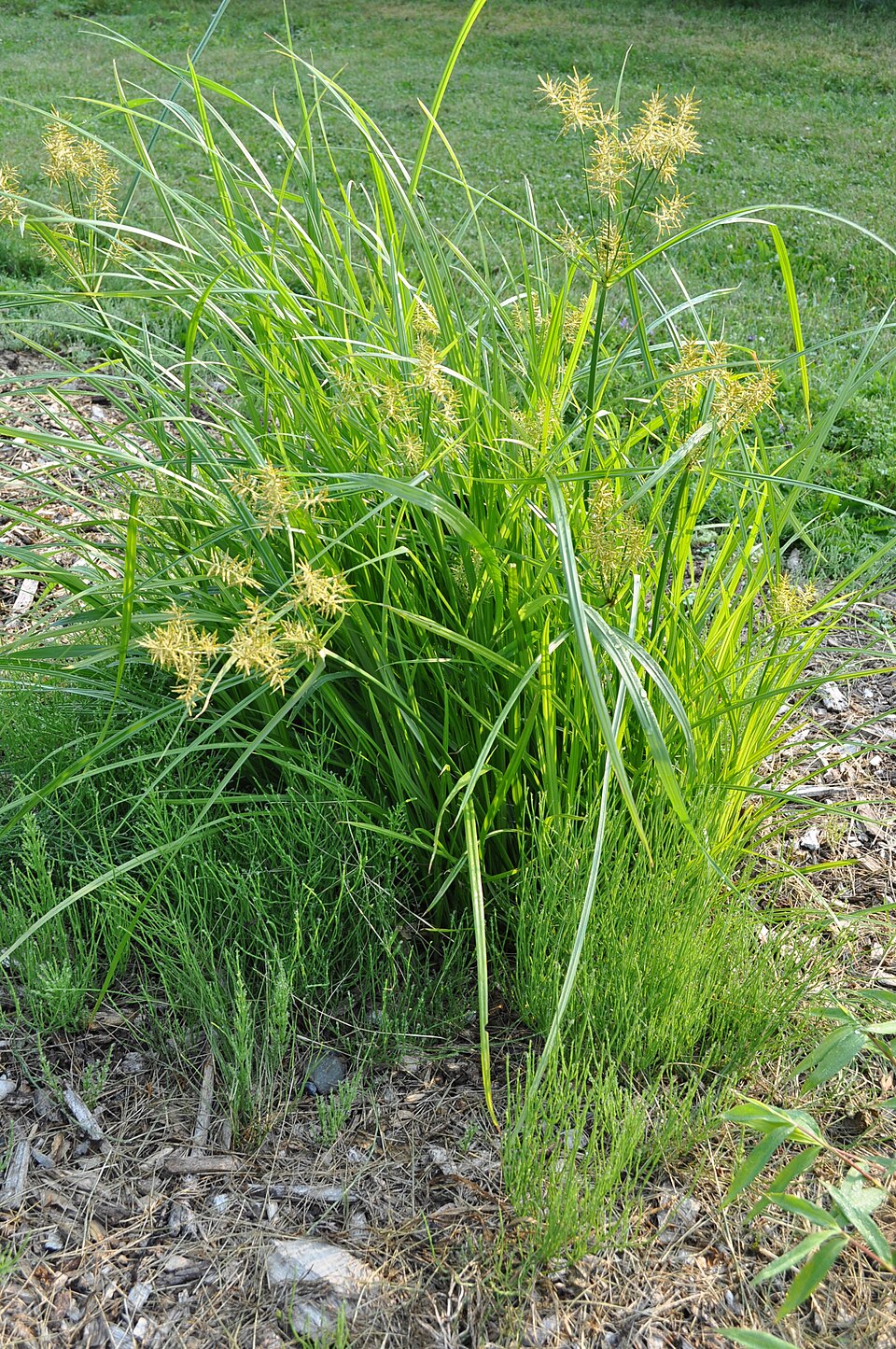

At a glance
- Life cycle
- Perennial
- Leaves
- Deciduous
- Bloom
- Mid summer
- Fruiting season
- Summer to fall
Recorded in 31 Mississippi counties.
Who uses this plant?
 9CaterpillarsGenus host records with ranges including MS
Genus host records with ranges including MS · Cyperus
- Argyrotaenia ivanaIvana Leafroller Moth
- Bactra verutanaJavelin Moth
- Diploschizia impigritellaYellow Nutsedge Moth
- Elasmopalpus lignosellaLesser Cornstalk Borer
- Euphyes pilatkaSawgrass Skipper, Palatka Skipper, Coastal Sedge Skipper, Keys Sawgrass Skipper[for subspecies Euphyes pilatka klotsi]
- Euphyes vestrisDun Skipper, Dun Sedge Skipper, Sedge Witch)\
- Globia oblongaOblong Sedge Borer Moth, Large Noagria
- Spodoptera frugiperdaFall Armyworm Moth
- Cosmopterix attenuatella
 —BeesSoutheastern regional records
 —Specialist beesPollen specialists
 22BirdsRecorded genus food-resource interactions; not a state feeding claim
Recorded genus food-resource interactions; not a state feeding claim · Cyperus
- Agelaius phoeniceusRed-winged Blackbird
- Anas acutaNorthern Pintail
- Anser albifronsGreater White-fronted Goose
- Antigone canadensisSandhill Crane
- Aythya affinisLesser Scaup
- Aythya collarisRing-necked Duck
- Aythya valisineriaCanvasback
- Callipepla californicaCalifornia Quail
- Colinus virginianusNorthern Bobwhite
- Columbina passerinaCommon Ground Dove
Show all 22
- Cyrtonyx montezumaeMontezuma Quail
- Dendrocygna bicolorFulvous Whistling-Duck
- Falcipennis canadensisSpruce Grouse
- Gallinula galeataCommon Gallinule
- Mareca americanaAmerican Wigeon
- Mareca streperaGadwall
- Meleagris gallopavoWild Turkey
- Molothrus aterBrown-headed Cowbird
- Pooecetes gramineusVesper Sparrow
- Porzana carolinaSora
- Spizella pusillaField Sparrow
- Tympanuchus pallidicinctusLesser Prairie-Chicken
Direct food only: birds recorded eating this genus across North America. Caterpillars on host plants also feed nesting birds. NC Native Plant Society: butterfly gardening
Plant details
- Family
- Cyperaceae
- Hardiness
- Zones 8a–10b
- Soil pH
- Acidic or alkaline
- Flower color
- Brown/copper, yellow or red
- Growth rate
- Rapid
- Growth habit
- Spreads by rhizomes
- Foliage color
- Green
- Fruit begins
- Summer
- Fruit ends
- Fall
What its natural habitat tells you
Safety has not been reviewed for this plant; check toxicity and thorns before planting.
Growing sources and scope
- Bloom · “Mid summer” · USDA PLANTS · Nationwide species characteristics; local growing conditions may vary
- Flower color · “Brown/copper, yellow or red” · NC Extension Plant Toolbox (ranked first; USDA PLANTS differs)
- Foliage color · “Green” · USDA PLANTS · Nationwide species characteristics; local growing conditions may vary
- Fruit begins · “Summer” · USDA PLANTS · Nationwide species characteristics; local growing conditions may vary
- Fruit ends · “Fall” · USDA PLANTS · Nationwide species characteristics; local growing conditions may vary
- Growth habit · “Spreads by rhizomes” · USDA PLANTS · Nationwide species characteristics; local growing conditions may vary
- Growth rate · “Rapid” · USDA PLANTS · Nationwide species characteristics; local growing conditions may vary
- Hardiness · “Zones 8a–10b” · NC Extension Plant Toolbox
- Height · “6 inches–2 feet” · NC Extension Plant Toolbox (ranked first; USDA PLANTS differs)
- Leaves · “Deciduous” · NC Extension Plant Toolbox
- Life cycle · “Perennial” · NC Extension Plant Toolbox
- Light · “Full sun (6 or more hours of direct sunlight a day); Partial shade (direct sunlight only part of the day, 2-6 hours)” · NC Extension Plant Toolbox
- Soil · “Moist; Occasionally dry” · NC Extension Plant Toolbox
- Soil pH · “Acidic or alkaline” · NC Extension Plant Toolbox
- Spread · “2–5 inches” · NC Extension Plant Toolbox
Also known as
Earth Almond; Wild Chufa; Yellow Nut Sedge; Yellow Nutgrass; Yellwo Nut Grass
Conservation status
| Mississippi rank | SNA |
|---|---|
| Global rank | G5 |
| MS status | Not verified |
| Federal status | Not verified |
Will it fit your yard?
Check this plant against your county, sun and soil moisture. Conditions are checked in your browser.
Growing cautions
- Spreads by rhizomes. USDA PLANTS lists its growth form as rhizomatous. USDA PLANTS
For planning only; these do not change the score or Fit.
Sources
- NatureServe Explorer
- USDA PLANTS
- Mississippi occurrence source
- Shropshire & Tallamy 2025, Lepidoptera of North America north of Mexico, ZooKeys 1261 (ODbL)
- Noori, Seltmann & Orr 2026, A curated and integrated dataset for exploring global bee-plant interactions (GloBI), Zenodo, CC BY 4.0
- Smith, Bachelder, Russell, Morales, Mosher & Seltmann 2024, Bee-Specialization-Modeling v0.6.1 (specialist host table compiled from J. Fowler's pollen specialist bee lists), Zenodo, CC BY 4.0
- Hurlbert, Olsen, Sawyer & Winner 2021, Avian Diet Database, Scientific Data 8: 260 (CC0)
- Narango, Tallamy & Shropshire 2020, Few keystone plant genera support the majority of Lepidoptera species, Nature Communications