

Bog Smartweed
Persicaria setacea
In the Carolinas and Georgia, found in swamp forests, bottomland forests. Weakley, Flora of the Southeastern United States (2025), Carolinas & Georgia edition What its natural habitat tells you
Native to Louisiana (estimated). How scores work Is it native here?
Profile 94%
- Height
- Up to about 5 feet
- Light
- Partial shade, Full shade, Full sun
- Soil moisture
- Moist to standing water
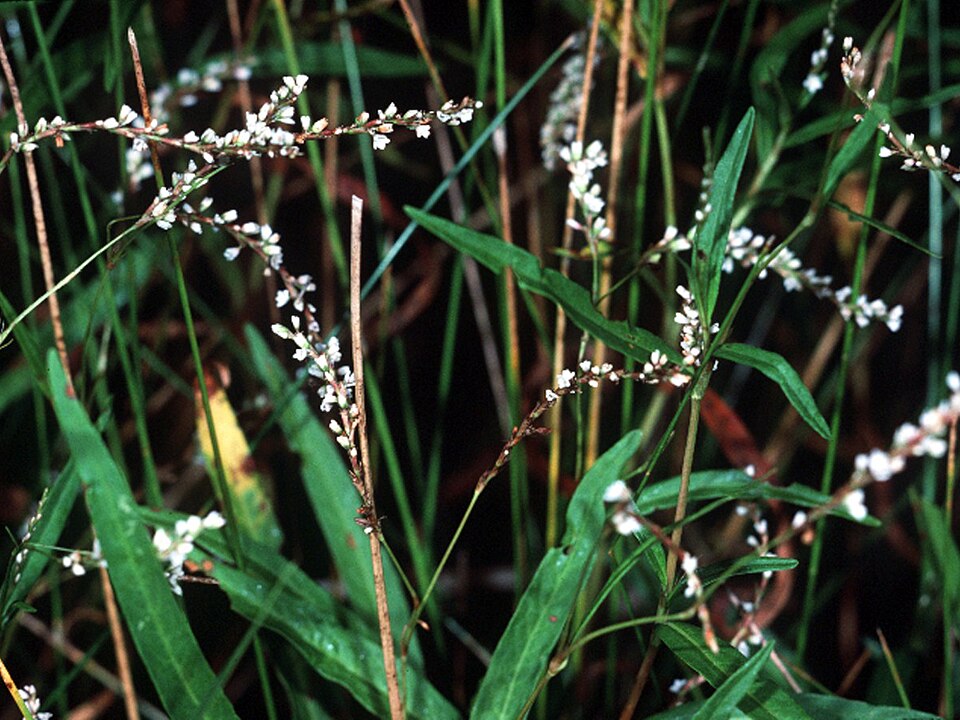

At a glance
- Life cycle
- Perennial
- Bloom
- July to November
Not yet recorded · Spread · Leaves
Recorded in 11 Louisiana parishes.
Natural habitats
Places it grows wild. Not a planting requirement. Each habitat page lists the plants and wildlife also found there.
Forested wetlands with standing water much of the year, such as cypress and gum swamps.
Floodplain and bottomland forests
Forests on low ground beside rivers and streams that flood from time to time.
Who uses this plant?
 40CaterpillarsGenus host records with ranges including LA
Genus host records with ranges including LA · Polygonum
- Achyra rantalisGarden Webworm Moth
- Acronicta insularisHenry's Marsh Moth, Cattail Caterpillar
- Acronicta oblinitaSmeared Dagger
- Anticlea multiferataMany-Lined Carpet
- Apantesis argeArge Tiger Moth
- Apantesis naisNais Tiger Moth
- Archips semiferanusOak Leafroller Moth
- Calothysanis amaturariaCross-Lined Wave
- Chionodes discoocellellaEyeringed Chionodes
- Coleophora cratipennellaStreaked Coleophora
Show all 40
- Costaconvexa centrostrigariaBent-Lined Carpet
- Elophila obliteralisWaterlily Leafcutter Moth
- Emmelina monodactylaMorning-Glory Plume Moth
- Epiblema otiosanaBidens Borer Moth
- Eusarca confusariaConfused Eusarca
- Feltia subterraneaSubterranean Dart, Granulate Cutworm
- Haematopis gratariaChickweed Geometer
- Helicoverpa zeaCorn Earworm Moth
- Homophoberia apicosaBlack Wedge-Spot, Smartweed Groundling
- Hyles lineataWhite-Lined Sphinx
- Hypena scabraGreen Cloverworm Bomolocha, Black Snout
- Maliattha synochitisBlack-Dotted Lithacodia, Black-Dotted Glyph, Brass-Dotted Grass Moth
- Melanolophia canadariaCanadian Melanolphia, Variable Redmarked Looper
- Metarranthis duariaRuddy Metarranthis
- Nephelodes miniansBronzed Cutworm
- Nomophila nearcticaLucerne Moth, American Celery Webworm
- Orthonama obstipataThe Gem
- Ostrinia obumbratalisSmartweed Borer
- Ostrinia penitalisAmerican Lotus Borer, Lily Moth
- Parapoynx obscuralisObscure Pondweed Moth
- Patania silicalisHerbivorous Patania, Herbivorous Pleuroptya
- Prochoerodes lineolaLarge Maple Spanworm Moth
- Pseudeustrotia carneolaPink-Barred Lithacodia, Pink-Barred Pseudeustrotia
- Saucrobotys futilalisDogbane Saucrobotys
- Schinia scissoidesDivided Flower Moth
- Schinia spinosaeSpinose Flower Moth
- Scopula limboundataLarge Lace-Border
- Spilosoma congruaAgreeable Tiger Moth
- Spilosoma virginicaVirginian Tiger Moth, Yellow Woolybear Moth, Yellow Bear
- Strymon melinusGray Hairstreak
 34BeesSoutheastern regional records
Southeastern regional records · Persicaria
Individual names are not available yet.
Noori, Seltmann & Orr 2026, A curated and integrated dataset for exploring global bee-plant interactions (GloBI), Zenodo, CC BY 4.0 0Specialist beesPollen specialists
 58BirdsRecorded genus food-resource interactions; not a state feeding claim
Recorded genus food-resource interactions; not a state feeding claim · Polygonum
- Agelaius phoeniceusRed-winged Blackbird
- Aix sponsaWood Duck
- Alectoris chukarChukar
- Anas acutaNorthern Pintail
- Anas creccaGreen-winged Teal
- Anas platyrhynchosMallard
- Anser albifronsGreater White-fronted Goose
- Anthus rubescensAmerican Pipit
- Aythya affinisLesser Scaup
- Aythya americanaRedhead
Show all 58
- Aythya collarisRing-necked Duck
- Aythya valisineriaCanvasback
- Bonasa umbellusRuffed Grouse
- Bucephala clangulaCommon Goldeneye
- Callipepla californicaCalifornia Quail
- Centrocercus urophasianusGreater Sage-Grouse
- Colinus virginianusNorthern Bobwhite
- Columba liviaRock Pigeon
- Columbina passerinaCommon Ground Dove
- Coturnicops noveboracensisYellow Rail
- Dendragapus obscurusDusky Grouse
- Dendrocygna autumnalisBlack-bellied Whistling-Duck
- Dolichonyx oryzivorusBobolink
- Eremophila alpestrisHorned Lark
- Euphagus cyanocephalusBrewer's Blackbird
- Francolinus francolinusBlack Francolin
- Fulica americanaAmerican Coot
- Gallinula galeataCommon Gallinule
- Haemorhous mexicanusHouse Finch
- Junco hyemalisDark-eyed Junco
- Lagopus lagopusWillow Ptarmigan
- Mareca americanaAmerican Wigeon
- Meleagris gallopavoWild Turkey
- Melospiza melodiaSong Sparrow
- Melozone crissalisCalifornia Towhee
- Molothrus aterBrown-headed Cowbird
- Oreortyx pictusMountain Quail
- Oxyura jamaicensisRuddy Duck
- Passer domesticusHouse Sparrow
- Perdix perdixGray Partridge
- Pheucticus melanocephalusBlack-headed Grosbeak
- Pinicola enucleatorPine Grosbeak
- Pipilo maculatusSpotted Towhee
- Porzana carolinaSora
- Quiscalus quisculaCommon Grackle
- Rallus elegansKing Rail
- Rallus limicolaVirginia Rail
- Sialia mexicanaWestern Bluebird
- Sialia sialisEastern Bluebird
- Spinus psaltriaLesser Goldfinch
- Spizella passerinaChipping Sparrow
- Sturnus vulgarisEuropean Starling
- Turdus migratoriusAmerican Robin
- Tympanuchus phasianellusSharp-tailed Grouse
- Vireo griseusWhite-eyed Vireo
- Zenaida macrouraMourning Dove
- Zonotrichia atricapillaGolden-crowned Sparrow
- Zonotrichia leucophrysWhite-crowned Sparrow
Direct food only: birds recorded eating this genus across North America. Caterpillars on host plants also feed nesting birds. NC Native Plant Society: butterfly gardening
No records yet · Ants · Beetles · Flies · Adult butterflies / moths · Other wasps · Other insects
Plant details
- Family
- Polygonaceae
- Flower color
- White, pink or green
Safety has not been reviewed for this plant; check toxicity and thorns before planting.
Growing sources and scope
- Bloom · “July to November” · Weakley, Flora of the Southeastern United States (2025), Carolinas & Georgia edition · Carolinas and Georgia
- Flower color · “White, pink or green” · Lady Bird Johnson Wildflower Center
- Height · “Up to about 5 feet” · Lady Bird Johnson Wildflower Center
- Life cycle · “Perennial” · Lady Bird Johnson Wildflower Center
- Light · “Partial shade; Full shade; Full sun (documented habitat)” · Weakley, Flora of the Southeastern United States (2025), Carolinas & Georgia edition · Carolinas and Georgia
- Soil · “Moist; Water; Wet (documented habitat)” · Weakley, Flora of the Southeastern United States (2025), Carolinas & Georgia edition · Carolinas and Georgia
Also known as
Polygonum setaceum; knotweed
Conservation status
| Louisiana rank | SNR |
|---|---|
| Global rank | G5 |
| LA status | Not verified |
| Federal status | Not verified |
Will it fit your yard?
Check this plant against your county, sun and soil moisture. Conditions are checked in your browser.
Sources
- USDA PLANTS
- Vascular Plants of North Carolina (NC Natural Heritage Program)
- Weakley, Flora of the Southeastern United States (2025)
- Louisiana occurrence source
- Shropshire & Tallamy 2025, Lepidoptera of North America north of Mexico, ZooKeys 1261 (ODbL)
- Noori, Seltmann & Orr 2026, A curated and integrated dataset for exploring global bee-plant interactions (GloBI), Zenodo, CC BY 4.0
- Smith, Bachelder, Russell, Morales, Mosher & Seltmann 2024, Bee-Specialization-Modeling v0.6.1 (specialist host table compiled from J. Fowler's pollen specialist bee lists), Zenodo, CC BY 4.0
- Hurlbert, Olsen, Sawyer & Winner 2021, Avian Diet Database, Scientific Data 8: 260 (CC0)
- Narango, Tallamy & Shropshire 2020, Few keystone plant genera support the majority of Lepidoptera species, Nature Communications