

Southern Crabapple
Malus angustifolia
In the Carolinas and Georgia, found in forests, woodlands, fence-rows, dry hammocks, occasionally in bottomlands. Weakley, Flora of the Southeastern United States (2025), Carolinas & Georgia edition What its natural habitat tells you
Native to Louisiana (estimated). How scores work Is it native here?
Profile 100%
- Height
- Up to about 30 feet
- Light
- Full sun, Partial shade
- Soil moisture
- Usually moist
At a glance
- Life cycle
- Woody perennial
- Leaves
- Deciduous
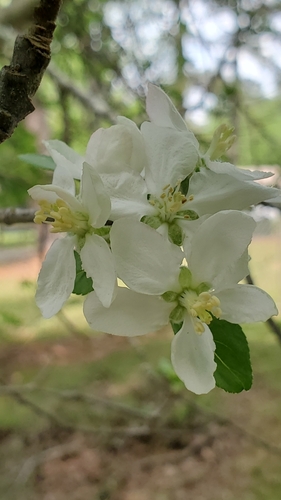
- Bloom
- Spring
- Fruiting season
- August to September
Not yet recorded · Spread
Recorded in 21 Louisiana parishes.
Natural habitats
Places it grows wild. Not a planting requirement. Each habitat page lists the plants and wildlife also found there.
Forest or woodland where the source does not say how moist or dry.
Floodplain and bottomland forests
Forests on low ground beside rivers and streams that flood from time to time.
Who uses this plant?
 161CaterpillarsGenus host records with ranges including LA
Genus host records with ranges including LA · Malus
- Abagrotis alternataGreater Red Dart, Mottled Grey Cutworm
- Acharia stimuleaSaddleback Caterpillar Moth
- Achatia distinctaDistinct Quaker
- Acleris chalybeanaLesser Maple Leafroller Moth
- Acleris maculidorsanaStained-Back Leafroller Moth
- Acrobasis indigenellaLeaf Crumpler
- Acronicta americanaAmerican Dagger
- Acronicta clarescensClear Dagger
- Acronicta funeralisFunerary Dagger, Paddle Caterpillar
- Acronicta impletaYellow-Haired Dagger
Show all 161
- Acronicta interruptaInterrupted Dagger
- Acronicta oblinitaSmeared Dagger
- Acronicta radcliffeiRadcliffe's Dagger
- Acronicta spinigeraNondescript Dagger
- Adoneta spinuloidesPurple-Crested Slug
- Agnorisma badinodisPale-Banded Dart
- Agrotis ipsilonIpsilon Dart, Black Cutworm, Greasy Cutworm
- Alsophila pometariaFall Cankerworm Moth
- Amorbia humerosanaWhite-Lined Leafroller Moth
- Amphipyra pyramidoidesMiranda Underwing, Copper Underwing, Copper Amphipyra
- Amyelois transitellaNavel Orangeworm
- Anatrachyntis rileyiPink Scavanger Caterpillar
- Anavitrinella pampinariaCommon Gray, Cranberry Spanworm
- Anomis flavaTropical Anomis Moth
- Antaeotricha leucillanaWell-Marked Leaf Tier, Pale Gray Bird-Dropping Moth
- Antepione thisoariaVariable Antepione
- Antheraea polyphemusPolyphemus Moth
- Archips argyrospilaFruit-Tree Leafroller Moth
- Archips griseaGray Archips
- Archips purpuranaOmnivorous Leafroller Moth
- Archips semiferanusOak Leafroller Moth
- Argyrostrotis anilisShort-Lined Chocolate
- Argyrotaenia quercifolianaYellow-Winged Oak Leafroller Moth, Lined Oak Leafroller
- Argyrotaenia velutinanaRed-Banded Leafroller Moth, Jack Pine Tube Moth
- Automeris ioIo Moth
- Balsa malanaMany-Dotted Balsa, Many-Dotted Appleworm
- Callosamia anguliferaTulip-Tree Silkmoth
- Callosamia prometheaPromethea Silkmoth, Promethea Moth
- Catocala blandulaCharming Underwing
- Catocala clintoniiClinton's Underwing
- Catocala crataegiHawthorne Underwing, Thorn Underwing
- Catocala gryneaWoody Underwing
- Catocala miraWonderful Underwing
- Catocala pretiosaPrecious Underwing, Texarkana Underwing
- Catocala ultroniaUltronia Underwing
- Cecrita guttivittaMaple Prominent, Saddled Prominent
- Cenopis diluticostanaSpring Dead-Leaf Roller Moth, Oak Cenopis
- Cenopis directanaChokecherry Leafroller Moth
- Cenopis pettitanaMaple-Basswood Leafroller Moth
- Cenopis reticulatanaReticulated Fruitworm Moth
- Cerma cerinthaTufted Bird-Dropping Moth, Cherry Agate
- Choristoneura fractivittanaBroken-Banded Leafroller, Lined Corn-Borer Moth
- Choristoneura rosaceanaOblique-Banded Leafroller Moth, Rosaceous Leaf Roller
- Coelodasys unicornisUnicorn Caterpillar Moth
- Dasychira basiflavaYellow-Based Tussock Moth
- Datana ministraYellow-Necked Caterpillar Moth
- Dichomeris ligulellaPalmerworm
- Ectropis crepusculariaThe Small Engrailed, Saddleback Looper
- Ennomos magnariaMaple Spanworm Moth, Notchwing Geometer
- Ennomos subsignariaElm Spanworm Moth
- Erannis tiliariaLinden Looper Moth, Western Winter Moth, Lime Looper
- Estigmene acreaSalt Marsh Moth, Acrea Moth
- Euclea delphiniiSpiny Oak-Slug Moth
- Eulithis diversilineataLesser Grapevine Looper Moth
- Eulogia ochrifrontellaBroad-Banded Eulogia
- Eumacaria madopataBrown-Bordered Geometer
- Eupithecia miserulataCommon Eupithacia, Common Pug
- Eutrapela clematariaCurved-Tooth Geometer, Purplish Brown Looper
- Euzophera semifuneralisAmerican Plum Borer
- Feltia herilisMaster's Dart
- Feltia jaculiferaDingy Cutworm
- Grapholita packardiCherry Fruit Worm
- Halysidota tessellarisBanded Tussock Moth, Pale Tiger Moth
- Haploa colonaColona Moth
- Haploa leconteiLeconte's Haploa
- Haploa reversaReversed Haploa
- Harrisimemna trisignataHarris's Three-Spot
- Helicoverpa zeaCorn Earworm Moth
- Holcocera chalcofrontellaSumac Holcocera
- Hyalophora cecropiaCecropia Silkmoth, Cecropia Moth
- Hyles lineataWhite-Lined Sphinx
- Hypagyrtis unipunctataOne-Spotted Variant
- Hypena scabraGreen Cloverworm Bomolocha, Black Snout
- Hyphantria cuneaFall Webworm
- Iridopsis ephyrariaPale-Winged Gray
- Kocakina fidelisIntractable Quaker, Green Fruitworm, Fourlined Green Fruitworm
- Lacinipolia meditataThe Thinker
- Lacinipolia renigeraBristly Ground Cat, Bristly Cutworm Moth, Kidney Spotted "Mamestra"
- Lambdina fiscellariaHemlock Looper, Western Oak Looper
- Limenitis archippusViceroy
- Limenitis arthemisBanded Purple, Red-Spotted Admiral
- Lithacodes fasciolaYellow-Shouldered Slug
- Lithophane antennataAshen Pinion
- Lithophane bethuneiBethune's Pinion
- Lochmaeus manteoVariable Oakleaf Caterpillar Moth
- Lomographa vestaliataWhite Spring Moth
- Lycia ypsilonWoolly Gray
- Macaria coortariaFour-Spotted Angle, Four-Spotted Granite
- Malacosoma americanaEastern Tent Caterpillar
- Malacosoma disstriaForest Tent Caterpillar
- Megalopyge crispataBlack-Waved Flannel Moth, Crinkled Flannel Moth
- Megalopyge opercularisSouthern Flannel Moth, Puss Caterpillar
- Melanolophia canadariaCanadian Melanolphia, Variable Redmarked Looper
- Metaxaglaea australisSouthern Sallow
- Metaxaglaea semitariaFootpath Sallow
- Metaxaglaea viaticaRoadside Sallow
- Moodna ostrinellaDarker Moodna
- Morrisonia confusaConfused Woodgrain
- Mythimna unipunctaArmyworm Moth, White Speck
- Nematocampa resistariaFilament Bearer, Horned Spanworm Moth
- Nemoria bistriariaTwo-Striped Emerald, Red-Fringed Emerald
- Oedemasia concinnaRed-Humped Caterpillar, Red-Humped Appleworm
- Oedemasia leptinoidesBlack-Blotched Schizura
- Oedemasia semirufescensRed-Washed Prominent
- Orgyia leucostigmaWhite-Marked Tussock Moth
- Orthosia alurinaGray Quaker
- Orthosia hibisciSpeckled Green Fruitworm Moth, Speckled Green Quaker
- Orthosia rubescensRuby Quaker
- Ostrinia obumbratalisSmartweed Borer
- Pachysphinx modestaModest Sphinx, The Big Poplar Sphinx
- Paleacrita vernataSpring Cankerworm Moth
- Palthis angulalisDark-Spotted Palthis
- Pandemis limitataThree-Lined Leafroller Moth
- Paonias excaecataBlinded Sphinx, Blind Eyed Sphinx
- Paonias myopsSmall-Eyed Sphinx
- Papaipema nebrisStalk Borer
- Papilio glaucusEastern Tiger Swallowtail
- Parasa chlorisSmaller Parasa, Green Slug Moth
- Parasa indeterminaStinging Rose Caterpillar Moth, Rose Slug Caterpillar
- Phigalia strigatariaSmall Phigalia, Small Oak Looper
- Phigalia titeaThe Half-Wing Geometer, Spiney Looper, Eastern Oak Looper
- Phobetron pitheciumHag Moth, Monkey Slug
- Platynota flavedanaBlack-Shaded Platynota
- Platynota idaeusalisTufted Apple-Bud Moth
- Prochoerodes lineolaLarge Maple Spanworm Moth
- Proteoteras aesculanaMaple Seed Caterpillar, Maple Twig Borer
- Pseudothyatira cymatophoroidesTufted Thyatirid
- Pyrausta phoenicealisPhoenicean Pyrausta, Perilla Leafroller
- Satyrium calanusBanded Hairstreak, Falacer Hairstreak
- Satyrium liparopsStriped Hairstreak
- Schizura ipomaeaeMorning-Glory Prominent, Checkered-Fringe Prominent
- Scopula limboundataLarge Lace-Border
- Smerinthus jamaicensisTwin-Spotted Sphinx
- Sparganothis sulfureanaSparganothis Fruitworm Moth, Sulfur Leafroller, False Yellow-Head
- Sphinx kalmiaeFawn Sphinx, Laurel Sphinx
- Spodoptera eridaniaSouthern Armyworm Moth
- Spodoptera frugiperdaFall Armyworm Moth
- Strymon melinusGray Hairstreak
- Sunira bicoloragoBicolored Sallow
- Synanthedon exitiosaPeachtree Borer Moth, Western Peachtree Borer
- Synanthedon pictipesLesser Peachtree Borer Moth
- Synanthedon scitulaDogwood Borer, Pecan Borer
- Syndemis afflictanaFall Dead-Leaf Roller, Gray Leafroller, Black-and-Grey Banded Leafroller
- Thyridopteryx ephemeraeformisEvergreen Bagworm Moth
- Tolype velledaLarge Tolype, Large Lappet Moth, Vellada Lappet Moth
- Xestia dolosaGreater Black-Letter Dart, Greater Spotted Cutworm
- Zale calycanthataDouble-Banded Zale
- Zale lunataLunate Zale
- Aristotelia pudibundella
- Blastobasis quaintancella
- Xenotemna pallorana
 176BeesSoutheastern regional records
Southeastern regional records · Malus
Individual names are not available yet.
Noori, Seltmann & Orr 2026, A curated and integrated dataset for exploring global bee-plant interactions (GloBI), Zenodo, CC BY 4.0 1Specialist beesPollen specialists
 9BirdsRecorded genus food-resource interactions; not a state feeding claim
Recorded genus food-resource interactions; not a state feeding claim · Malus
- Aphelocoma californicaCalifornia Scrub-Jay
- Bombycilla cedrorumCedar Waxwing
- Bonasa umbellusRuffed Grouse
- Callipepla californicaCalifornia Quail
- Coccothraustes vespertinusEvening Grosbeak
- Ixoreus naeviusVaried Thrush
- Melanerpes erythrocephalusRed-headed Woodpecker
- Turdus migratoriusAmerican Robin
- Zonotrichia atricapillaGolden-crowned Sparrow
Direct food only: birds recorded eating this genus across North America. Caterpillars on host plants also feed nesting birds. NC Native Plant Society: butterfly gardening
No records yet · Ants · Beetles · Flies · Adult butterflies / moths · Other wasps · Other insects
Plant details
- Family
- Rosaceae
- Hardiness
- Zones 4a–9b
- Soil pH
- Acidic to neutral
- Flower color
- Pink
- Fruit begins
- August
- Fruit ends
- September
Safety has not been reviewed for this plant; check toxicity and thorns before planting.
Growing sources and scope
- Bloom · “Spring” · NC Extension Plant Toolbox (ranked first; Weakley, Flora of the Southeastern United States (2025), Carolinas & Georgia edition differs)
- Flower color · “Pink” · NC Extension Plant Toolbox
- Fruit begins · “August” · Weakley, Flora of the Southeastern United States (2025), Carolinas & Georgia edition · Carolinas and Georgia
- Fruit ends · “September” · Weakley, Flora of the Southeastern United States (2025), Carolinas & Georgia edition · Carolinas and Georgia
- Hardiness · “Zones 4a–9b” · NC Extension Plant Toolbox
- Height · “Up to about 30 feet” · Lady Bird Johnson Wildflower Center
- Leaves · “Deciduous” · NC Extension Plant Toolbox
- Life cycle · “Woody perennial” · NC Extension Plant Toolbox (ranked first; Lady Bird Johnson Wildflower Center differs)
- Light · “Full sun (6 or more hours of direct sunlight a day); Partial shade (direct sunlight only part of the day, 2-6 hours)” · NC Extension Plant Toolbox (ranked first; Lady Bird Johnson Wildflower Center differs)
- primary_flower_color · “pink” · NC Extension Plant Toolbox
- Soil · “Good drainage; Moist” · NC Extension Plant Toolbox (ranked first; NC Extension Plant Toolbox, Lady Bird Johnson Wildflower Center differ)
- Soil pH · “Acidic to neutral” · NC Extension Plant Toolbox
Conservation status
| Louisiana rank | SNR |
|---|---|
| Global rank | G5? |
| LA status | Not verified |
| Federal status | Not verified |
Will it fit your yard?
Check this plant against your county, sun and soil moisture. Conditions are checked in your browser.
Sources
- USDA PLANTS
- Vascular Plants of North Carolina (NC Natural Heritage Program)
- Weakley, Flora of the Southeastern United States (2025)
- Louisiana occurrence source
- Shropshire & Tallamy 2025, Lepidoptera of North America north of Mexico, ZooKeys 1261 (ODbL)
- Noori, Seltmann & Orr 2026, A curated and integrated dataset for exploring global bee-plant interactions (GloBI), Zenodo, CC BY 4.0
- Smith, Bachelder, Russell, Morales, Mosher & Seltmann 2024, Bee-Specialization-Modeling v0.6.1 (specialist host table compiled from J. Fowler's pollen specialist bee lists), Zenodo, CC BY 4.0
- Hurlbert, Olsen, Sawyer & Winner 2021, Avian Diet Database, Scientific Data 8: 260 (CC0)
- Narango, Tallamy & Shropshire 2020, Few keystone plant genera support the majority of Lepidoptera species, Nature Communications