

Eastern Purple Coneflower
Echinacea purpurea
Pink-purple rays surround a spiny central cone above rough green leaves. In the Carolinas and Georgia, found in open woodlands, roadsides, some of the occurrences persistent or spread from cultivation. Weakley, Flora of the Southeastern United States (2025), Carolinas & Georgia edition What its natural habitat tells you
Native to Louisiana. How scores work Is it native here?
Profile 100%
- Height
- 3–4 feet
- Spread
- 1–2 feet
- Light
- Full sun, Partial shade
- Soil moisture
- Somewhat dry to moist
Space about 1.5 ft apart from its recorded spread, about 44 per 100 sq ft. Enter your bed size for a count
Will it fit your yard?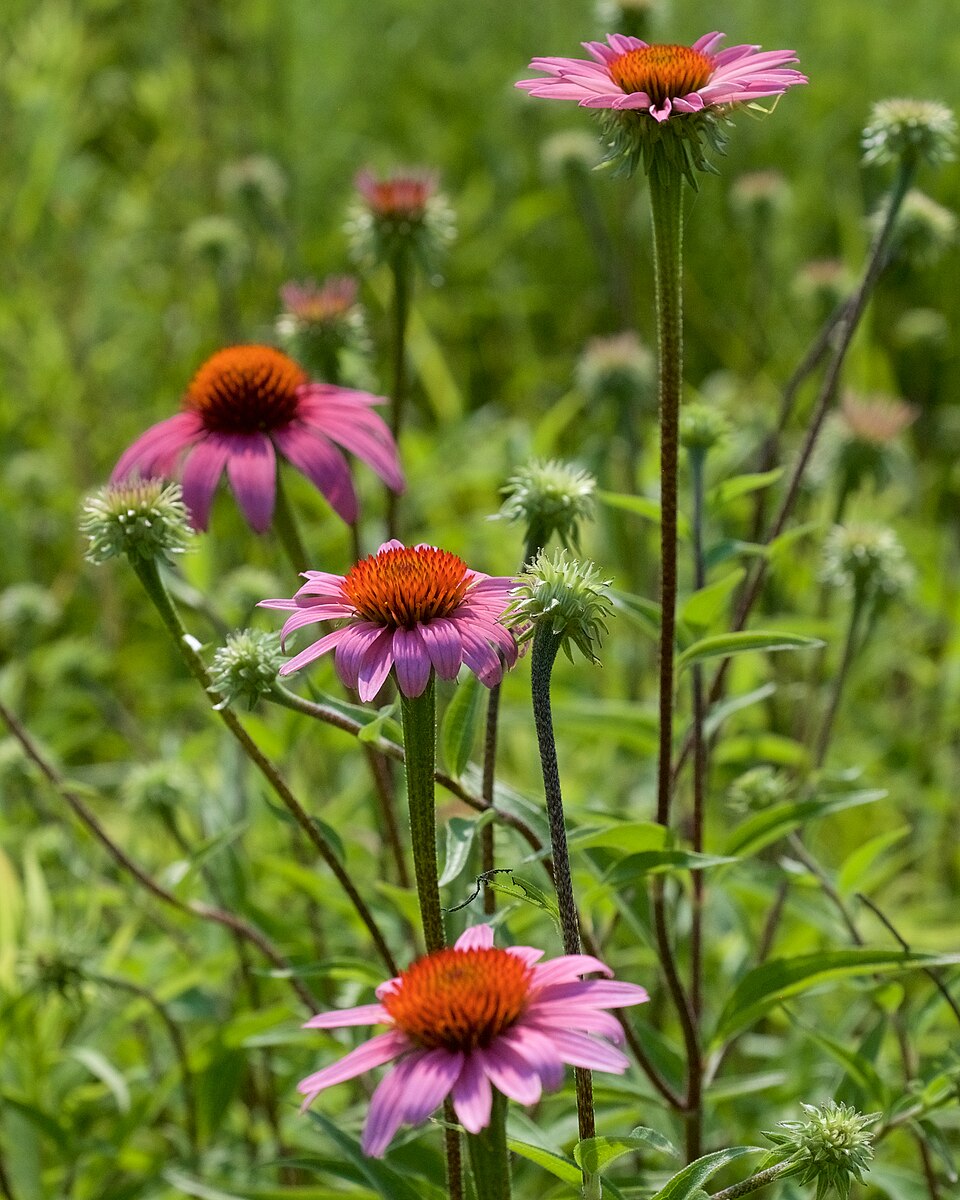
Rare or protected plant. Specialist conservation planting; excluded from routine garden suggestions. Plant caution source
Hidden from default planting suggestions. Wildlife value and native status remain unchanged.
At a glance
- Life cycle
- Herbaceous perennial
- Leaves
- Deciduous
- Bloom
- June to August
- Fruiting season
- Summer to fall
Recorded in 10 Louisiana parishes.
Natural habitats
Places it grows wild. Not a planting requirement. Each habitat page lists the plants and wildlife also found there.
Forest or woodland where the source does not say how moist or dry.
Roadsides, fields and disturbed ground
Ground opened by people: roadsides, old fields, pastures, fencerows and lots.
Also found with this plant
Wildlife whose habitat models include habitats this plant grows in, in Louisiana. Shared habitat, not food. 67 animals.
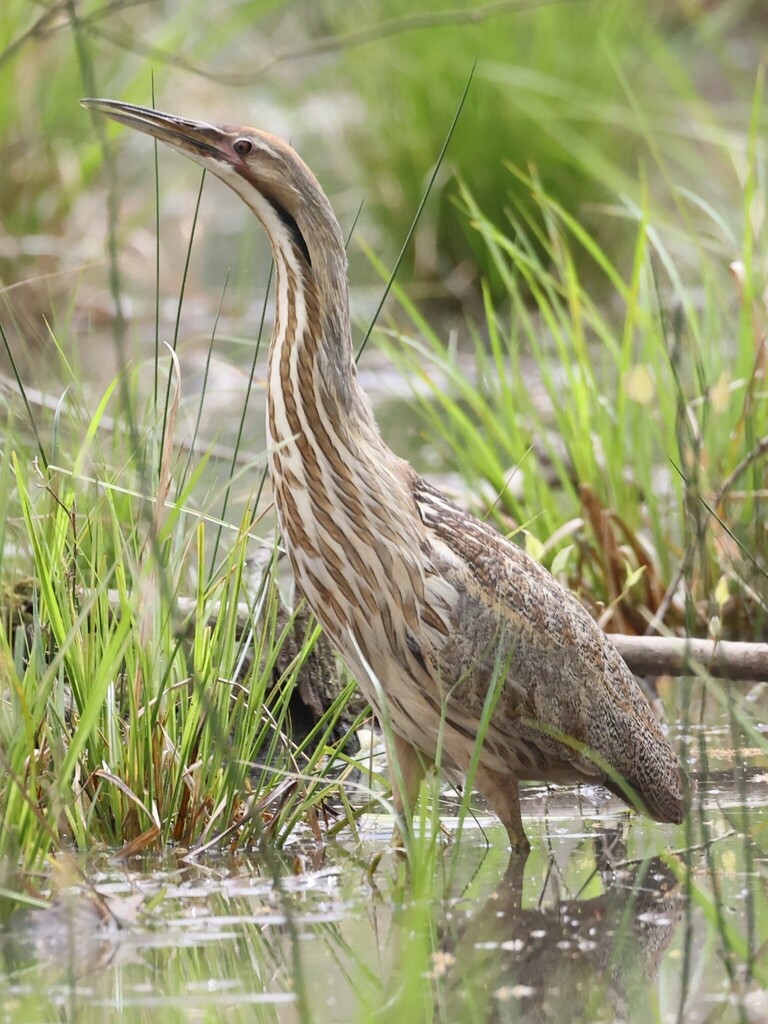
- American BitternBotaurus lentiginosus
- American GoldfinchCarduelis tristis
- American KestrelFalco sparverius
- American RobinTurdus migratorius
- American WoodcockScolopax minor
- Bank SwallowRiparia riparia
- Black-crowned Night-heronNycticorax nycticorax
- Blue GrosbeakPasserina caerulea
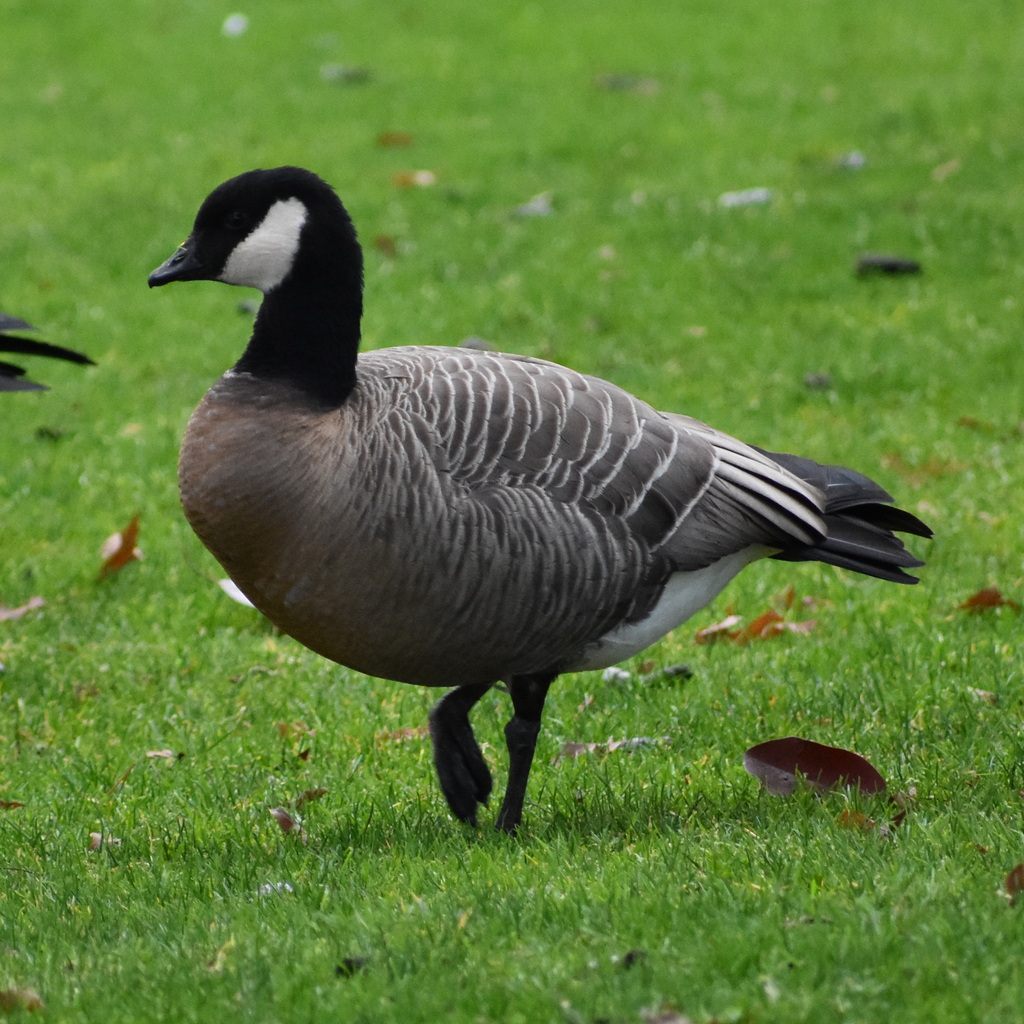
- Cackling GooseBranta hutchinsii
- Canada GooseBranta canadensis
- Chimney SwiftChaetura pelagica
- Chipping SparrowSpizella passerina
- Cliff SwallowPetrochelidon pyrrhonota
- Common NighthawkChordeiles minor
- Cooper's HawkAccipiter cooperii
- Dark-eyed JuncoJunco hyemalis
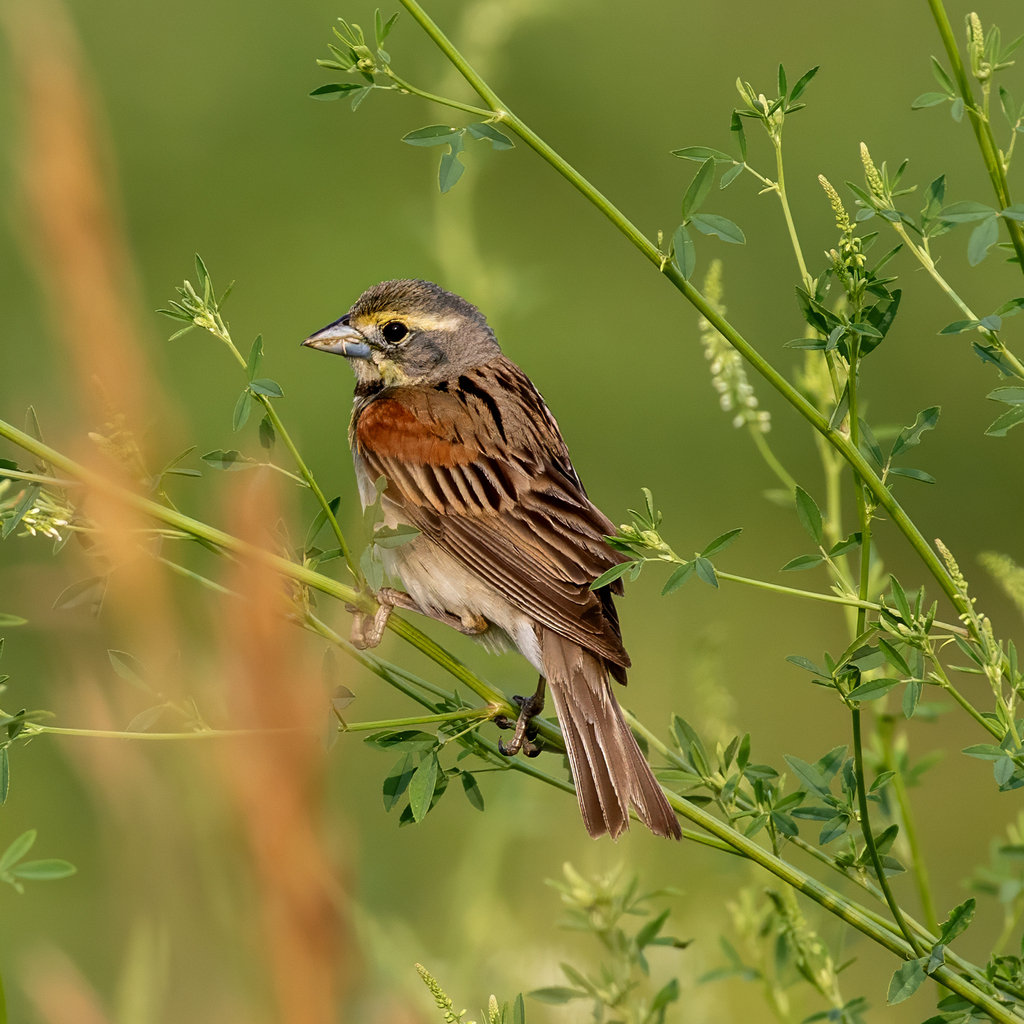
- DickcisselSpiza americana
- Eastern BluebirdSialia sialis
- Eastern KingbirdTyrannus tyrannus
- Eastern Screech-owlMegascops asio
- Eurasian Collared-doveStreptopelia decaocto
- European StarlingSturnus vulgaris
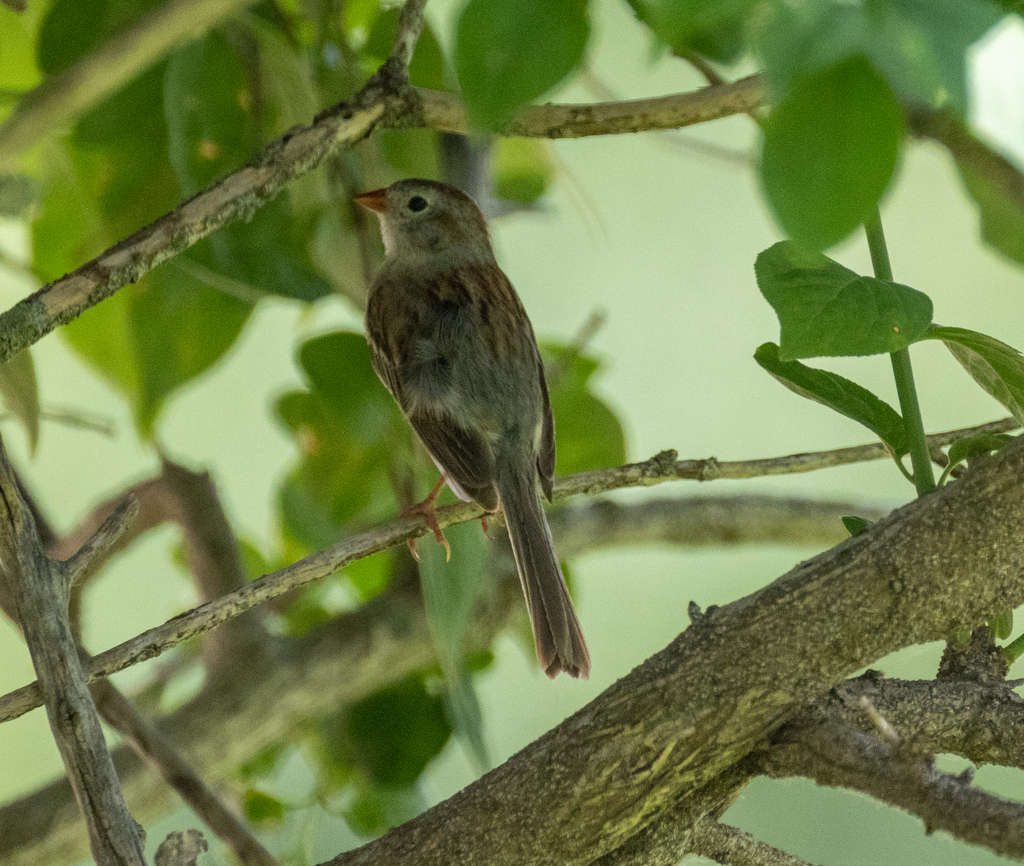
- Field SparrowSpizella pusilla
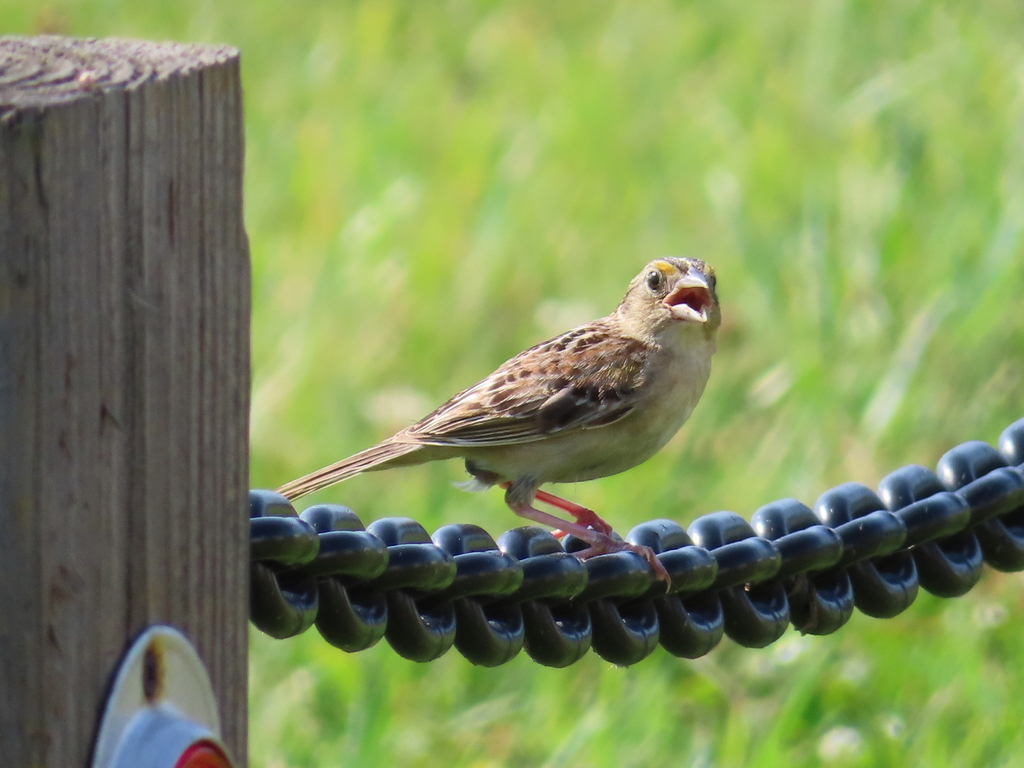
- Grasshopper SparrowAmmodramus savannarum




















Who uses this plant?
 2CaterpillarsGenus host records with ranges including LA
Genus host records with ranges including LA · Echinacea
- Homoeosoma electellaSunflower Moth
- Papaipema nebrisStalk Borer
 34BeesSoutheastern regional records
Southeastern regional records · Echinacea
Individual names are not available yet.
Noori, Seltmann & Orr 2026, A curated and integrated dataset for exploring global bee-plant interactions (GloBI), Zenodo, CC BY 4.0 12Specialist beesPollen specialists
Pollen specialists · Echinacea
- Andrena rudbeckiae
- Megachile inimica
- Megachile parallela
- Megachile pugnata
- Megachile xylocopoides
- Melissodes coreopsis
- Melissodes desponsus
- Melissodes subagilis
- Melissodes subillatus
- Melissodes trinodis
Show all 12
- Paranthidium jugatorium
- Protandrena albitarsis
 —BirdsRecorded genus food-resource interactions; not a state feeding claim
 1AntsRecorded seed interactions
- Solenopsis invicta
Solenopsis invicta: Seed predation.
No records yet · Beetles · Flies · Adult butterflies / moths · Other wasps · Other insects
Plant details
- Family
- Asteraceae
- Hardiness
- Zones 3a–8b
- Soil pH
- Neutral
- Flower color
- Purple
- Growth rate
- Moderate
- Growth habit
- Single stem
- Foliage color
- Green
- Fruit begins
- Summer
- Fruit ends
- Fall
Flowering timing. Species profile reports June–August; timing varies with location and year. Source
Flower color. Lavender rays surround a purplish-brown disk. The source’s other color categories include cultivars; cultivar traits are not assigned to the species. Source
Leave some seed heads for birds and retain standing hollow stems for nesting bees. Watch for aster yellows. NC State Extension
Growing sources and scope
- Bloom · “June to August” · NC State Extension · reviewed species facts
- Flower color · “Purple” · NC State Extension · reviewed species facts
- Foliage color · “Green” · USDA PLANTS · Nationwide species characteristics; local growing conditions may vary
- Fruit begins · “Summer” · USDA PLANTS · Nationwide species characteristics; local growing conditions may vary
- Fruit ends · “Fall” · USDA PLANTS · Nationwide species characteristics; local growing conditions may vary
- Growth habit · “Single stem” · USDA PLANTS · Nationwide species characteristics; local growing conditions may vary
- Growth rate · “Moderate” · USDA PLANTS · Nationwide species characteristics; local growing conditions may vary
- Hardiness · “Zones 3a–8b” · NC Extension Plant Toolbox
- Height · “3–4 feet” · NC Extension Plant Toolbox (ranked first; Tennessee Smart Yards, USDA PLANTS, Minnesota Wildflowers, Prairie Moon 2026 Cultural Guide differ)
- Leaves · “Deciduous” · NC Extension Plant Toolbox
- Life cycle · “Perennial” · NC Extension Plant Toolbox
- Light · “Full sun (6 or more hours of direct sunlight a day); Partial shade (direct sunlight only part of the day, 2-6 hours)” · NC Extension Plant Toolbox (ranked first; Tennessee Smart Yards, Prairie Moon 2026 Cultural Guide differ)
- primary_flower_color · “purple” · NC State Extension species profile; existing gardener field review
- Soil · “Moist; Occasionally dry” · NC Extension Plant Toolbox (ranked first; Prairie Moon 2026 Cultural Guide differs)
- Soil pH · “Neutral” · NC Extension Plant Toolbox
- Spread · “1–2 feet” · NC Extension Plant Toolbox
Recognizing it
Rough, alternate leaves and drooping rays around a domed, brown-purple center. Identification source
Conservation status
| Louisiana rank | S2 |
|---|---|
| Global rank | G5 |
| LA status | Not verified |
| Federal status | Not verified |
Will it fit your yard?
Check this plant against your county, sun and soil moisture. Conditions are checked in your browser.
Growing cautions
- Self-seeds. Re-seeds well. Tennessee Smart Yards
For planning only; these do not change the score or Fit.
Sources
- NatureServe Explorer
- USDA PLANTS
- Vascular Plants of North Carolina (NC Natural Heritage Program)
- Weakley, Flora of the Southeastern United States (2025)
- Louisiana occurrence source
- Shropshire & Tallamy 2025, Lepidoptera of North America north of Mexico, ZooKeys 1261 (ODbL)
- Noori, Seltmann & Orr 2026, A curated and integrated dataset for exploring global bee-plant interactions (GloBI), Zenodo, CC BY 4.0
- Smith, Bachelder, Russell, Morales, Mosher & Seltmann 2024, Bee-Specialization-Modeling v0.6.1 (specialist host table compiled from J. Fowler's pollen specialist bee lists), Zenodo, CC BY 4.0
- Hurlbert, Olsen, Sawyer & Winner 2021, Avian Diet Database, Scientific Data 8: 260 (CC0)
- Narango, Tallamy & Shropshire 2020, Few keystone plant genera support the majority of Lepidoptera species, Nature Communications
- NC State Extension