Do not plant. Listed invasive in Kentucky.
Sap / sunlight hazard. Avoid skin and eye contact with sap. Sap exposure followed by sunlight can cause burns or dermatitis. Plant caution source
Hidden from default planting suggestions. Wildlife value and native status remain unchanged.
Ecological relationships
Who uses this plant?
 7CaterpillarsGenus host records with ranges including KY
Genus host records with ranges including KY · Pastinaca
- Autographa precationisCommon Looper Moth
- Euxoa tessellataTessellate Dart, Striped Cutworm
- Mythimna unipunctaArmyworm Moth, White Speck
- Ostrinia obumbratalisSmartweed Borer
- Papaipema nebrisStalk Borer
- Papilio polyxenesBlack Swallowtail, Celery Caterpillar, Fennel Worm, Desert Black Swallowtail, Parsnip Swallowtail
- Spilosoma virginicaVirginian Tiger Moth, Yellow Woolybear Moth, Yellow Bear
 —BeesSoutheastern regional records
 —Specialist beesPollen specialists
 —BirdsRecorded genus food-resource interactions; not a state feeding claim
Growing and identification
Plant details
- Family
- Apiaceae
- Flower color
- Yellow
Growing sources and scope
- Flower color · “Yellow” · NC Extension Plant Toolbox
- Height · “2–5 feet” · Minnesota Wildflowers
- Life cycle · “Biennial” · NC Extension Plant Toolbox
- Light · “Full sun (6 or more hours of direct sunlight a day)” · NC Extension Plant Toolbox
- Soil · “Moist; Occasionally dry; Occasionally wet” · NC Extension Plant Toolbox
Also known as
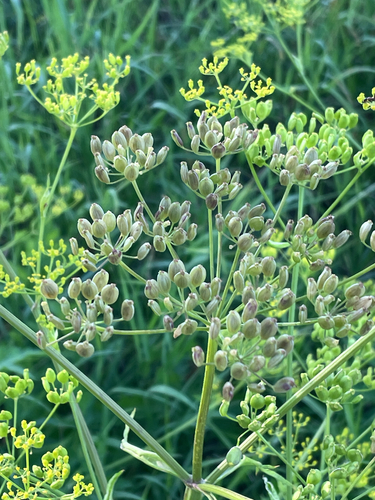
Parsnip; Wild Parsnip
Conservation status
| Kentucky rank | SNA |
|---|---|
| Global rank | GNR |
| KY status | Not verified |
| Federal status | Not verified |
Native alternatives
Find natives for your gardenSources
- tnky_atlas
- usda
- ky_invasive
- Shropshire & Tallamy 2025, Lepidoptera of North America north of Mexico, ZooKeys 1261 (ODbL)
- Noori, Seltmann & Orr 2026, A curated and integrated dataset for exploring global bee-plant interactions (GloBI), Zenodo, CC BY 4.0
- Smith, Bachelder, Russell, Morales, Mosher & Seltmann 2024, Bee-Specialization-Modeling v0.6.1 (specialist host table compiled from J. Fowler's pollen specialist bee lists), Zenodo, CC BY 4.0
- Hurlbert, Olsen, Sawyer & Winner 2021, Avian Diet Database, Scientific Data 8: 260 (CC0)
- Narango, Tallamy & Shropshire 2020, Few keystone plant genera support the majority of Lepidoptera species, Nature Communications