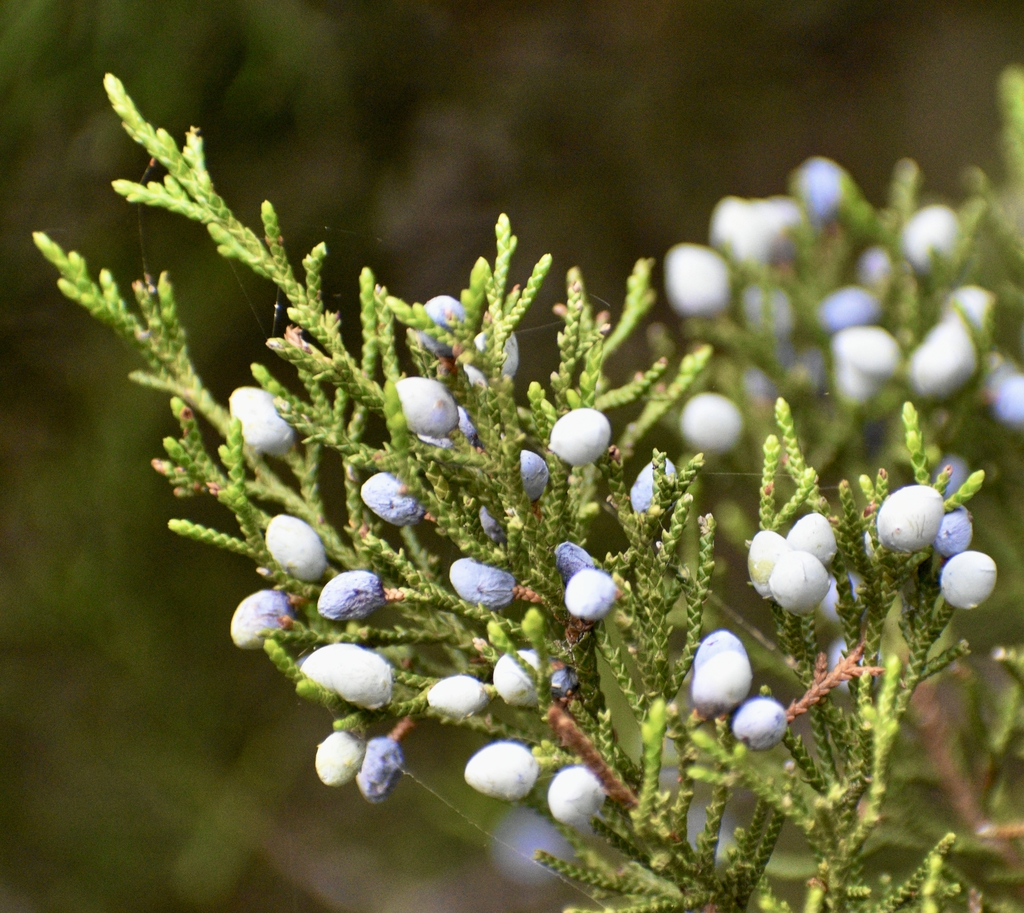
Ecological relationships
Who uses this plant?
 34CaterpillarsGenus host records with ranges including KY
Genus host records with ranges including KY · Juniperus
- Callophrys gryneusJuniper Hairstreak
- Acronicta americanaAmerican Dagger
- Argyresthia affinisJuniper Leafminer
- Argyresthia alternatellaHoney-Comb Micromoth
- Callophrys augustinusThe Brown Elfin
- Callophrys niphonPine Elfin
- Choristoneura fumiferanaSpruce Budworm Moth
- Crambidia castaPearly-Winged Lichen Moth
- Digrammia continuataCurve-Lined Angle
- Dysstroma truncataMarbled Carpet
Show all 34
- Eacles imperialisImperial Moth, Imperial Spiny Caterpillar
- Elaphria versicolorVariegated Midget
- Elasmopalpus lignosellaLesser Cornstalk Borer
- Eupithecia miserulataCommon Eupithacia, Common Pug
- Glena plumosariaCedar Grey, Dainty Gray
- Hyphantria cuneaFall Webworm
- Lambdina fiscellariaHemlock Looper, Western Oak Looper
- Lithophane lemmeriLemmer's Pinion
- Macaria distribuariaSouthern Chocolate Angle
- Macaria multilineataMany-Lined Angle
- Orgyia leucostigmaWhite-Marked Tussock Moth
- Orthotaenia undulanaDusky Leafroller
- Palthis angulalisDark-Spotted Palthis
- Papilio troilusSpicebush Swallowtail
- Patalene olyzonariaJuniper Geometer
- Periploca nigraJuniper Twig Girder
- Prochoerodes lineolaLarge Maple Spanworm Moth
- Spodoptera latifasciaOrange-Striped Armyworm, Velvet Armyworm Moth
- Spodoptera ornithogalliYellow-Striped Armyworm Moth, Cotton Cutworm
- Thyridopteryx ephemeraeformisEvergreen Bagworm Moth
- Argyresthia freyella
- Coleotechnites obliquistrigella
- Isophrictis similiella
- Periploca laeta
 0BeesSoutheastern regional records
 0Specialist beesPollen specialists
 23BirdsRecorded genus food-resource interactions; not a state feeding claim
Recorded genus food-resource interactions; not a state feeding claim · Juniperus
- Bombycilla cedrorumCedar Waxwing
- Sialia sialisEastern Bluebird
- Turdus migratoriusAmerican Robin
- Cathartes/coragyps spTurkey/Black Vulture
- Catharus guttatusHermit Thrush
- Catharus ustulatusSwainson's Thrush
- Coccothraustes vespertinusEvening Grosbeak
- Cyanocitta stelleriSteller's Jay
- Cyrtonyx montezumaeMontezuma Quail
- Dendragapus obscurusDusky Grouse
Show all 23
- Empidonax alnorum/trailliiAlder/Willow Flycatcher (Traill's Flycatcher)
- Empidonax flaviventrisYellow-bellied Flycatcher
- Falcipennis canadensisSpruce Grouse
- Ixoreus naeviusVaried Thrush
- Loxia leucopteraWhite-winged Crossbill
- Meleagris gallopavoWild Turkey
- Mimus polyglottosNorthern Mockingbird
- Myadestes townsendiTownsend's Solitaire
- Pinicola enucleatorPine Grosbeak
- Sturnus vulgarisEuropean Starling
- Tachycineta bicolorTree Swallow
- Tyrannus tyrannusEastern Kingbird
- Vireo solitariusBlue-headed Vireo
No records yet · Ants · Beetles · Flies · Adult butterflies / moths · Other wasps · Other insects
Growing and identification
Plant details
- Family
- Cupressaceae
- Hardiness
- Zones 2a–9b
- Soil pH
- Acidic to alkaline
- Flower color
- Green
- Growth rate
- Slow
- Growth habit
- Single stem
- Foliage color
- Green
- Fruit begins
- Summer
- Fruit ends
- Fall
Safety has not been reviewed for this plant; check toxicity and thorns before planting.
Growing sources and scope
- Bloom · “Late spring” · USDA PLANTS · Nationwide species characteristics; local growing conditions may vary
- Flower color · “Green” · USDA PLANTS · Nationwide species characteristics; local growing conditions may vary
- Foliage color · “Green” · USDA PLANTS · Nationwide species characteristics; local growing conditions may vary
- Fruit begins · “Summer” · USDA PLANTS · Nationwide species characteristics; local growing conditions may vary
- Fruit ends · “Fall” · USDA PLANTS · Nationwide species characteristics; local growing conditions may vary
- Growth habit · “Single stem” · USDA PLANTS · Nationwide species characteristics; local growing conditions may vary
- Growth rate · “Slow” · USDA PLANTS · Nationwide species characteristics; local growing conditions may vary
- Hardiness · “Zones 2a–9b” · NC Extension Plant Toolbox
- Height · “30–40 feet” · NC Extension Plant Toolbox
- Leaves · “Evergreen” · NC Extension Plant Toolbox
- Life cycle · “Woody perennial” · NC Extension Plant Toolbox
- Light · “Full sun (6 or more hours of direct sunlight a day); Partial shade (direct sunlight only part of the day, 2-6 hours)” · NC Extension Plant Toolbox
- Soil · “Moist; Occasionally dry; Occasionally wet” · NC Extension Plant Toolbox
- Soil pH · “Acidic to alkaline” · NC Extension Plant Toolbox
- Spread · “10–20 feet” · NC Extension Plant Toolbox
Conservation status
| Kentucky rank | Not available |
|---|---|
| Global rank | G5 |
| KY status | Not verified |
| Federal status | Not verified |
In your garden
Will it fit your spot?
Check this plant against your county, sun and soil moisture. Conditions are checked in your browser.
Choose a county to begin.
Sources
- tnky_atlas
- usda
- nc_flora
- Shropshire & Tallamy 2025, Lepidoptera of North America north of Mexico, ZooKeys 1261 (ODbL)
- Noori, Seltmann & Orr 2026, A curated and integrated dataset for exploring global bee-plant interactions (GloBI), Zenodo, CC BY 4.0
- Smith, Bachelder, Russell, Morales, Mosher & Seltmann 2024, Bee-Specialization-Modeling v0.6.1 (specialist host table compiled from J. Fowler's pollen specialist bee lists), Zenodo, CC BY 4.0
- Hurlbert, Olsen, Sawyer & Winner 2021, Avian Diet Database, Scientific Data 8: 260 (CC0)
- Narango, Tallamy & Shropshire 2020, Few keystone plant genera support the majority of Lepidoptera species, Nature Communications