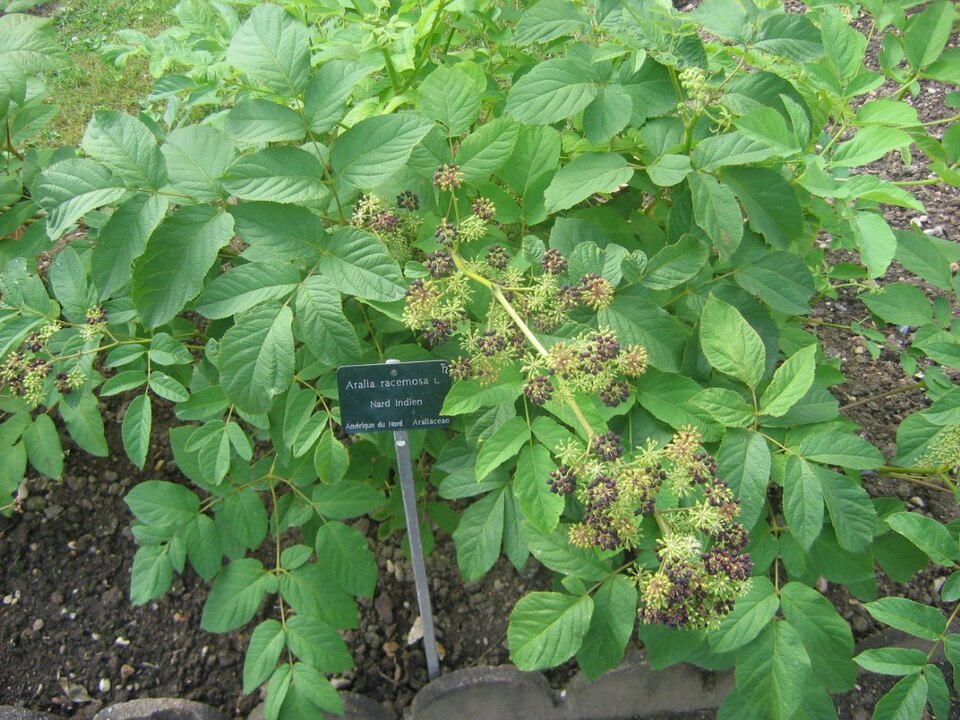

Ecological relationships
Who uses this plant?
 13CaterpillarsGenus host records with ranges including KY
Genus host records with ranges including KY · Aralia
- Amorbia humerosanaWhite-Lined Leafroller Moth
- Apatelodes torrefactaSpotted Apatelodes
- Celastrina ladonSpring Azure
- Coelostathma discopunctanaThe Batman Moth
- Dichomeris juncidellaOrange-Dotted Dichomeris
- Ectropis crepusculariaThe Small Engrailed, Saddleback Looper
- Herpetogramma thestealisZigzag Herpetogramma, Subtle-Feathered Grass Moth
- Iridopsis defectariaBrown-Shaded Gray, Willow Looper
- Iridopsis ephyrariaPale-Winged Gray
- Machimia tentoriferellaGold-Striped Leaftier Moth
Show all 13
- Orthosia rubescensRuby Quaker
- Papaipema araliaeAralia Shoot Borer
- Spilosoma virginicaVirginian Tiger Moth, Yellow Woolybear Moth, Yellow Bear
 13BeesSoutheastern regional records
Southeastern regional records · Aralia
Individual names are not available yet.
Noori, Seltmann & Orr 2026, A curated and integrated dataset for exploring global bee-plant interactions (GloBI), Zenodo, CC BY 4.0 0Specialist beesPollen specialists
 6BirdsRecorded genus food-resource interactions; not a state feeding claim
Recorded genus food-resource interactions; not a state feeding claim · Aralia
- Hylocichla mustelinaWood Thrush
- Catharus guttatusHermit Thrush
- Catharus minimus/bicknelliGray-cheeked/Bicknell's Thrush
- Catharus ustulatusSwainson's Thrush
- Pinicola enucleatorPine Grosbeak
- Sialia sialisEastern Bluebird
No records yet · Ants · Beetles · Flies · Adult butterflies / moths · Other wasps · Other insects
Growing and identification
Plant details
- Family
- Araliaceae
- Hardiness
- Zones 3–8
- Flower color
- Green
Safety has not been reviewed for this plant; check toxicity and thorns before planting.
Growing sources and scope
- Bloom · “July to August” · Prairie Moon 2026 Cultural Guide · Nursery cultural guide; height in flower; moisture categories retained as printed
- Flower color · “Green” · Prairie Moon 2026 Cultural Guide · Nursery cultural guide; height in flower; moisture categories retained as printed
- Hardiness · “Zones 3–8” · Missouri Botanical Garden Plant Finder
- Height · “About 4 feet in flower” · Prairie Moon 2026 Cultural Guide · Nursery cultural guide; height in flower; moisture categories retained as printed
- Life cycle · “Perennial” · Minnesota Wildflowers
- Light · “Part shade (3–6 hours); Shade (under 3 hours)” · Prairie Moon 2026 Cultural Guide · Nursery cultural guide; height in flower; moisture categories retained as printed
- Soil · “Wet-mesic; Mesic” · Prairie Moon 2026 Cultural Guide · Nursery cultural guide; height in flower; moisture categories retained as printed
- Spread · “3–5 feet” · Missouri Botanical Garden Plant Finder
Also known as
American Spikenard
Conservation status
| Kentucky rank | S4 |
|---|---|
| Global rank | G4G5 |
| KY status | Not verified |
| Federal status | Not verified |
In your garden
Will it fit your spot?
Check this plant against your county, sun and soil moisture. Conditions are checked in your browser.
Choose a county to begin.
Sources
- tnky_atlas
- usda
- nc_flora
- Shropshire & Tallamy 2025, Lepidoptera of North America north of Mexico, ZooKeys 1261 (ODbL)
- Noori, Seltmann & Orr 2026, A curated and integrated dataset for exploring global bee-plant interactions (GloBI), Zenodo, CC BY 4.0
- Smith, Bachelder, Russell, Morales, Mosher & Seltmann 2024, Bee-Specialization-Modeling v0.6.1 (specialist host table compiled from J. Fowler's pollen specialist bee lists), Zenodo, CC BY 4.0
- Hurlbert, Olsen, Sawyer & Winner 2021, Avian Diet Database, Scientific Data 8: 260 (CC0)
- Narango, Tallamy & Shropshire 2020, Few keystone plant genera support the majority of Lepidoptera species, Nature Communications