

Oriental False Hawksbeard
Youngia japonica
Found in flowerbeds, suburban woodlands, roadsides, disturbed areas, trail edges, hammocks, rocky woodlands, floodplains. FloraQuest, phone app (app page) What its natural habitat tells you
Not native to Florida. How scores work Is it native here?
Profile 71%
- Light
- Dappled sunlight, Partial shade
- Soil moisture
- Usually moist
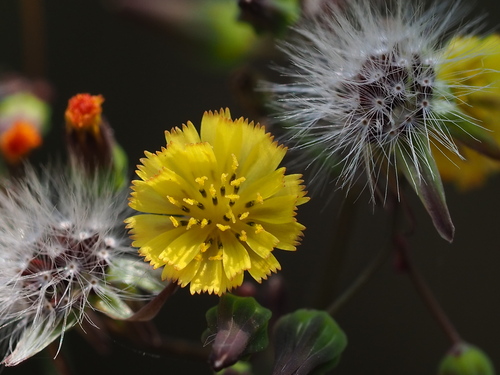
At a glance
- Life cycle
- Annual
- Leaves
- Evergreen
- Bloom
- December to June
Not yet recorded · Height · Spread
Recorded in 62 Florida counties.
Natural habitats
Places it grows wild. Not a planting requirement.
Habitats
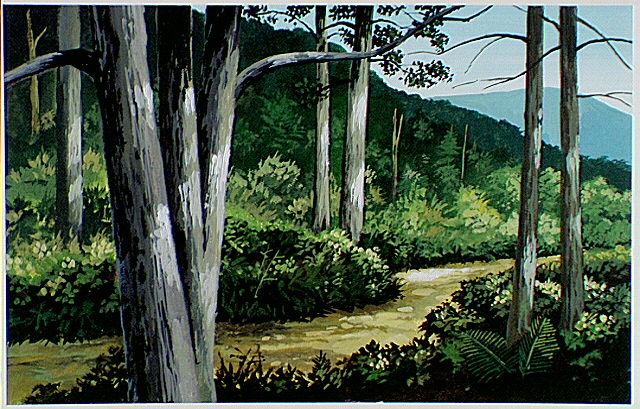
Forests and woodlands; roadsides, fields and disturbed ground; Coastal Plain hammocks; floodplain and bottomland forests.
Each habitat page lists the plants and wildlife also found there. All habitats
Who uses this plant?
 2CaterpillarsGenus host records with ranges including FL
Genus host records with ranges including FL · Crepis
- Schinia binaBina Flower Moth
- Trichoplusia niNi Moth, Cabbage Looper Moth
 —BeesSoutheastern regional records
 2Specialist beesPollen specialists
Pollen specialists · Crepis
- Melissodes confusus
- Melissodes pallidisignatus
 1BirdsRecorded genus food-resource interactions; not a state feeding claim
Recorded genus food-resource interactions; not a state feeding claim · Crepis
- Centrocercus urophasianusGreater Sage-Grouse
Direct food only: birds recorded eating this genus across North America. Caterpillars on host plants also feed nesting birds. NC Native Plant Society: butterfly gardening
Plant details
- Family
- Asteraceae
- Hardiness
- Zones 5a–10b
- Soil pH
- Acidic to alkaline
- Flower color
- Yellow, green or orange
Safety has not been reviewed for this plant; check toxicity and thorns before planting.
Growing sources and scope
- Bloom · “December to June” · FloraQuest: Carolinas, Georgia (Southeastern Flora Team), phone app (app page) · Carolinas and Georgia
- Flower color · “Yellow, green or orange” · NC Extension Plant Toolbox
- Hardiness · “Zones 5a–10b” · NC Extension Plant Toolbox
- Leaves · “Evergreen” · NC Extension Plant Toolbox
- Life cycle · “Annual” · NC Extension Plant Toolbox
- Light · “Dappled sunlight (shade through upper canopy all day); Partial shade (direct sunlight only part of the day, 2-6 hours)” · NC Extension Plant Toolbox
- Soil · “Moist; Occasionally wet” · NC Extension Plant Toolbox
- Soil pH · “Acidic to alkaline” · NC Extension Plant Toolbox
Also known as
Crepis japonica; False Hawksbeard; hawksbeard
Conservation status
| Florida rank | SNA |
|---|---|
| Global rank | GNR |
| FL status | Not verified |
| Federal status | Not verified |
Native alternatives
Find natives for your gardenSources
- Atlas of Florida Plants
- USDA PLANTS
- FloraQuest: Carolinas, Georgia (Weakley), phone app (app page)
- FloraQuest: Florida (Weakley), phone app (app page)
- NatureServe Explorer
- Shropshire & Tallamy 2025, Lepidoptera of North America north of Mexico, ZooKeys 1261 (ODbL)
- Noori, Seltmann & Orr 2026, A curated and integrated dataset for exploring global bee-plant interactions (GloBI), Zenodo, CC BY 4.0
- Smith, Bachelder, Russell, Morales, Mosher & Seltmann 2024, Bee-Specialization-Modeling v0.6.1 (specialist host table compiled from J. Fowler's pollen specialist bee lists), Zenodo, CC BY 4.0
- Hurlbert, Olsen, Sawyer & Winner 2021, Avian Diet Database, Scientific Data 8: 260 (CC0)
- Narango, Tallamy & Shropshire 2020, Few keystone plant genera support the majority of Lepidoptera species, Nature Communications