

Japanese Wisteria
Wisteria floribunda
Commonly cultivated, escaped to urban, suburban, and rural forests and woodlands. FloraQuest, phone app (app page) What its natural habitat tells you
—
Not native
Not native to Florida. How scores work Is it native here?
Profile 71%
- Height
- Both species have been observed 65 feet high in the canopy
- Light
- Full sun
- Soil moisture
- Usually moist
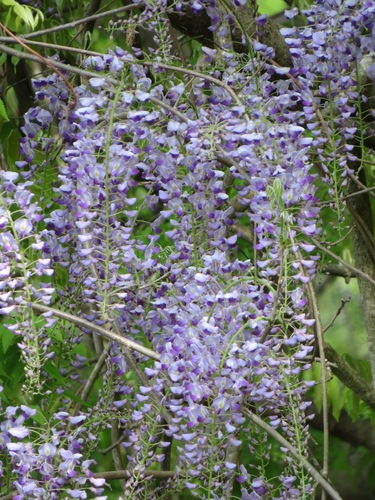
At a glance
- Life cycle
- Woody perennial
- Leaves
- Deciduous
- Bloom
- April to July
- Fruiting season
- July to November
JFMAMJJASOND
Not yet recorded · Spread
Recorded in 8 Florida counties.
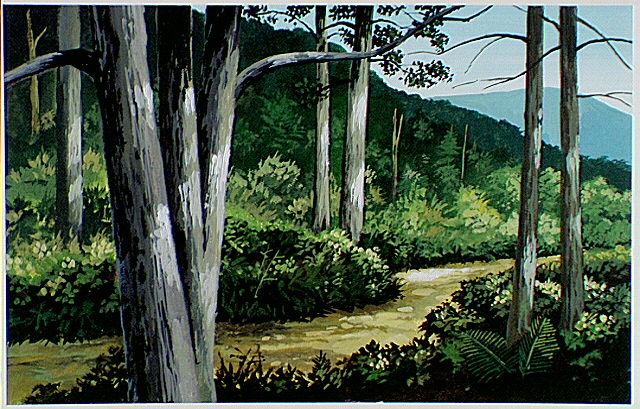
Natural habitats
Places it grows wild. Not a planting requirement. Each habitat page lists the plants and wildlife also found there.
Ecological relationships
Who uses this plant?
 18CaterpillarsGenus host records with ranges including FL
Genus host records with ranges including FL · Wisteria
- Epargyreus clarusSilver-spotted Skipper
- Acharia stimuleaSaddleback Caterpillar Moth
- Anticarsia gemmatalisVelvetbean Caterpillar Moth
- Automeris ioIo Moth
- Ecdytolopha insiticianaLocust Twig Borer Moth
- Euphydryas phaetonThe Baltimore, The Black Checker
- Gesta horatiusHorace's Duskywing, Brown Duskywing
- Gesta zaruccoZarucco Duskywing
- Hyalophora cecropiaCecropia Silkmoth, Cecropia Moth
- Hyphantria cuneaFall Webworm
Show all 18
- Oedemasia concinnaRed-Humped Caterpillar, Red-Humped Appleworm
- Orgyia leucostigmaWhite-Marked Tussock Moth
- Paonias excaecataBlinded Sphinx, Blind Eyed Sphinx
- Spodoptera frugiperdaFall Armyworm Moth
- Synanthedon scitulaDogwood Borer, Pecan Borer
- Thyridopteryx ephemeraeformisEvergreen Bagworm Moth
- Urbanus proteusLong-Tailed Skipper, Bean Leaf Roller
- Zale lunataLunate Zale
 —BeesSoutheastern regional records
 —Specialist beesPollen specialists
 —BirdsRecorded genus food-resource interactions; not a state feeding claim
Growing and identification
Plant details
- Family
- Fabaceae
- Hardiness
- Zones 4a–9b
- Soil pH
- Acidic
- Flower color
- Pink or purple
- Fruit begins
- July
- Fruit ends
- November
Safety has not been reviewed for this plant; check toxicity and thorns before planting.
Growing sources and scope
- Bloom · “April to July” · FloraQuest: Carolinas, Georgia (Southeastern Flora Team), phone app (app page) · Carolinas and Georgia
- Flower color · “Pink or purple” · NC Extension Plant Toolbox
- Fruit begins · “July” · FloraQuest: Carolinas, Georgia (Southeastern Flora Team), phone app (app page) · Carolinas and Georgia
- Fruit ends · “November” · FloraQuest: Carolinas, Georgia (Southeastern Flora Team), phone app (app page) · Carolinas and Georgia
- Hardiness · “Zones 4a–9b” · NC Extension Plant Toolbox
- Height · “Both species have been observed 65 feet (20 m) high in the canopy” · Fire Effects Information System: Wisteria floribunda · Source botanical description; original units and scope retained
- Leaves · “Deciduous” · NC Extension Plant Toolbox
- Life cycle · “Woody perennial” · NC Extension Plant Toolbox
- Light · “Full sun (6 or more hours of direct sunlight a day)” · NC Extension Plant Toolbox
- Soil · “Moist” · NC Extension Plant Toolbox
- Soil pH · “Acidic” · NC Extension Plant Toolbox
Conservation status
| Florida rank | SNA |
|---|---|
| Global rank | GNR |
| FL status | Not verified |
| Federal status | Not verified |
Native alternatives
Find natives for your gardenSources
- Atlas of Florida Plants
- USDA PLANTS
- FloraQuest: Carolinas, Georgia (Weakley), phone app (app page)
- FloraQuest: Florida (Weakley), phone app (app page)
- NatureServe Explorer
- Shropshire & Tallamy 2025, Lepidoptera of North America north of Mexico, ZooKeys 1261 (ODbL)
- Noori, Seltmann & Orr 2026, A curated and integrated dataset for exploring global bee-plant interactions (GloBI), Zenodo, CC BY 4.0
- Smith, Bachelder, Russell, Morales, Mosher & Seltmann 2024, Bee-Specialization-Modeling v0.6.1 (specialist host table compiled from J. Fowler's pollen specialist bee lists), Zenodo, CC BY 4.0
- Hurlbert, Olsen, Sawyer & Winner 2021, Avian Diet Database, Scientific Data 8: 260 (CC0)
- Narango, Tallamy & Shropshire 2020, Few keystone plant genera support the majority of Lepidoptera species, Nature Communications