

Pine Barren Goldenrod
Solidago fistulosa
Found in pocosins, swamp forests, wet pine savannas, wet pine flatwoods, maritime forests. Weakley, Flora of the Southeastern United States (2025), Florida edition What its natural habitat tells you
Native to Florida. How scores work Is it native here?
Profile 100%
- Height
- About 6.6 feet
- Light
- Shade
- Soil moisture
- Moist to wet
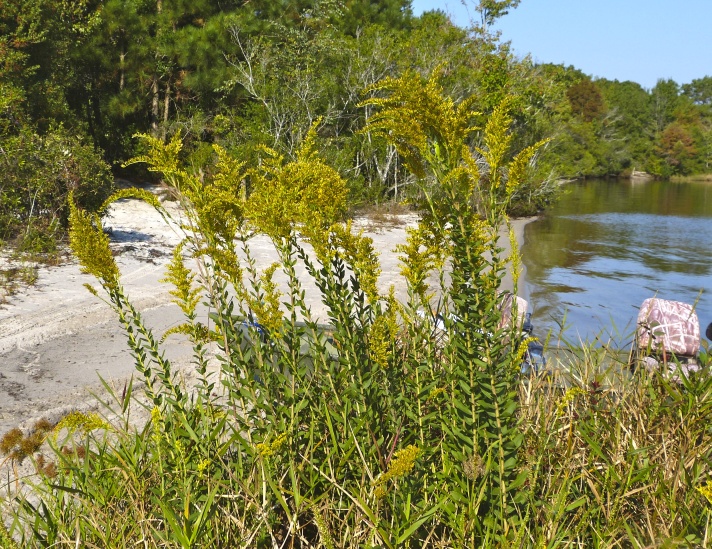
At a glance
- Life cycle
- Perennial
- Bloom
- August to November
- Fruiting season
- Fall
Not yet recorded · Spread · Leaves
Recorded in 65 Florida counties.
Natural habitats
Places it grows wild. Not a planting requirement. Each habitat page lists the plants and wildlife also found there.
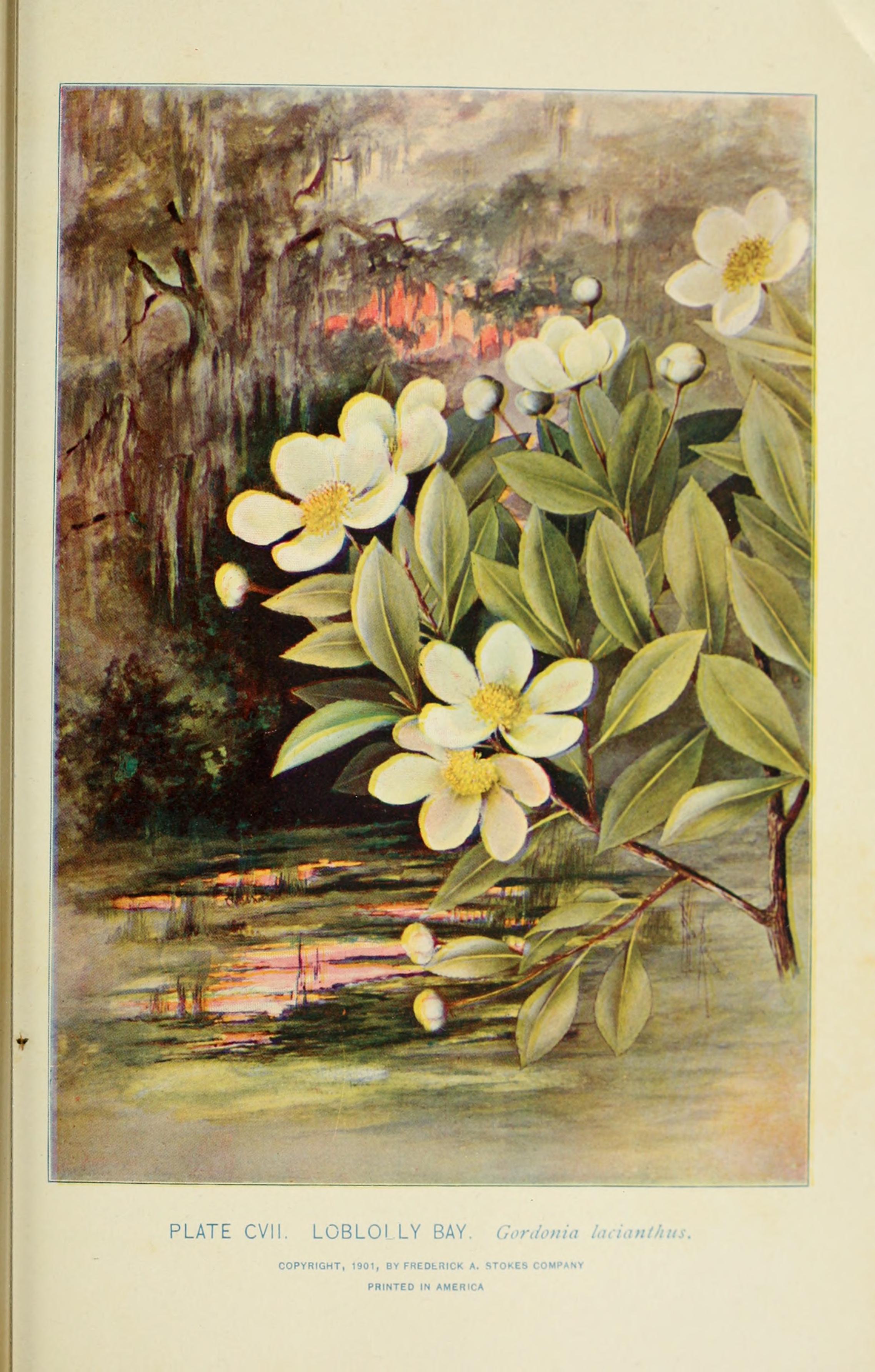
Dense evergreen shrub wetlands and bay forests on wet, acid peat of the Coastal Plain.
Open, fire-kept longleaf pine stands over grasses and wildflowers on wet to moist sandy soil.
Flat, sandy Coastal Plain pine woodlands, wetter than sandhills and denser than savannas.
Salt-pruned forests and shrub thickets behind coastal dunes.
Who uses this plant?
 86CaterpillarsGenus host records with ranges including FL
Genus host records with ranges including FL · Solidago
- Agrotis gladiariaSwordsman Dart, Clay-Backed Cut-Worm
- Agrotis vetustaOld Man Dart
- Alsophila pometariaFall Cankerworm Moth
- Amorbia humerosanaWhite-Lined Leafroller Moth
- Anavitrinella pampinariaCommon Gray, Cranberry Spanworm
- Ancylis floridanaStrawberry Leafroller
- Archips purpuranaOmnivorous Leafroller Moth
- Argyrotaenia ivanaIvana Leafroller Moth
- Argyrotaenia velutinanaRed-Banded Leafroller Moth, Jack Pine Tube Moth
- Bucculatrix angustataNarrow Bucculatrix
Show all 86
- Chlorochlamys chloroleucariaBlackberry Looper Moth
- Chlosyne nycteisSilvery Checkerspot
- Choristoneura rosaceanaOblique-Banded Leafroller Moth, Rosaceous Leaf Roller
- Chrysodeixis includensSoybean Looper Moth
- Cisseps fulvicollisYellow-Collared Scape Moth
- Condica sutorThe Cobbler, Cobbler Groundling
- Condica vidensWhite-Dotted Groundling
- Cremastobombycia solidaginisGoldenrod Leafminer
- Ctenoplusia oxygrammaSharp-Stigma Looper Moth
- Cucullia asteroidesThe Asteroid, Asteroid Paint, Goldenrod Hooded Owlet
- Dichomeris flavocostellaCream-Edged Dichomeris
- Dichomeris inserrataIndented Dichomeris
- Dichomeris juncidellaOrange-Dotted Dichomeris
- Dichomeris ochripalpellaShining Dichomeris Moth
- Dichomeris setosellaHairy Dichomeris
- Endothenia hebesanaVerbena Bud Moth
- Epiblema otiosanaBidens Borer Moth
- Epiblema scudderianaScudder's Epiblema, Goldenrod Gall Moth
- Epiblema tripartitanaThree-Parted Epiblema
- Episimus argutanaSumac Leaftier
- Eucosma raracanaReddish Eucosma, Reddish Phaneta
- Euphydryas phaetonThe Baltimore, The Black Checker
- Eupithecia miserulataCommon Eupithacia, Common Pug
- Eusarca confusariaConfused Eusarca
- Feltia jaculiferaDingy Cutworm
- Gnorimoschema gallaesolidaginisGoldenrod Gall Moth
- Helicoverpa zeaCorn Earworm Moth
- Hellinsia kellicottiiGoldenrod Borer Plume Moth
- Herpetogramma aeglealisSerpentine Webworm
- Herpetogramma pertextalisBold-Feathered Grass Moth
- Herpetogramma thestealisZigzag Herpetogramma, Subtle-Feathered Grass Moth
- Iridopsis humariaSmall Purplish Gray
- Lacinipolia meditataThe Thinker
- Leuconycta diphteroidesGreen Leuconycta
- Lioptilodes albistriolatusMousy Plume Moth
- Orthodes cynicaCynical Quaker, Cynical Groundcat
- Orthodes majusculaRustic Quaker, Rustic Groundcat
- Ostrinia obumbratalisSmartweed Borer
- Palthis angulalisDark-Spotted Palthis
- Papaipema duovataSeaside Golden Rod Borer
- Pelochrista cataclystianaSolidaga Eucosma, Solidaga Pelochrista
- Pelochrista derelictaDerelict Eucosma
- Pelochrista dorsisignatanaTriangle-Backed Eucosma
- Pelochrista robinsonanaRobinson's Pelochrista, Robinson's Eucosma
- Platynota idaeusalisTufted Apple-Bud Moth
- Platynota stultanaOmnivorous Leafroller
- Pleuroprucha insulsariaCommon Tan Wave
- Pseudeustrotia carneolaPink-Barred Lithacodia, Pink-Barred Pseudeustrotia
- Schinia nundinaGoldenrod Flower Moth
- Sonia canadanaCanadian Sonia Moth
- Sonia constrictanaConstricted Sonia
- Sparganothis distinctaDistinct Sparganothis
- Sparganothis sulfureanaSparganothis Fruitworm Moth, Sulfur Leafroller, False Yellow-Head
- Spodoptera ornithogalliYellow-Striped Armyworm Moth, Cotton Cutworm
- Synchlora frondariaSouthern Emerald
- Tricholita signataSignate Quaker, Signate Groundcat
- Trichordestra legitimaStriped Garden Caterpillar Moth
- Udea rubigalisCelery Leaftier
- Utetheisa ornatrixOrnate Moth, Pink Underwing, Rattlebox Moth, Bella Moth
- Xanthotype urticariaFalse Crocus Geometer
- Xestia dolosaGreater Black-Letter Dart, Greater Spotted Cutworm
- Zale lunataLunate Zale
- Bucculatrix magnella
- Bucculatrix solidaginiella
- Dichomeris achne
- Dichomeris agonia
- Dichomeris euprepes
- Epiblema desertana
- Epiblema obfuscana
- Epiblema resumptana
- Gnorimoschema salinaris
- Hellinsia glenni
- Hellinsia lacteodactylus
- Helvibotys helvialis
- Pelochrista mobilensis
- Xenotemna pallorana
 82BeesSoutheastern regional records
Southeastern regional records · Solidago
Individual names are not available yet.
Noori, Seltmann & Orr 2026, A curated and integrated dataset for exploring global bee-plant interactions (GloBI), Zenodo, CC BY 4.0 36Specialist beesPollen specialists
Pollen specialists · Solidago
- Andrena asteris
- Andrena braccata
- Andrena canadensis
- Andrena chromotricha
- Andrena fulvipennis
- Andrena hirticincta
- Andrena nubecula
- Andrena placata
- Andrena simplex
- Calliopsis coloradensis
Show all 36
- Colletes americanus
- Colletes compactus
- Colletes rufocinctus
- Colletes simulans
- Colletes solidaginis
- Colletes speculiferus
- Colletes thysanellae
- Dianthidium simile
- Megachile inimica
- Megachile xylocopoides
- Melissodes coreopsis
- Melissodes dentiventris
- Melissodes druriellus
- Melissodes fumosus
- Melissodes illatus
- Melissodes niveus
- Melissodes trinodis
- Perdita boltoniae
- Perdita bruneri
- Perdita laticincta
- Perdita octomaculata
- Perdita swenki
- Protandrena aestivalis
- Protandrena andrenoides
- Protandrena citripes
- Protandrena compositarum
 2BirdsRecorded genus food-resource interactions; not a state feeding claim
Recorded genus food-resource interactions; not a state feeding claim · Solidago
- Centrocercus urophasianusGreater Sage-Grouse
- Meleagris gallopavoWild Turkey
Direct food only: birds recorded eating this genus across North America. Caterpillars on host plants also feed nesting birds. NC Native Plant Society: butterfly gardening
No records yet · Ants · Beetles · Flies · Adult butterflies / moths · Other wasps · Other insects
Plant details
- Family
- Asteraceae
- Flower color
- Yellow
- Growth rate
- Moderate
- Growth habit
- Spreads by rhizomes
- Foliage color
- Dark green
- Fruit begins
- Fall
- Fruit ends
- Fall
Safety has not been reviewed for this plant; check toxicity and thorns before planting.
Growing sources and scope
- Bloom · “August to November” · Weakley, Flora of the Southeastern United States (2025), Carolinas & Georgia edition (ranked first; USDA PLANTS differs) · Carolinas and Georgia
- Flower color · “Yellow” · USDA PLANTS · Nationwide species characteristics; local growing conditions may vary
- Foliage color · “Dark green” · USDA PLANTS · Nationwide species characteristics; local growing conditions may vary
- Fruit begins · “Fall” · USDA PLANTS · Nationwide species characteristics; local growing conditions may vary
- Fruit ends · “Fall” · USDA PLANTS · Nationwide species characteristics; local growing conditions may vary
- Growth habit · “Spreads by rhizomes” · USDA PLANTS · Nationwide species characteristics; local growing conditions may vary
- Growth rate · “Moderate” · USDA PLANTS · Nationwide species characteristics; local growing conditions may vary
- Height · “About 6.6 feet” · USDA PLANTS (ranked first; Lady Bird Johnson Wildflower Center differs) · Nationwide species characteristics; local growing conditions may vary
- Life cycle · “Perennial” · Lady Bird Johnson Wildflower Center
- Light · “Shade” · Lady Bird Johnson Wildflower Center
- primary_flower_color · “yellow” · USDA PLANTS
- Soil · “Moist; Wet (documented habitat)” · Weakley, Flora of the Southeastern United States (2025), Carolinas & Georgia edition · Carolinas and Georgia
Conservation status
| Florida rank | S5 |
|---|---|
| Global rank | G4G5 [G5] |
| FL status | Not verified |
| Federal status | Not verified |
Will it fit your yard?
Check this plant against your county, sun and soil moisture. Conditions are checked in your browser.
Growing cautions
- Spreads by rhizomes. USDA PLANTS lists its growth form as rhizomatous. USDA PLANTS
For planning only; these do not change the score or Fit.
Sources
- Atlas of Florida Plants
- USDA PLANTS
- Vascular Plants of North Carolina (NC Natural Heritage Program)
- Weakley, Flora of the Southeastern United States (2025), Florida edition
- NatureServe Explorer
- Shropshire & Tallamy 2025, Lepidoptera of North America north of Mexico, ZooKeys 1261 (ODbL)
- Noori, Seltmann & Orr 2026, A curated and integrated dataset for exploring global bee-plant interactions (GloBI), Zenodo, CC BY 4.0
- Smith, Bachelder, Russell, Morales, Mosher & Seltmann 2024, Bee-Specialization-Modeling v0.6.1 (specialist host table compiled from J. Fowler's pollen specialist bee lists), Zenodo, CC BY 4.0
- Hurlbert, Olsen, Sawyer & Winner 2021, Avian Diet Database, Scientific Data 8: 260 (CC0)
- Narango, Tallamy & Shropshire 2020, Few keystone plant genera support the majority of Lepidoptera species, Nature Communications