

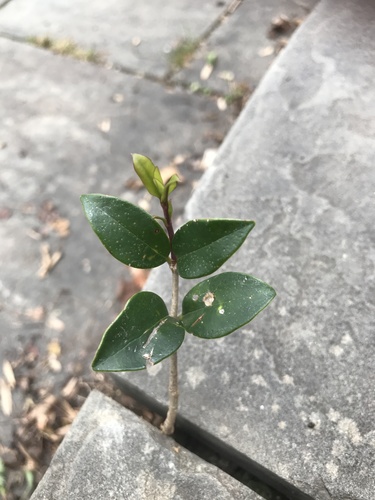
Japanese Privet
Ligustrum japonicum
Found in disturbed places. FloraQuest, phone app (app page) What its natural habitat tells you
—
Not native
Not native to Florida. How scores work Is it native here?
Profile 82%
- Height
- 6–12 feet
- Spread
- 5–6 feet
- Light
- Full sun, Partial shade
- Soil moisture
- Dry to average
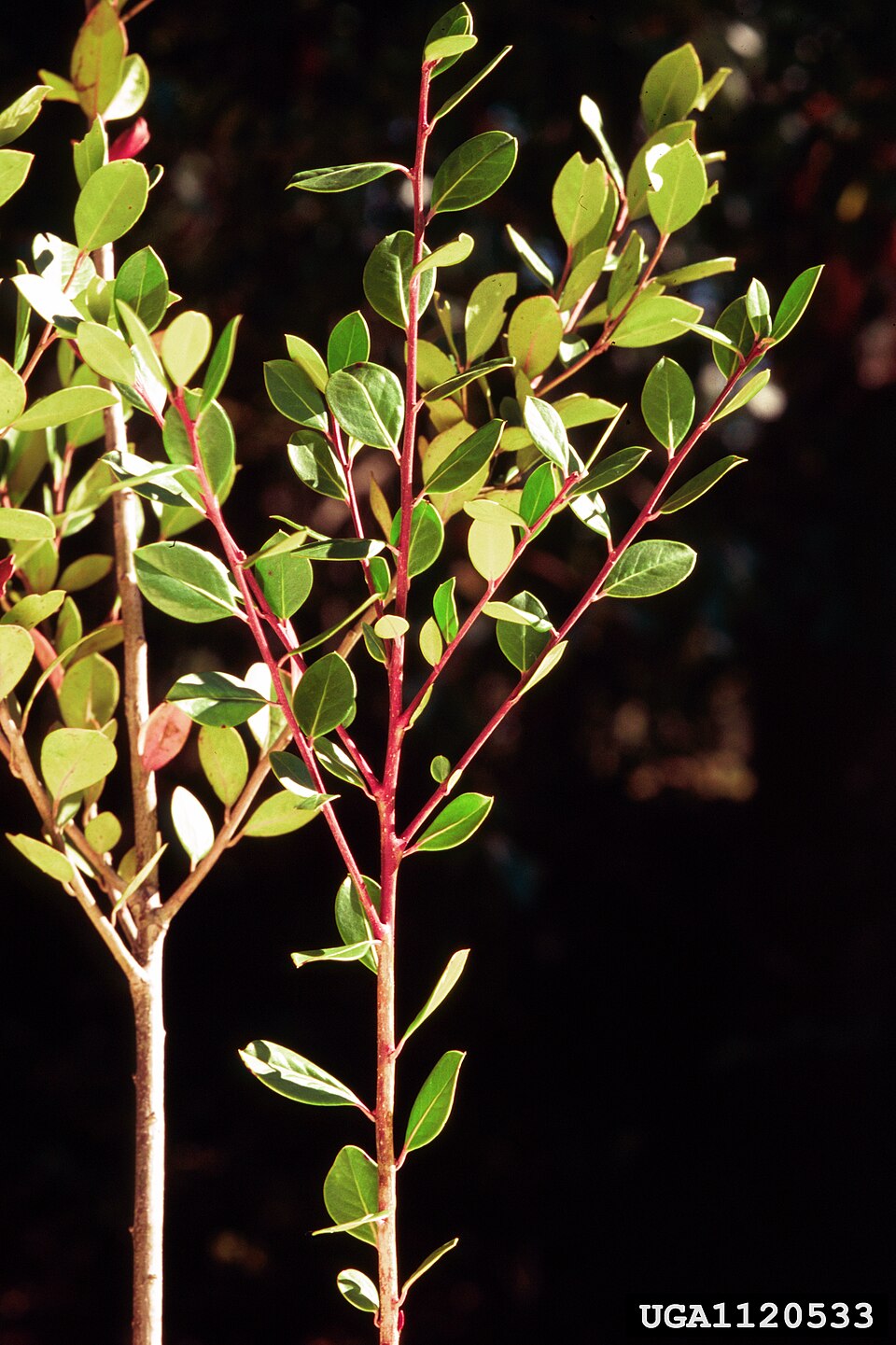
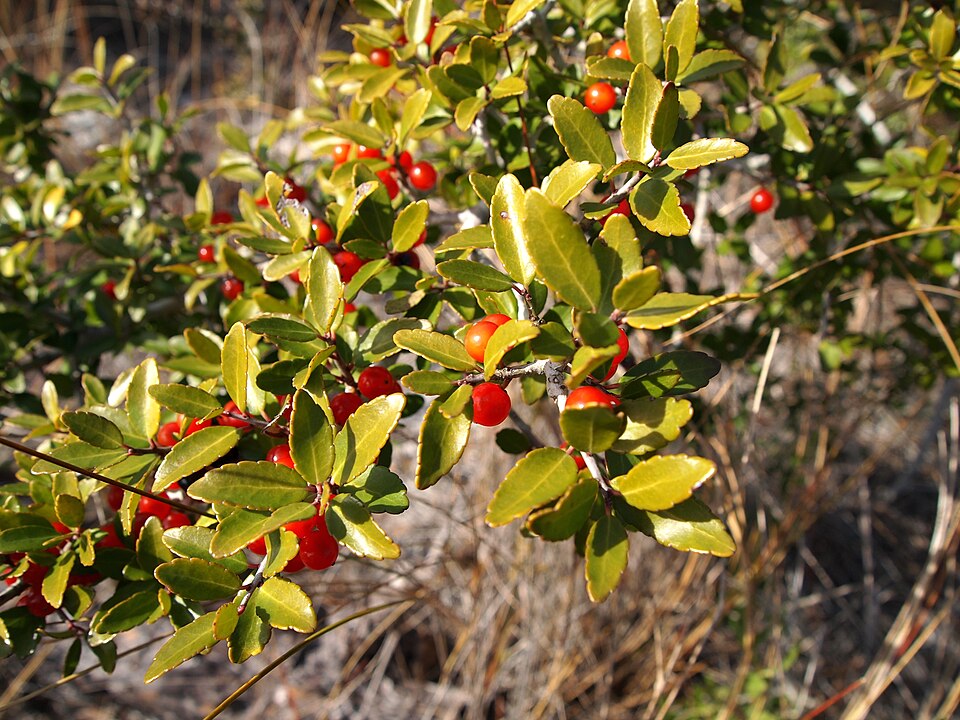
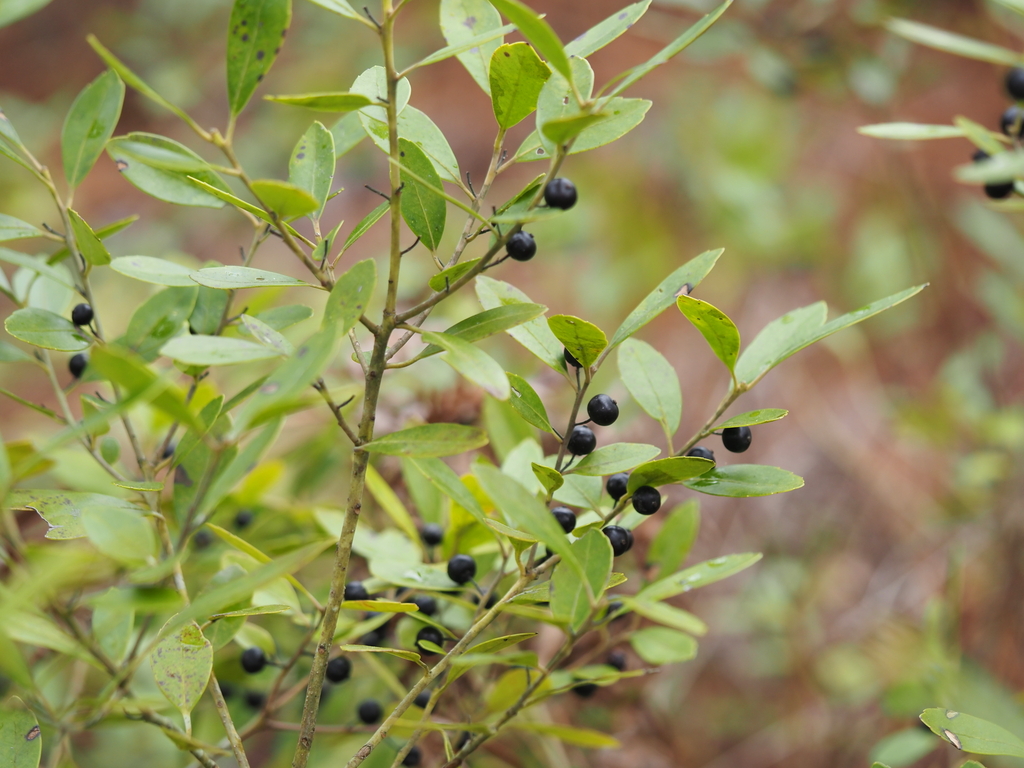
Plant this instead
Choose your county to list local plants first.
No recorded swaps for this county. Try the garden finder.
At a glance
- Life cycle
- Woody perennial
- Leaves
- Evergreen
- Bloom
- April to June
- Fruiting season
- Summer to fall
JFMAMJJASOND
Recorded in 20 Florida counties.
Natural habitats
Places it grows wild. Not a planting requirement. Each habitat page lists the plants and wildlife also found there.
Roadsides, fields and disturbed ground
Ground opened by people: roadsides, old fields, pastures, fencerows and lots.
Ecological relationships
Who uses this plant?
 30CaterpillarsGenus host records with ranges including FL
Genus host records with ranges including FL · Ligustrum
- Acronicta impletaYellow-Haired Dagger
- Acronicta oblinitaSmeared Dagger
- Aethalura intertextaFour-Barred Gray
- Apantesis naisNais Tiger Moth
- Argyrotaenia velutinanaRed-Banded Leafroller Moth, Jack Pine Tube Moth
- Automeris ioIo Moth
- Callosamia prometheaPromethea Silkmoth, Promethea Moth
- Ceratomia undulosaWaved Sphinx
- Cerma cerinthaTufted Bird-Dropping Moth, Cherry Agate
- Citheronia regalisRoyal Walnut Moth, Hickory Horned Devil
Show all 30
- Dolba hyloeusPawpaw Sphinx
- Eacles imperialisImperial Moth, Imperial Spiny Caterpillar
- Ectropis crepusculariaThe Small Engrailed, Saddleback Looper
- Eupithecia miserulataCommon Eupithacia, Common Pug
- Harrisimemna trisignataHarris's Three-Spot
- Hymenia perspectalisSpotted Beet Webworm
- Hypena scabraGreen Cloverworm Bomolocha, Black Snout
- Hyphantria cuneaFall Webworm
- Manduca rusticaRustic Sphinx
- Orgyia leucostigmaWhite-Marked Tussock Moth
- Palpita quadristigmalisFour-Spotted Palpita, Privet Moth
- Paonias myopsSmall-Eyed Sphinx
- Papilio glaucusEastern Tiger Swallowtail
- Podosesia syringaeLilac Borer Moth, Ash Borer
- Sphinx franckiiFranck's Sphinx
- Sphinx kalmiaeFawn Sphinx, Laurel Sphinx
- Spilosoma virginicaVirginian Tiger Moth, Yellow Woolybear Moth, Yellow Bear
- Thyridopteryx ephemeraeformisEvergreen Bagworm Moth
- Astala confederata
- Desmia tages
 —BeesSoutheastern regional records
 —Specialist beesPollen specialists
 —BirdsRecorded genus food-resource interactions; not a state feeding claim
Growing and identification
Plant details
- Family
- Oleaceae
- Hardiness
- Zones 7a–10b
- Soil pH
- Alkaline
- Flower color
- White
- Growth rate
- Rapid
- Growth habit
- Several stems
- Foliage color
- Dark green
- Fruit begins
- Summer
- Fruit ends
- Fall
Safety has not been reviewed for this plant; check toxicity and thorns before planting.
Growing sources and scope
- Bloom · “April to June” · FloraQuest: Carolinas, Georgia (Southeastern Flora Team), phone app (app page) (ranked first; USDA PLANTS differs) · Carolinas and Georgia
- Flower color · “White” · NC Extension Plant Toolbox
- Foliage color · “Dark green” · USDA PLANTS · Nationwide species characteristics; local growing conditions may vary
- Fruit begins · “Summer” · USDA PLANTS · Nationwide species characteristics; local growing conditions may vary
- Fruit ends · “Fall” · USDA PLANTS · Nationwide species characteristics; local growing conditions may vary
- Growth habit · “Several stems” · USDA PLANTS · Nationwide species characteristics; local growing conditions may vary
- Growth rate · “Rapid” · USDA PLANTS · Nationwide species characteristics; local growing conditions may vary
- Hardiness · “Zones 7a–10b” · NC Extension Plant Toolbox
- Height · “6–12 feet” · NC Extension Plant Toolbox (ranked first; USDA PLANTS differs)
- Leaves · “Evergreen” · NC Extension Plant Toolbox
- Life cycle · “Woody perennial” · NC Extension Plant Toolbox
- Light · “Full sun (6 or more hours of direct sunlight a day); Partial shade (direct sunlight only part of the day, 2-6 hours)” · NC Extension Plant Toolbox
- primary_flower_color · “white” · USDA PLANTS
- Soil · “Occasionally dry” · NC Extension Plant Toolbox
- Soil pH · “Alkaline” · NC Extension Plant Toolbox
- Spread · “5–6 feet” · NC Extension Plant Toolbox
Conservation status
| Florida rank | SNA |
|---|---|
| Global rank | GNR |
| FL status | Not verified |
| Federal status | Not verified |
Sources
- Atlas of Florida Plants
- USDA PLANTS
- FloraQuest: Carolinas, Georgia (Weakley), phone app (app page)
- FloraQuest: Florida (Weakley), phone app (app page)
- NatureServe Explorer
- Shropshire & Tallamy 2025, Lepidoptera of North America north of Mexico, ZooKeys 1261 (ODbL)
- Noori, Seltmann & Orr 2026, A curated and integrated dataset for exploring global bee-plant interactions (GloBI), Zenodo, CC BY 4.0
- Smith, Bachelder, Russell, Morales, Mosher & Seltmann 2024, Bee-Specialization-Modeling v0.6.1 (specialist host table compiled from J. Fowler's pollen specialist bee lists), Zenodo, CC BY 4.0
- Hurlbert, Olsen, Sawyer & Winner 2021, Avian Diet Database, Scientific Data 8: 260 (CC0)
- Narango, Tallamy & Shropshire 2020, Few keystone plant genera support the majority of Lepidoptera species, Nature Communications