

Sweet Joe-pye-weed
Eutrochium purpureum
Native to Florida. How scores work Is it native here?
Profile 100%
- Height
- 5–7 feet
- Spread
- 2–4 feet
- Light
- Full sun, Partial shade
- Soil moisture
- Usually moist
Space about 3 ft apart from its recorded spread, about 11 per 100 sq ft. Enter your bed size for a count
Will it fit your yard?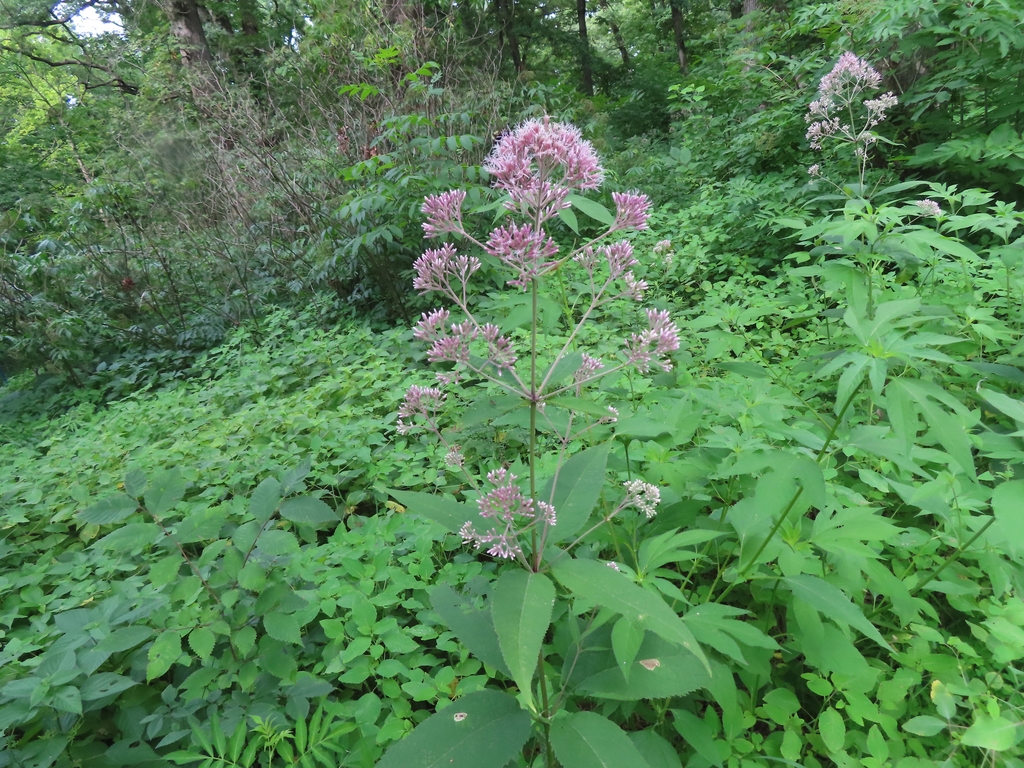
At a glance
- Life cycle
- Perennial
- Bloom
- July to September
- Fruiting season
- Fall
Not yet recorded · Leaves
Recorded in 6 Florida counties.
Care
- Keep the soil moist.
Who uses this plant?
 38CaterpillarsGenus host records with ranges including FL
Genus host records with ranges including FL · Eupatorium
- Anavitrinella pampinariaCommon Gray, Cranberry Spanworm
- Carmenta bassiformisEupatorium Borer Moth, Ironweed Clearwing Moth
- Carmenta pyralidiformisBoneset Borer Moth
- Carmenta texanaTexana Clearwing Moth
- Celastrina neglectaSummer Azure
- Chlorochlamys chloroleucariaBlackberry Looper Moth
- Chlorostrymon simaethisSilver-Banded Hairstreak
- Chrysodeixis includensSoybean Looper Moth
- Cisseps fulvicollisYellow-Collared Scape Moth
- Condica vecorsDusky Groundling
Show all 38
- Dichomeris setosellaHairy Dichomeris
- Digrammia continuataCurve-Lined Angle
- Dysodia oculatanaEyed Thyris
- Estigmene acreaSalt Marsh Moth, Acrea Moth
- Eugnosta erigeronanaFleabane Cochylid
- Eupithecia miserulataCommon Eupithacia, Common Pug
- Haploa clymeneClymene Moth
- Hellinsia unicolorUnmarked Plume Moth
- Oedemasia concinnaRed-Humped Caterpillar, Red-Humped Appleworm
- Oenobotys vinotinctalisWine-Tinted Oenobotys Moth
- Oidaematophorus eupatoriiEupatorium Plume Moth
- Orthodes majusculaRustic Quaker, Rustic Groundcat
- Ostrinia obumbratalisSmartweed Borer
- Papaipema cataphractaBurdock Border, Potato-Stalk Borer
- Papaipema harrisiiHeracleum Stem Borer Moth, Cow Parsnip Borer
- Patania silicalisHerbivorous Patania, Herbivorous Pleuroptya
- Perigea xanthioidesRed Groundling
- Platynota flavedanaBlack-Shaded Platynota
- Platynota rostranaOmnivorous Platynota
- Pleuroprucha insulsariaCommon Tan Wave
- Schinia trifasciaThree-Lined Flower Moth
- Spoladea recurvalisHawaiian Beet Webworm
- Synchlora frondariaSouthern Emerald
- Tornos scolopacinariaDimorphic Gray
- Dichomeris aglaia
- Dichrorampha leopardana
- Hellinsia habecki
- Niasoma metallicana
 34BeesSoutheastern regional records
Southeastern regional records · Eupatorium
Individual names are not available yet.
Noori, Seltmann & Orr 2026, A curated and integrated dataset for exploring global bee-plant interactions (GloBI), Zenodo, CC BY 4.0 4Specialist beesPollen specialists
Pollen specialists · Eutrochium
- Dieunomia heteropoda
- Megachile xylocopoides
- Melissodes denticulatus
- Melissodes druriellus
 1BirdsRecorded genus food-resource interactions; not a state feeding claim
Recorded genus food-resource interactions; not a state feeding claim · Eupatorium
- Ortalis vetulaPlain Chachalaca
Direct food only: birds recorded eating this genus across North America. Caterpillars on host plants also feed nesting birds. NC Native Plant Society: butterfly gardening
Flies 3
- Exoprosopa fasciata
- Systoechus vulgaris
- Volucella vesiculosa
Flower visits · Carlinville, Illinois, USA
Adult butterflies / moths 4
- Anosia plexippus
- Pholisora hayhurstii
- Pontia protodice
- Vanessa huntera
Flower visits · Carlinville, Illinois, USA
Other wasps 2
- Polistes rubiginosus
- Sphex procera
Flower visits · Carlinville, Illinois, USA
No records yet · Ants · Beetles · Other insects
Plant details
- Family
- Asteraceae
- Hardiness
- Zones 4a–9b
- Soil pH
- Acidic to alkaline
- Flower color
- Pink or purple
- Fruit begins
- Fall
- Fruit ends
- Fall
What its natural habitat tells you
Safety has not been reviewed for this plant; check toxicity and thorns before planting.
Growing sources and scope
- Bloom · “July to September” · Prairie Moon 2026 Cultural Guide · Nursery cultural guide; height in flower; moisture categories retained as printed
- Flower color · “Pink or purple” · NC Extension Plant Toolbox (ranked first; Prairie Moon 2026 Cultural Guide differs)
- Fruit begins · “Fall” · NC Extension Plant Toolbox · Species profile fruit display season; not a local ripening date
- Fruit ends · “Fall” · NC Extension Plant Toolbox · Species profile fruit display season; not a local ripening date
- Hardiness · “Zones 4a–9b” · NC Extension Plant Toolbox (ranked first; Missouri Botanical Garden Plant Finder differs)
- Height · “5–7 feet” · NC Extension Plant Toolbox (ranked first; Lady Bird Johnson Wildflower Center, Minnesota Wildflowers, Prairie Moon 2026 Cultural Guide differ)
- Life cycle · “Perennial” · NC Extension Plant Toolbox
- Light · “Full sun (6 or more hours of direct sunlight a day); Partial shade (direct sunlight only part of the day, 2-6 hours)” · NC Extension Plant Toolbox (ranked first; Lady Bird Johnson Wildflower Center, Missouri Botanical Garden Plant Finder, Prairie Moon 2026 Cultural Guide differ)
- Soil · “Moist; Occasionally wet” · NC Extension Plant Toolbox (ranked first; Lady Bird Johnson Wildflower Center, Missouri Botanical Garden Plant Finder, Prairie Moon 2026 Cultural Guide differ)
- Soil pH · “Acidic to alkaline” · NC Extension Plant Toolbox
- Spread · “2–4 feet” · NC Extension Plant Toolbox
Also known as
Eupatorium purpureum; Sweet Joe pye weed; Sweet Scented Joe Pye Weed; thoroughwort
Conservation status
| Florida rank | SNR |
|---|---|
| Global rank | G5 |
| FL status | Not verified |
| Federal status | Not verified |
Will it fit your yard?
Check this plant against your county, sun and soil moisture. Conditions are checked in your browser.
Sources
- Atlas of Florida Plants
- USDA PLANTS
- Vascular Plants of North Carolina (NC Natural Heritage Program)
- Shropshire & Tallamy 2025, Lepidoptera of North America north of Mexico, ZooKeys 1261 (ODbL)
- Noori, Seltmann & Orr 2026, A curated and integrated dataset for exploring global bee-plant interactions (GloBI), Zenodo, CC BY 4.0
- Smith, Bachelder, Russell, Morales, Mosher & Seltmann 2024, Bee-Specialization-Modeling v0.6.1 (specialist host table compiled from J. Fowler's pollen specialist bee lists), Zenodo, CC BY 4.0
- Hurlbert, Olsen, Sawyer & Winner 2021, Avian Diet Database, Scientific Data 8: 260 (CC0)
- Narango, Tallamy & Shropshire 2020, Few keystone plant genera support the majority of Lepidoptera species, Nature Communications