

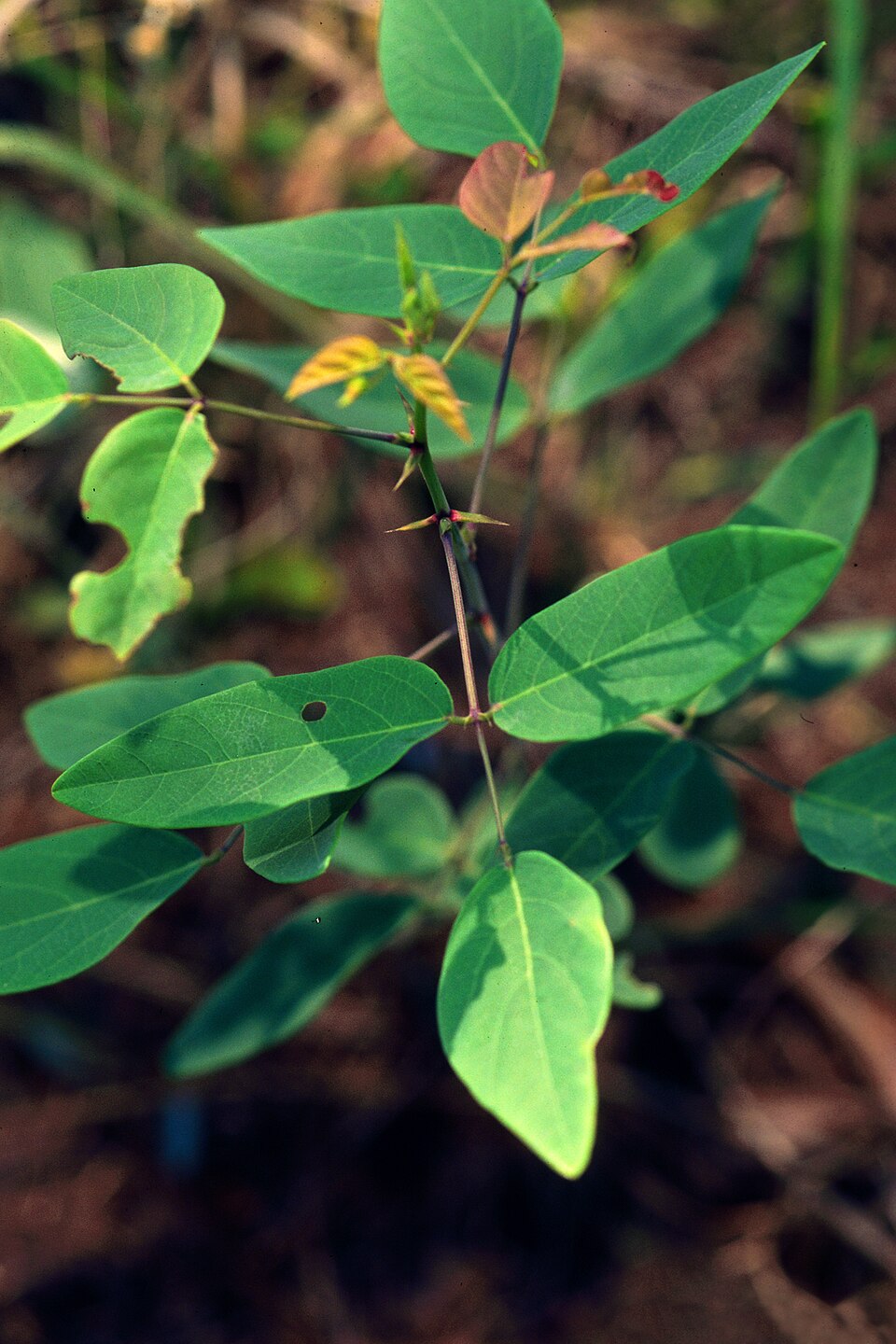
Smooth Tick-trefoil
Desmodium laevigatum
Found in dry oak and pine forests, fields, woodland borders, disturbed areas. Weakley, Flora of the Southeastern United States (2025), Florida edition What its natural habitat tells you
Native to Florida. How scores work Is it native here?
Profile 82%
- Light
- Partial shade, Full sun
- Soil moisture
- Dry to moist
At a glance
- Life cycle
- Perennial
- Bloom
- June to September
- Fruiting season
- August to October
Not yet recorded · Height · Spread · Leaves
Recorded in 18 Florida counties.
Natural habitats
Places it grows wild. Not a planting requirement. Each habitat page lists the plants and wildlife also found there.

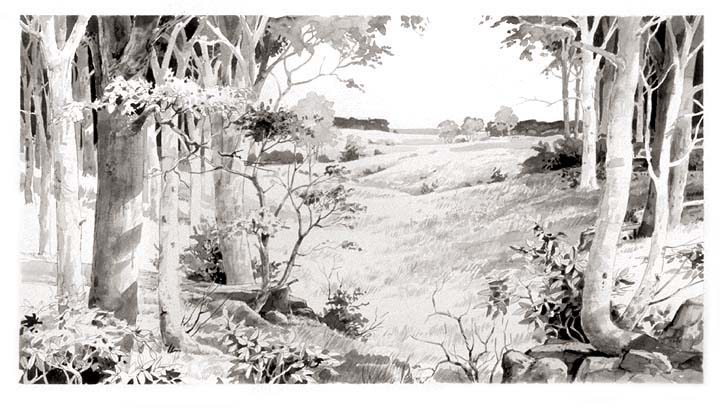
Roadsides, fields and disturbed ground
Ground opened by people: roadsides, old fields, pastures, fencerows and lots.
Also found with this plant
Wildlife whose habitat models include habitats this plant grows in, in Florida. Shared habitat, not food. 79 animals.
- Northern CardinalCardinalis cardinalis
- Northern FlickerColaptes auratus
- Northern MockingbirdMimus polyglottos
- Orange-crowned WarblerVermivora celata
- Orchard OrioleIcterus spurius
- OspreyPandion haliaetus
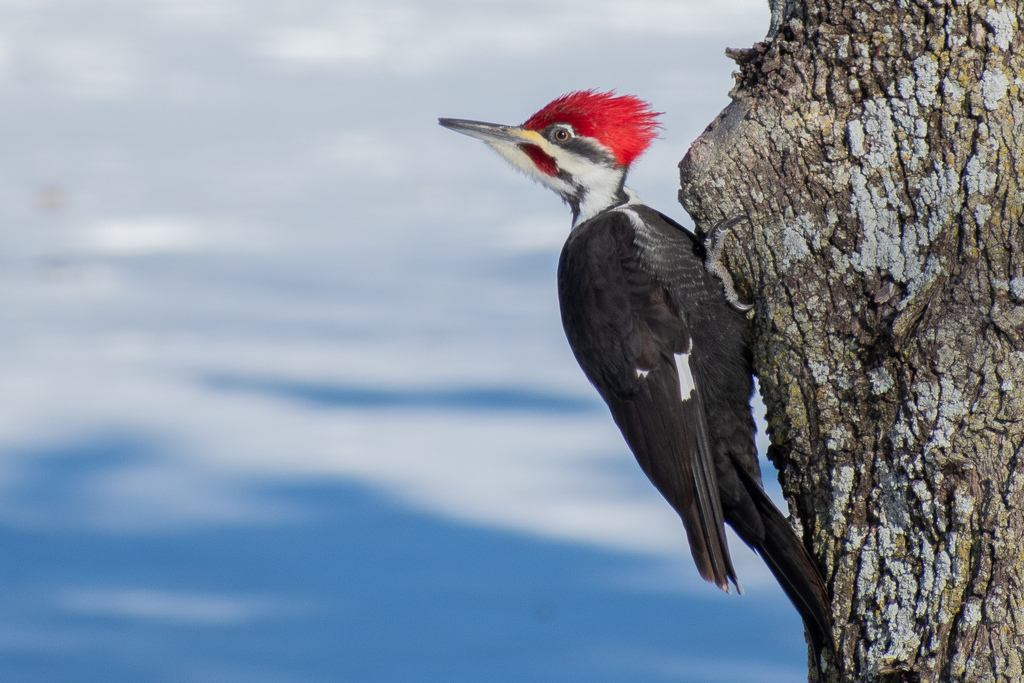
- Pileated WoodpeckerDryocopus pileatus
- Pine SiskinCarduelis pinus
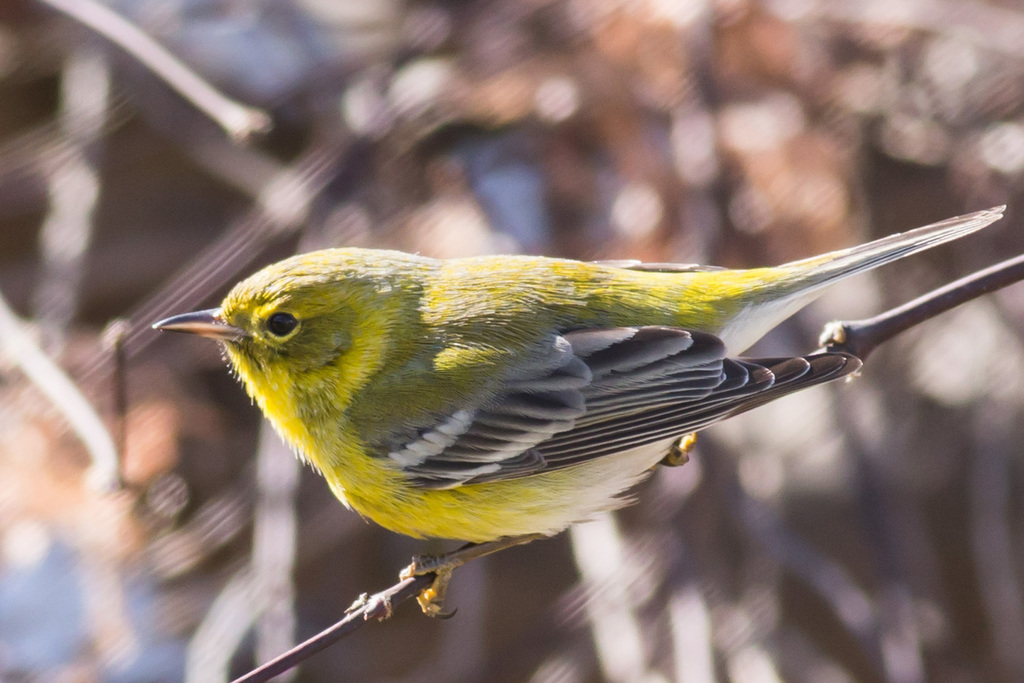
- Pine WarblerDendroica pinus
- Prairie WarblerDendroica discolor
- Purple FinchCarpodacus purpureus
- Red-bellied WoodpeckerMelanerpes carolinus
- Red-cockaded WoodpeckerPicoides borealis
- Red-headed WoodpeckerMelanerpes erythrocephalus
- Red-tailed HawkButeo jamaicensis
- Red-winged BlackbirdAgelaius phoeniceus
- Ruby-crowned KingletRegulus calendula
- Ruby-throated HummingbirdArchilochus colubris
- Sharp-shinned HawkAccipiter striatus
- Spotted SandpiperActitis macularius
- Swallow-tailed KiteElanoides forficatus
- Tufted TitmouseBaeolophus bicolor
- Turkey VultureCathartes aura
- White-crowned SparrowZonotrichia leucophrys










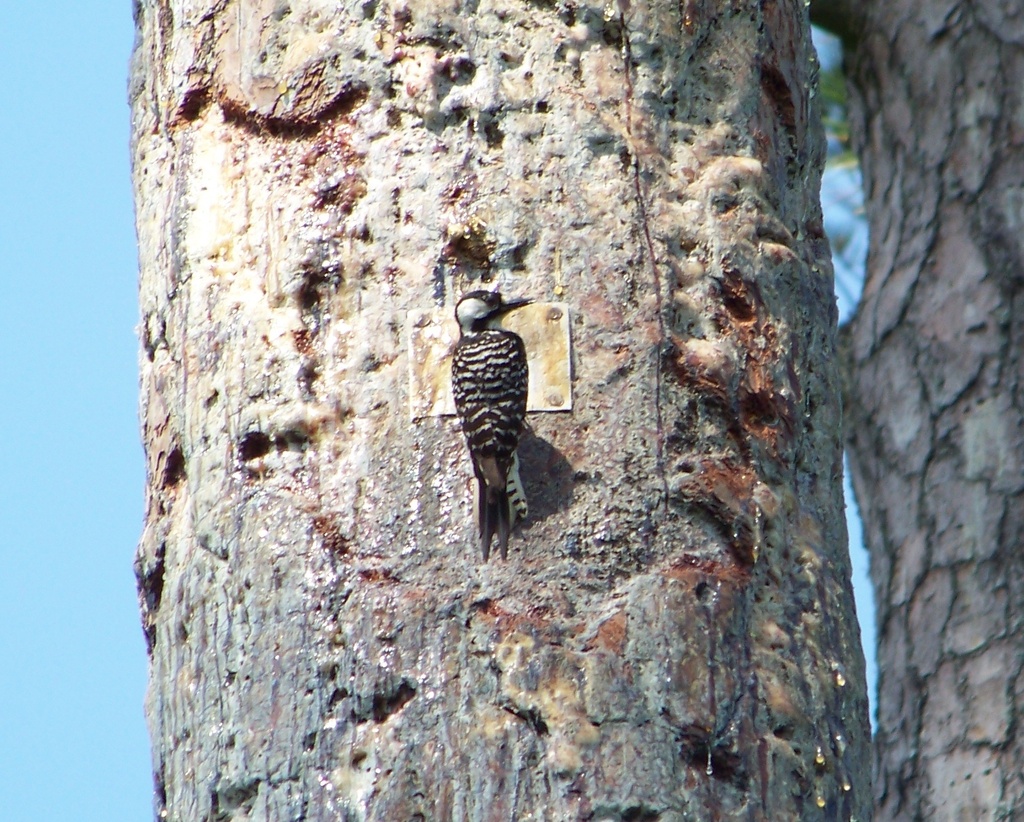







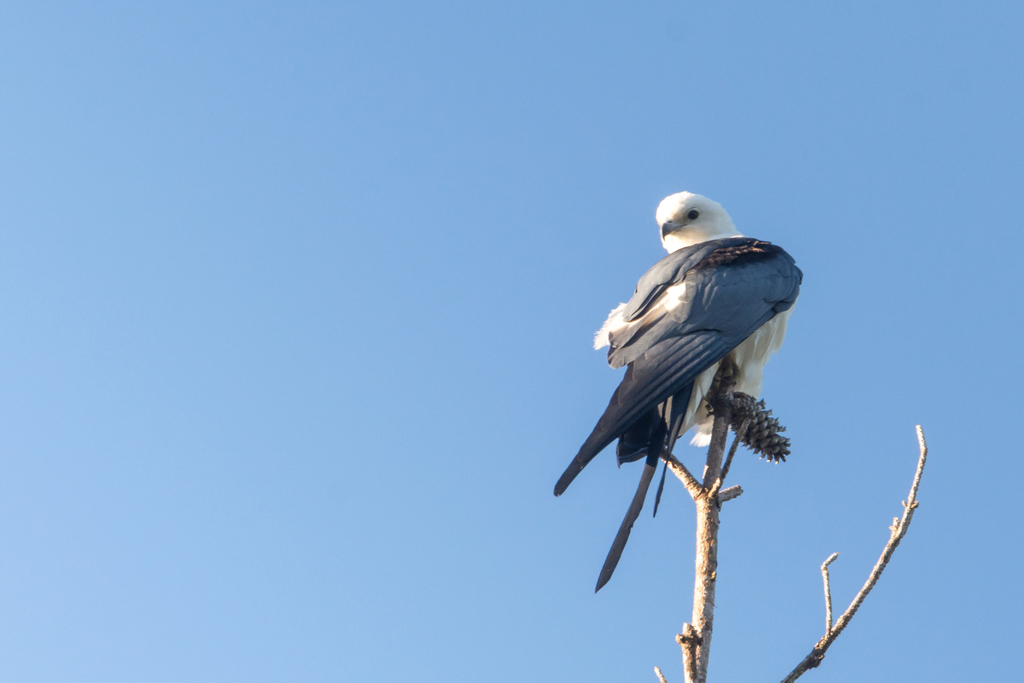


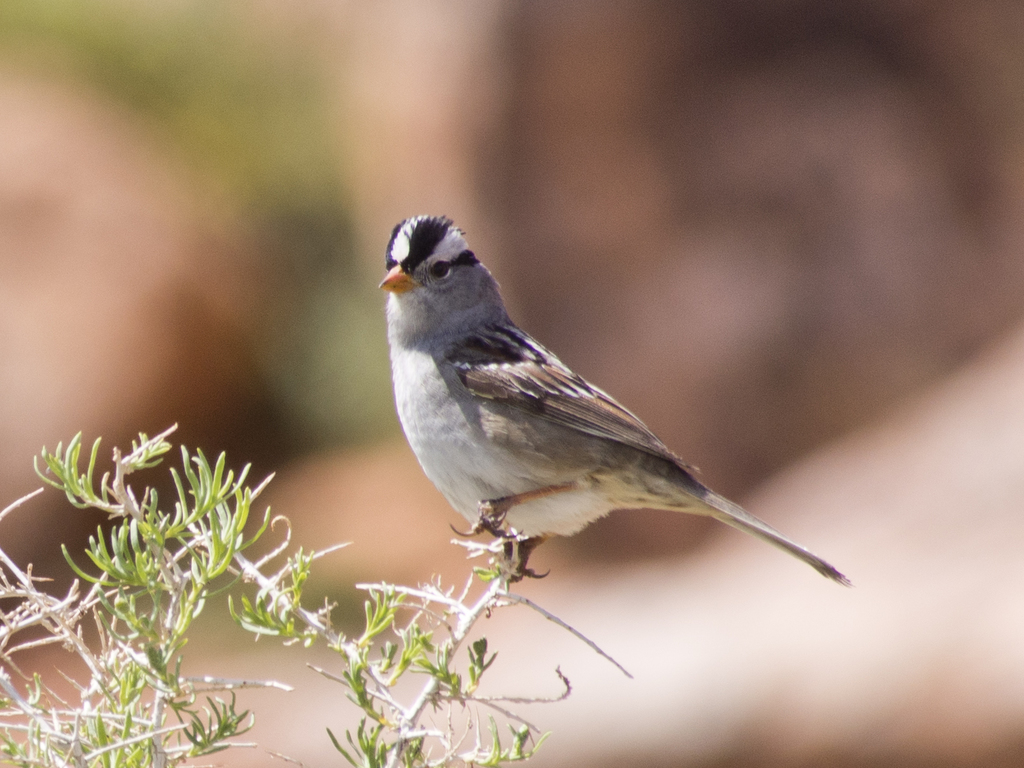

Who uses this plant?
 28CaterpillarsGenus host records with ranges including FL
Genus host records with ranges including FL · Desmodium
- Epargyreus clarusSilver-spotted Skipper
- Aristotelia roseosuffusellaPink-Washed Aristotelia
- Brenthia pavonacellaPeacock Brenthia Moth
- Caloptilia violacellaTick-Trefoil Caloptilia
- Cecropterus bathyllusSouthern Cloudywing
- Cecropterus dorantesDorantes Longtail, Lilac-Banded Longtail
- Cecropterus lyciadesHoary Edge
- Cecropterus pyladesNorthern Cloudywing
- Chloridea virescensTobacco Budworm Moth
- Coelostathma discopunctanaThe Batman Moth
Show all 28
- Cupido comyntasEastern Tailed-Blue
- Eurema dairaBarred Yellow, Barred Sulphur
- Exelastis pumilioDwarf Plume Moth
- Helicoverpa zeaCorn Earworm Moth
- Hypena scabraGreen Cloverworm Bomolocha, Black Snout
- Leptotes cassiusCassius Blue, Tropical Striped Blue
- Omiodes indicataBean-Leaf Webworm Moth
- Orphanostigma haemorrhoidalisLantana Leaftier
- Pyrrhia ciliscaAmerican Bordered Sallow, Noble Sun Moth
- Spodoptera eridaniaSouthern Armyworm Moth
- Spodoptera frugiperdaFall Armyworm Moth
- Stenoptilodes taprobanesNarrow Plume Moth
- Strymon melinusGray Hairstreak
- Triclonella pergandeellaSweetclover Root Borer, Bush-Clover Triclonella
- Urbanus proteusLong-Tailed Skipper, Bean Leaf Roller
- Anarsioses aberrans
- Dichomeris acuminatus
- Porphyrosela desmodiella
 15BeesSoutheastern regional records
Southeastern regional records · Desmodium
Individual names are not available yet.
Noori, Seltmann & Orr 2026, A curated and integrated dataset for exploring global bee-plant interactions (GloBI), Zenodo, CC BY 4.0 0Specialist beesPollen specialists
 3BirdsRecorded genus food-resource interactions; not a state feeding claim
Recorded genus food-resource interactions; not a state feeding claim · Desmodium
- Bonasa umbellusRuffed Grouse
- Colinus virginianusNorthern Bobwhite
- Cyrtonyx montezumaeMontezuma Quail
Direct food only: birds recorded eating this genus across North America. Caterpillars on host plants also feed nesting birds. NC Native Plant Society: butterfly gardening
No records yet · Ants · Beetles · Flies · Adult butterflies / moths · Other wasps · Other insects
Plant details
- Family
- Fabaceae
- Flower color
- Pink, purple or violet
- Fruit begins
- August
- Fruit ends
- October
Safety has not been reviewed for this plant; check toxicity and thorns before planting.
Growing sources and scope
- Bloom · “June to September” · Weakley, Flora of the Southeastern United States (2025), Carolinas & Georgia edition · Carolinas and Georgia
- Flower color · “Pink, purple or violet” · Lady Bird Johnson Wildflower Center
- Fruit begins · “August” · Weakley, Flora of the Southeastern United States (2025), Carolinas & Georgia edition · Carolinas and Georgia
- Fruit ends · “October” · Weakley, Flora of the Southeastern United States (2025), Carolinas & Georgia edition · Carolinas and Georgia
- Life cycle · “Perennial” · Lady Bird Johnson Wildflower Center
- Light · “Partial shade; Full sun (documented habitat)” · Weakley, Flora of the Southeastern United States (2025), Carolinas & Georgia edition · Carolinas and Georgia
- Soil · “Dry; Moist (documented habitat)” · Weakley, Flora of the Southeastern United States (2025), Carolinas & Georgia edition · Carolinas and Georgia
Also known as
Smooth Tick Trefoil
Conservation status
| Florida rank | SNR |
|---|---|
| Global rank | G5 |
| FL status | Not verified |
| Federal status | Not verified |
Will it fit your yard?
Check this plant against your county, sun and soil moisture. Conditions are checked in your browser.
Sources
- Atlas of Florida Plants
- USDA PLANTS
- Vascular Plants of North Carolina (NC Natural Heritage Program)
- Weakley, Flora of the Southeastern United States (2025), Florida edition
- Shropshire & Tallamy 2025, Lepidoptera of North America north of Mexico, ZooKeys 1261 (ODbL)
- Noori, Seltmann & Orr 2026, A curated and integrated dataset for exploring global bee-plant interactions (GloBI), Zenodo, CC BY 4.0
- Smith, Bachelder, Russell, Morales, Mosher & Seltmann 2024, Bee-Specialization-Modeling v0.6.1 (specialist host table compiled from J. Fowler's pollen specialist bee lists), Zenodo, CC BY 4.0
- Hurlbert, Olsen, Sawyer & Winner 2021, Avian Diet Database, Scientific Data 8: 260 (CC0)
- Narango, Tallamy & Shropshire 2020, Few keystone plant genera support the majority of Lepidoptera species, Nature Communications