

Downy Serviceberry
Amelanchier arborea
Found in dry to moist forests, seepage and depression wetlands. FloraQuest, phone app (app page) What its natural habitat tells you
Native to Florida. How scores work Is it native here?
Profile 100%
- Height
- About 36 feet
- Spread
- 15–25 feet
- Light
- Full sun
- Soil moisture
- Dry to average
Space about 20 ft apart from its recorded spread. Enter your bed size for a count
Will it fit your yard?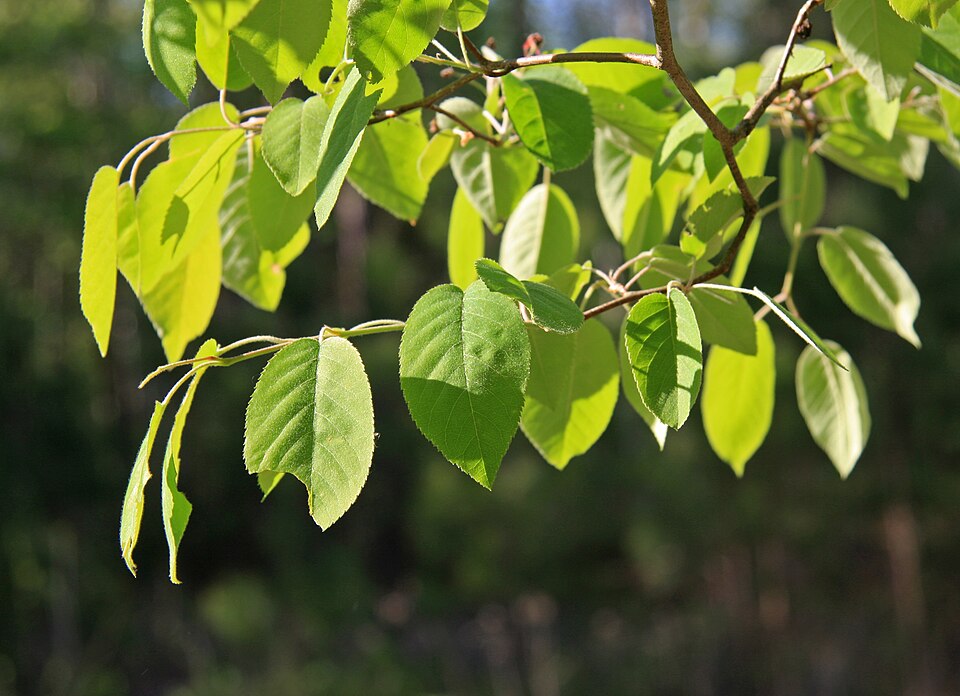

At a glance
- Life cycle
- Perennial
- Leaves
- Deciduous
- Bloom
- March to May
- Fruiting season
- May to August
Recorded in 13 Florida counties.
Natural habitats
Places it grows wild. Not a planting requirement. Each habitat page lists the plants and wildlife also found there.
Forests and open woodlands on dry ridges and slopes, often oak or pine.
Forests on moist but not wet ground, such as rich slopes and ravines.
Places where groundwater keeps the soil or rock wet, such as seepage slopes and spring runs.
Who uses this plant?
 71CaterpillarsGenus host records with ranges including FL
Genus host records with ranges including FL · Amelanchier
- Limenitis arthemisRed-spotted Purple
- Achatia distinctaDistinct Quaker
- Acronicta americanaAmerican Dagger
- Acronicta clarescensClear Dagger
- Actias lunaLuna Moth
- Adoneta spinuloidesPurple-Crested Slug
- Alsophila pometariaFall Cankerworm Moth
- Amphipyra pyramidoidesMiranda Underwing, Copper Underwing, Copper Amphipyra
- Antheraea polyphemusPolyphemus Moth
- Argyresthia oreasellaCherry Shoot Borer
Show all 71
- Automeris ioIo Moth
- Balsa labeculaWhite-Blotched Balsa
- Balsa malanaMany-Dotted Balsa, Many-Dotted Appleworm
- Catocala blandulaCharming Underwing
- Catocala praeclaraPraeclara Underwing, Chokeberry Underwing, Charlotte's Underwing
- Catocala pretiosaPrecious Underwing, Texarkana Underwing
- Cecrita biundataWavy-Lined Heterocampa
- Cecrita guttivittaMaple Prominent, Saddled Prominent
- Cenopis directanaChokecherry Leafroller Moth
- Choristoneura conflictanaLarge Aspen Tortrix
- Choristoneura rosaceanaOblique-Banded Leafroller Moth, Rosaceous Leaf Roller
- Coelodasys unicornisUnicorn Caterpillar Moth
- Datana ministraYellow-Necked Caterpillar Moth
- Ennomos subsignariaElm Spanworm Moth
- Erannis tiliariaLinden Looper Moth, Western Winter Moth, Lime Looper
- Euchlaena marginariaOchre Euchlaena
- Euclea delphiniiSpiny Oak-Slug Moth
- Eupithecia miserulataCommon Eupithacia, Common Pug
- Eutrapela clematariaCurved-Tooth Geometer, Purplish Brown Looper
- Glena cribratariaDotted Gray
- Halysidota tessellarisBanded Tussock Moth, Pale Tiger Moth
- Haploa leconteiLeconte's Haploa
- Hedya chionosemaTwin-Spotted Budworm, White-Spotted Hedya
- Hyalophora cecropiaCecropia Silkmoth, Cecropia Moth
- Hydriomena pluviataSharp Green Hydriomena
- Hypagyrtis unipunctataOne-Spotted Variant
- Hyphantria cuneaFall Webworm
- Limenitis archippusViceroy
- Lithophane antennataAshen Pinion
- Lithophane bethuneiBethune's Pinion
- Lithophane patefactaDiomorphic Pinion, Branded Pinion
- Lytrosis unitariaCommon Lytrosis
- Malacosoma americanaEastern Tent Caterpillar
- Malacosoma disstriaForest Tent Caterpillar
- Megalopyge crispataBlack-Waved Flannel Moth, Crinkled Flannel Moth
- Melanolophia canadariaCanadian Melanolphia, Variable Redmarked Looper
- Melanolophia signatariaSignate Melanolphia
- Metarranthis duariaRuddy Metarranthis
- Nadata gibbosaWhite-Dotted Prominent
- Nematocampa resistariaFilament Bearer, Horned Spanworm Moth
- Oedemasia concinnaRed-Humped Caterpillar, Red-Humped Appleworm
- Oedemasia semirufescensRed-Washed Prominent
- Orgyia leucostigmaWhite-Marked Tussock Moth
- Orthosia alurinaGray Quaker
- Orthotaenia undulanaDusky Leafroller
- Palthis angulalisDark-Spotted Palthis
- Paonias excaecataBlinded Sphinx, Blind Eyed Sphinx
- Paonias myopsSmall-Eyed Sphinx
- Papilio glaucusEastern Tiger Swallowtail
- Phigalia strigatariaSmall Phigalia, Small Oak Looper
- Phobetron pitheciumHag Moth, Monkey Slug
- Phyllodesma americanaLappet Moth, American Lappet Moth, Southern Lappet Moth
- Probole amicariaFriendly Probole
- Satyrium liparopsStriped Hairstreak
- Satyrium titusCoral Hairstreak
- Schizura ipomaeaeMorning-Glory Prominent, Checkered-Fringe Prominent
- Sericaglaea signataVariable Sallow
- Synanthedon exitiosaPeachtree Borer Moth, Western Peachtree Borer
- Synanthedon pictipesLesser Peachtree Borer Moth
- Thyridopteryx ephemeraeformisEvergreen Bagworm Moth
- Ectoedemia nyssaefoliella
 8BeesSoutheastern regional records
Southeastern regional records · Amelanchier
Individual names are not available yet.
Noori, Seltmann & Orr 2026, A curated and integrated dataset for exploring global bee-plant interactions (GloBI), Zenodo, CC BY 4.0 0Specialist beesPollen specialists
 16BirdsRecorded genus food-resource interactions; not a state feeding claim
Recorded genus food-resource interactions; not a state feeding claim · Amelanchier
- Bombycilla cedrorumCedar Waxwing
- Hylocichla mustelinaWood Thrush
- Turdus migratoriusAmerican Robin
- Bonasa umbellusRuffed Grouse
- Catharus fuscescensVeery
- Catharus guttatusHermit Thrush
- Catharus ustulatusSwainson's Thrush
- Coccothraustes vespertinusEvening Grosbeak
- Dendragapus obscurusDusky Grouse
- Myadestes townsendiTownsend's Solitaire
Show all 16
- Pheucticus ludovicianusRose-breasted Grosbeak
- Pinicola enucleatorPine Grosbeak
- Sialia mexicanaWestern Bluebird
- Tympanuchus phasianellusSharp-tailed Grouse
- Tyrannus tyrannusEastern Kingbird
- Vireo olivaceusRed-eyed Vireo
Direct food only: birds recorded eating this genus across North America. Caterpillars on host plants also feed nesting birds. NC Native Plant Society: butterfly gardening
No records yet · Ants · Beetles · Flies · Adult butterflies / moths · Other wasps · Other insects
Plant details
- Family
- Rosaceae
- Hardiness
- Zones 4–9
- Soil pH
- Acidic
- Flower color
- White
- Growth rate
- Slow
- Growth habit
- Single stem
- Foliage color
- Dark green
- Fruit begins
- May
- Fruit ends
- August
Safety has not been reviewed for this plant; check toxicity and thorns before planting.
Growing sources and scope
- Bloom · “March to May” · FloraQuest: Carolinas, Georgia (Southeastern Flora Team), phone app (app page) (ranked first; USDA PLANTS differs) · Carolinas and Georgia
- Flower color · “White” · USDA PLANTS · Nationwide species characteristics; local growing conditions may vary
- Foliage color · “Dark green” · USDA PLANTS · Nationwide species characteristics; local growing conditions may vary
- Fruit begins · “May” · FloraQuest: Carolinas, Georgia (Southeastern Flora Team), phone app (app page) (ranked first; USDA PLANTS differs) · Carolinas and Georgia
- Fruit ends · “August” · FloraQuest: Carolinas, Georgia (Southeastern Flora Team), phone app (app page) (ranked first; USDA PLANTS differs) · Carolinas and Georgia
- Growth habit · “Single stem” · USDA PLANTS · Nationwide species characteristics; local growing conditions may vary
- Growth rate · “Slow” · USDA PLANTS · Nationwide species characteristics; local growing conditions may vary
- Hardiness · “Zones 4–9” · Missouri Botanical Garden Plant Finder
- Height · “About 36 feet” · USDA PLANTS (ranked first; Lady Bird Johnson Wildflower Center, Missouri Botanical Garden Plant Finder differ) · Nationwide species characteristics; local growing conditions may vary
- Leaves · “Deciduous” · Lady Bird Johnson Wildflower Center
- Leaf retention · “Deciduous” · USDA PLANTS · Nationwide species characteristics; local growing conditions may vary
- Life cycle · “Perennial” · Lady Bird Johnson Wildflower Center
- Light · “Full sun” · Tennessee Smart Yards (ranked first; Virginia DCR Piedmont, Virginia DCR Coastal Plain, Lady Bird Johnson Wildflower Center, Missouri Botanical Garden Plant Finder differ) · Published Tennessee growing guidance; exact cached scientific heading
- primary_flower_color · “white” · USDA PLANTS
- Soil · “medium to dry” · Tennessee Smart Yards (ranked first; Virginia DCR Piedmont, Virginia DCR Coastal Plain, Lady Bird Johnson Wildflower Center, Missouri Botanical Garden Plant Finder differ) · Published Tennessee growing guidance; exact cached scientific heading
- Soil pH · “Acidic” · Lady Bird Johnson Wildflower Center
- Spread · “15–25 feet” · Missouri Botanical Garden Plant Finder
Also known as
Common Serviceberry
Conservation status
| Florida rank | S3 |
|---|---|
| Global rank | G5 |
| FL status | Not verified |
| Federal status | Not verified |
Will it fit your yard?
Check this plant against your county, sun and soil moisture. Conditions are checked in your browser.
Sources
- Atlas of Florida Plants
- USDA PLANTS
- Vascular Plants of North Carolina (NC Natural Heritage Program)
- FloraQuest: Florida (Weakley), phone app (app page)
- NatureServe Explorer
- Shropshire & Tallamy 2025, Lepidoptera of North America north of Mexico, ZooKeys 1261 (ODbL)
- Noori, Seltmann & Orr 2026, A curated and integrated dataset for exploring global bee-plant interactions (GloBI), Zenodo, CC BY 4.0
- Smith, Bachelder, Russell, Morales, Mosher & Seltmann 2024, Bee-Specialization-Modeling v0.6.1 (specialist host table compiled from J. Fowler's pollen specialist bee lists), Zenodo, CC BY 4.0
- Hurlbert, Olsen, Sawyer & Winner 2021, Avian Diet Database, Scientific Data 8: 260 (CC0)
- Narango, Tallamy & Shropshire 2020, Few keystone plant genera support the majority of Lepidoptera species, Nature Communications