

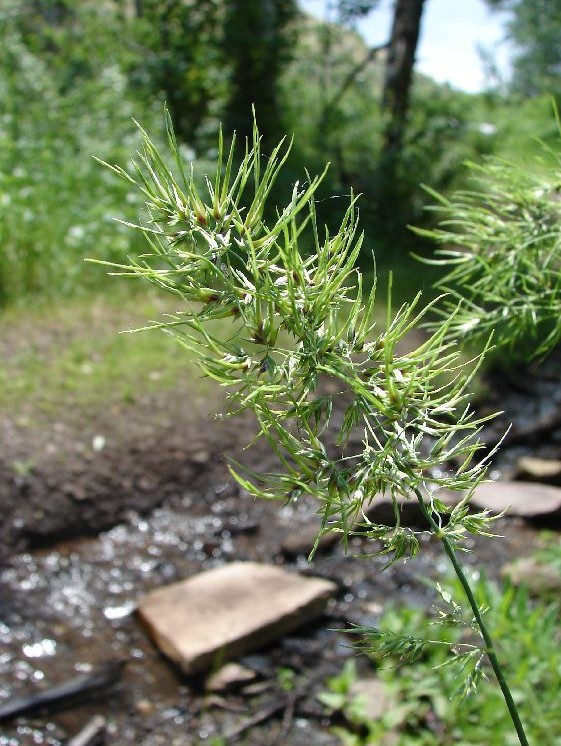
Bulbous Bluegrass
Poa bulbosa
—
Not native
Not native to Arkansas. How scores work Is it native here?
Profile 82%
- Height
- About 1.5 feet
- Light
- 2 or more hours of direct sun
- Soil moisture
- Somewhat dry to average
Plant this instead
Choose your county to list local plants first.
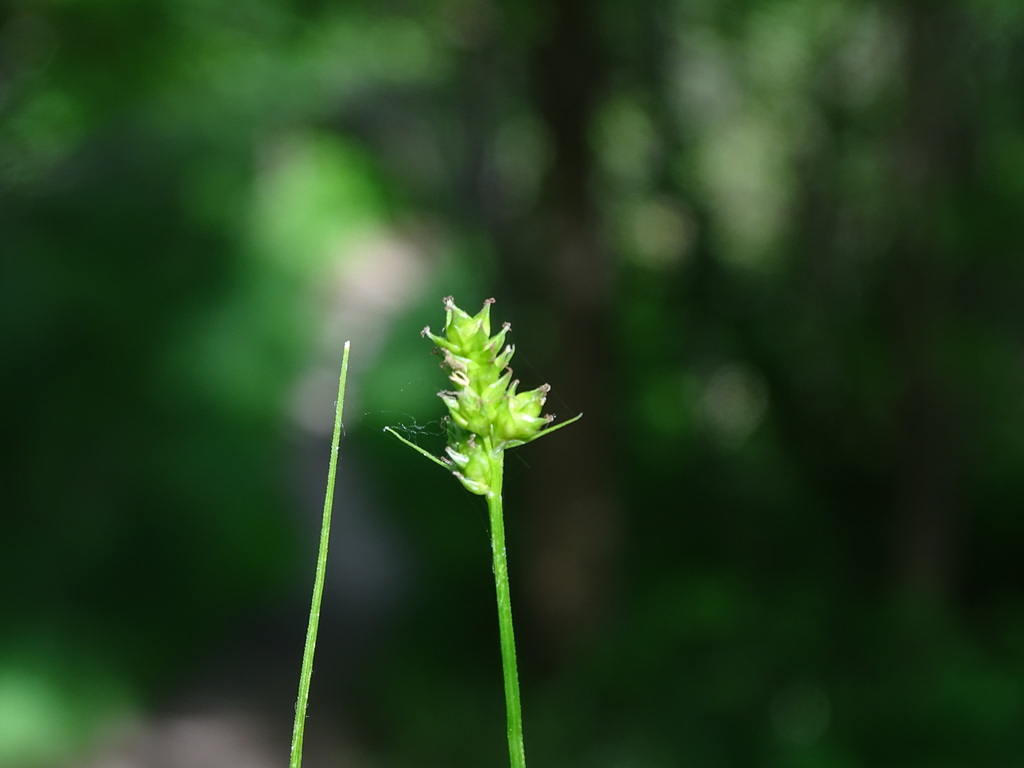
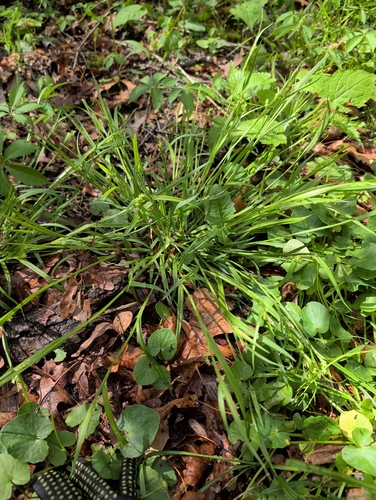
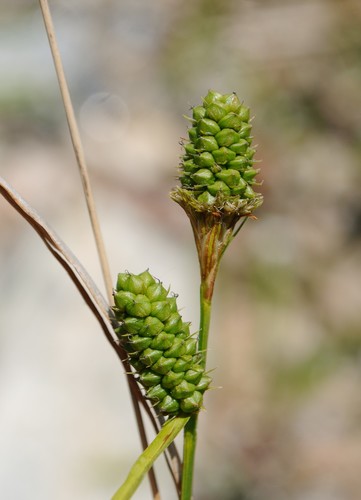

No recorded swaps for this county. Try the garden finder.
At a glance
- Bloom
- Late spring
- Fruiting season
- Summer
Not yet recorded · Spread · Life cycle · Leaves
Recorded in 6 Arkansas counties.
Ecological relationships
Who uses this plant?
 36CaterpillarsGenus host records with ranges including AR
Genus host records with ranges including AR · Poa
- Acrolophus popeanellaClemen's Grass Tubeworm
- Agrotis gladiariaSwordsman Dart, Clay-Backed Cut-Worm
- Amblyscirtes hegonPepper and Salt Skipper
- Amblyscirtes vialisCommon Roadside-Skipper, Black Little Skipper
- Ancyloxypha numitorLeast Skipper
- Anicla infectaGreen Cutworm Moth
- Arugisa luteaCommon Arugisa
- Atalopedes huronSachem
- Cercyonis pegalaCommon Wood Nymph
- Feltia jaculiferaDingy Cutworm
Show all 36
- Fissicrambus mutabilisStriped Webworm, Striped Sodworm, Changeable Grass-Veneer
- Hesperia leonardusLeonard's Skipper, Blazing Star Skipper, Pawnee Prairie Skipper, Pawnee Montane Skipper
- Hylephila phyleusFiery Skipper
- Lacinipolia meditataThe Thinker
- Lerodea eufalaEufala Skipper, Gray Skipper, Rice Leafroller
- Leucania phragmitidicolaNeedle Wainscot, Phragmites Wainscot
- Lon hobomokHobomok Skipper
- Lon zabulonZabulon Skipper
- Macrochilo litophoraAngulate Fan-Foot, Brown-Lined Owlet
- Marimatha nigrofimbriaBlack-Bordered Lemon
- Megisto cymelaLittle Wood Satyr
- Mythimna unipunctaArmyworm Moth, White Speck
- Nephelodes miniansBronzed Cutworm
- Nomophila nearcticaLucerne Moth, American Celery Webworm
- Orgyia leucostigmaWhite-Marked Tussock Moth
- Papaipema nebrisStalk Borer
- Parapediasia teterrellusBluegrass Webworm
- Pediasia trisectaSod Webworm Moth, Larger Sod Webworm
- Phalaenostola larentioidesBlack-Banded Owlet, Black-Banded Phalaenostola
- Phalaenostola metonalisPale Epidelta, Pale Phalaenostola
- Polites corasPeck's Skipper, Yellow-Patch Skipper
- Polites themistoclesTawny-Edged Skipper
- Spodoptera frugiperdaFall Armyworm Moth
- Elachista freyerella
- Elachista illectella
- Gonioterma mistrella
 —BeesSoutheastern regional records
 —Specialist beesPollen specialists
 9BirdsRecorded genus food-resource interactions; not a state feeding claim
Recorded genus food-resource interactions; not a state feeding claim · Poa
- Anser caerulescensSnow Goose
- Branta canadensisCanada Goose
- Callipepla californicaCalifornia Quail
- Lagopus leucuraWhite-tailed Ptarmigan
- Meleagris gallopavoWild Turkey
- Pooecetes gramineusVesper Sparrow
- Spizella breweriBrewer's Sparrow
- Spizella passerinaChipping Sparrow
- Spizella pusillaField Sparrow
Direct food only: birds recorded eating this genus across North America. Caterpillars on host plants also feed nesting birds. NC Native Plant Society: butterfly gardening
Growing and identification
Plant details
- Family
- Poaceae
- Flower color
- Yellow
- Growth rate
- Moderate
- Growth habit
- Grows in clumps
- Foliage color
- Green
- Fruit begins
- Summer
- Fruit ends
- Summer
What its natural habitat tells you
Safety has not been reviewed for this plant; check toxicity and thorns before planting.
Growing sources and scope
- Bloom · “Late spring” · USDA PLANTS · Nationwide species characteristics; local growing conditions may vary
- Flower color · “Yellow” · USDA PLANTS · Nationwide species characteristics; local growing conditions may vary
- Foliage color · “Green” · USDA PLANTS · Nationwide species characteristics; local growing conditions may vary
- Fruit begins · “Summer” · USDA PLANTS · Nationwide species characteristics; local growing conditions may vary
- Fruit ends · “Summer” · USDA PLANTS · Nationwide species characteristics; local growing conditions may vary
- Growth habit · “Grows in clumps” · USDA PLANTS · Nationwide species characteristics; local growing conditions may vary
- Growth rate · “Moderate” · USDA PLANTS · Nationwide species characteristics; local growing conditions may vary
- Height · “About 1.5 feet” · USDA PLANTS · Nationwide species characteristics; local growing conditions may vary
Also known as
Bulbous Blue Grass; Chapmans Blue Grass; Chapmans Bluegrass
Conservation status
| Arkansas rank | SNA |
|---|---|
| Global rank | GNR |
| AR status | Not verified |
| Federal status | Not verified |
Sources
- Atlas of the Vascular Plants of Arkansas (2013)
- USDA PLANTS
- NatureServe Explorer
- Arkansas occurrence source
- Shropshire & Tallamy 2025, Lepidoptera of North America north of Mexico, ZooKeys 1261 (ODbL)
- Noori, Seltmann & Orr 2026, A curated and integrated dataset for exploring global bee-plant interactions (GloBI), Zenodo, CC BY 4.0
- Smith, Bachelder, Russell, Morales, Mosher & Seltmann 2024, Bee-Specialization-Modeling v0.6.1 (specialist host table compiled from J. Fowler's pollen specialist bee lists), Zenodo, CC BY 4.0
- Hurlbert, Olsen, Sawyer & Winner 2021, Avian Diet Database, Scientific Data 8: 260 (CC0)
- Narango, Tallamy & Shropshire 2020, Few keystone plant genera support the majority of Lepidoptera species, Nature Communications