

Swamp Milkweed
Asclepias incarnata
Native to Arkansas. How scores work Is it native here?
Profile 100%
- Height
- 3–5 feet
- Spread
- 2–3 feet
- Light
- Full sun, Partial shade
- Soil moisture
- Usually moist
Space about 2.5 ft apart from its recorded spread, about 16 per 100 sq ft. Enter your bed size for a count
Will it fit your yard?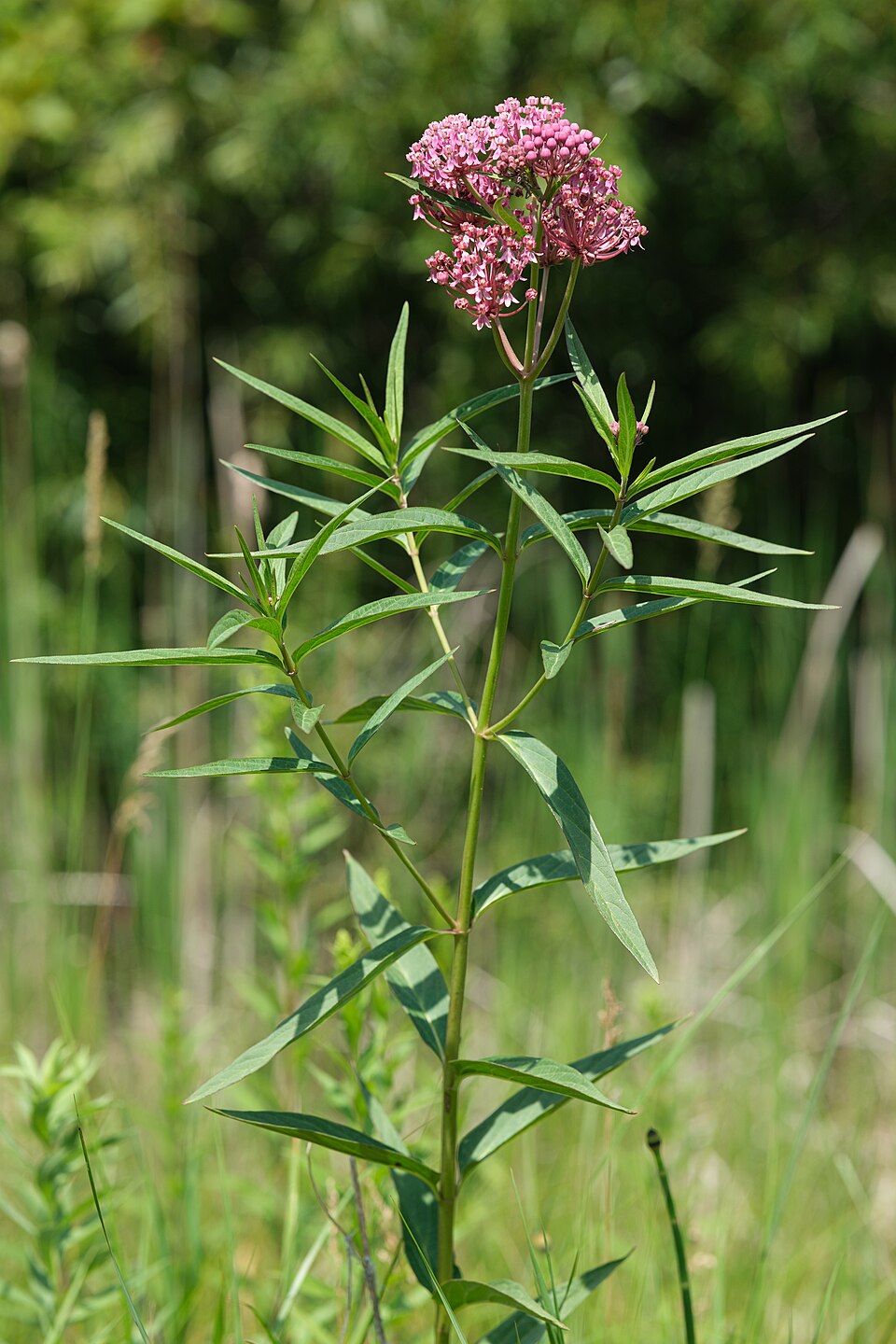

Rare or protected plant. Specialist conservation planting; excluded from routine garden suggestions. Plant caution source
Hidden from default planting suggestions. Wildlife value and native status remain unchanged.
At a glance
- Life cycle
- Perennial
- Leaves
- Deciduous
- Bloom
- Fall
- Fruiting season
- Spring to fall
Recorded in 5 Arkansas counties.
Who uses this plant?
 12CaterpillarsGenus host records with ranges including AR
Genus host records with ranges including AR · Asclepias
- Danaus plexippusMonarch
- Cycnia collarisUnexpected Cycnia
- Cycnia teneraDelicate Cycnia, Dogbane Tiger Moth
- Euchaetes egleMilkweed Tussock Moth or Milkweed Tiger Moth
- Hyalophora cecropiaCecropia Silkmoth, Cecropia Moth
- Papaipema nebrisStalk Borer
- Platynota flavedanaBlack-Shaded Platynota
- Pygarctia spragueiSprague's Pygarctia Moth
- Pyrrharctia isabellaIsabella Tiger Moth, Banded Woolybear
- Spodoptera frugiperdaFall Armyworm Moth
Show all 12
- Strymon melinusGray Hairstreak
- Trichordestra legitimaStriped Garden Caterpillar Moth
 59BeesSoutheastern regional records
Southeastern regional records · Asclepias
Individual names are not available yet.
Noori, Seltmann & Orr 2026, A curated and integrated dataset for exploring global bee-plant interactions (GloBI), Zenodo, CC BY 4.0 0Specialist beesPollen specialists
 1BirdsRecorded genus food-resource interactions; not a state feeding claim
Recorded genus food-resource interactions; not a state feeding claim · Asclepias
- Ortalis vetulaPlain Chachalaca
Direct food only: birds recorded eating this genus across North America. Caterpillars on host plants also feed nesting birds. NC Native Plant Society: butterfly gardening
Beetles 2
- Acmaeodera pulchella
- Trichius piger
Flower visits · Carlinville, Illinois, USA
Flies 10
- Cistogaster occidua
- Conops xanthopareus
- Ennyomma globosa
- Opsidia gonioides
- Panzeria radicum
- Phasioclista metallica
- Physocephala tibialis
- Scepsis fulvicollis
- Spallanzania hesperidarum
- Stratiomyia meigenii
Flower visits · Carlinville, Illinois, USA
Adult butterflies / moths 10
- Achalarus lycidas
- Anosia plexippus
- Argynnis cybele
- Euphyes verna
- Limochores taumas
- Papilio asterias
- Pholisora catullus
- Phyciodes tharos
- Speyeria idalia
- Vanessa atalanta
Flower visits · Carlinville, Illinois, USA
Other wasps 23
- Ageniella accepta
- Ammobia ichneumonea
- Ammobia nuda
- Ammobia pennsylvanica
- Bembix nubillipennis
- Bembix spinolae
- Cerceris clypeata
- Cerceris fumipennis
- Eumenes fraternus
- Isodontia apicalis
Show all 23
- Isodontia macrocephala
- Leionotus arvensis
- Polistes pallipes
- Polistes rubiginosus
- Polistes variatus
- Priononyx atrata
- Priononyx thomae
- Pseudoplisus phaleratus
- Tachytes distinctus
- Tachytes mandibularis
- Tachytes pepticus
- Vespula maculata
- Vespula vidua
Flower visits · Carlinville, Illinois, USA
Other insects 1
- Lygaeus turcicus
Flower visits · Carlinville, Illinois, USA
No records yet · Ants
Plant details
- Family
- Apocynaceae
- Hardiness
- Zones 3a–9b
- Soil pH
- Acidic to neutral
- Flower color
- Pink or white
- Growth rate
- Moderate
- Growth habit
- Spreads by rhizomes
- Foliage color
- Green
- Fruit begins
- Spring
- Fruit ends
- Fall
What its natural habitat tells you
Growing sources and scope
- Bloom · “Fall” · USDA PLANTS (ranked first; Prairie Moon 2026 Cultural Guide differs) · Nationwide species characteristics; local growing conditions may vary
- Flower color · “Pink or white” · NC Extension Plant Toolbox (ranked first; USDA PLANTS, Prairie Moon 2026 Cultural Guide differ)
- Foliage color · “Green” · USDA PLANTS · Nationwide species characteristics; local growing conditions may vary
- Fruit begins · “Spring” · USDA PLANTS · Nationwide species characteristics; local growing conditions may vary
- Fruit ends · “Fall” · USDA PLANTS · Nationwide species characteristics; local growing conditions may vary
- Growth habit · “Spreads by rhizomes” · USDA PLANTS · Nationwide species characteristics; local growing conditions may vary
- Growth rate · “Moderate” · USDA PLANTS · Nationwide species characteristics; local growing conditions may vary
- Hardiness · “Zones 3a–9b” · NC Extension Plant Toolbox
- Height · “3–5 feet” · NC Extension Plant Toolbox (ranked first; Tennessee Smart Yards, USDA PLANTS, Minnesota Wildflowers, Prairie Moon 2026 Cultural Guide differ)
- Leaves · “Deciduous” · NC Extension Plant Toolbox
- Life cycle · “Perennial” · NC Extension Plant Toolbox
- Light · “Full sun (6 or more hours of direct sunlight a day); Partial shade (direct sunlight only part of the day, 2-6 hours)” · NC Extension Plant Toolbox (ranked first; Tennessee Smart Yards, Prairie Moon 2026 Cultural Guide differ)
- Soil · “Moist; Occasionally wet” · NC Extension Plant Toolbox (ranked first; Tennessee Smart Yards, Prairie Moon 2026 Cultural Guide differ)
- Soil pH · “Acidic to neutral” · NC Extension Plant Toolbox
- Spread · “2–3 feet” · NC Extension Plant Toolbox
Conservation status
| Arkansas rank | S2 |
|---|---|
| Global rank | G5 |
| AR status | Not verified |
| Federal status | Not verified |
Will it fit your yard?
Check this plant against your county, sun and soil moisture. Conditions are checked in your browser.
Growing cautions
- Self-seeds. Re-seeds to a modest degree. Tennessee Smart Yards
For planning only; these do not change the score or Fit.
Sources
- NatureServe Explorer
- USDA PLANTS
- Vascular Plants of North Carolina (NC Natural Heritage Program)
- Arkansas occurrence source
- Shropshire & Tallamy 2025, Lepidoptera of North America north of Mexico, ZooKeys 1261 (ODbL)
- Noori, Seltmann & Orr 2026, A curated and integrated dataset for exploring global bee-plant interactions (GloBI), Zenodo, CC BY 4.0
- Smith, Bachelder, Russell, Morales, Mosher & Seltmann 2024, Bee-Specialization-Modeling v0.6.1 (specialist host table compiled from J. Fowler's pollen specialist bee lists), Zenodo, CC BY 4.0
- Hurlbert, Olsen, Sawyer & Winner 2021, Avian Diet Database, Scientific Data 8: 260 (CC0)
- Narango, Tallamy & Shropshire 2020, Few keystone plant genera support the majority of Lepidoptera species, Nature Communications