

White Vervain
Verbena urticifolia
Found in floodplain forests, moist and dry upland forests, disturbed habitats. Weakley, Flora of the Southeastern United States (2025), South Central edition What its natural habitat tells you
Native to Alabama. How scores work Is it native here?
Profile 94%
- Height
- 3–5 feet
- Light
- Full sun, Part shade, Shade
- Soil moisture
- Average to moist
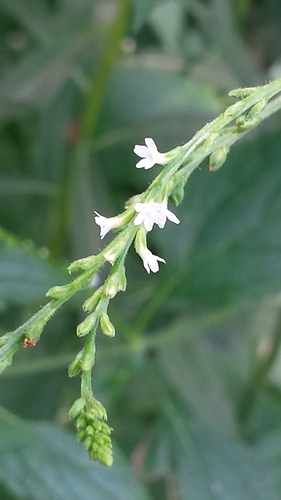
At a glance
- Life cycle
- Perennial
- Bloom
- May to November
Not yet recorded · Spread · Leaves
Recorded in 42 Alabama counties.
Natural habitats
Places it grows wild. Not a planting requirement. Each habitat page lists the plants and wildlife also found there.
Floodplain and bottomland forests
Forests on low ground beside rivers and streams that flood from time to time.
Forests and open woodlands on dry ridges and slopes, often oak or pine.
Also found with this plant
Wildlife whose habitat models include habitats this plant grows in, in Alabama. Shared habitat, not food. 123 animals.
- Wild TurkeyMeleagris gallopavo
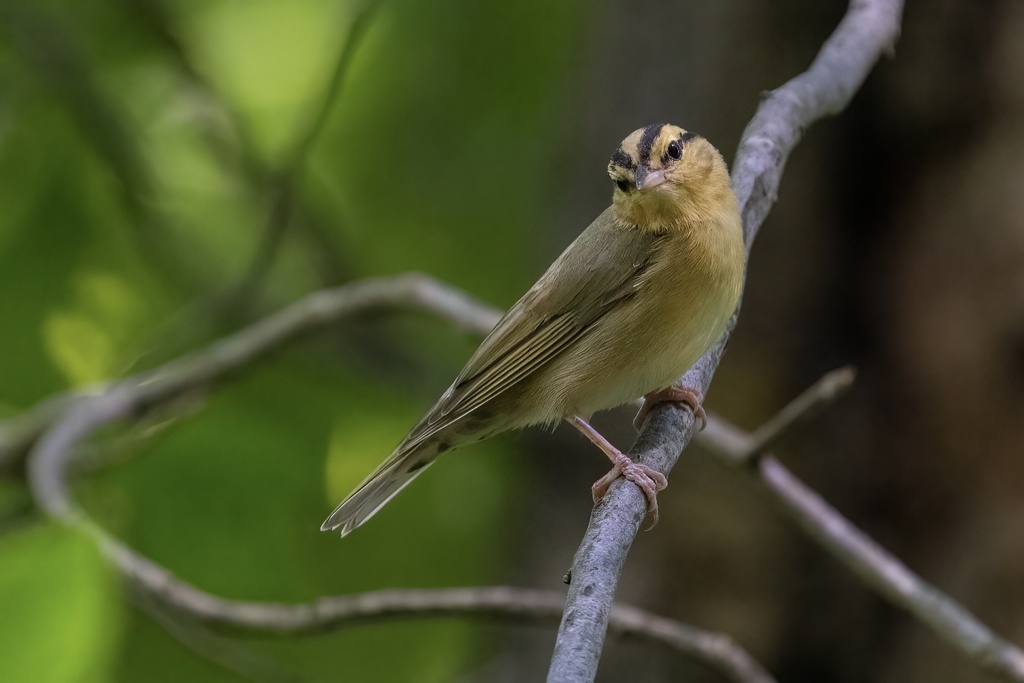
- Worm-eating WarblerHelmitheros vermivorum
- Yellow-throated WarblerDendroica dominica


Who uses this plant?
 11CaterpillarsGenus host records with ranges including AL
Genus host records with ranges including AL · Verbena
- Autographa precationisCommon Looper Moth
- Cenopis reticulatanaReticulated Fruitworm Moth
- Choristoneura rosaceanaOblique-Banded Leafroller Moth, Rosaceous Leaf Roller
- Crambodes talidiformisVerbena Groundling, Verbena Moth
- Endothenia hebesanaVerbena Bud Moth
- Junonia coeniaCommon Buckeye
- Megalographa bilobaBilobed Looper Moth
- Neogalea suniaLantana Stick Caterpillar, Catabena Moth
- Sparganothis sulfureanaSparganothis Fruitworm Moth, Sulfur Leafroller, False Yellow-Head
- Spilosoma virginicaVirginian Tiger Moth, Yellow Woolybear Moth, Yellow Bear
Show all 11
- Xenotemna pallorana
 39BeesSoutheastern regional records
Southeastern regional records · Verbena
Individual names are not available yet.
Noori, Seltmann & Orr 2026, A curated and integrated dataset for exploring global bee-plant interactions (GloBI), Zenodo, CC BY 4.0 2Specialist beesPollen specialists
Pollen specialists · Verbena
- Calliopsis michenerella
- Calliopsis nebraskensis
 8BirdsRecorded genus food-resource interactions; not a state feeding claim
Recorded genus food-resource interactions; not a state feeding claim · Verbena
- Acanthis flammeaCommon Redpoll
- Anthus rubescensAmerican Pipit
- Calcarius lapponicusLapland Longspur
- Callipepla californicaCalifornia Quail
- Colinus virginianusNorthern Bobwhite
- Columbina passerinaCommon Ground Dove
- Plectrophenax nivalisSnow Bunting
- Zenaida macrouraMourning Dove
Direct food only: birds recorded eating this genus across North America. Caterpillars on host plants also feed nesting birds. NC Native Plant Society: butterfly gardening
No records yet · Ants · Beetles · Flies · Adult butterflies / moths · Other wasps · Other insects
Plant details
- Family
- Verbenaceae
- Flower color
- White
Safety has not been reviewed for this plant; check toxicity and thorns before planting.
Growing sources and scope
- Bloom · “May to November” · Weakley, Flora of the Southeastern United States (2025), Carolinas & Georgia edition (ranked first; Prairie Moon 2026 Cultural Guide differs) · Carolinas and Georgia
- Flower color · “White” · Prairie Moon 2026 Cultural Guide · Nursery cultural guide; height in flower; moisture categories retained as printed
- Height · “3–5 feet” · Minnesota Wildflowers (ranked first; Prairie Moon 2026 Cultural Guide differs)
- Life cycle · “Perennial” · Minnesota Wildflowers
- Light · “Full sun (6+ hours); Part shade (3–6 hours); Shade (under 3 hours)” · Prairie Moon 2026 Cultural Guide · Nursery cultural guide; height in flower; moisture categories retained as printed
- primary_flower_color · “white” · Prairie Moon 2026 Cultural Guide
- Soil · “Wet-mesic; Mesic” · Prairie Moon 2026 Cultural Guide · Nursery cultural guide; height in flower; moisture categories retained as printed
Also known as
Nettle Leaf Vervain
Conservation status
| Alabama rank | SNR |
|---|---|
| Global rank | G5 |
| AL status | Not verified |
| Federal status | Not verified |
Will it fit your yard?
Check this plant against your county, sun and soil moisture. Conditions are checked in your browser.
Sources
- Alabama Plant Atlas
- USDA PLANTS
- Vascular Plants of North Carolina (NC Natural Heritage Program)
- Weakley, Flora of the Southeastern United States (2025)
- Shropshire & Tallamy 2025, Lepidoptera of North America north of Mexico, ZooKeys 1261 (ODbL)
- Noori, Seltmann & Orr 2026, A curated and integrated dataset for exploring global bee-plant interactions (GloBI), Zenodo, CC BY 4.0
- Smith, Bachelder, Russell, Morales, Mosher & Seltmann 2024, Bee-Specialization-Modeling v0.6.1 (specialist host table compiled from J. Fowler's pollen specialist bee lists), Zenodo, CC BY 4.0
- Hurlbert, Olsen, Sawyer & Winner 2021, Avian Diet Database, Scientific Data 8: 260 (CC0)
- Narango, Tallamy & Shropshire 2020, Few keystone plant genera support the majority of Lepidoptera species, Nature Communications