

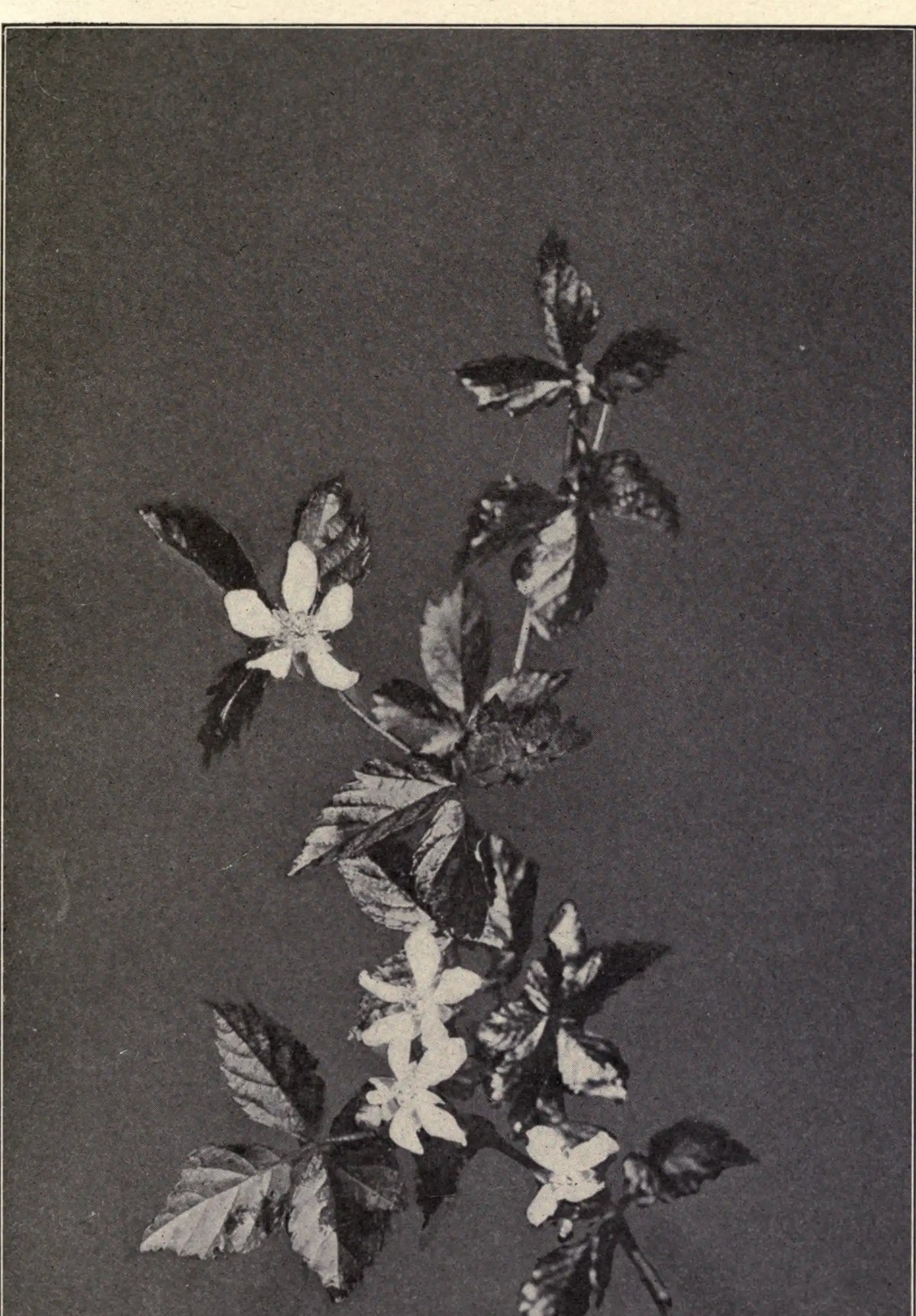
























Rubus trivialis. 500 wild flowers of San Antonio and vicinity (1922), Ellen Schulz Quillin
“February to April.”
Rubus trivialis. 500 wild flowers of San Antonio and vicinity (1922), Ellen Schulz Quillin
Text on this page, read from the scan
EACEAE. Hydrangea family. Philadelphus serpylliifolius Gray. Mock Orange. Wild Syringa. A shrub that makes itself known by the lovely orange- blossom fragrance of the pure white, four to five-petaled flowers that singly tip the short, brittle branches. Leaves alternate or opposite. Blades entire, less than three-fourths of an inch long, three-nerved, green above and white with a dense covering of appressed silvery-white hairs beneath. Stamens many. Fruit a small globular capsule. Flowers about one-half inch across,. similar to the familiar garden Syringa, commonly known as Mock Orange, only smaller. March and April. On shady lime- stone ledges. Rare. ROSACEAE. Rose Family. Rubus trivialis Michx. Dewberry. ‘* Zarzamora,’’ Prickly, trailing, evergreen shrub. Leaves palmately com- pound, alternate. Leaflets three to five, sharply saw-toothed. Flowers white, showy, resembling miniature wild roses. Petals five. Stamens numerous. Fruit a delicious, black, Juicy oblong berry gathered for food and making an excursion in April and May a pleasure delight. February to April. Shaded moist ground and dry creek beds. Commonly cultivated and very beautiful with its white flowers and scarlet and black fruits when trained over a wire netting. Mr. G. Schmeltzer reports that the dried dewberry roots are made into a tea, which is drunk for hemmorhages. Geum canadense Jacq. White A
Out of copyright. Scan courtesy of the Biodiversity Heritage Library.


