

States
North CarolinaTennesseeGeorgiaSouth CarolinaKentuckyAlabamaFloridaVirginia
Menu

Early Bluegrass

Poa cuspidata

Found in moist forests at low to high elevations, ravines, bluffs. FloraQuest, phone app (app page) What its natural habitat tells you

59
Strong

Native to Alabama. How scores work Is it native here?

Profile 82%

Height
Up to about 2 feet
Light
Partial shade, Full shade, Full sun
Soil moisture
Dry to moist
Will it fit your yard?

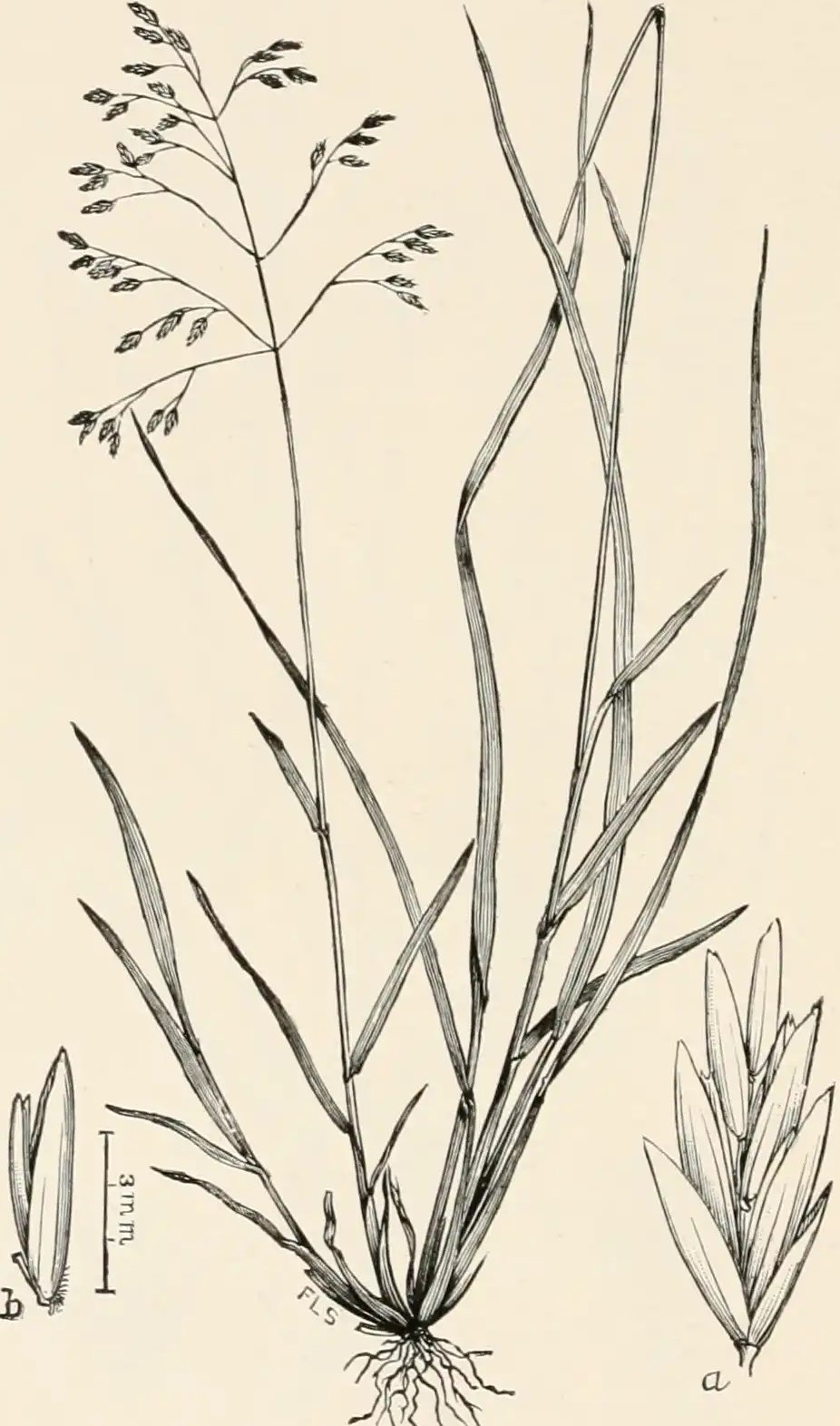
No photograph yet, so Quercus found this drawing in an old book. Is it Poa cuspidata?

3 matching answers from different visitors decide it.

At a glance

Life cycle
Perennial
Bloom
April

Not yet recorded · Spread · Leaves

Recorded in 23 Alabama counties.

Natural habitats

Places it grows wild. Not a planting requirement. Each habitat page lists the plants and wildlife also found there.

All habitats

From historical sources

What the old botany books say

These facts were missing, so Quercus searched the Biodiversity Heritage Library for Poa cuspidata and read up to three independent North American books. Every quote was checked word for word against the scanned page. Open a page to read it.

Bloom: April From 1 book, needs a second

Poa brevifolia. Botany of the United States north of Virginia (1856), Lewis C Beck

“Woods. Penn. Muhl. April.”

Listed in this book as Poa brevifolia

Help us verify the bloom time

Read the quote above. When do these books say it flowers?

3 matching answers from different visitors mark it verified.

Habitat: Woods. Penn. From 1 book, needs a second

Poa brevifolia. Botany of the United States north of Virginia (1856), Lewis C Beck

“Woods. Penn.”

Listed in this book as Poa brevifolia

Poa brevifolia. Botany of the northern and middle states, or, A description of the plants found in the Uni… (1833), Lewis C Beck

“HAB. Woods. Penn.”

Listed in this book as Poa brevifolia

Help us verify the habitat

Read the quotes above. Do these quotes describe where the plant grows?

3 matching answers from different visitors mark it verified.

Height: up to 2 ft 2 of 3 books agree

Poa brevifolia. Botany of the United States north of Virginia (1856), Lewis C Beck

“Culm about 2 feet high”

Listed in this book as Poa brevifolia

Poa brevifolia. Botany of the northern and middle states, or, A description of the plants found in the Uni… (1833), Lewis C Beck

“Culm 2 feet high”

Listed in this book as Poa brevifolia

Help us verify the height

Read the quotes above. How tall do these books say it grows?

3 matching answers from different visitors mark it verified.

Ecological relationships

Who uses this plant?

What these records mean

33CaterpillarsGenus host records with ranges including AL

Genus host records with ranges including AL · Poa

  • Acrolophus popeanellaClemen's Grass Tubeworm
  • Agrotis gladiariaSwordsman Dart, Clay-Backed Cut-Worm
  • Amblyscirtes hegonPepper and Salt Skipper
  • Amblyscirtes vialisCommon Roadside-Skipper, Black Little Skipper
  • Ancyloxypha numitorLeast Skipper
  • Anicla infectaGreen Cutworm Moth
  • Arugisa luteaCommon Arugisa
  • Atalopedes huronSachem
  • Cercyonis pegalaCommon Wood Nymph
  • Feltia jaculiferaDingy Cutworm
Show all 33
  • Fissicrambus mutabilisStriped Webworm, Striped Sodworm, Changeable Grass-Veneer
  • Hesperia leonardusLeonard's Skipper, Blazing Star Skipper, Pawnee Prairie Skipper, Pawnee Montane Skipper
  • Hylephila phyleusFiery Skipper
  • Lacinipolia meditataThe Thinker
  • Lerodea eufalaEufala Skipper, Gray Skipper, Rice Leafroller
  • Leucania phragmitidicolaNeedle Wainscot, Phragmites Wainscot
  • Leucania subpunctataWhite-Dotted Wainscot, Forage Armyworm
  • Lon hobomokHobomok Skipper
  • Lon zabulonZabulon Skipper
  • Macrochilo litophoraAngulate Fan-Foot, Brown-Lined Owlet
  • Marimatha nigrofimbriaBlack-Bordered Lemon
  • Megisto cymelaLittle Wood Satyr
  • Mythimna unipunctaArmyworm Moth, White Speck
  • Nephelodes miniansBronzed Cutworm
  • Nomophila nearcticaLucerne Moth, American Celery Webworm
  • Orgyia leucostigmaWhite-Marked Tussock Moth
  • Papaipema nebrisStalk Borer
  • Parapediasia teterrellusBluegrass Webworm
  • Pediasia trisectaSod Webworm Moth, Larger Sod Webworm
  • Phalaenostola larentioidesBlack-Banded Owlet, Black-Banded Phalaenostola
  • Polites themistoclesTawny-Edged Skipper
  • Spodoptera frugiperdaFall Armyworm Moth
  • Gonioterma mistrella
Shropshire & Tallamy 2025, Lepidoptera of North America north of Mexico, ZooKeys 1261 (ODbL)
1BeesSoutheastern regional records
0Specialist beesPollen specialists
9BirdsRecorded genus food-resource interactions; not a state feeding claim

Recorded genus food-resource interactions; not a state feeding claim · Poa

  • Anser caerulescensSnow Goose
  • Branta canadensisCanada Goose
  • Callipepla californicaCalifornia Quail
  • Lagopus leucuraWhite-tailed Ptarmigan
  • Meleagris gallopavoWild Turkey
  • Pooecetes gramineusVesper Sparrow
  • Spizella breweriBrewer's Sparrow
  • Spizella passerinaChipping Sparrow
  • Spizella pusillaField Sparrow
Hurlbert, Olsen, Sawyer & Winner 2021, Avian Diet Database, Scientific Data 8: 260 (CC0)

Direct food only: birds recorded eating this genus across North America. Caterpillars on host plants also feed nesting birds. NC Native Plant Society: butterfly gardening

No records yet · Ants · Beetles · Flies · Adult butterflies / moths · Other wasps · Other insects

Growing and identification

Plant details

Family
Poaceae
Flower color
Green or brown

Safety has not been reviewed for this plant; check toxicity and thorns before planting.

Growing sources and scope

Conservation status

Alabama rankSNR
Global rankG5
AL statusNot verified
Federal statusNot verified

Conservation source Global and federal source

In your garden

Will it fit your yard?

Check this plant against your county, sun and soil moisture. Conditions are checked in your browser.

Choose a county to begin.

Sources