

Eastern Prickly Pear
Opuntia humifusa
Found in slate outcrops, sandy soils, upland hardwood forests or mixed pine-hardwood forests in dry, clay or silty soils. Weakley, Flora of the Southeastern United States (2025), South Central edition What its natural habitat tells you
Native to Alabama. How scores work Is it native here?
Profile 94%
- Height
- 6 inches–1 foot
- Spread
- 1–1.5 feet
- Light
- Full sun
- Soil moisture
- Dry to somewhat dry
Space about 1 ft apart from its recorded spread, about 100 per 100 sq ft. Enter your bed size for a count
Will it fit your yard?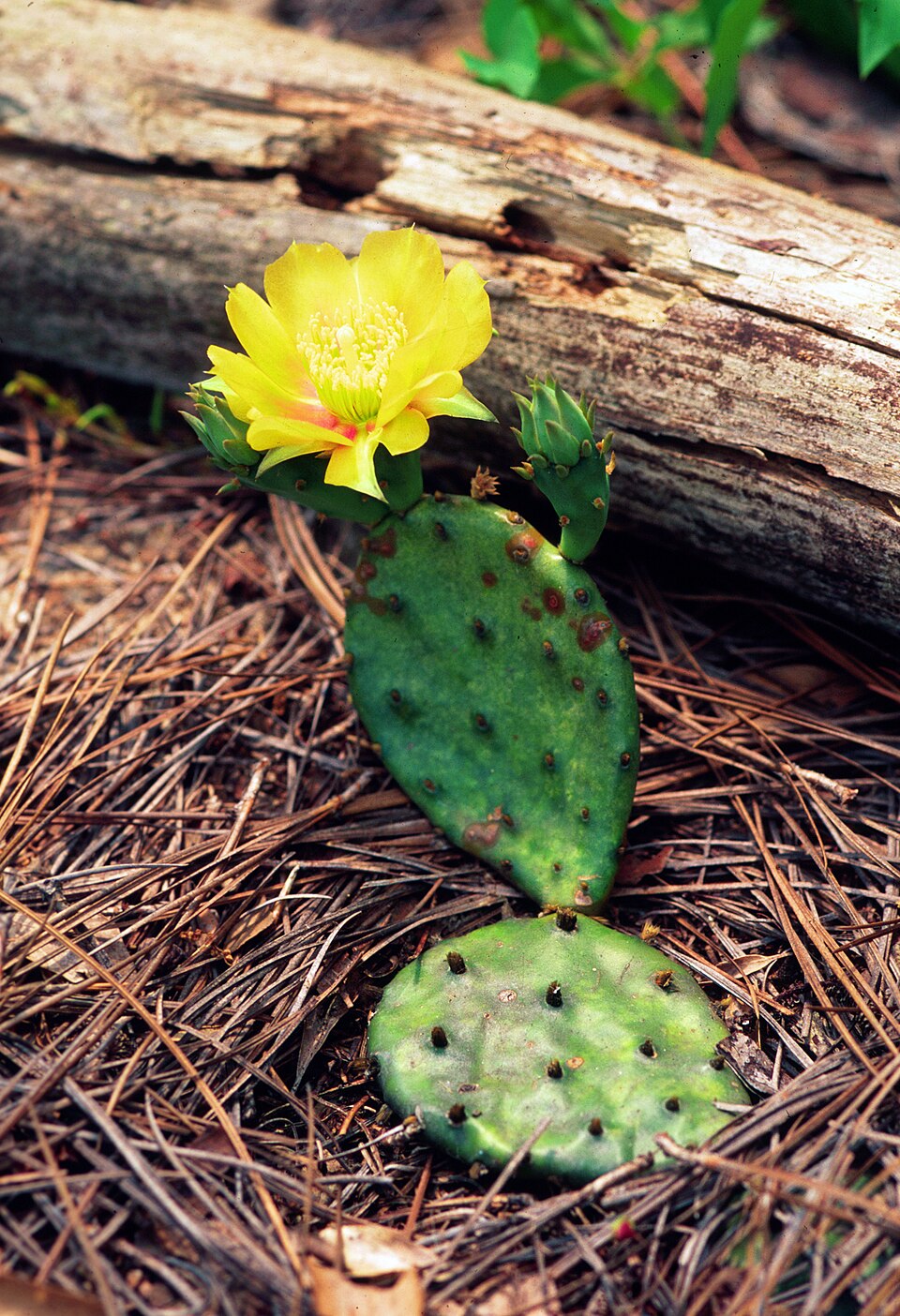
At a glance
- Life cycle
- Perennial
- Bloom
- June to July
Not yet recorded · Leaves
Recorded in 34 Alabama counties.
Natural habitats
Places it grows wild. Not a planting requirement. Each habitat page lists the plants and wildlife also found there.
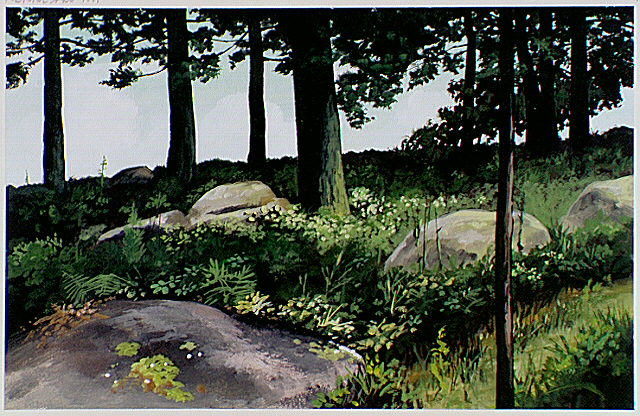
Cliffs, ledges and rocky summits

Also found with this plant
Wildlife whose habitat models include habitats this plant grows in, in Alabama. Shared habitat, not food. 103 animals.
- American GoldfinchCarduelis tristis
- American KestrelFalco sparverius
- American RobinTurdus migratorius
- Blue GrosbeakPasserina caerulea
- Blue JayCyanocitta cristata
- Brown CreeperCerthia americana
- Brown ThrasherToxostoma rufum
- Cedar WaxwingBombycilla cedrorum
- Chipping SparrowSpizella passerina
- Common NighthawkChordeiles minor
- Cooper's HawkAccipiter cooperii
- Dark-eyed JuncoJunco hyemalis
- Double-crested CormorantPhalacrocorax auritus
- Downy WoodpeckerPicoides pubescens
- Eastern BluebirdSialia sialis
- Eastern KingbirdTyrannus tyrannus
- Eastern Screech-owlMegascops asio
- Golden-crowned KingletRegulus satrapa
- Great Horned OwlBubo virginianus
- Hairy WoodpeckerPicoides villosus
- Mourning DoveZenaida macroura
- Northern FlickerColaptes auratus
- Northern MockingbirdMimus polyglottos
- OspreyPandion haliaetus

























Who uses this plant?
 6CaterpillarsGenus host records with ranges including AL
Genus host records with ranges including AL · Opuntia
- Dicymolomia julianalisJulia's Dicymolomia
- Homoeosoma electellaSunflower Moth
- Laetilia coccidivoraScale-Feeding Snout
- Melitara prodenialisEastern Cactus-Boring Moth, Eastern Blue Cactus Borer
- Eurythmia hospitella
- Menesta tortriciformella
 25BeesSoutheastern regional records
Southeastern regional records · Opuntia
Individual names are not available yet.
Noori, Seltmann & Orr 2026, A curated and integrated dataset for exploring global bee-plant interactions (GloBI), Zenodo, CC BY 4.0 5Specialist beesPollen specialists
Pollen specialists · Opuntia
- Diadasia australis
- Diadasia piercei
- Lithurgopsis gibbosa
- Lithurgopsis littoralis
- Macrotera texana
 4BirdsRecorded genus food-resource interactions; not a state feeding claim
Recorded genus food-resource interactions; not a state feeding claim · Opuntia
- Cardinalis cardinalisNorthern Cardinal
- Cyrtonyx montezumaeMontezuma Quail
- Leptotila verreauxiWhite-tipped Dove
- Meleagris gallopavoWild Turkey
Direct food only: birds recorded eating this genus across North America. Caterpillars on host plants also feed nesting birds. NC Native Plant Society: butterfly gardening
No records yet · Ants · Beetles · Flies · Adult butterflies / moths · Other wasps · Other insects
Plant details
- Family
- Cactaceae
- Hardiness
- Zones 4a–9b
- Flower color
- Yellow or red
Safety has not been reviewed for this plant; check toxicity and thorns before planting.
Growing sources and scope
- Bloom · “June to July” · Prairie Moon 2026 Cultural Guide · Nursery cultural guide; height in flower; moisture categories retained as printed
- Flower color · “Yellow or red” · NC Extension Plant Toolbox (ranked first; Prairie Moon 2026 Cultural Guide differs)
- Hardiness · “Zones 4a–9b” · NC Extension Plant Toolbox
- Height · “6 inches–1 foot” · NC Extension Plant Toolbox (ranked first; Prairie Moon 2026 Cultural Guide differs)
- Life cycle · “Perennial” · NC Extension Plant Toolbox
- Light · “Full sun (6 or more hours of direct sunlight a day)” · NC Extension Plant Toolbox (ranked first; Virginia DCR Piedmont, Virginia DCR Coastal Plain, Prairie Moon 2026 Cultural Guide differ)
- Soil · “Occasionally dry; Very dry” · NC Extension Plant Toolbox (ranked first; Virginia DCR Piedmont, Virginia DCR Coastal Plain, Prairie Moon 2026 Cultural Guide differ)
- Spread · “1–1.5 feet” · NC Extension Plant Toolbox
Conservation status
| Alabama rank | SNR |
|---|---|
| Global rank | G5 |
| AL status | Not verified |
| Federal status | Not verified |
Will it fit your yard?
Check this plant against your county, sun and soil moisture. Conditions are checked in your browser.
Sources
- Alabama Plant Atlas
- USDA PLANTS
- Weakley, Flora of the Southeastern United States (2025), South Central edition
- Shropshire & Tallamy 2025, Lepidoptera of North America north of Mexico, ZooKeys 1261 (ODbL)
- Noori, Seltmann & Orr 2026, A curated and integrated dataset for exploring global bee-plant interactions (GloBI), Zenodo, CC BY 4.0
- Smith, Bachelder, Russell, Morales, Mosher & Seltmann 2024, Bee-Specialization-Modeling v0.6.1 (specialist host table compiled from J. Fowler's pollen specialist bee lists), Zenodo, CC BY 4.0
- Hurlbert, Olsen, Sawyer & Winner 2021, Avian Diet Database, Scientific Data 8: 260 (CC0)
- Narango, Tallamy & Shropshire 2020, Few keystone plant genera support the majority of Lepidoptera species, Nature Communications