

Standish's Honeysuckle
Lonicera standishii
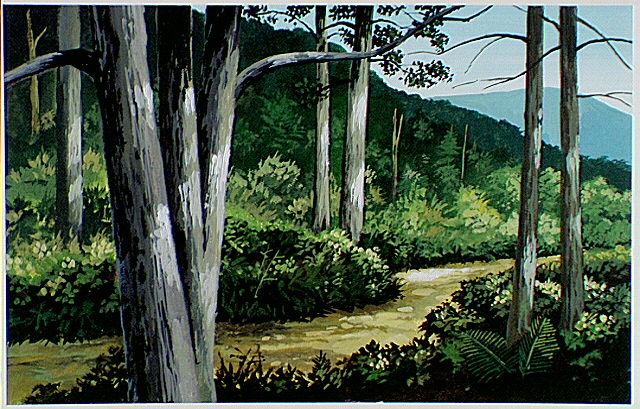
Found in forests, woodlands, old home sites. Weakley, Flora of the Southeastern United States (2025), South Central edition What its natural habitat tells you
Not native to Alabama. How scores work Is it native here?
Profile 53%
- Light
- Partial shade, Full shade, Full sun
- Soil moisture
- Dry to moist
No photograph yet. Looking for an old drawing…
At a glance
- Bloom
- February and April
- Fruiting season
- March to April
Not yet recorded · Height · Spread · Life cycle · Leaves
This plant is missing most of its facts, so Quercus is looking them up in old botany books.
Recorded in 1 Alabama county.
Natural habitats
Places it grows wild. Not a planting requirement. Each habitat page lists the plants and wildlife also found there.
Who uses this plant?
 27CaterpillarsGenus host records with ranges including AL
Genus host records with ranges including AL · Lonicera
- Hemaris diffinisSnowberry Clearwing
- Hemaris thysbeHummingbird Clearwing
- Acronicta oblinitaSmeared Dagger
- Aethalura intertextaFour-Barred Gray
- Amorbia humerosanaWhite-Lined Leafroller Moth
- Argyrotaenia velutinanaRed-Banded Leafroller Moth, Jack Pine Tube Moth
- Callizzia amorataGray Scoopwing
- Choristoneura rosaceanaOblique-Banded Leafroller Moth, Rosaceous Leaf Roller
- Ectropis crepusculariaThe Small Engrailed, Saddleback Looper
- Egira alternansAlternate Woodling
Show all 27
- Euphydryas phaetonThe Baltimore, The Black Checker
- Harrisimemna trisignataHarris's Three-Spot
- Helicoverpa zeaCorn Earworm Moth
- Herpetogramma thestealisZigzag Herpetogramma, Subtle-Feathered Grass Moth
- Hyalophora cecropiaCecropia Silkmoth, Cecropia Moth
- Hyles lineataWhite-Lined Sphinx
- Hypercompe scriboniaGiant Leopard Moth, Great Leopard Moth
- Hyphantria cuneaFall Webworm
- Leucania pilipalpisZippered Wainscot
- Leucania ursulaUrsula Wainscot
- Megalopyge opercularisSouthern Flannel Moth, Puss Caterpillar
- Oiketicus abbotiiAbbot's Bagworm Moth
- Orgyia leucostigmaWhite-Marked Tussock Moth
- Orthosia hibisciSpeckled Green Fruitworm Moth, Speckled Green Quaker
- Palthis angulalisDark-Spotted Palthis
- Spilosoma virginicaVirginian Tiger Moth, Yellow Woolybear Moth, Yellow Bear
- Uresiphita reversalisGenista Caterpillar, Genista Cbroom Moth
 —BeesSoutheastern regional records
 —Specialist beesPollen specialists
 10BirdsRecorded genus food-resource interactions; not a state feeding claim
Recorded genus food-resource interactions; not a state feeding claim · Lonicera
- Bonasa umbellusRuffed Grouse
- Catharus guttatusHermit Thrush
- Catharus ustulatusSwainson's Thrush
- Ixoreus naeviusVaried Thrush
- Mimus polyglottosNorthern Mockingbird
- Myadestes townsendiTownsend's Solitaire
- Pinicola enucleatorPine Grosbeak
- Pipilo maculatusSpotted Towhee
- Turdus migratoriusAmerican Robin
- Vireo olivaceusRed-eyed Vireo
Direct food only: birds recorded eating this genus across North America. Caterpillars on host plants also feed nesting birds. NC Native Plant Society: butterfly gardening
Plant details
- Family
- Caprifoliaceae
- Fruit begins
- March
- Fruit ends
- April
Safety has not been reviewed for this plant; check toxicity and thorns before planting.
Growing sources and scope
- Bloom · “February to early April” · Weakley, Flora of the Southeastern United States (2025), Carolinas & Georgia edition · Carolinas and Georgia
- Fruit begins · “March” · Weakley, Flora of the Southeastern United States (2025), Carolinas & Georgia edition · Carolinas and Georgia
- Fruit ends · “April” · Weakley, Flora of the Southeastern United States (2025), Carolinas & Georgia edition · Carolinas and Georgia
- Light · “Partial shade; Full shade; Full sun (documented habitat)” · Weakley, Flora of the Southeastern United States (2025), Carolinas & Georgia edition · Carolinas and Georgia
- Soil · “Dry; Moist (documented habitat)” · Weakley, Flora of the Southeastern United States (2025), Carolinas & Georgia edition · Carolinas and Georgia
Conservation status
| Alabama rank | Not available |
|---|---|
| Global rank | GNR |
| AL status | Not verified |
| Federal status | Not verified |
Native alternatives
Find natives for your gardenSources
- Alabama Plant Atlas
- USDA PLANTS
- Weakley, Flora of the Southeastern United States (2025)
- Shropshire & Tallamy 2025, Lepidoptera of North America north of Mexico, ZooKeys 1261 (ODbL)
- Noori, Seltmann & Orr 2026, A curated and integrated dataset for exploring global bee-plant interactions (GloBI), Zenodo, CC BY 4.0
- Smith, Bachelder, Russell, Morales, Mosher & Seltmann 2024, Bee-Specialization-Modeling v0.6.1 (specialist host table compiled from J. Fowler's pollen specialist bee lists), Zenodo, CC BY 4.0
- Hurlbert, Olsen, Sawyer & Winner 2021, Avian Diet Database, Scientific Data 8: 260 (CC0)
- Narango, Tallamy & Shropshire 2020, Few keystone plant genera support the majority of Lepidoptera species, Nature Communications