

Dahoon Holly
Ilex cassine
Found in blackwater stream swamps, pocosins, nearly always in very acid peaty or sandy sites. FloraQuest, phone app (app page) What its natural habitat tells you
Native to Alabama. How scores work Is it native here?
Profile 100%
- Height
- 20–30 feet
- Spread
- 10–15 feet
- Light
- Full sun, Partial shade
- Soil moisture
- Moist to standing water
Space about 12.5 ft apart from its recorded spread. Enter your bed size for a count
Will it fit your yard?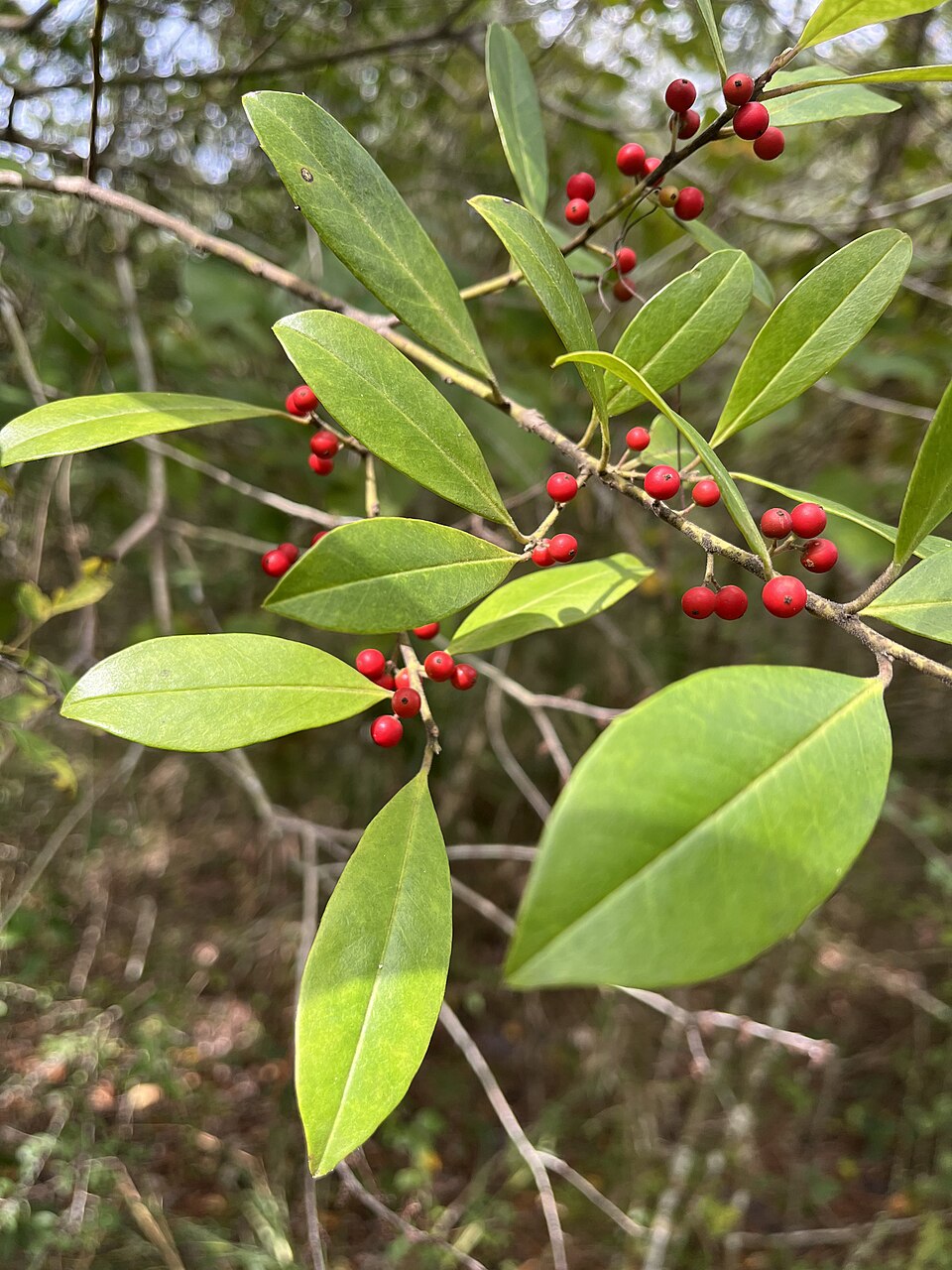
At a glance
- Life cycle
- Woody perennial
- Leaves
- Evergreen
- Bloom
- May to June
- Fruiting season
- October to November
Recorded in 9 Alabama counties.
Natural habitats
Places it grows wild. Not a planting requirement.
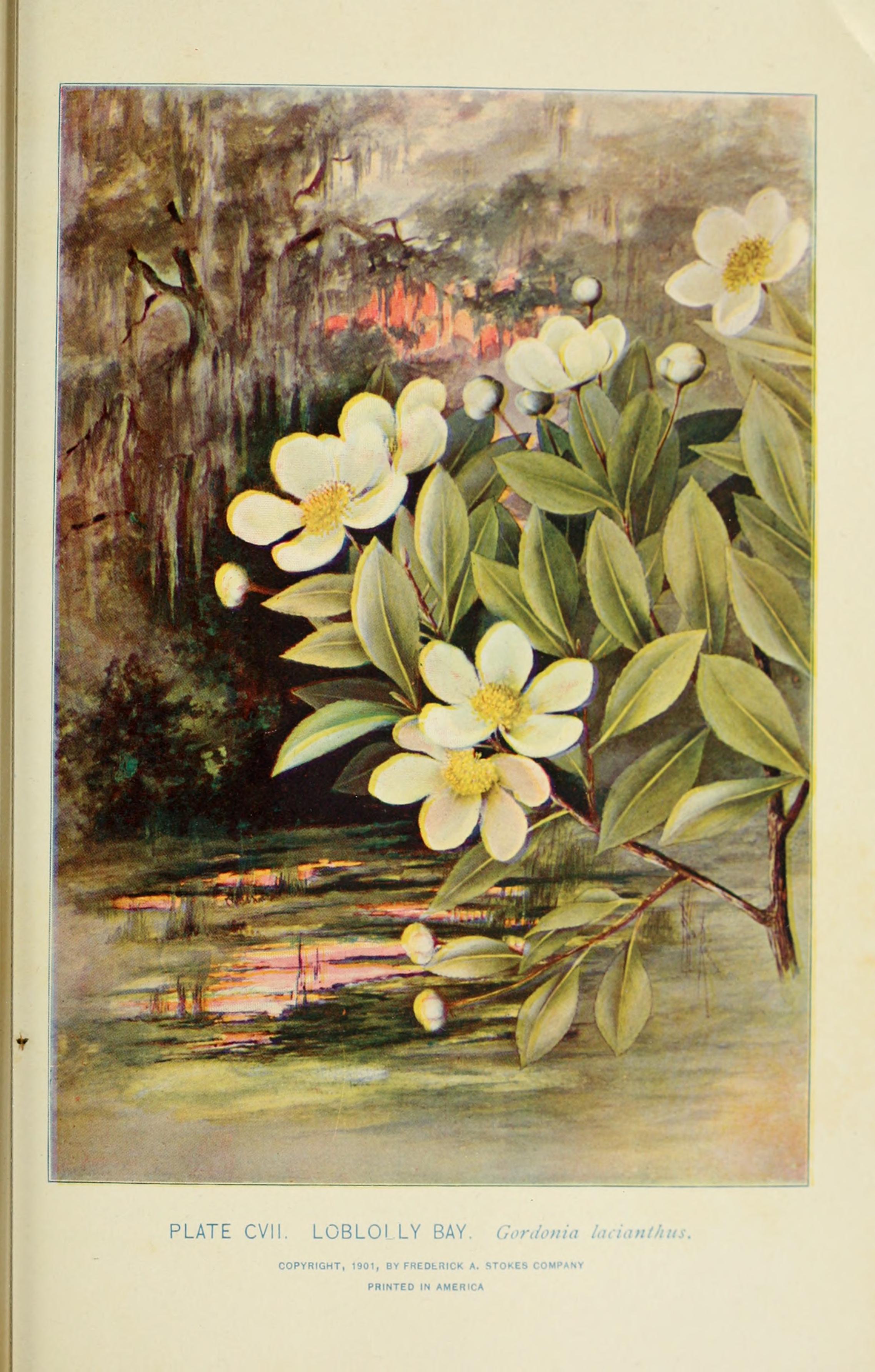
Habitats
Each habitat page lists the plants and wildlife also found there. All habitats
Also found with this plant
Wildlife whose habitat models include habitats this plant grows in, in Alabama. Shared habitat, not food. 100 animals.
- Acadian FlycatcherEmpidonax virescens
- American Black DuckAnas rubripes
- American CrowCorvus brachyrhynchos
- American GoldfinchCarduelis tristis
- American KestrelFalco sparverius
- American RedstartSetophaga ruticilla
- American RobinTurdus migratorius
- Bald EagleHaliaeetus leucocephalus
- Barred OwlStrix varia
- Belted KingfisherMegaceryle alcyon
- Black VultureCoragyps atratus
- Black-and-White WarblerMniotilta varia
- Black-crowned Night-heronNycticorax nycticorax
- Blue GrosbeakPasserina caerulea
- Blue JayCyanocitta cristata
- Blue-gray GnatcatcherPolioptila caerulea
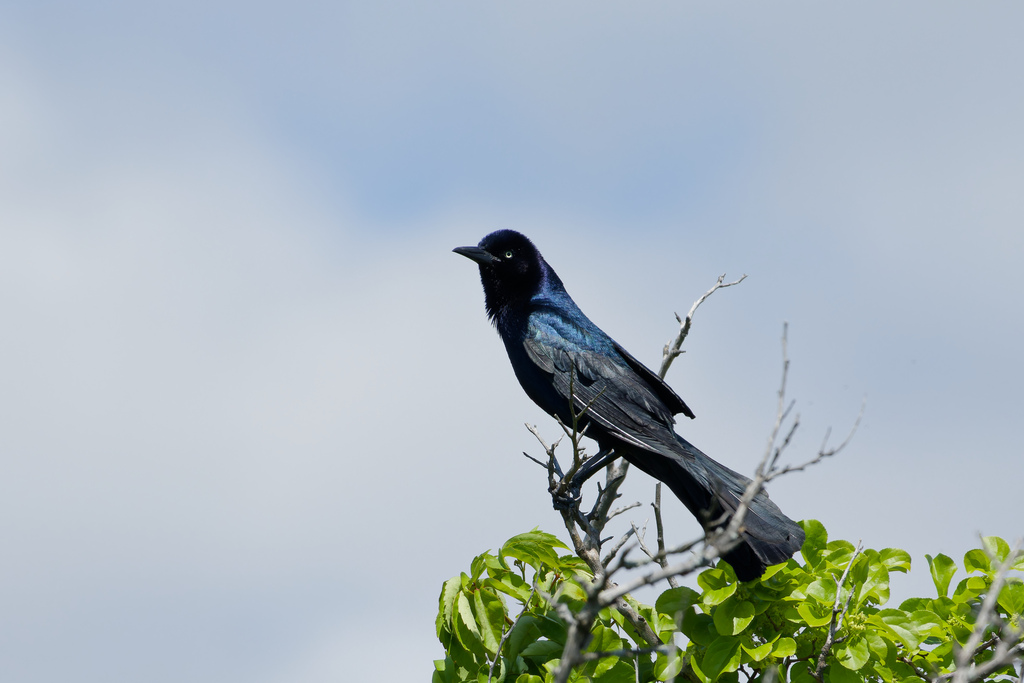
- Boat-tailed GrackleQuiscalus major
- Carolina ChickadeePoecile carolinensis
- Cedar WaxwingBombycilla cedrorum
- Common GrackleQuiscalus quiscula
- Common NighthawkChordeiles minor
- Cooper's HawkAccipiter cooperii
- Double-crested CormorantPhalacrocorax auritus
- Downy WoodpeckerPicoides pubescens
























Who uses this plant?
 50CaterpillarsGenus host records with ranges including AL
Genus host records with ranges including AL · Ilex
- Acharia stimuleaSaddleback Caterpillar Moth
- Anavitrinella pampinariaCommon Gray, Cranberry Spanworm
- Antheraea polyphemusPolyphemus Moth
- Apatelodes torrefactaSpotted Apatelodes
- Argyrotaenia velutinanaRed-Banded Leafroller Moth, Jack Pine Tube Moth
- Automeris ioIo Moth
- Callophrys henriciHenry's Elfin
- Cecrita biundataWavy-Lined Heterocampa
- Cenopis reticulatanaReticulated Fruitworm Moth
- Cepphis armatariaScallop Moth
Show all 50
- Choristoneura rosaceanaOblique-Banded Leafroller Moth, Rosaceous Leaf Roller
- Coelodasys unicornisUnicorn Caterpillar Moth
- Dolba hyloeusPawpaw Sphinx
- Egira alternansAlternate Woodling
- Ennomos magnariaMaple Spanworm Moth, Notchwing Geometer
- Episemasia solitariaSolitary Ruddy
- Episimus tyriusMaple Tip Borer
- Euclea delphiniiSpiny Oak-Slug Moth
- Eupithecia miserulataCommon Eupithacia, Common Pug
- Feltia subterraneaSubterranean Dart, Granulate Cutworm
- Haematopis gratariaChickweed Geometer
- Harrisimemna trisignataHarris's Three-Spot
- Herpetogramma pertextalisBold-Feathered Grass Moth
- Herpetogramma thestealisZigzag Herpetogramma, Subtle-Feathered Grass Moth
- Hyphantria cuneaFall Webworm
- Ilexia intractataBlack-Dotted Ruddy, Holly Looper
- Larisa subsolanaDark-Based Larisa
- Lascoria ambigualisAmbiguous Moth, Ambiguous Litter Moth
- Lithophane viridipallensPale Green Pinion
- Malacosoma disstriaForest Tent Caterpillar
- Manduca rusticaRustic Sphinx
- Megalopyge opercularisSouthern Flannel Moth, Puss Caterpillar
- Metaxaglaea violaceaHolly Sallow
- Morrisonia confusaConfused Woodgrain
- Oiketicus abbotiiAbbot's Bagworm Moth
- Orgyia leucostigmaWhite-Marked Tussock Moth
- Orthosia alurinaGray Quaker
- Orthosia rubescensRuby Quaker
- Papilio palamedesPalamedes Swallowtail
- Platynota rostranaOmnivorous Platynota
- Prolimacodes badiaSkiff Moth, Skiff Caterpillar
- Protoboarmia porcelariaPorcelain Gray, Dashedlined Looper
- Psilocorsis cryptolechiellaBlack-Fringed Leaftier
- Rhopobota dietzianaWinterberry Moth
- Schizura ipomaeaeMorning-Glory Prominent, Checkered-Fringe Prominent
- Sphinx kalmiaeFawn Sphinx, Laurel Sphinx
- Spodoptera frugiperdaFall Armyworm Moth
- Synanthedon kathyaeHolly Clearwing Borer
- Thyridopteryx ephemeraeformisEvergreen Bagworm Moth
- Rhopobota finitimana
 35BeesSoutheastern regional records
Southeastern regional records · Ilex
Individual names are not available yet.
Noori, Seltmann & Orr 2026, A curated and integrated dataset for exploring global bee-plant interactions (GloBI), Zenodo, CC BY 4.0 3Specialist beesPollen specialists
Pollen specialists · Ilex
- Colletes banksi
- Colletes brimleyi
- Perdita floridensis
 11BirdsRecorded genus food-resource interactions; not a state feeding claim
Recorded genus food-resource interactions; not a state feeding claim · Ilex
- Hylocichla mustelinaWood Thrush
- Sialia sialisEastern Bluebird
- Turdus migratoriusAmerican Robin
- Bonasa umbellusRuffed Grouse
- Catharus fuscescensVeery
- Catharus guttatusHermit Thrush
- Catharus minimus/bicknelliGray-cheeked/Bicknell's Thrush
- Catharus ustulatusSwainson's Thrush
- Meleagris gallopavoWild Turkey
- Sturnus vulgarisEuropean Starling
Show all 11
- Vireo griseusWhite-eyed Vireo
Direct food only: birds recorded eating this genus across North America. Caterpillars on host plants also feed nesting birds. NC Native Plant Society: butterfly gardening
No records yet · Ants · Beetles · Flies · Adult butterflies / moths · Other wasps · Other insects
Plant details
- Family
- Aquifoliaceae
- Hardiness
- Zones 7a–11b
- Soil pH
- Acidic to neutral
- Flower color
- Yellow or white
- Growth rate
- Moderate
- Growth habit
- Single stem
- Foliage color
- Dark green
- Fruit begins
- October
- Fruit ends
- November
Safety has not been reviewed for this plant; check toxicity and thorns before planting.
Growing sources and scope
- Bloom · “May to June” · FloraQuest: Carolinas, Georgia (Southeastern Flora Team), phone app (app page) (ranked first; USDA PLANTS differs) · Carolinas and Georgia
- Flower color · “Yellow or white” · NC Extension Plant Toolbox (ranked first; USDA PLANTS, Lady Bird Johnson Wildflower Center differ)
- Foliage color · “Dark green” · USDA PLANTS · Nationwide species characteristics; local growing conditions may vary
- Fruit begins · “October” · FloraQuest: Carolinas, Georgia (Southeastern Flora Team), phone app (app page) (ranked first; USDA PLANTS differs) · Carolinas and Georgia
- Fruit ends · “November” · FloraQuest: Carolinas, Georgia (Southeastern Flora Team), phone app (app page) (ranked first; USDA PLANTS differs) · Carolinas and Georgia
- Growth habit · “Single stem” · USDA PLANTS · Nationwide species characteristics; local growing conditions may vary
- Growth rate · “Moderate” · USDA PLANTS · Nationwide species characteristics; local growing conditions may vary
- Hardiness · “Zones 7a–11b” · NC Extension Plant Toolbox
- Height · “20–30 feet” · NC Extension Plant Toolbox (ranked first; USDA PLANTS, Lady Bird Johnson Wildflower Center differ)
- Leaves · “Evergreen” · NC Extension Plant Toolbox
- Life cycle · “Woody perennial” · NC Extension Plant Toolbox (ranked first; Lady Bird Johnson Wildflower Center differs)
- Light · “Full sun (6 or more hours of direct sunlight a day); Partial shade (direct sunlight only part of the day, 2-6 hours)” · NC Extension Plant Toolbox (ranked first; Lady Bird Johnson Wildflower Center differs)
- Soil · “Frequent standing water; Moist; Occasionally wet” · NC Extension Plant Toolbox (ranked first; Lady Bird Johnson Wildflower Center differs)
- Soil pH · “Acidic to neutral” · NC Extension Plant Toolbox
- Spread · “10–15 feet” · NC Extension Plant Toolbox
Conservation status
| Alabama rank | SNR |
|---|---|
| Global rank | G5 |
| AL status | Not verified |
| Federal status | Not verified |
Will it fit your yard?
Check this plant against your county, sun and soil moisture. Conditions are checked in your browser.
Sources
- Alabama Plant Atlas
- USDA PLANTS
- Vascular Plants of North Carolina (NC Natural Heritage Program)
- FloraQuest: Carolinas, Georgia (Weakley), phone app (app page)
- NatureServe Explorer
- Shropshire & Tallamy 2025, Lepidoptera of North America north of Mexico, ZooKeys 1261 (ODbL)
- Noori, Seltmann & Orr 2026, A curated and integrated dataset for exploring global bee-plant interactions (GloBI), Zenodo, CC BY 4.0
- Smith, Bachelder, Russell, Morales, Mosher & Seltmann 2024, Bee-Specialization-Modeling v0.6.1 (specialist host table compiled from J. Fowler's pollen specialist bee lists), Zenodo, CC BY 4.0
- Hurlbert, Olsen, Sawyer & Winner 2021, Avian Diet Database, Scientific Data 8: 260 (CC0)
- Narango, Tallamy & Shropshire 2020, Few keystone plant genera support the majority of Lepidoptera species, Nature Communications