

Little Barley
Hordeum pusillum
Found in roadsides, fields, pastures, ditches, disturbed areas. FloraQuest, phone app (app page) What its natural habitat tells you
Native to Alabama. How scores work Is it native here?
Profile 100%
- Height
- About 1.2 feet
- Light
- Full sun
- Soil moisture
- Dry to moist
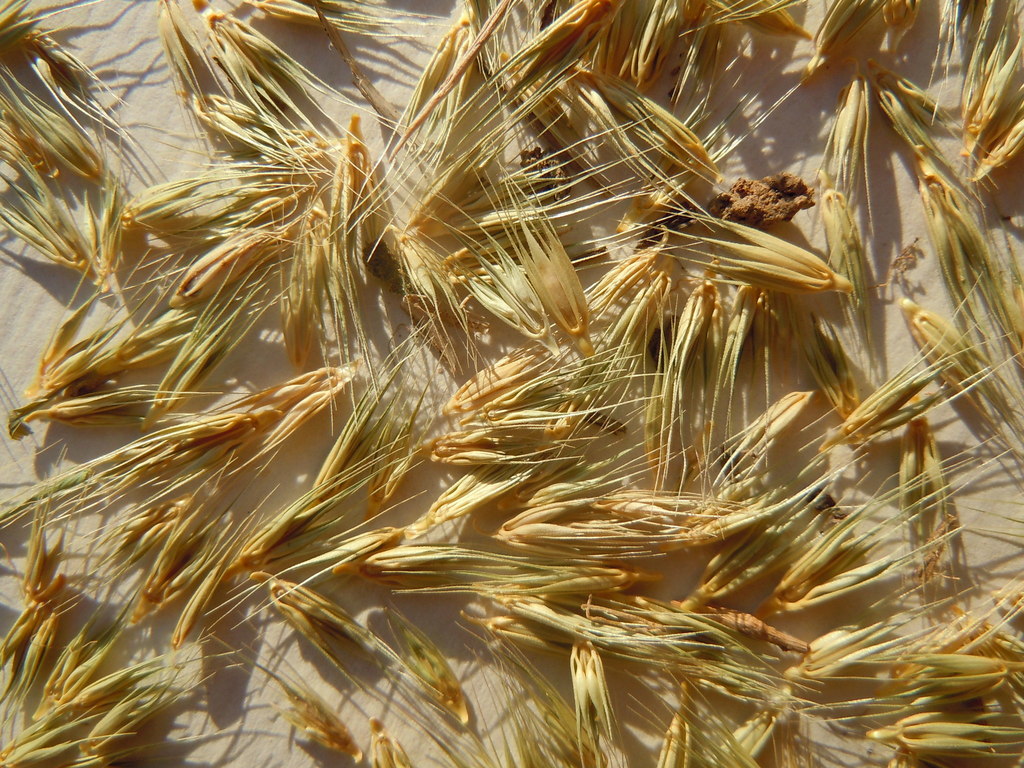
At a glance
- Bloom
- April to June
- Fruiting season
- Spring to summer
Not yet recorded · Spread · Life cycle · Leaves
Recorded in 56 Alabama counties.
Natural habitats
Places it grows wild. Not a planting requirement. Each habitat page lists the plants and wildlife also found there.
Roadsides, fields and disturbed ground
Ground opened by people: roadsides, old fields, pastures, fencerows and lots.
Who uses this plant?
 13CaterpillarsGenus host records with ranges including AL
Genus host records with ranges including AL · Hordeum
- Agrotis gladiariaSwordsman Dart, Clay-Backed Cut-Worm
- Agrotis venerabilisVenerable Dart, Dusky Cut-Worm
- Dargida diffusaWheat Head Armywotm Moth
- Elasmopalpus lignosellaLesser Cornstalk Borer
- Fissicrambus mutabilisStriped Webworm, Striped Sodworm, Changeable Grass-Veneer
- Leucania subpunctataWhite-Dotted Wainscot, Forage Armyworm
- Maliattha synochitisBlack-Dotted Lithacodia, Black-Dotted Glyph, Brass-Dotted Grass Moth
- Megalographa bilobaBilobed Looper Moth
- Mythimna unipunctaArmyworm Moth, White Speck
- Nephelodes miniansBronzed Cutworm
Show all 13
- Papaipema nebrisStalk Borer
- Spodoptera frugiperdaFall Armyworm Moth
- Xestia dolosaGreater Black-Letter Dart, Greater Spotted Cutworm
 0BeesSoutheastern regional records
 0Specialist beesPollen specialists
 18BirdsRecorded genus food-resource interactions; not a state feeding claim
Recorded genus food-resource interactions; not a state feeding claim · Hordeum
- Anser albifronsGreater White-fronted Goose
- Anthus rubescensAmerican Pipit
- Antigone canadensisSandhill Crane
- Aythya americanaRedhead
- Calcarius lapponicusLapland Longspur
- Calcarius pictusSmith's Longspur
- Callipepla californicaCalifornia Quail
- Columba liviaRock Pigeon
- Corvus coraxCommon Raven
- Mareca americanaAmerican Wigeon
Show all 18
- Passerculus sandwichensisSavannah Sparrow
- Perdix perdixGray Partridge
- Phasianus colchicusRing-necked Pheasant
- Plectrophenax nivalisSnow Bunting
- Sturnus vulgarisEuropean Starling
- Xanthocephalus xanthocephalusYellow-headed Blackbird
- Zenaida asiaticaWhite-winged Dove
- Zenaida macrouraMourning Dove
Direct food only: birds recorded eating this genus across North America. Caterpillars on host plants also feed nesting birds. NC Native Plant Society: butterfly gardening
No records yet · Ants · Beetles · Flies · Adult butterflies / moths · Other wasps · Other insects
Plant details
- Family
- Poaceae
- Flower color
- Yellow
- Growth rate
- Rapid
- Growth habit
- Grows in clumps
- Foliage color
- Green
- Fruit begins
- Spring
- Fruit ends
- Summer
Safety has not been reviewed for this plant; check toxicity and thorns before planting.
Growing sources and scope
- Bloom · “April to June” · FloraQuest: Carolinas, Georgia (Southeastern Flora Team), phone app (app page) (ranked first; USDA PLANTS differs) · Carolinas and Georgia
- Flower color · “Yellow” · USDA PLANTS · Nationwide species characteristics; local growing conditions may vary
- Foliage color · “Green” · USDA PLANTS · Nationwide species characteristics; local growing conditions may vary
- Fruit begins · “Spring” · USDA PLANTS · Nationwide species characteristics; local growing conditions may vary
- Fruit ends · “Summer” · USDA PLANTS · Nationwide species characteristics; local growing conditions may vary
- Growth habit · “Grows in clumps” · USDA PLANTS · Nationwide species characteristics; local growing conditions may vary
- Growth rate · “Rapid” · USDA PLANTS · Nationwide species characteristics; local growing conditions may vary
- Height · “About 1.2 feet” · USDA PLANTS · Nationwide species characteristics; local growing conditions may vary
- Light · “Full sun (documented habitat)” · FloraQuest: Carolinas, Georgia (Southeastern Flora Team), phone app (app page) · Carolinas and Georgia
- Soil · “Dry; Moist (documented habitat)” · FloraQuest: Carolinas, Georgia (Southeastern Flora Team), phone app (app page) · Carolinas and Georgia
Conservation status
| Alabama rank | SNR |
|---|---|
| Global rank | G5 |
| AL status | Not verified |
| Federal status | Not verified |
Will it fit your yard?
Check this plant against your county, sun and soil moisture. Conditions are checked in your browser.
Sources
- Alabama Plant Atlas
- USDA PLANTS
- Vascular Plants of North Carolina (NC Natural Heritage Program)
- NatureServe Explorer
- Shropshire & Tallamy 2025, Lepidoptera of North America north of Mexico, ZooKeys 1261 (ODbL)
- Noori, Seltmann & Orr 2026, A curated and integrated dataset for exploring global bee-plant interactions (GloBI), Zenodo, CC BY 4.0
- Smith, Bachelder, Russell, Morales, Mosher & Seltmann 2024, Bee-Specialization-Modeling v0.6.1 (specialist host table compiled from J. Fowler's pollen specialist bee lists), Zenodo, CC BY 4.0
- Hurlbert, Olsen, Sawyer & Winner 2021, Avian Diet Database, Scientific Data 8: 260 (CC0)
- Narango, Tallamy & Shropshire 2020, Few keystone plant genera support the majority of Lepidoptera species, Nature Communications