

Western Sunflower
Helianthus occidentalis
Found in rocky or sandy flood-scoured riversides, dry hammocks (in FL). Weakley, Flora of the Southeastern United States (2025), South Central edition What its natural habitat tells you
Native to Alabama. How scores work Is it native here?
Profile 100%
- Height
- 2–5 feet
- Spread
- 1.5–2 feet
- Light
- Full sun, Partial shade
- Soil moisture
- Somewhat dry to moist
Space about 2 ft apart from its recorded spread, about 25 per 100 sq ft. Enter your bed size for a count
Will it fit your yard?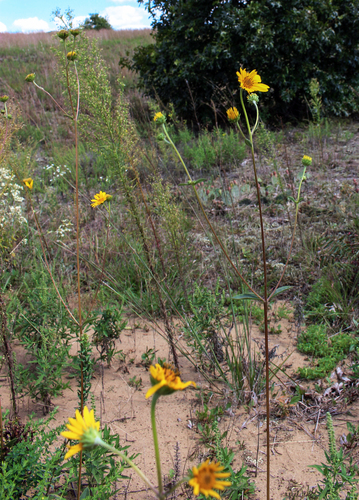
At a glance
- Life cycle
- Perennial
- Bloom
- July to October
Not yet recorded · Leaves
Recorded in 6 Alabama counties.
Also found with this plant
Wildlife whose habitat models include habitats this plant grows in, in Alabama. Shared habitat, not food. 54 animals.
- Turkey VultureCathartes aura
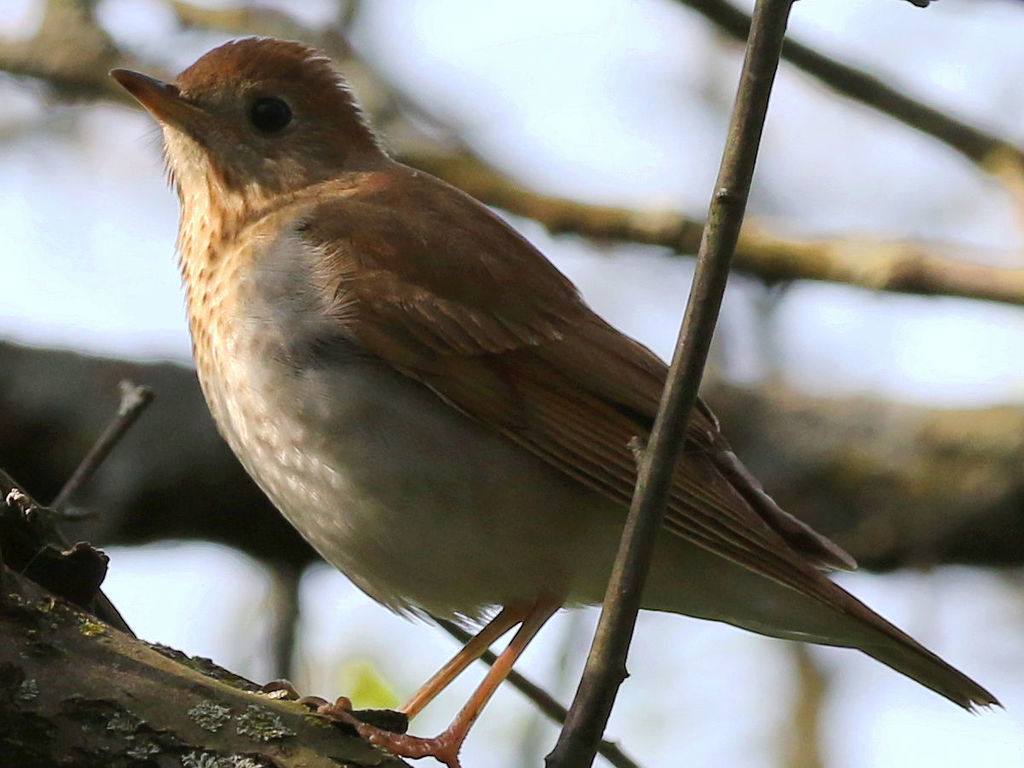
- VeeryCatharus fuscescens
- White-breasted NuthatchSitta carolinensis
- Willow FlycatcherEmpidonax traillii
- Wood DuckAix sponsa
- Yellow-breasted ChatIcteria virens




Who uses this plant?
 68CaterpillarsGenus host records with ranges including AL
Genus host records with ranges including AL · Helianthus
- Chlosyne nycteisSilvery Checkerspot
- Acharia stimuleaSaddleback Caterpillar Moth
- Achyra rantalisGarden Webworm Moth
- Adaina ambrosiaeAmbrosia Plume Moth, Ragweed Plume Moth
- Agrotis ipsilonIpsilon Dart, Black Cutworm, Greasy Cutworm
- Amyna strictaEight-Spot Moth
- Autographa precationisCommon Looper Moth
- Chloridea virescensTobacco Budworm Moth
- Chlorochlamys chloroleucariaBlackberry Looper Moth
- Choristoneura rosaceanaOblique-Banded Leafroller Moth, Rosaceous Leaf Roller
Show all 68
- Chrysodeixis includensSoybean Looper Moth
- Cochylichroa hospesBanded Sunflower Moth
- Condica sutorThe Cobbler, Cobbler Groundling
- Dichomeris flavocostellaCream-Edged Dichomeris
- Dichomeris inserrataIndented Dichomeris
- Dichomeris juncidellaOrange-Dotted Dichomeris
- Elophila obliteralisWaterlily Leafcutter Moth
- Estigmene acreaSalt Marsh Moth, Acrea Moth
- Eupithecia miserulataCommon Eupithacia, Common Pug
- Euplexia benesimilisAmerican Angle Shades
- Feltia jaculiferaDingy Cutworm
- Feltia subgothicaSubgothic Dart
- Helicoverpa zeaCorn Earworm Moth
- Herpetogramma pertextalisBold-Feathered Grass Moth
- Homoeosoma electellaSunflower Moth
- Hypercompe scriboniaGiant Leopard Moth, Great Leopard Moth
- Hyphantria cuneaFall Webworm
- Manduca rusticaRustic Sphinx
- Megalographa bilobaBilobed Looper Moth
- Mythimna unipunctaArmyworm Moth, White Speck
- Nomophila nearcticaLucerne Moth, American Celery Webworm
- Oedemasia leptinoidesBlack-Blotched Schizura
- Ogdoconta cinereolaCommon Pinkband Groundling
- Orgyia leucostigmaWhite-Marked Tussock Moth
- Papaipema cataphractaBurdock Border, Potato-Stalk Borer
- Papaipema nebrisStalk Borer
- Pelochrista scintillanaSpangled Pelochrista
- Phyciodes tharosPearl Crescent, Crescentspot
- Plagiomimicus spumosumFrothy Moth
- Platynota flavedanaBlack-Shaded Platynota
- Pleuroprucha insulsariaCommon Tan Wave
- Ponometia semiflavaHalf-Yellow Bird-Dropping Moth, Half-Yellow Moth
- Pyrrharctia isabellaIsabella Tiger Moth, Banded Woolybear
- Rachiplusia ouGray Looper
- Sparganothis sulfureanaSparganothis Fruitworm Moth, Sulfur Leafroller, False Yellow-Head
- Spilosoma virginicaVirginian Tiger Moth, Yellow Woolybear Moth, Yellow Bear
- Spodoptera eridaniaSouthern Armyworm Moth
- Spodoptera frugiperdaFall Armyworm Moth
- Spodoptera latifasciaOrange-Striped Armyworm, Velvet Armyworm Moth
- Spodoptera ornithogalliYellow-Striped Armyworm Moth, Cotton Cutworm
- Spoladea recurvalisHawaiian Beet Webworm
- Stiria rugifronsSunflower Seedcropper, Yellow Sunflower Moth
- Suleima helianthanaSunflower Bud Moth
- Synchlora frondariaSouthern Emerald
- Thyridopteryx ephemeraeformisEvergreen Bagworm Moth
- Trichoplusia niNi Moth, Cabbage Looper Moth
- Vanessa carduiPainted Lady, Cosmopolite
- Vanessa virginiensisAmerican Lady, American Painted Lady
- Xestia dolosaGreater Black-Letter Dart, Greater Spotted Cutworm
- Bucculatrix fusicola
- Bucculatrix magnella
- Bucculatrix needhami
- Carmenta ithacae
- Eucosma sombreana
- Isophrictis rudbeckiella
- Isophrictis similiella
- Pelochrista womonana
- Sitochroa dasconalis
 69BeesSoutheastern regional records
Southeastern regional records · Helianthus
Individual names are not available yet.
Noori, Seltmann & Orr 2026, A curated and integrated dataset for exploring global bee-plant interactions (GloBI), Zenodo, CC BY 4.0 44Specialist beesPollen specialists
Pollen specialists · Helianthus
- Andrena aliciae
- Andrena asteris
- Andrena braccata
- Andrena chromotricha
- Andrena haynesi
- Andrena simplex
- Colletes birkmanni
- Colletes compactus
- Colletes rufocinctus
- Colletes simulans
Show all 44
- Diadasia enavata
- Dianthidium curvatum
- Dieunomia heteropoda
- Dieunomia triangulifera
- Dufourea marginata
- Hesperapis carinata
- Megachile fortis
- Megachile inimica
- Megachile parallela
- Megachile pugnata
- Megachile xylocopoides
- Melissodes bidentis
- Melissodes coloradensis
- Melissodes coreopsis
- Melissodes denticulatus
- Melissodes dentiventris
- Melissodes desponsus
- Melissodes illatus
- Melissodes manipularis
- Melissodes subillatus
- Melissodes trinodis
- Melissodes wheeleri
- Paranthidium jugatorium
- Perdita albipennis
- Perdita bruneri
- Perdita heliophila
- Perdita laticincta
- Perdita pratti
- Perdita swenki
- Perdita tridentata
- Protandrena andrenoides
- Protandrena piercei
- Protandrena simulans
- Trachusa zebrata
 36BirdsRecorded genus food-resource interactions; not a state feeding claim
Recorded genus food-resource interactions; not a state feeding claim · Helianthus
- Agelaius phoeniceusRed-winged Blackbird
- Alectoris chukarChukar
- Anthus rubescensAmerican Pipit
- Branta canadensisCanada Goose
- Calcarius lapponicusLapland Longspur
- Calcarius ornatusChestnut-collared Longspur
- Callipepla californicaCalifornia Quail
- Callipepla gambeliiGambel's Quail
- Colinus virginianusNorthern Bobwhite
- Columbina passerinaCommon Ground Dove
Show all 36
- Corvus brachyrhynchosAmerican Crow
- Corvus cryptoleucusChihuahuan Raven
- Dryobates pubescensDowny Woodpecker
- Euphagus cyanocephalusBrewer's Blackbird
- Haemorhous mexicanusHouse Finch
- Loxia leucopteraWhite-winged Crossbill
- Melanerpes erythrocephalusRed-headed Woodpecker
- Meleagris gallopavoWild Turkey
- Melospiza melodiaSong Sparrow
- Melozone crissalisCalifornia Towhee
- Molothrus aterBrown-headed Cowbird
- Oreortyx pictusMountain Quail
- Ortalis vetulaPlain Chachalaca
- Passer domesticusHouse Sparrow
- Perdix perdixGray Partridge
- Quiscalus quisculaCommon Grackle
- Rhynchophanes mccowniiMcCown's Longspur
- Sitta carolinensisWhite-breasted Nuthatch
- Spinus psaltriaLesser Goldfinch
- Spinus tristisAmerican Goldfinch
- Turdus migratoriusAmerican Robin
- Tympanuchus pallidicinctusLesser Prairie-Chicken
- Xanthocephalus xanthocephalusYellow-headed Blackbird
- Zenaida asiaticaWhite-winged Dove
- Zenaida macrouraMourning Dove
- Zonotrichia leucophrysWhite-crowned Sparrow
Direct food only: birds recorded eating this genus across North America. Caterpillars on host plants also feed nesting birds. NC Native Plant Society: butterfly gardening
No records yet · Ants · Beetles · Flies · Adult butterflies / moths · Other wasps · Other insects
Plant details
- Family
- Asteraceae
- Hardiness
- Zones 4a–8b
- Soil pH
- Acidic to alkaline
- Flower color
- Yellow
Safety has not been reviewed for this plant; check toxicity and thorns before planting.
Growing sources and scope
- Bloom · “July to October” · Weakley, Flora of the Southeastern United States (2025), Carolinas & Georgia edition (ranked first; Prairie Moon 2026 Cultural Guide differs) · Carolinas and Georgia
- Flower color · “Yellow” · NC Extension Plant Toolbox
- Hardiness · “Zones 4a–8b” · NC Extension Plant Toolbox (ranked first; Missouri Botanical Garden Plant Finder differs)
- Height · “2–5 feet” · NC Extension Plant Toolbox (ranked first; Tennessee Smart Yards, Lady Bird Johnson Wildflower Center, Missouri Botanical Garden Plant Finder, Prairie Moon 2026 Cultural Guide differ)
- Life cycle · “Perennial” · NC Extension Plant Toolbox
- Light · “Full sun (6 or more hours of direct sunlight a day); Partial shade (direct sunlight only part of the day, 2-6 hours)” · NC Extension Plant Toolbox (ranked first; Tennessee Smart Yards, Lady Bird Johnson Wildflower Center, Missouri Botanical Garden Plant Finder, Prairie Moon 2026 Cultural Guide differ)
- primary_flower_color · “yellow” · Prairie Moon 2026 Cultural Guide
- Soil · “Moist; Occasionally dry” · NC Extension Plant Toolbox (ranked first; Tennessee Smart Yards, Lady Bird Johnson Wildflower Center, Missouri Botanical Garden Plant Finder, Prairie Moon 2026 Cultural Guide differ)
- Soil pH · “Acidic to alkaline” · NC Extension Plant Toolbox
- Spread · “1.5–2 feet” · NC Extension Plant Toolbox
Also known as
Few Leaf Sunflower; Few Leaved Sunflower; Fewleaf Sunflower; Fewleaved Sunflower; Naked Stem Sunflower; Naked Stemmed Sunflower; Nakedstem Sunflower; Nakedstemmed Sunflower
Conservation status
| Alabama rank | SNR |
|---|---|
| Global rank | G5 |
| AL status | Not verified |
| Federal status | Not verified |
Will it fit your yard?
Check this plant against your county, sun and soil moisture. Conditions are checked in your browser.
Growing cautions
- Spreads aggressively. Spreads aggressively by rhizomes. Tennessee Smart Yards
For planning only; these do not change the score or Fit.
Sources
- Alabama Plant Atlas
- USDA PLANTS
- Vascular Plants of North Carolina (NC Natural Heritage Program)
- Weakley, Flora of the Southeastern United States (2025), Carolinas & Georgia edition
- Shropshire & Tallamy 2025, Lepidoptera of North America north of Mexico, ZooKeys 1261 (ODbL)
- Noori, Seltmann & Orr 2026, A curated and integrated dataset for exploring global bee-plant interactions (GloBI), Zenodo, CC BY 4.0
- Smith, Bachelder, Russell, Morales, Mosher & Seltmann 2024, Bee-Specialization-Modeling v0.6.1 (specialist host table compiled from J. Fowler's pollen specialist bee lists), Zenodo, CC BY 4.0
- Hurlbert, Olsen, Sawyer & Winner 2021, Avian Diet Database, Scientific Data 8: 260 (CC0)
- Narango, Tallamy & Shropshire 2020, Few keystone plant genera support the majority of Lepidoptera species, Nature Communications