

Soft Golden-aster
Bradburia pilosa
Found in barrens, prairies, glades, savannas, roadsides, disturbed areas. Weakley, Flora of the Southeastern United States (2025), South Central edition What its natural habitat tells you
Native to Alabama (estimated). How scores work Is it native here?
Profile 82%
- Height
- Up to about 3 feet
- Light
- Full sun
- Soil moisture
- Dry to moist
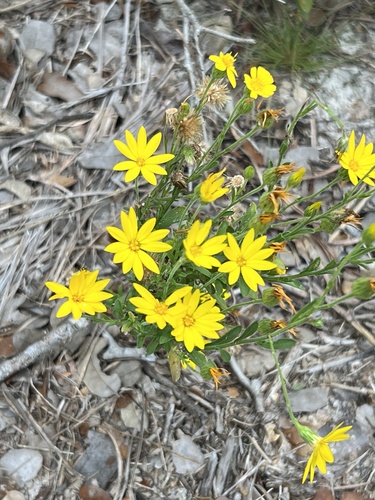
At a glance
- Life cycle
- Annual
Not yet recorded · Spread · Leaves · Bloom
This plant is missing most of its facts, so Quercus is looking them up in old botany books.
Recorded in 11 Alabama counties.
Natural habitats
Places it grows wild. Not a planting requirement. Each habitat page lists the plants and wildlife also found there.
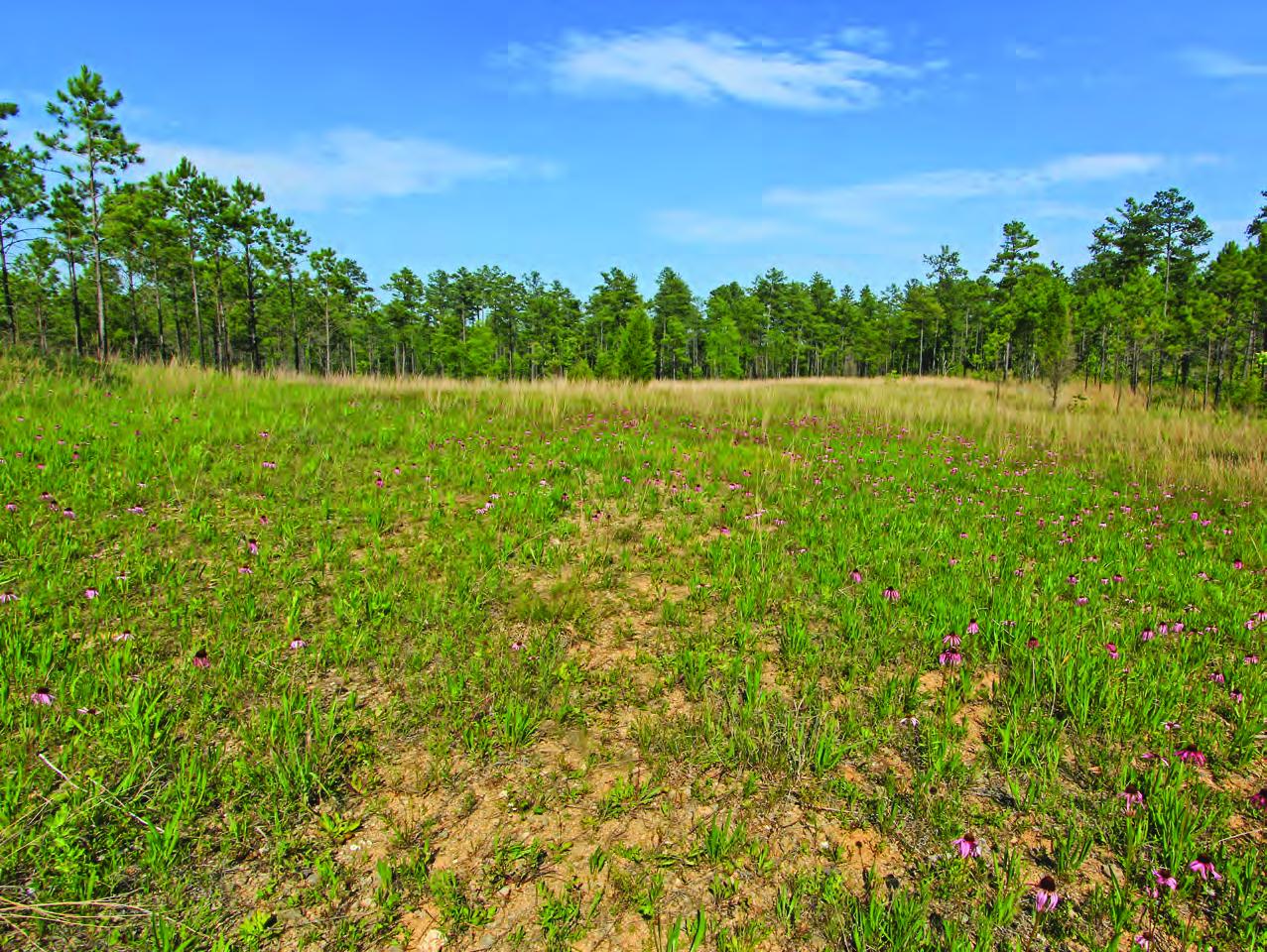
Open, fire-kept longleaf pine stands over grasses and wildflowers on wet to moist sandy soil.
Roadsides, fields and disturbed ground
Ground opened by people: roadsides, old fields, pastures, fencerows and lots.
Who uses this plant?
 18CaterpillarsGenus host records with ranges including AL
Genus host records with ranges including AL · Heterotheca
- Chloridea virescensTobacco Budworm Moth
- Chlorochlamys chloroleucariaBlackberry Looper Moth
- Epiblema scudderianaScudder's Epiblema, Goldenrod Gall Moth
- Eupithecia miserulataCommon Eupithacia, Common Pug
- Feltia subgothicaSubgothic Dart
- Feltia tricosaConfused Dart, Tricose Dart
- Heliocheilus paradoxusParadoxical Grass Moth
- Pleuroprucha insulsariaCommon Tan Wave
- Ponometia semiflavaHalf-Yellow Bird-Dropping Moth, Half-Yellow Moth
- Schinia arcigeraArcigera Flower Moth
Show all 18
- Schinia lynxLynx Flower Moth
- Schinia nubilaCamphorweed Flower Moth
- Schinia saturataBrown Flower Moth
- Schinia sirenAluring Schinia Moth
- Spilosoma virginicaVirginian Tiger Moth, Yellow Woolybear Moth, Yellow Bear
- Synchlora frondariaSouthern Emerald
- Dejongia californicus
- Hellinsia chlorias
 37BeesSoutheastern regional records
Southeastern regional records · Heterotheca
Individual names are not available yet.
Noori, Seltmann & Orr 2026, A curated and integrated dataset for exploring global bee-plant interactions (GloBI), Zenodo, CC BY 4.0 22Specialist beesPollen specialists
Pollen specialists · Heterotheca
- Andrena fulvipennis
- Ashmeadiella bucconis
- Colletes speculiferus
- Colletes thysanellae
- Dieunomia heteropoda
- Dieunomia nevadensis
- Hesperapis carinata
- Melissodes coreopsis
- Melissodes dentiventris
- Melissodes desponsus
Show all 22
- Melissodes druriellus
- Melissodes menuachus
- Perdita albipennis
- Perdita bishoppi
- Perdita boltoniae
- Perdita consobrina
- Perdita georgica
- Perdita graenicheri
- Perdita ignota
- Perdita octomaculata
- Perdita swenki
- Perdita xanthismae
 —BirdsRecorded genus food-resource interactions; not a state feeding claim
No records yet · Ants · Beetles · Flies · Adult butterflies / moths · Other wasps · Other insects
Plant details
- Family
- Asteraceae
- Flower color
- Yellow
Safety has not been reviewed for this plant; check toxicity and thorns before planting.
Growing sources and scope
- Flower color · “Yellow” · Lady Bird Johnson Wildflower Center
- Height · “Up to about 3 feet” · Lady Bird Johnson Wildflower Center
- Life cycle · “Annual” · Lady Bird Johnson Wildflower Center
- Light · “Full sun (documented habitat)” · Weakley, Flora of the Southeastern United States (2025), Carolinas & Georgia edition · Carolinas and Georgia
- primary_flower_color · “yellow” · Lady Bird Johnson Wildflower Center
- Soil · “Dry; Moist (documented habitat)” · Weakley, Flora of the Southeastern United States (2025), Carolinas & Georgia edition · Carolinas and Georgia
Also known as
Chrysopsis pilosa; Heterotheca pilosa; Soft Golden Aster; Soft Goldenaster; golden aster; golden-aster
Conservation status
| Alabama rank | SNR |
|---|---|
| Global rank | G5 |
| AL status | Not verified |
| Federal status | Not verified |
Will it fit your yard?
Check this plant against your county, sun and soil moisture. Conditions are checked in your browser.
Sources
- USDA PLANTS
- Weakley, Flora of the Southeastern United States (2025)
- Alabama occurrence source
- Shropshire & Tallamy 2025, Lepidoptera of North America north of Mexico, ZooKeys 1261 (ODbL)
- Noori, Seltmann & Orr 2026, A curated and integrated dataset for exploring global bee-plant interactions (GloBI), Zenodo, CC BY 4.0
- Smith, Bachelder, Russell, Morales, Mosher & Seltmann 2024, Bee-Specialization-Modeling v0.6.1 (specialist host table compiled from J. Fowler's pollen specialist bee lists), Zenodo, CC BY 4.0
- Hurlbert, Olsen, Sawyer & Winner 2021, Avian Diet Database, Scientific Data 8: 260 (CC0)
- Narango, Tallamy & Shropshire 2020, Few keystone plant genera support the majority of Lepidoptera species, Nature Communications