

Bearded Beggarticks
Bidens aristosa
Found in marshes, wet meadows, ditches, bogs. FloraQuest, phone app (app page) What its natural habitat tells you
Native to Alabama. How scores work Is it native here?
Profile 100%
- Height
- 2–4 feet
- Spread
- 1–2 feet
- Light
- Full sun, Partial shade
- Soil moisture
- Somewhat dry to moist
Space about 1.5 ft apart from its recorded spread, about 44 per 100 sq ft. Enter your bed size for a count
Will it fit your yard?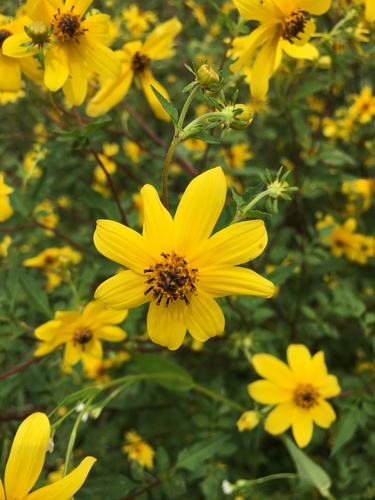
At a glance
- Life cycle
- Annual or biennial
- Leaves
- Deciduous
- Bloom
- Late summer
- Fruiting season
- Summer to fall
Recorded in 33 Alabama counties.
Natural habitats
Places it grows wild. Not a planting requirement. Each habitat page lists the plants and wildlife also found there.
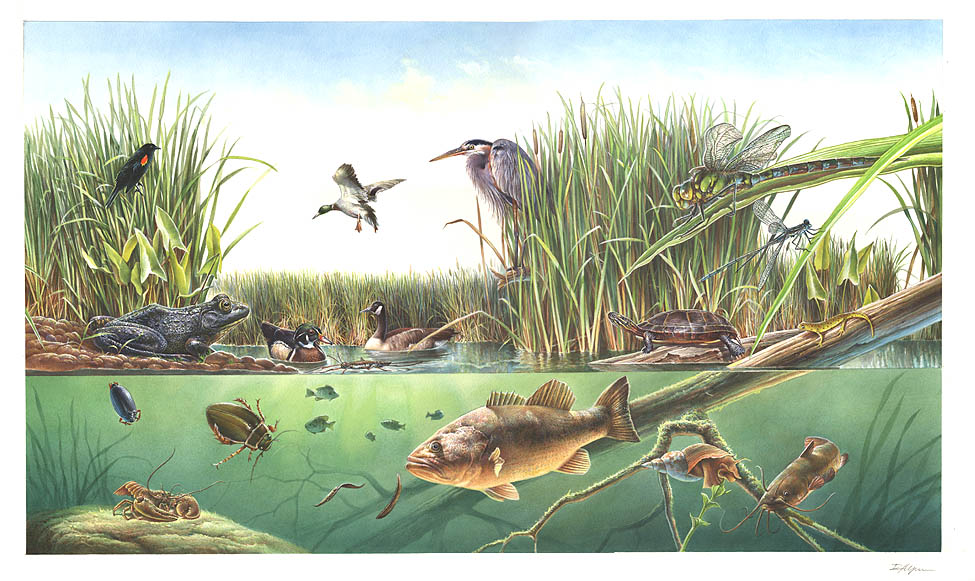
Open, wet, grassy or sedgy ground that is not a bog.
Roadsides, fields and disturbed ground
Ground opened by people: roadsides, old fields, pastures, fencerows and lots.
Also found with this plant
Wildlife whose habitat models include habitats this plant grows in, in Alabama. Shared habitat, not food. 85 animals.
- Acadian FlycatcherEmpidonax virescens
- Alder FlycatcherEmpidonax alnorum
- American Black DuckAnas rubripes
- American GoldfinchCarduelis tristis
- American RedstartSetophaga ruticilla
- American RobinTurdus migratorius
- Bald EagleHaliaeetus leucocephalus
- Belted KingfisherMegaceryle alcyon
- Black-and-White WarblerMniotilta varia
- Black-crowned Night-heronNycticorax nycticorax
- Blue GrosbeakPasserina caerulea
- Blue JayCyanocitta cristata
- Blue-gray GnatcatcherPolioptila caerulea
- Brown CreeperCerthia americana
- Brown-headed CowbirdMolothrus ater
- Canada GooseBranta canadensis
- CanvasbackAythya valisineria
- Carolina WrenThryothorus ludovicianus
- Cedar WaxwingBombycilla cedrorum
- Chimney SwiftChaetura pelagica
- Cliff SwallowPetrochelidon pyrrhonota
- Common NighthawkChordeiles minor
- Common YellowthroatGeothlypis trichas
- Cooper's HawkAccipiter cooperii
























Who uses this plant?
 24CaterpillarsGenus host records with ranges including AL
Genus host records with ranges including AL · Bidens
- Cecropterus lyciadesHoary Edge
- Cecropterus pyladesNorthern Cloudywing
- Cirrhophanus trianguliferGoldenrod Stowaway, Beggarticks Seedcropper
- Condica concisaConcise Groundling
- Condica confederataThe Confederate
- Condica cupentiaSplotched Groundling
- Condica mobilisMobile Groundling
- Dichomeris juncidellaOrange-Dotted Dichomeris
- Epiblema abruptanaAbrupt Epiblema
- Epiblema otiosanaBidens Borer Moth
Show all 24
- Eupithecia miserulataCommon Eupithacia, Common Pug
- Homoeosoma electellaSunflower Moth
- Lorita scarificataChrysanthemum Flower Borer
- Nathalis ioleDainty Sulphur, Dwarf Yellow
- Palthis asopialisFaint-Spotted Palthis
- Papaipema nebrisStalk Borer
- Platynota stultanaOmnivorous Leafroller
- Pyrausta tyralisCoffee-Loving Pyrausta
- Scopula aemulataRival Wave
- Spilosoma virginicaVirginian Tiger Moth, Yellow Woolybear Moth, Yellow Bear
- Spodoptera eridaniaSouthern Armyworm Moth
- Spodoptera frugiperdaFall Armyworm Moth
- Synchlora frondariaSouthern Emerald
- Urbanus proteusLong-Tailed Skipper, Bean Leaf Roller
 76BeesSoutheastern regional records
Southeastern regional records · Bidens
Individual names are not available yet.
Noori, Seltmann & Orr 2026, A curated and integrated dataset for exploring global bee-plant interactions (GloBI), Zenodo, CC BY 4.0 8Specialist beesPollen specialists
Pollen specialists · Bidens
- Andrena aliciae
- Andrena chromotricha
- Dianthidium curvatum
- Dieunomia heteropoda
- Megachile inimica
- Megachile parallela
- Megachile xylocopoides
- Melissodes denticulatus
 10BirdsRecorded genus food-resource interactions; not a state feeding claim
Recorded genus food-resource interactions; not a state feeding claim · Bidens
- Acanthis flammeaCommon Redpoll
- Aix sponsaWood Duck
- Anas platyrhynchosMallard
- Callipepla californicaCalifornia Quail
- Colinus virginianusNorthern Bobwhite
- Dendrocygna bicolorFulvous Whistling-Duck
- Fulica americanaAmerican Coot
- Plectrophenax nivalisSnow Bunting
- Porzana carolinaSora
- Rallus limicolaVirginia Rail
Direct food only: birds recorded eating this genus across North America. Caterpillars on host plants also feed nesting birds. NC Native Plant Society: butterfly gardening
Beetles 5
- Chrysomela similis
- Diabrotica 12-punctata
- Epicauta cinerea
- Epicauta pennsylvanica
- Rhodobaenus 13-punctatus
Flower visits · Carlinville, Illinois, USA
Flies 20
- Anthrax halcyon
- Archytas aterrima
- Eristalis latifrons
- Exoprosopa decora
- Exoprosopa fasciata
- Exoprosopa fascipennis
- Leskiomima secunda
- Milesia ornata
- Orthoneura nitida
- Peleteria robusta
Show all 20
- Physocephala texana
- Ptilodexia abdominalis
- Robertsonomyia palpalis
- Scotiptera parvicornis
- Senotainia trilineata
- Siphoplagia anomala
- Spallanzania hesperidarum
- Syrphus americanus
- Systropus macer
- Zodion fulvifrons
Flower visits · Carlinville, Illinois, USA
Adult butterflies / moths 9
- Anosia plexippus
- Argynnis cybele
- Heliothis armiger
- Limochores taumas
- Nathalis iole
- Papilio asterias
- Phyciodes tharos
- Thanaos juvenalis
- Vanessa cardui
Flower visits · Carlinville, Illinois, USA
Other wasps 11
- Ancistrocerus tigris
- Bembix nubillipennis
- Bembix spinolae
- Bicyrtes 4-fasciata
- Bicyrtes ventralis
- Cerceris fulvipes
- Cerceris prominens
- Exetastes suaveolens
- Pseudoplisus divisus
- Sphex gracilis
Show all 11
- Sphex nigricans
Flower visits · Carlinville, Illinois, USA
Other insects 1
- Euschistus variolarius
Flower visits · Carlinville, Illinois, USA
No records yet · Ants
Plant details
- Family
- Asteraceae
- Soil pH
- Neutral
- Flower color
- Yellow
- Growth rate
- Rapid
- Growth habit
- Single crown
- Foliage color
- Green
- Fruit begins
- Summer
- Fruit ends
- Fall
Safety has not been reviewed for this plant; check toxicity and thorns before planting.
Growing sources and scope
- Bloom · “Late summer” · USDA PLANTS (ranked first; Prairie Moon 2026 Cultural Guide differs) · Nationwide species characteristics; local growing conditions may vary
- Flower color · “Yellow” · NC Extension Plant Toolbox
- Foliage color · “Green” · USDA PLANTS · Nationwide species characteristics; local growing conditions may vary
- Fruit begins · “Summer” · USDA PLANTS · Nationwide species characteristics; local growing conditions may vary
- Fruit ends · “Fall” · USDA PLANTS · Nationwide species characteristics; local growing conditions may vary
- Growth habit · “Single crown” · USDA PLANTS · Nationwide species characteristics; local growing conditions may vary
- Growth rate · “Rapid” · USDA PLANTS · Nationwide species characteristics; local growing conditions may vary
- Height · “2–4 feet” · NC Extension Plant Toolbox (ranked first; USDA PLANTS, Lady Bird Johnson Wildflower Center, Prairie Moon 2026 Cultural Guide differ)
- Leaves · “Deciduous” · NC Extension Plant Toolbox
- Life cycle · “Annual or biennial” · NC Extension Plant Toolbox (ranked first; Lady Bird Johnson Wildflower Center differs)
- Light · “Full sun (6 or more hours of direct sunlight a day); Partial shade (direct sunlight only part of the day, 2-6 hours)” · NC Extension Plant Toolbox (ranked first; Lady Bird Johnson Wildflower Center, Prairie Moon 2026 Cultural Guide differ)
- primary_flower_color · “yellow” · USDA PLANTS
- Soil · “Moist; Occasionally dry; Occasionally wet” · NC Extension Plant Toolbox (ranked first; Prairie Moon 2026 Cultural Guide differs)
- Soil pH · “Neutral” · NC Extension Plant Toolbox
- Spread · “1–2 feet” · NC Extension Plant Toolbox
Also known as
Bearded Beggar Ticks
Conservation status
| Alabama rank | Not available |
|---|---|
| Global rank | G5 |
| AL status | Not verified |
| Federal status | Not verified |
Will it fit your yard?
Check this plant against your county, sun and soil moisture. Conditions are checked in your browser.
Sources
- Alabama Plant Atlas
- USDA PLANTS
- Vascular Plants of North Carolina (NC Natural Heritage Program)
- Shropshire & Tallamy 2025, Lepidoptera of North America north of Mexico, ZooKeys 1261 (ODbL)
- Noori, Seltmann & Orr 2026, A curated and integrated dataset for exploring global bee-plant interactions (GloBI), Zenodo, CC BY 4.0
- Smith, Bachelder, Russell, Morales, Mosher & Seltmann 2024, Bee-Specialization-Modeling v0.6.1 (specialist host table compiled from J. Fowler's pollen specialist bee lists), Zenodo, CC BY 4.0
- Hurlbert, Olsen, Sawyer & Winner 2021, Avian Diet Database, Scientific Data 8: 260 (CC0)
- Narango, Tallamy & Shropshire 2020, Few keystone plant genera support the majority of Lepidoptera species, Nature Communications